.png)
It’s wonderful to be back working with the amazing RepresentWomen team after a month of down time and travel abroad. I am writing this edition from Boston for the American Political Science Association conference (APSA), where RepresentWomen is featuring our research in two formats this year. We have organized a panel on women’s representation with our partners at New America, Vote Mama, and the Center for American Women and Politics (CAWP), and are also presenting one additional paper as a reflection of the trailblazing research we do and uplift every day. This is an exciting milestone from our team and I’m excited to share more next week!
While I am so glad to be here in Boston, I am also simultaneously holding grief for the tremendous losses we have experienced as a nation in recent weeks. Like so many Americans, I’m absorbing the deaths of the poet and essayist Wendell Berry, singer and philanthropist Dolly Parton, and the feminist leader Gloria Steinem.
Today’s introduction is dedicated to the two women we have lost recently, as I believe they both deserve to be honored and recognized individually.
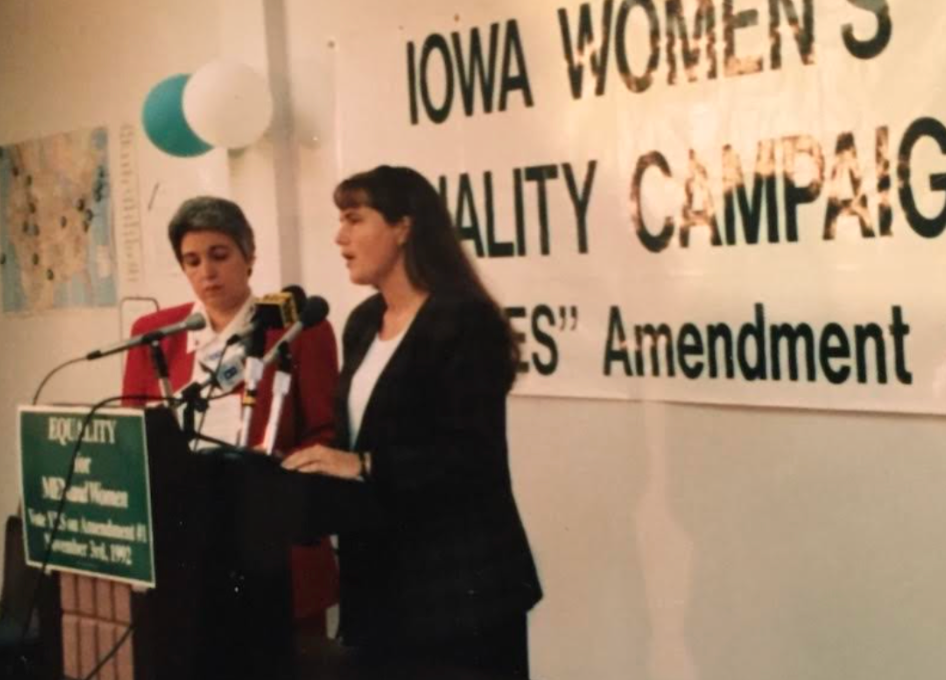
When I received the notification yesterday morning that Gloria Steinem had died, my mind immediately went back to 1992 and the work we pursued together, alongside my dear friend, Kathy Spillar, who published a heartfelt tribute to Gloria yesterday. I had the privilege of working alongside these two incredible women as a young political operative, where I was tapped by Kathy and Feminist Majority president, Ellie Smeal, to run a campaign for adding an Equal Rights Amendment to Iowa’s state constitution. It was while working on this campaign that I first encountered Gloria, who arrived on site wearing a stunning leopard-print dress that is still etched vividly in my mind to this day.
It was the summer of 1992 when Gloria arrived in Iowa to join the action, and we welcomed her support with open arms. I already knew I was in a fight of a lifetime — facing wild attacks from the likes of Pat Robertson and Phyllis Schlafly, both of whom staunchly opposed the Equal Rights Amendment. As they hammered back at our campaign, I found myself engaged in a heated debate with Ralph Reed on Larry King Live, advocating tooth and nail for equality despite the pushback. I never wavered in my dedication to the campaign, although, I must admit, the constant pushback was incredibly frustrating. That day that Gloria appeared, she lent more than just a voice, but also provided support that was so deeply meaningful and motivating to me. While we lost that campaign in Iowa by a heartbreakingly close margin, Kathy, Ellie and Gloria embodied the kind of persistence I seek to bring to our work.
Gloria’s writings were prolific and brilliant. In this era of challenges to democracy itself, her insight about measuring its health through how women are treated is evergreen. As the United Nations cited this week, Steinem wrote: “The easiest way to figure out how democratic and peaceful any group is, is to see: are there women there and how are they being treated?”
Read Steinem’s words republished in Ms. magazine:
“There is now a big majority of the country that supports the radical idea that people are people, regardless of gender or race or sexuality or class or ethnicity. Yet there is still about a third of this country that is in backlash against this new consciousness. They feel robbed of privilege and have the power of resentment. We must be aware of the threat they pose, but make no mistake: They are not the majority anymore.
Patriarchy was the beginning of hierarchy, reinforced by racism and classism and nationalism, but since this began with controlling reproduction, free women can bring down the hierarchy. There is now a widespread understanding that democracy starts with the ability of women to make decisions over our own bodies, and that’s exactly what we are doing. At the same time, men get to be whole human beings by being active in the home as well as outside. Both men and women have our whole humanity to gain.
I won’t be around for the next 50 years, but you who are reading this may be. Imagining is the first step to creating. Let’s do it together!
At my age, in this still hierarchical time, people often ask me if I’m “passing the torch.”
I explain that I’m keeping my torch, thank you very much, and I’m using it to light the torches of others.
Because only if each of us has a torch will there be enough light.”
We have work to do. Leaders like Gloria Steinem, Kathy Spillar, and Ellie Smeal provide role models of never giving up — and doing so with style and verve.
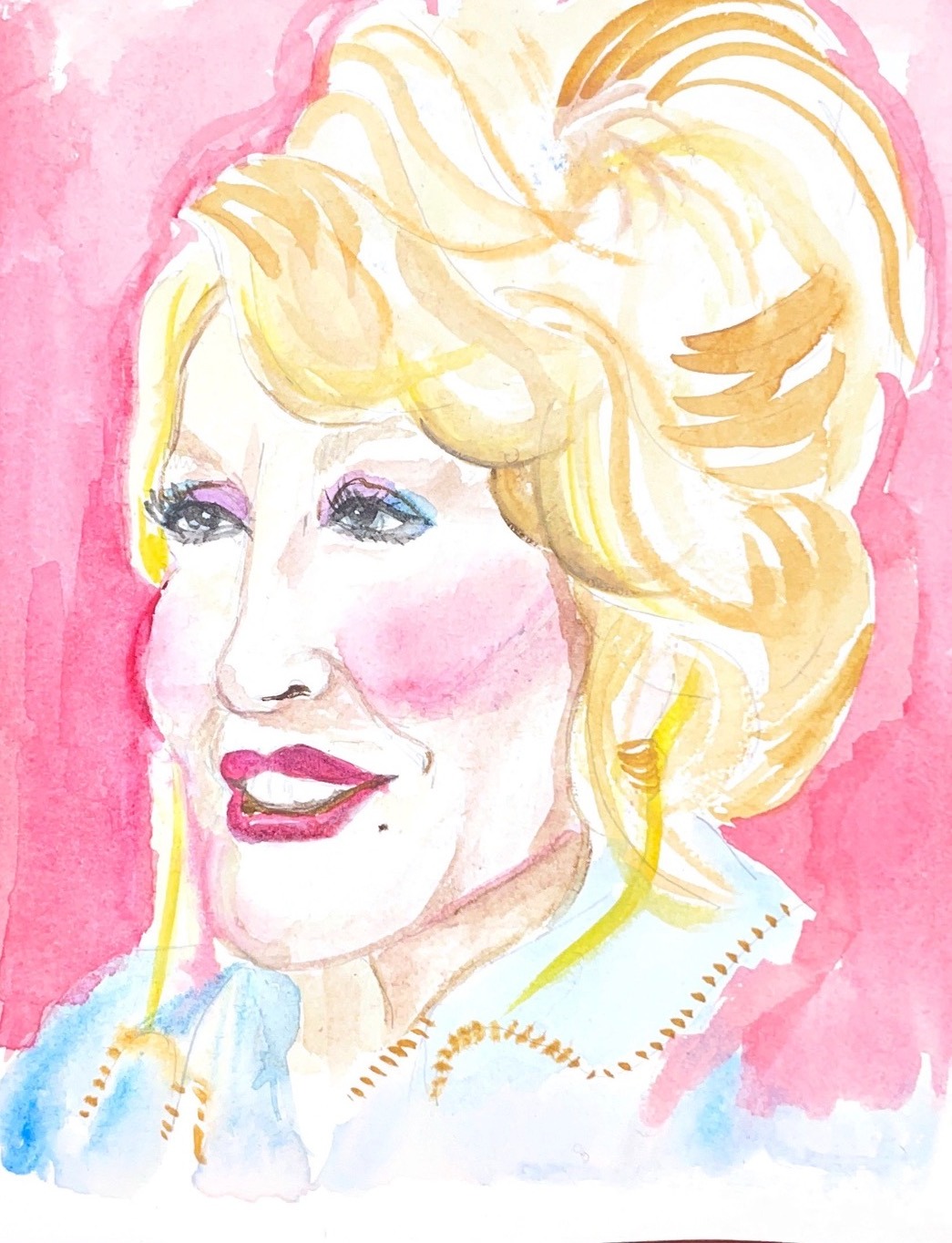
Another legend, Dolly Parton, died last week. She was 80. I will let others write about what her music and her generosity meant to the world; I want to write about something narrower, and something I have thought about for years. A week ago today, Governor Bill Lee and the Metropolitan Nashville Airport Authority announced plans to rename Nashville International Airport in her honor, a proposal the airport authority will take up at its meeting on September 17. If it happens, Dolly Parton will become the first woman honored on one of America's fifty busiest airports.
I have been calling for something like this for over 15 years and am heartened to see a proposal finally moving forward. In 2016, I started a petition to rename Washington Dulles International Airport for Eleanor Roosevelt, aptly coining it the Eleanor Roosevelt Airport — ERA — as I thought it was time for an ERA in our nation's capital! I also felt it would be an improvement over the current name, as the Dulles brothers have been notably anti-democratic. Not long after, I wrote in Medium calling for us to do the same for Justice Sandra Day O'Connor, which sadly, has not resulted in a name change yet, but the good news is both petitions are still ongoing!
Both efforts came from the same simple observation: women have shaped this country's history as fully as men have, and yet almost none of our major airports, the places that welcome the world to American cities, carry a woman's name. That gap was never really about aviation. It was a small, visible symptom of a much larger pattern: women's contributions get honored less consistently, remembered less permanently, and written into fewer of the structures we build to mark what a place and a people value.
Dolly Parton earning that recognition, more than 150,000 petition signatures and years of advocacy after fans first proposed it, tells me two things at once. It tells me that the public appetite for honoring women this way has been there all along, waiting for the right moment and the right momentum to move officials to act. And it tells me how rare that moment still is, that it took the loss of someone as beloved as Dolly Parton for a governor and an airport authority to move this quickly.
I think about this alongside the work we do every day at RepresentWomen on the barriers women face running for and winning office. Naming an airport and winning an election are different kinds of recognition, but they rhyme. Both are about whether the structures around us make space for women's leadership to be seen, credited, and remembered, or whether that space has to be fought for one exception at a time. A woman's name on a terminal sign will not change how our electoral systems work. But it is a reminder that representation is not just about who holds office. It is about who gets to be remembered as having shaped the place we call home.
I am glad Nashville is moving in this direction, and I hope the airport authority follows through in September. I hope, too, that this is not the last time a governor picks up the phone and asks how to make a tribute like this real. There are so many women, in Tennessee and everywhere else, whose names belong on the buildings we pass through every day. Dolly Parton spent her life making sure people who came from very little did not stay invisible. It would be a fitting way to carry that forward.
Birthdays: Darlene Mealy, NYC Councilwoman; Mary Peltola, Former U.S. Rep.; Sara Ramirez, actress; Dee Dee Myers, first woman White House Press Secretary; Jenifer Rajkumar, NY State Rep.; Lily Tomlin, actress & activist; Rebecca Schuller, former Director of Winning for Women; Marguerite Higgins, first woman to win a Pulitzer for International Reporting for her work on the Korean War (1920); Dixy Lee Ray, served as the 17th governor of Washington; Dorothy Maynor, first Black woman to sing at a presidential Inauguration and founder of the Harlem School of the Arts (HSA); DeNora Getachew, CEO at DoSomething.org; Kamillah Hanks, NYC Councilwoman; Diedre Henderson, Lt. Governor of UT; Beyoncé Giselle Knowles-Carter, singer & songwriter; Sarah Polk, former First Lady; Elaine Yoneda, union organizer, early advocate for equal pay & free daycare (1906); Annie Kuster, former U.S. Representative from New Hampshire; Mavis Leno, feminist & philanthropist; Jane Addams, suffragist & peace advocate (1860); Gale Brewer, NYC Councilwoman; Carly Fiorina, Chairman at Carly Fiorina Enterprises ; my grandmother Marjorie Smith Terrell (1891-1973); Marie Wilson, founder of The White House Project & the Ms. Foundation
Milestones: Katharine Graham became the 1st woman publisher of a major U.S. newspaper (1963).
“The Indigenous Women Who Could Flip the Midterms and Rewrite American History”
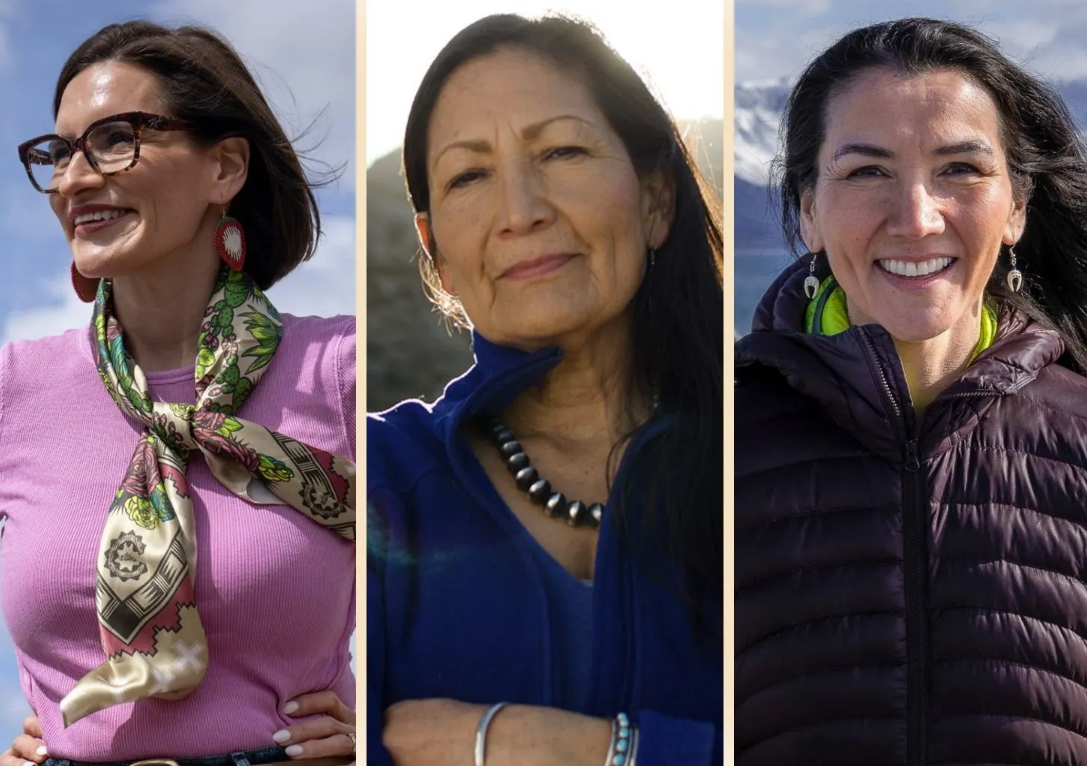
Lorissa Rinehart has a great piece at The Female Body Politic on an exciting opportunity for Native American women to be elected for the first time as governor and U.S. Senator. An additional datapoint since Lorissa’s piece is that Mary Peltola led incumbent U.S. Senator Dan Sullivan in the final count in Alaska’s all-candidate primary by 49.5% to 41.4%, giving her a clear edge in this November’s ranked choice voting contest against Sullivan and two minor candidates. Here’s an excerpt from Lorissa’s introduction before profiles of Peltola, New Mexico’s Democratic nominee for governor Deb Haaland, and Minnesota’s Democratic nominee for Senate Peggy Flanagan.
“While traditional American historians have a penchant for misrepresenting the past, in truth, Indigenous and Native women have been a guiding force in American democracy since well before Thomas Jefferson even set his cute little quill to parchment. After all, it was not from his own mind that he derived the idea of a government of, for, and by the people, but rather from the Haudenosaunee Confederacy, inspired by Jigonhsasee, which in Haudenosaunee means, “She Who Lives at the War-Road.”...
It was Jigonhsasee who fed and sheltered the 5 warring tribes of the Haudenosaunee. It was through her example of compassion, empathy, and consensus that The Great Law of Peace, the foundational document for the Haudenosaunee Confederacy, was derived. Since then, Indigenous women have been fundamental to protecting and progressing our democracy. If you don’t believe me, follow Rebecca Nagle, whose Substack and podcast dive into the past and present of Native leadership in American democracy.
But today, I wanted to write about Jigonhsasee’s spiritual granddaughters, who are continuing to carry the torch of freedom for all into a future worth fighting for.”
Chances for Women in Next Week’s Final Primaries in New Hampshire & Rhode Island
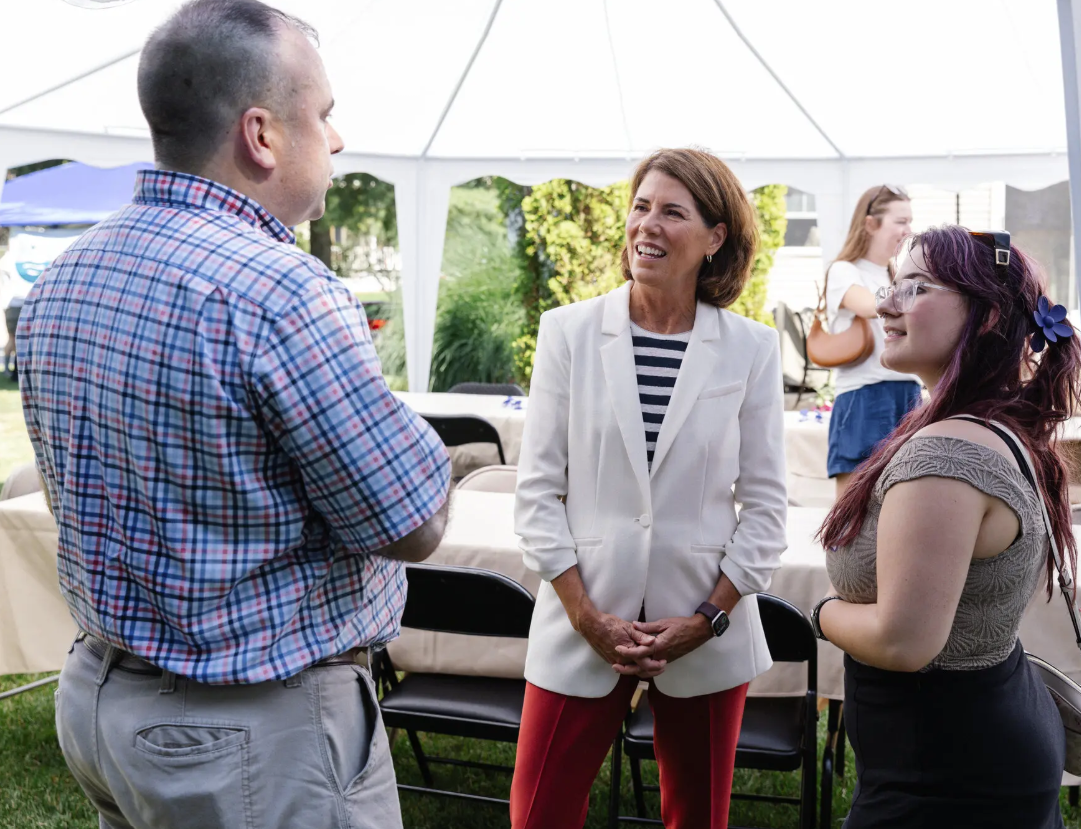
More than six months after the 2026 primary season kicked off on March 3, primary season will soon conclude– with primaries on Tuesday in New Hampshire, on Wednesday (uniquely) in Rhode Island, and on Tuesday the 15th in Delaware. It could be a big day for women, including in Rhode Island for Helena Foulkes in the Democratic primary for governor and in New Hampshire for Karishma Manzur in the Democratic primary for U.S. Senate. Here’s more:
Rhode Island governor primary: Former CVS executive Helena Foulkes, who narrowly lost the Democratic primary for governor in 2022 to Dan McKee, is again taking on the incumbent. She is consistently leading in polls and, if successful, would be heavily favored in November. Known for removing tobacco from CVS, Foulkes lifted up the role of education in a 2024 interview about her career reported by the Harvard Business School — with her shoutout to Quaker education catching my eye:
“A big thing for me was my mother really pushing me and my sisters in particular to have careers. She had never had one, but she wanted that for us. That was a big theme in my life, just the notion of being empowered, having power, having a voice and something that I observed a lot in my early years.
I had amazing teachers in my life. I had a teacher named Miss Murphy, who was my gym teacher in elementary school. I was a pretty good runner, and I remember there weren't other girls who were willing to run in a particular race. I ran and I didn't do that well, but Miss Murphy hugged me and she said, "You're going to be President of the United States someday, Helena." I remember thinking, "Miss Murphy thinks I can do anything. Isn't this great?"
Then, I had the gift of going to an all-girls Quaker high school. Junior high and high school, actually. Where I had some incredible teachers there as well who were role models. There was no sense of inhibition, we could do anything we wanted. They pushed me, they inspired me. Mrs Paitere is one woman who comes to mind, my English teacher, but I had other amazing teachers who also thought the world of us and thought we could do anything.”
New Hampshire primary: Women are poised to sweep both major parties’ primaries for governor and New Hampshire’s congressional district. Most surprising, despite a huge spending edge, Congressman Alex Pappas is losing ground rapidly in the Democratic primary for an open U.S. Senate seat against Exeter scientist Karishma Manzur. Here’s New Hampshire Journal coverage of a poll from the University of New Hampshire Survey Center:
“The biggest movement in the poll, however, may be in the Democratic U.S. Senate primary. Manzur, a medical scientist and first-time candidate, has gained support among younger and progressive voters, particularly those who identify as socialists. Pappas continues to perform best among voters older than 50, moderates, and liberals.
“She is definitely the progressive candidate, a candidate who frankly didn’t have the money and the organization early on, but has put together a grassroots campaign,” UNH Survey Center Director Andrew Smith told Boston’s 7NEWS. “And that old-fashioned knocking on doors because you don’t have enough money to run ads is working for her.”
“I’d say that race is up in the air,” Smith added.”
Massachusetts Primaries Create Record for Women Nominees for Governor
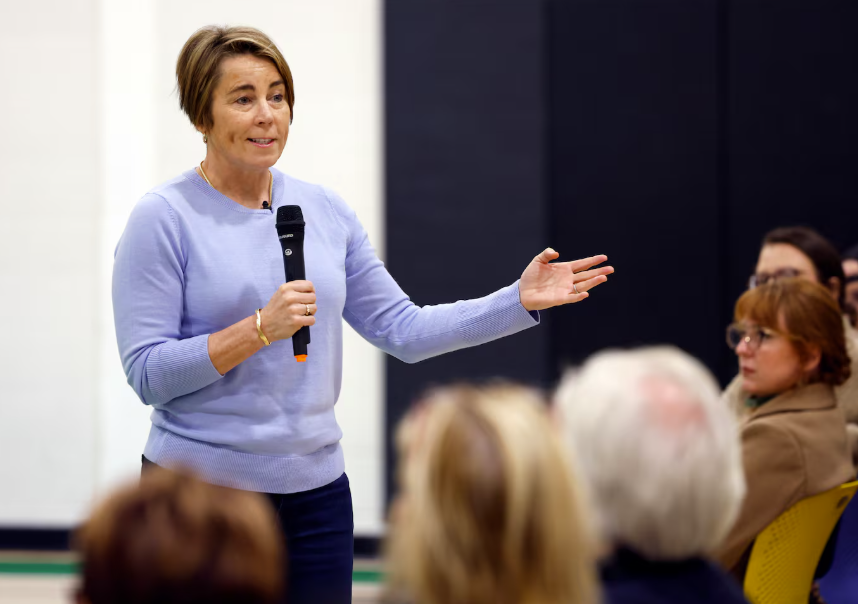
Massachusetts held its primaries on September 1. A woman fell short in a key open seat House primary, but there were notable outcomes lifted up the Center for American Women and Politics.
“Incumbent Governor Maura Healey (D) and Lieutenant Governor Kim Driscoll (R) were unopposed in the primary. They will run again on the same general election ticket in a contest currently rated as “Solid Democrat” by Cook Political Report. Healey and Driscoll became the first all-woman ticket to win a gubernatorial election in 2022.
In 2026, other all-woman gubernatorial tickets have advanced to the general election in Alaska (Republicans Candi English and Jodi Taylor), Michigan (Democrats Jocelyn Benson and Winnie Brink), New Mexico (Democrats Deb Haaland and Maggie Toulouse Oliver), and New York (Democrats Kathy Hochul and Adrienne Adams).
Women are running separately as general election nominees this year for governor and lieutenant governor from the same party in Arkansas (Republican incumbents Sarah Huckabee Sanders and Leslie Rutledge), Texas (Democrats Gina Hinojosa and Vikki Goodwin), and Vermont (Democrats Amanda Janoo and Molly Gray).
Women have simultaneously held the governor and lieutenant governor roles in four states to date: Arkansas (ran separately), Iowa (LG appointed to fill a vacancy after election), Massachusetts (ran as joint general election ticket), and Virginia (ran separately).
Women are 6 of 10 (60%) major-party nominees for statewide elective executive office, including governor and lieutenant governor, in Massachusetts, including 5 of 6 (83.3%) Democrats and 1 of 4 (25%) Republicans.
Women are 3 of 14 (21.4%) major-party nominees for U.S. House in Massachusetts, including 3 of 9 (33.3%) Democrats and 0 of 5 (0%) Republicans. All three nominees are incumbents in races in which they are heavily favored.”
Women in Presidential Elections: Always “Soon,” But Never Now
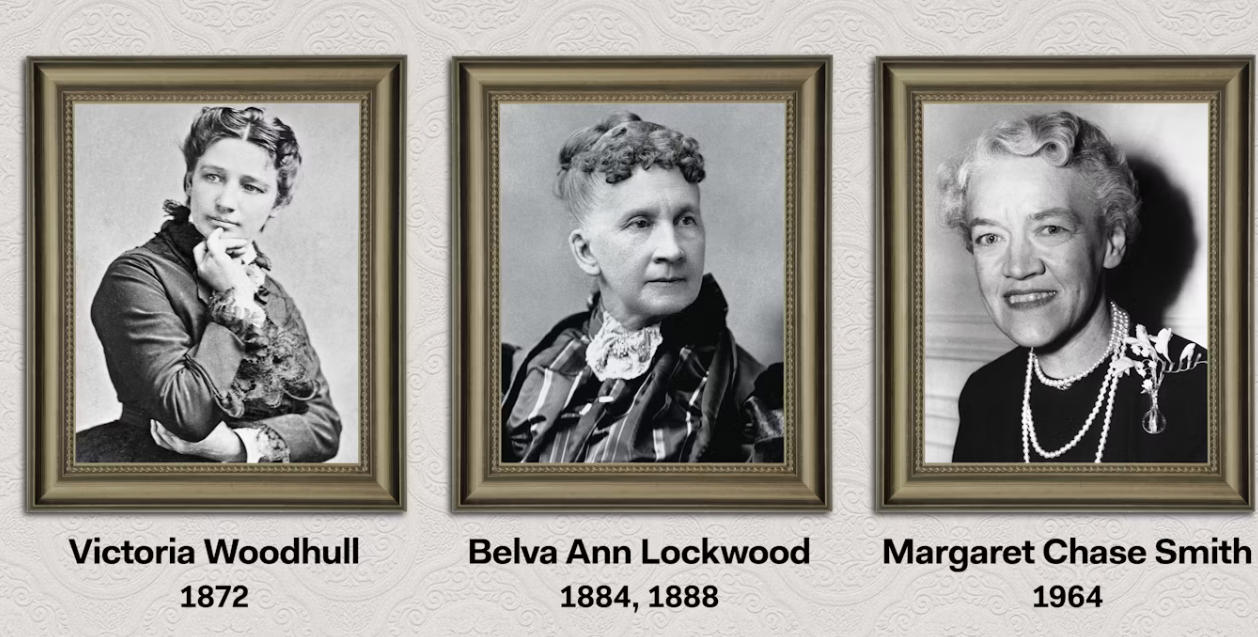
I was moved reading Ana Marie Cox’s tour de force in The New Republic on the history of women and the presidency that includes a strong call for women to step up as candidates in 2028. Here’s an excerpt:
“By 1934, the argument that a woman could become president reached the exact same point we remain at today, which is to say that women had by then been elected to every other office. As an Associated Press story that year observed, “The presidency and vice-presidency is the only high government executive office this country has not already accorded women.”
In 1945, a columnist opined that somewhere in the country “is a girl … who may succeed in being elected President of the United States”—after all, that year saw a record number of women serving in Congress: 11.
In 1949, a Gallup poll on willingness to vote for a woman saw the respondents split, 48 percent for and 48 percent against. A poll write-up summarized the state of affairs: “A ‘Madam President’ is as inevitable for the United States as the return of short skirts.” That same year, Harry S. Truman told the delegates of Girls Nation that by the time “all of us old people will be out of the way … you might have this terrible job which I have.”
In 1959, John F. Kennedy wrote that it would happen “during this generation.”
Meanwhile, more and more women tested this theory in the major parties, including Republican Margaret Chase Smith in 1964 and Democrats Shirley Chisholm and Patsy Mink in 1972. Smaller parties with longer odds took the biggest chances—most of the women who have run for president in the United States have led third-party tickets, and almost half have been women of color. In 1976, Betty Ford thought it might happen by 1996.
In 1980, Jimmy Carter said it would happen by the time his daughter Amy came of age (and maybe she’d have the job).
In 1984, the same year the Democrat Geraldine Ferraro stepped into place as a vice presidential candidate and lost, Ronald Reagan assured a group of female Republican leaders that they’d see a woman in the office “one of these days,” and four years later added that a woman president was “inevitable.”
In 1990, Ferraro herself said she thought that “we have a real shot at having a woman president in this next decade” because the sexist nature of her coverage—“How I did my hair, where I bought my clothes. Dumb things”—would be put away. “Because I was the first woman, people were caught up in a lot of other things besides my brain,” she told McCall’s. “People got it out of their system in 1984.”
In 1991, 65-year-old Barbara Bush said she planned “to be around” for it. (She died in 2018.)
In 1992, Democrats’ “Year of the Woman” saw more women than ever run for office and more women win. Patricia Aburdene, the co-author of Megatrends for Women, confidently asserted that “male-dominated institutions, from religious fundamentalism to the Senate Judiciary Committee to the Supreme Court, will be dragged kicking and screaming into the 21st Century.”
In 1993, in a television interview, Bill Clinton—as his wife stood straight-faced beside him—guessed that it would be “not long,” adding, “probably within my lifetime.”
In February 1999, pollster Larry Sabato, self-proclaimed possessor of a political “crystal ball,” said, “It’s going to happen sooner than anyone expects,” and predicted that if there were four male candidates in the 2000 presidential election, one would be a minority. “People are going to be stunned at how quickly the white male power structure falls.”
In 2006, Laura Bush guessed it was imminent: “I think it will happen probably in the next few terms.”
In 2010, George H.W. Bush saw it on the horizon: “I don’t know who, or when, but I would say fairly soon.”
In 2016—you remember.
In 2017, Hillary Clinton softly echoed her husband’s timeline: “Will we ever have a female president? We will. I hope I’m around to vote for her.”
Then 2024. You remember.
Bill Clinton, two weeks after Harris’s loss in 2024: “Pretty soon.” Nancy Pelosi, 2025: “Within this next generation.”
Barack Obama, 2026: “Sometime soon,” he told People magazine in June. “In my lifetime.”
Back to School: Student Governments Lead with RCV and PRCV
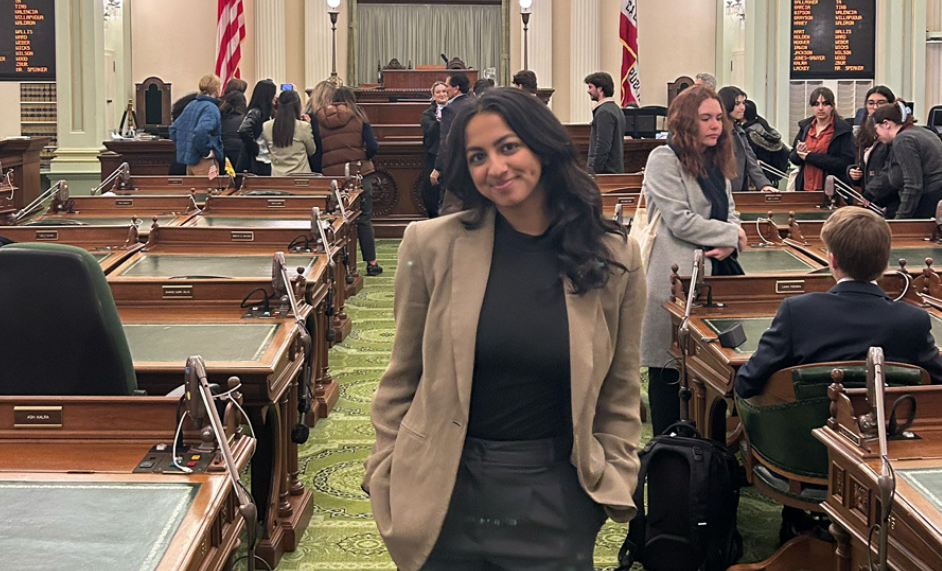
RepresentWomen’s recent poll with Murmuration repeated a finding that always gives me hope: Younger Americans strongly support reforms that would increase choices for voters like ranked choice voting. That finding goes hand-in-hand with how student government leaders all over the country keep adopting and implementing ranked choice voting for student government, with more than 100 colleges in at least 40 states now using RCV for student elections.
Many colleges use the fairest system of all for electing student leaders: the proportional form of RCV, also known as the single transferable vote. Here’s Radford University professor Chapman Rackaway in The Renovator on “Let Students Practice Democracy Before They Have to Defend It”:
“I’ve spent years thinking about how to get more students into the habit of running, voting, and taking the mechanics of elections seriously. One idea keeps standing out: campuses should adopt Single Transferable Vote — STV — for electing their student governments. It’s not a hypothetical. A meaningful number of schools already use it, including Carnegie Mellon, UCLA, UC Berkeley, Vanderbilt, and Louisiana State, among others. The pitch to a skeptical student government isn’t “try something exotic.” It’s “you’re behind.”..
The upshot is that a body elected under STV tends to reflect the actual range of student opinion in the room, instead of handing every seat to whichever bloc turns out its people first.
Capturing the breadth of students’ voices is what makes Single Transferable Vote useful for the candidacy problem specifically. In a winner-take-all student election, running against an entrenched group means betting everything on beating them outright — a discouraging proposition for a first-time candidate with no campaign infrastructure. Under STV, a student doesn’t need to out-organize the dominant clique to win a seat; they need to clear a quota that a fraction of the electorate can meet on its own. That lowers the real cost of entry…
As a civic educator, I’m drawn to another benefit of Single Transferable Vote systems: the moment a student has to rank candidates instead of picking just one, they’re forced to think — even briefly — about the fact that voting methods are a choice, not a law of nature. That’s a small dose of exactly the kind of thinking American democracy needs more of right now. We need an electorate that understands its institutions well enough to ask whether those institutions are serving the goals we actually want, rather than assuming the rules in front of them are the only ones there are. Students can get accustomed to STV in college, and then apply it in the political world beyond. The time has come.”
P.S.
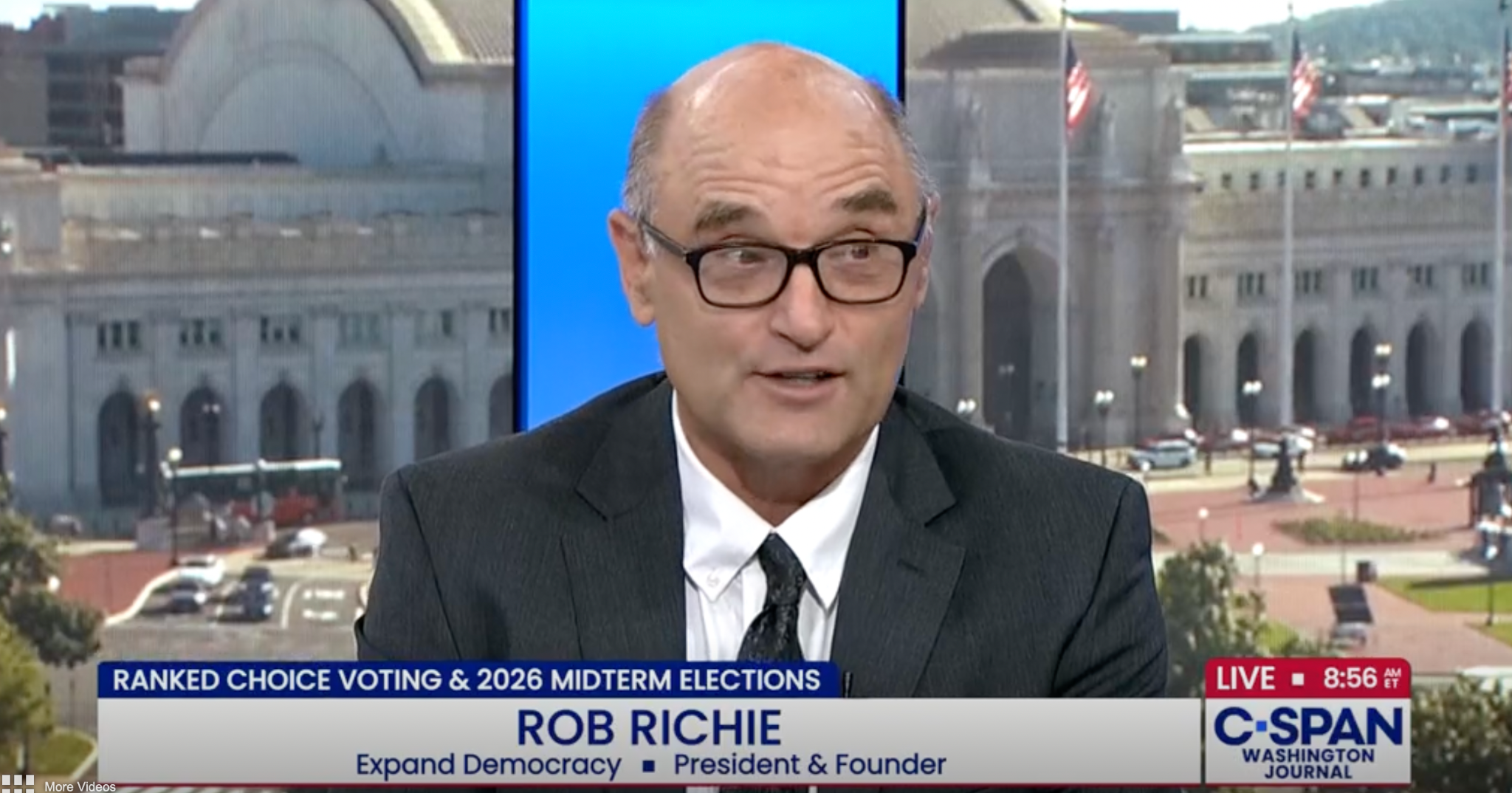
My husband Rob Richie, long-time leader of FairVote and now president of Expand Democracy, was a guest on CSPAN’s Washington Journal last month — his 25th appearance on the channel. Rob’s wide-ranging interview includes clear descriptions of ranked choice voting and proportional representation, along with answers to listener calls about how these systems uphold one person, on vote. Producers surprised Rob by playing a call he made into the program in 1992 to ask then-independent candidate for president Ross Perot about RCV. Check it out!
During my time off I attended the lovely wedding of Melanie’s (RW’s resident artist) son in Barcelona, hunted for lavender fields in Provence, traced the route of the Tour de France up Mont Ventoux, visited Guernica, witnessed the solar eclipse from a field in Spain, snuck around the back corridors of the National Gallery in London with Melanie’s sister who is a director there, read books, rode the new Suffrage line on the Underground, ate gallons of gelato, traveled to Swarthmoor Hall and Meeting where Quakerism was founded by Margaret Fell & George Fox, met with allies at the Electoral Reform Society in Cardiff & London, and on my last day had a lovely afternoon tea!