As we wrap up our writing for the week, I am heading off with colleagues for what promises to be a memorable event hosted by the Kettering Foundation, which is “bringing together leaders and changemakers during Congressional Black Caucus Foundation’s Annual Legislative Conference for an evening celebrating the leadership and transformative impact of Black women.” Its honoree this year is the remarkable LaTosha Brown, cofounder of Black Voters Matter and founder of the Southern Black Girls & Women’s Consortium, whose work, in the words of Kettering, “has helped build civic power, strengthen communities, and invest in the leadership of Black women and girls.”
RepresentWomen is proud to partner with Black Voters Matters on electoral reform work including ranked choice voting and proportional representation – both of which advance outcomes for women and men of color. Here are stirring words from Latosha Brown when she called for a Department of Democracy in a featured story in Ms.
The U.S. government maintains Cabinet-level departments dedicated to the defense of its borders, the stability of its financial system, the readiness of its military. It has no comparable institution whose singular mission is the protection of the democratic rights of its citizens here at home.
That is the gap I am proposing we fill with a Department of Democracy: a durable, people-powered, enforcement-capable institution designed to protect voting and civic rights, monitor the conduct of all three branches of government, hold states accountable, and serve as a permanent firewall against the erosion of democratic participation. It would be built to hold regardless of who’s in power.
Unlike anything for U.S. citizens that currently exists in the federal government, it would not be owned by any single branch. It would be designed to survive shifts in presidential administrations, partisan congressional control and judicial reinterpretation. The rights it protects belong to the people, not to whatever administration happens to be sitting in the chair.
LaTosha also joined with other leaders at Black Voters Matters in a forceful response to the shameful ruling by the Supreme Court in the Callais case that included:
And we at Black Voters Matter will not stop, with or without the tool of the Voting Rights Act; we will fight for racial justice in this country. We also know that if we, together, take this path armed with our collective intelligence, different faiths, culture, love, hope, determination and courage, we will create a new country, where we all share power and resources. A new country where our rights, which are given to us by our creator, are not simple acts of legislation that can be taken away by a rogue court, president, congress, or state government. A U.S. where the governing constitution will permanently guarantee representation for Black and other Marginalized people in every legislative body at every level of government. Together, we will craft and fight for a new constitution that will limit judicial lifetime appointments and robustly outline our human rights in a clear and specific way where no one in power can misinterpret or change the laws. The Constitution we create will put people over property, eliminate outdated legislative frameworks, and expand our rights to education, housing, food, healthcare, economics, environmental justice, and more political parties will ensure proportional representation so these rights come to pass.
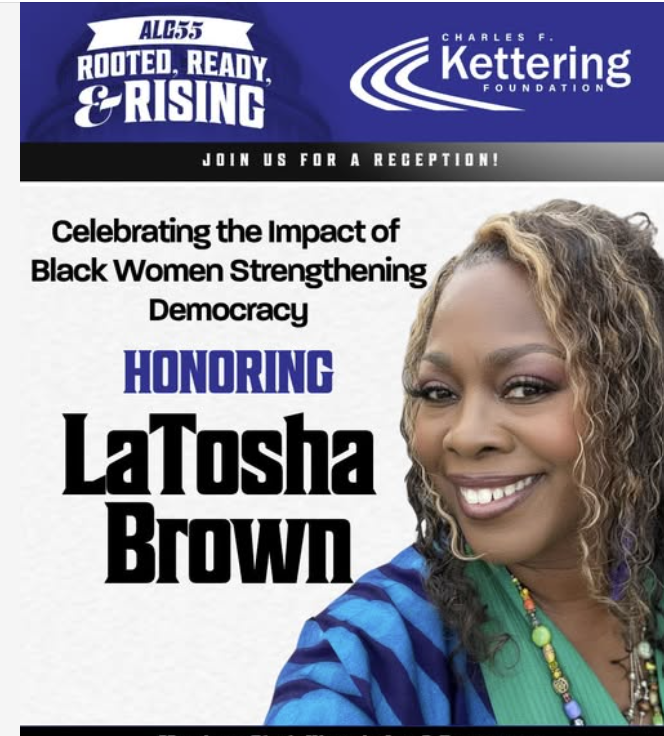

RepresentWomen is also proud to partner with a number of women’s organizations to co-host a reception tomorrow evening celebrating women leaders during the Congressional Black Caucus Foundation gathering.
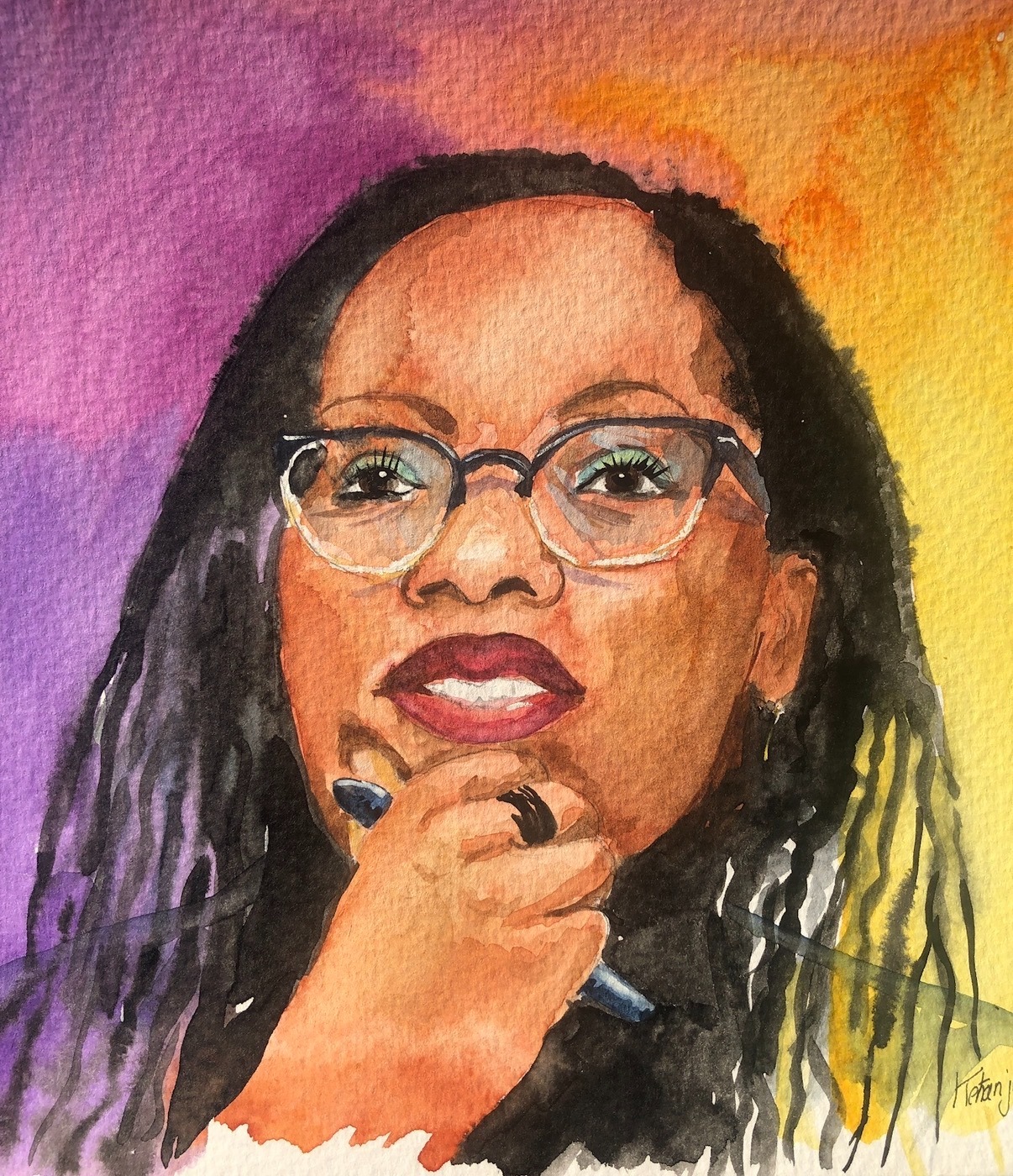
Birthdays: Ketanji Brown Jackson, Supreme Court Justice; Jennifer Guiterrez, NYC Councilwoman; Margaret Sanger, American League for Birth Control (1879). Jennie Curtis Cannon, suffragist (1851); Penny Singleton, actress and voice of Jane-Jetsons; Edna Adan Ismail, first qualified nurse in Somaliland; Chimamanda Ngozi Adichie, widely recognized figure In postcolonial feminist literature and author of Americanah; Alexis Bledel, actress; Amy Poehler, actress, writer, feminist; Lois Wessel; Julia Nickles Bryan; Maureen Connolly, 1st woman tennis player to win a Grand Slam (1934); Cheryl Strayed, author. Annabelle Baer; Anna Deavere Smith, actress & playwright; Aisha Tyler, actress & comedian. Caroline James; Soledad O'Brien, broadcast journalist & executive producer; Pablita Velarde, Pueblo artist & painter (1918), Mabel Vernon, Quaker suffragist (1883); Lurleen Wallace, former governor of AL; Nancy Bocskor; Lauren Leader, CEO of All In Together; Shirley Weber, Secretary of State CA
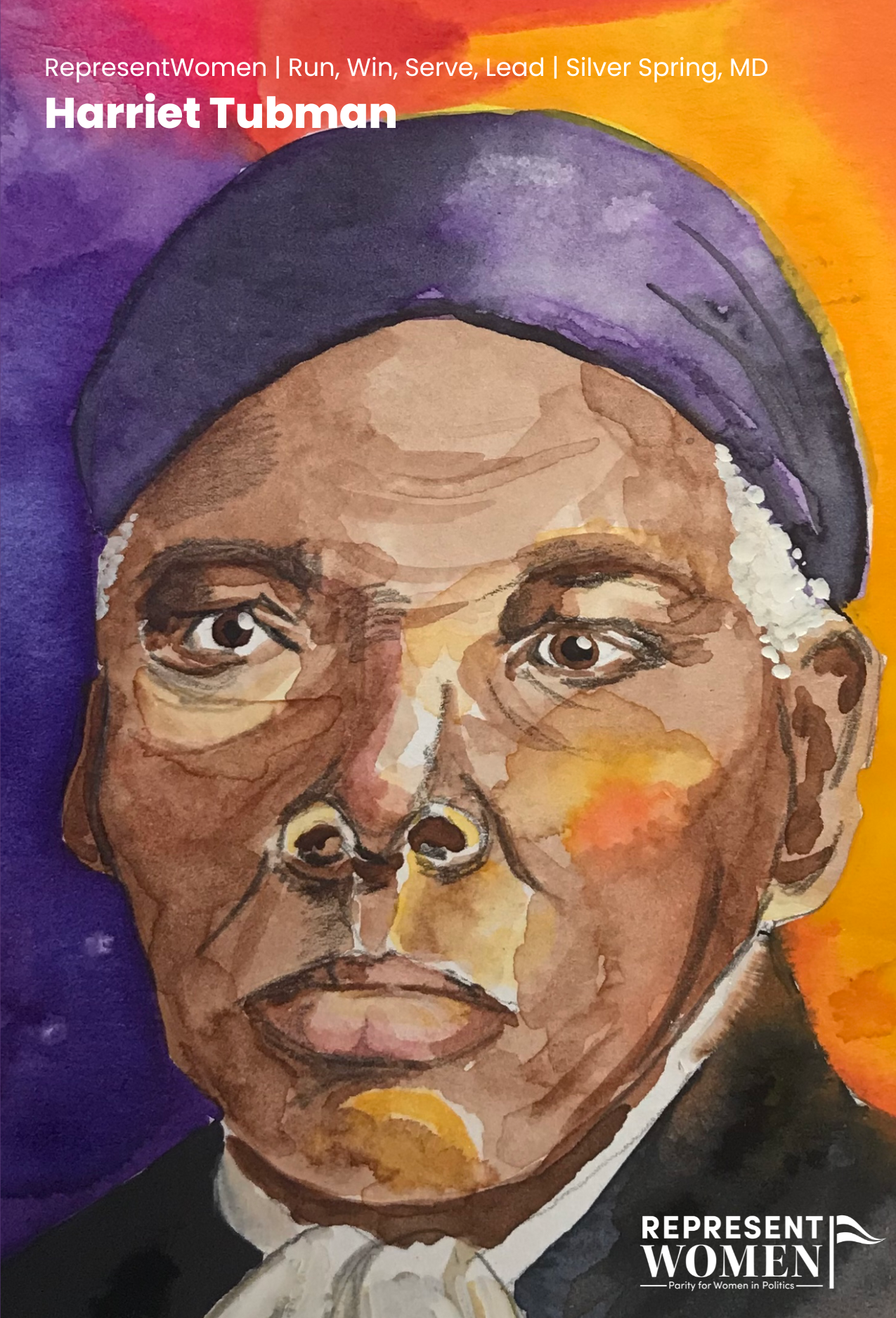
Milestones: Carla Hayden named first female Librarian of Congress (2016); Harriett Tubman escapes from slavery (1849); Emily Edson Briggs, became first woman White House correspondent during Lincoln’s administration, first president of Women’s National Press Association (1882); Margaret Chase Smith is the 1st woman elected to Senate not as a replacement (1948); Belva Lockwood is named Presidential nominee for the Equal Rights Party (1884)
Record Number of Women Nominees in State Legislative Elections

A record number of women have earned nominations for state legislative elections this year, and we can expect that women will grow their representation from its current level of 33.6%. Women will likely become the clear majority of Democrats in state legislatures. Democratic women already hold 49.5% of state legislative seats, including majorities of Democrats in 30 lower houses and 23 state senates. In stark contrast, Republican women hold only 21.4% of seats, and are not a majority in any Republican caucus in the state senate or house.
The Center for American Women and Politics crunched the numbers on state legislative candidates after Delaware closed out this year’s primary season this week that also introduces the comprehensive data on women running as incumbents, challengers and in open seat races. Here’s an excerpt:
There is a new record for women nominated in elections for state legislative races around the country, according to the latest data from the Center for American Women and Politics, a unit of the Eagleton Institute of Politics at Rutgers University. In 2026, 3,794 (2,571D, 1,197R, 22NP, 4Ind) women are nominees in state legislative races, beating the record of 3,621, set in 2022.
Additionally, Democratic women have also set a new record for state legislative nominees; the 2,571 Democratic women nominated in 2026 bests the previous record of 2,402, set in 2018. Meanwhile, Republicans have fallen short of their record levels, set in 2022, when 1,291 GOP women won nominations; 1,197 Republican women are state legislative nominees in 2026.
Delaware Closes Out Primary Season
Delaware Closes Out Primary Season
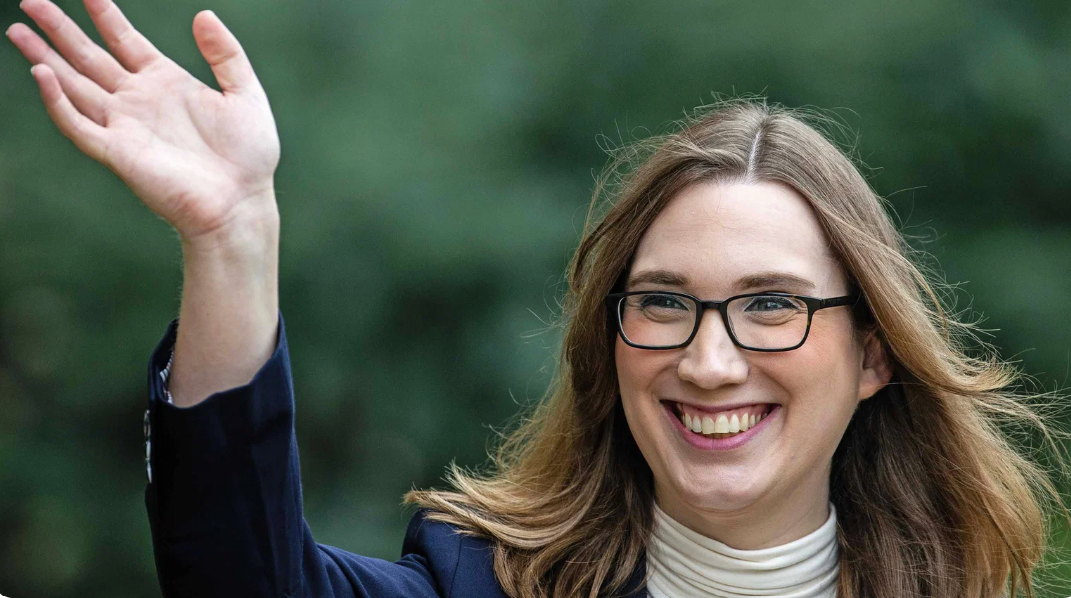
On September 15th, Delaware was the last state to hold its primary more than six months after several states voted on September 3. As highlighted by the Center for American Women and Politics, Delaware will have an all-male U.S. Senate election in November, but women are favored in the U.S. House election in three of five of the statewide executive elections up this year, including attorney general Kathy Jennings seeking re-election and the winner of an all-women contest for state auditor between incumbent Lydia York (D) and April Callaway (R).
U.S House incumbent Sarah McBride has been an influential voice in Congress in her first term in office. LGBTQ Nation reports on her bid for a leadership position this fall:
U.S. Rep. Sarah McBride (D-DE), the first out trans person in Congress, asked her Democratic House colleagues in a September 14 letter to support her bid to become one of the next co-chairs of the Democratic Policy and Communications Committee. The committee develops caucus-wide messaging for the House Democratic caucus. But in order to join the committee, she’ll first have to win re-election by defeating her anti-LGBTQ+ Republican opponent, Joseph Arminio.
“Since before I was sworn in, I have been grounded by and grateful for the genuine support members of this caucus show for one another,” McBride wrote in her letter. “What I have taken from it is that our collective strength is precisely what will win us the majority and allow us to pass an agenda that makes life more affordable for the people we represent.”
McBride said she wants the post-midterm Democratic caucus to “hit the ground running with a unified message” in 2027, and acknowledged the “increasingly complex media environment” that the party must navigate.
Governor Elections Offer Opportunities for Women in Georgia, Ohio and Texas

The RepresentWomen team is following statewide elections closely. Its projections include women having a modest gain in the U.S. Senate from 27 to 28 seats, with the range of possible outcomes including holding as many as 33 seats next year or as few as 21. In governor elections, the range is far wider: as many as 24 women governors next year or as few as six. Most likely is women holding 16 seats, including 13 Democrats and 3 Republicans. Here are snapshots with recent news and analysis from three competitive races where Democratic women are taking on Republican men, but in each case are being used by at least four to one.
Georgia and Keisha Lance Bottoms: Former Atlanta mayor Bottoms leads narrowly in polling averages, but is being heavily outspent, as reported by the Atlanta Journal-Constitution:
Republican Rick Jackson’s financial advantage has loomed over Georgia’s race for governor since his surprise entry in February. But this week, Democrats got a sobering reminder of just how lopsided it is. An AdImpact analysis shows pro-Jackson groups have spent or reserved nearly $76 million in airtime ahead of the general election, compared with about $8 million for Democratic nominee Keisha Lance Bottoms and her allies. Her campaign itself has just $42,000 reserved for traditional TV ads. Those figures don’t capture the full scope of Bottoms’ spending, nor do they reflect a six-figure statewide ad buy the campaign launched early Thursday.
Texas and Gina Hinojosa: The New York Times this week, in a story entitled Against the Odds, This Democrat in Texas Is Giving Greg Abbott a Fight, reports on a surprisingly close race where campaign spending also is lopsidedly in favor of her opponent.
Recent surveys from Fox News and by the University of Texas suggest a close governor’s race this year, with Mr. Abbott’s lead in the low- to mid-single digits. Last year, polls showed him leading by a wider margin. “Greg Abbott is facing the most challenging election of his career,” said Mark Jones, a political science professor and pollster at Rice University. “Right now you have voters who are unhappy about Abbott and unhappy with Trump, but don’t know much about Hinojosa other than that she’s the Democratic candidate.”..
She first ran for office in 2011, seeking a seat on the school board after state budget cuts threatened to close an elementary school that one of her sons attended. “That’s the motivation for any of this, my desire to protect our kids,” she said. She won that race. She later ran for state representative in Austin, a seat she has held since 2017. She is not seeking re-election to the House as she runs for governor. Ms. Hinojosa has made public schools and concerns over affordability centerpieces of her campaign.
Ohio and Amy Acton: From WLTV5, reporting on Dr. Amy Acton leading in a new poll.
A new poll released Wednesday shows Democratic gubernatorial candidate Amy Acton with a slight lead over Republican candidate Vivek Ramaswamy. The hotly contested race to succeed Ohio Gov. Mike DeWine, who is term-limited, is coming down to the final weeks, with Election Day on Nov. 3.A new poll released by Bowling Green State University and YouGov showed 48 percent of respondents said they would vote for Acton in November, compared to 45 percent for Ramaswamy. Other candidates received a total of seven percent of the vote.
Alaska Governor Election: Who Will Best Respond to Ranked Choice Voting Incentives

RepresentWomen’s data is clear: Ranked choice voting boosts opportunities for women candidates who embrace its incentives to engage with more voters and build coalitions across differences. Alaska’s ranked choice voting elections have resulted in women winning two of the three U.S. House elections held with the system, the one Senate election held with it in 2022, and a majority of seats in its lower house of representatives, including 47% of its Republicans members.
I found a new Anchorage Daily News article fascinating: “Heeding ranked choice voting, candidates refine their strategies in Alaska governor’s race.” Iris Samuels reports on how candidates are negotiating the four-way contest where each candidate can map out a path to victory. With three Republican candidates, they will have to be particularly attentive to building coalitions.
Notably, the one woman candidate Bernadette Wilson is showing the least ability to adapt to RCV. It’s a good reminder that systems create incentives, but no gender has a monopoly on responding to them. Here’s an excerpt:
Treg Taylor, a Republican who weeks ago vowed to be the “last line of defense against Lower 48 liberals who hate our way of life,” is now asking Democrats and independents to vote for him. Jonathan Kreiss-Tomkins, the only remaining Democrat remaining in the race, is pledging to put Republicans in his cabinet. Dave Bronson is calling on his supporters to rank all Republicans in the race, even after Bernadette Wilson — the top GOP vote-getter in the primary — asked her supporters not to.
With the November ballot set in the governor’s race, candidates are grappling with the reality of the state’s ranked choice voting system — which rewards moderation and punishes extreme partisanship — even as the Republicans in the field are calling for the system to be abolished….
Almost two-thirds of Alaska voters are not registered with either political party. Just under a quarter of Alaska voters are registered Republicans. Less than 12% are registered Democrats…. In a forum held Wednesday, Wilson — who finished ahead of other Republicans in the primary — questioned the efficacy of the bipartisan caucuses that have formed in both the House and Senate, and dismissed the idea of working across the aisle.
Elections in Sweden Project Magdalena Anderson to Return as Prime Minister
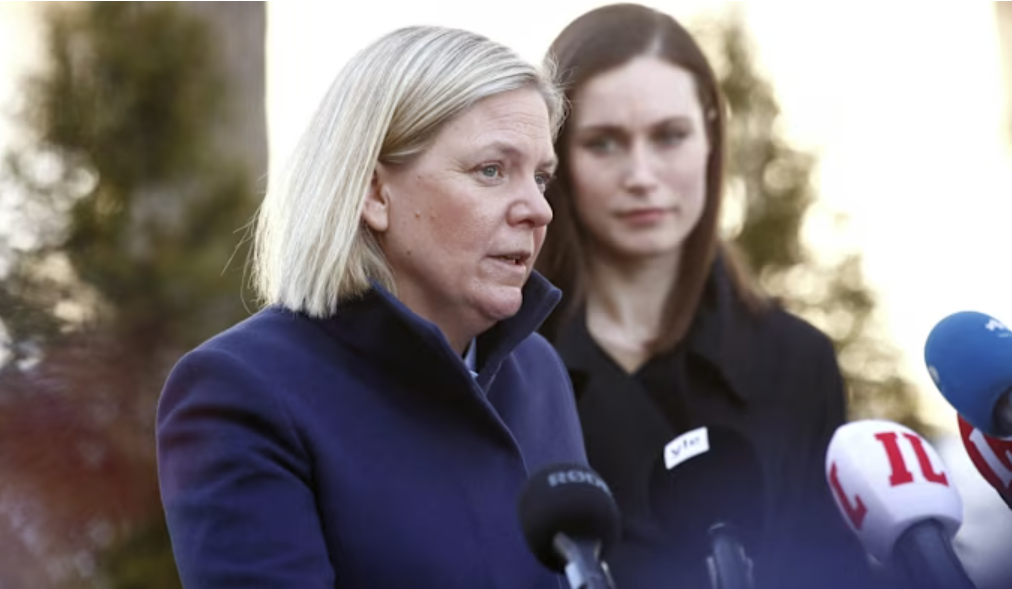
Sweden this week held an exceptionally competitive proportional representation election for parliament, with eight parties likely to win seats and women once again likely to win close to half of all seats. ABC News summarizes the outcome and the likely return to prime minister of Magdalena Anderson, who was the country’s first woman prime minister.
The Swedish Election Authority said the four opposition parties won 176 seats in the 349-seat parliament in Stockholm, the Riksdag, in Sunday’s election. The four parties that make up or support the outgoing conservative-led government took 173 seats. Shortly after the final results were announced, center-right Prime Minister Ulf Kristersson said he would resign as the head of government in a letter to the parliament's speaker posted on X.
Former Prime Minister Magdalena Andersson’s center-left Social Democrats finished as the biggest single party with 99 seats, despite losing eight seats compared with the last election in 2022. She will still face a complicated task to turn the result into a government because of tensions within the left-leaning bloc.
France 24 profiled Anderson and her appeal with voters as a “trusted, no-nonsense political operator”:
While the 59-year-old identifies with her Social Democrat party's traditional left-wing, she has taken a pragmatic approach to its shift toward the centre. She is a staunch defender of the Scandinavian country's famed welfare state, with an attitude that resonates with many Swedes, regularly topping opinion polls on the country's most trusted politicians.
"She has a way of speaking that many people feel they can trust," Stockholm University political scientist Jan Teorell told AFP. "There are similarities to (former German chancellor Angela) Merkel. I think Merkel has been a bit of a role model for her."..
Her [previous][ stint as prime minister was brief -- just 10 months -- but eventful. She guided Sweden through the Covid pandemic and a period of turbulent domestic politics, and spearheaded the reversal of the Social Democrats' longstanding opposition to NATO membership following Russia's full-scale invasion of Ukraine in February 2022.
Under her leadership, Sweden applied to join the alliance in May 2022. A few months later, in September 2022, she lost a general election to a right-wing bloc headed by Ulf Kristersson of the Moderate Party, and has since served as leader of the opposition.
Born in the university town of Uppsala in 1967, she is the only daughter of a university professor and a teacher. She first made a name for herself in the water, twice winning gold in junior swimming championships.
Annie Dillard and my Sister-in-Law Marina Richie

The New York Times this week published a moving obituary about Annie Dillard, a powerful writer about nature and religion. Dillard first emerged on the national scene with “Pilgrim at Tinker Creek” that has been called a 20th century analog to Henry David Thorea’s Walden. Here’s an excerpt from the Times:
With the publication of “Pilgrim at Tinker Creek” in 1974, Ms. Dillard, just 28, was recognized as a major new voice in American letters. It was only the beginning of her career: In the years to come, she would publish essays, meditations on religion, poems, a theory of literature, two novels, journalism, a best-selling autobiography and another best seller, “The Writing Life,” about what it takes to put words into a world that has more than enough of them.
I’ve thought of Dillard when reading the beautiful work of my sister-in-law Marina Richie, whose book Halcyon Journey: In Search of the Belted Kingfisher was the winner of the 2024 John Burroughs Medal for Distinguished Natural History Writing. This month brings the publication of Marina’s new book Feathered Forest: Aloft with Bird in Ancient Trees. I’ll be seeing her on her busy book tour next week in Seattle. It’s a beautiful book, both informative and meditative, with an ultimate call to action to protect our forests and the birds that depend on them. Here’s an excerpt from Booklist’s review:
“A lyrical new book . . .the author spins a story web out of ecology, bird behavior, discussions with forest and bird researchers, and her own observations . . .All make this perfect for sampling chapter by chapter and learning about connections we never considered before.”

That’s all for this week,
P.S. Flowers from my garden 🌻

.png)
.png)