
National polling shows Americans are ready for a democracy that works better — and women's representation is central to what that looks like.
In partnership with Murmuration, RepresentWomen surveyed over 5,000 adults nationwide to understand how people think about political leadership, representation, and the systems that shape who gets to lead.
What we found? Americans are dissatisfied with politics, but they haven't given up on democracy. In fact, voters want more representation, more choice, and less party control. Voters also understand that building women's political power would be beneficial for our democracy.
These findings reinforce what our research has shown for more than a decade: when women are underrepresented in office, the public does not see a shortage of qualified candidates. It sees a system that was not designed for our current needs. That distinction matters. It shifts the conversation from who is running to how our elections are structured, and it points toward design, not just recruitment, as the path forward.
This polling gives our argument new, current backing. It also gives us a shared, nonpartisan baseline for talking about representation, one that sits alongside our Gender Parity Index as a tool anyone working on these issues can use.
Voters want more representation, more choice, and less party control. Increasing women's representation is seen as beneficial for democracy.
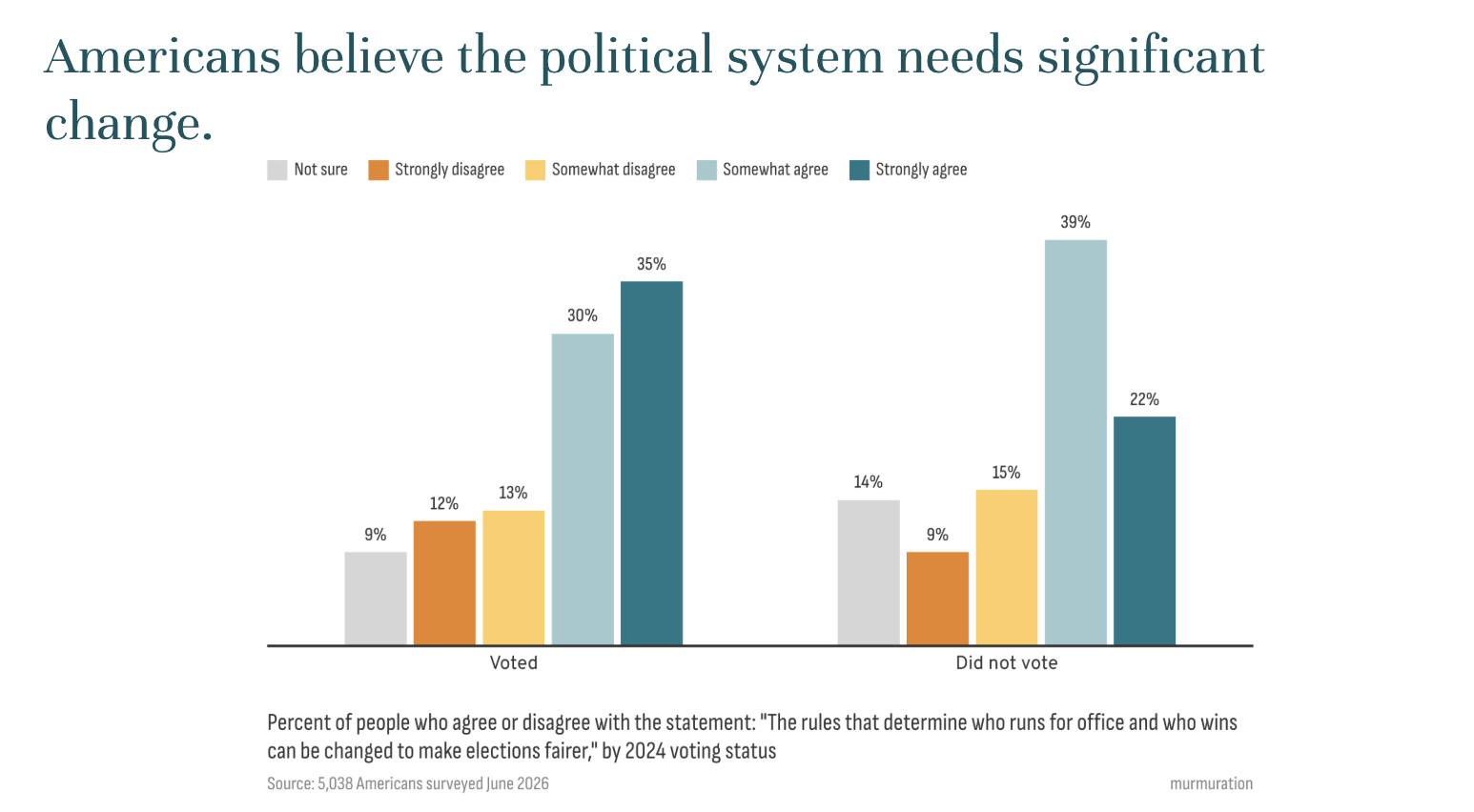
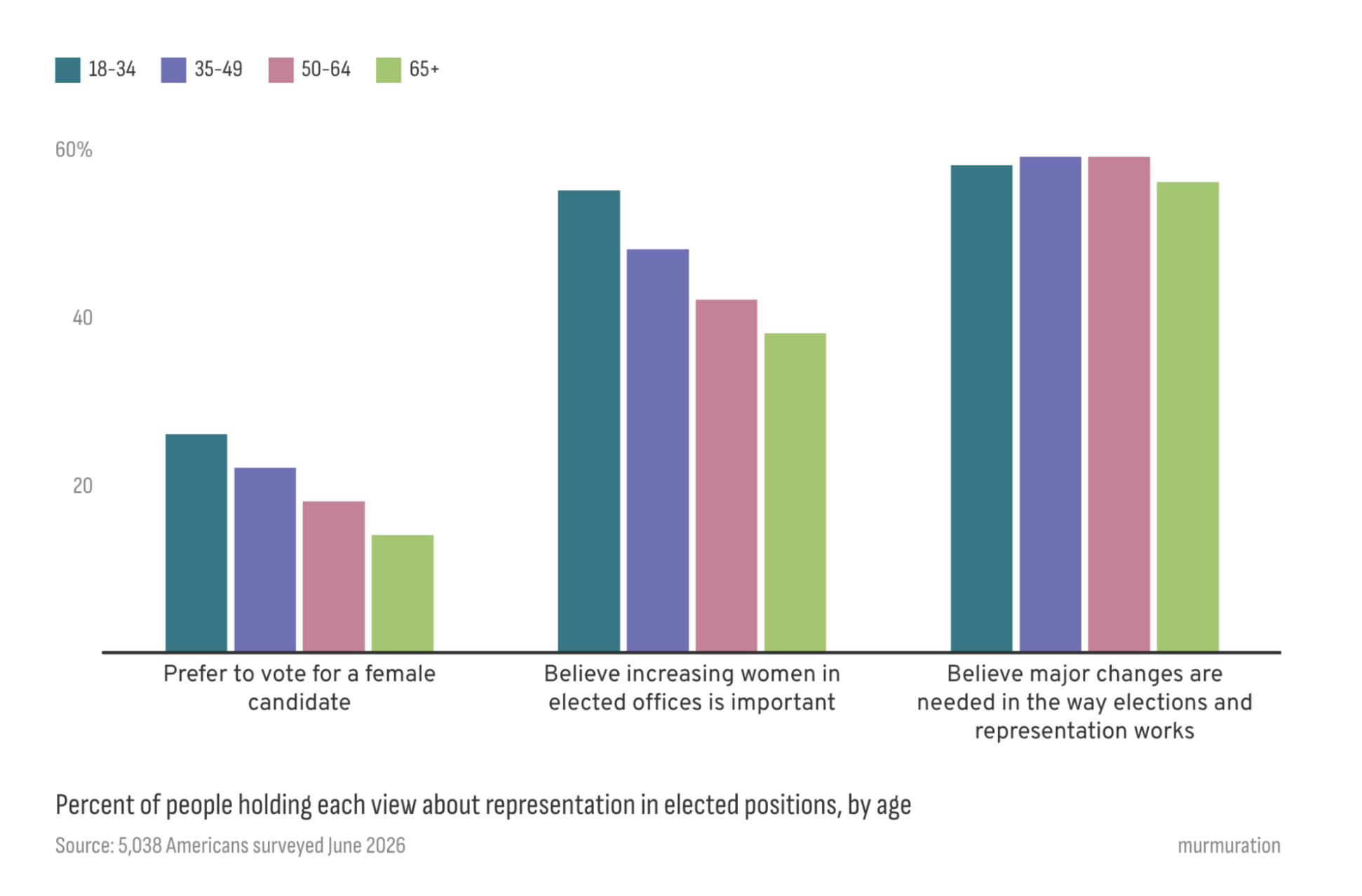
Nearly six in ten say the country needs major changes to how elections and representation work. Only 8% think no changes are needed.
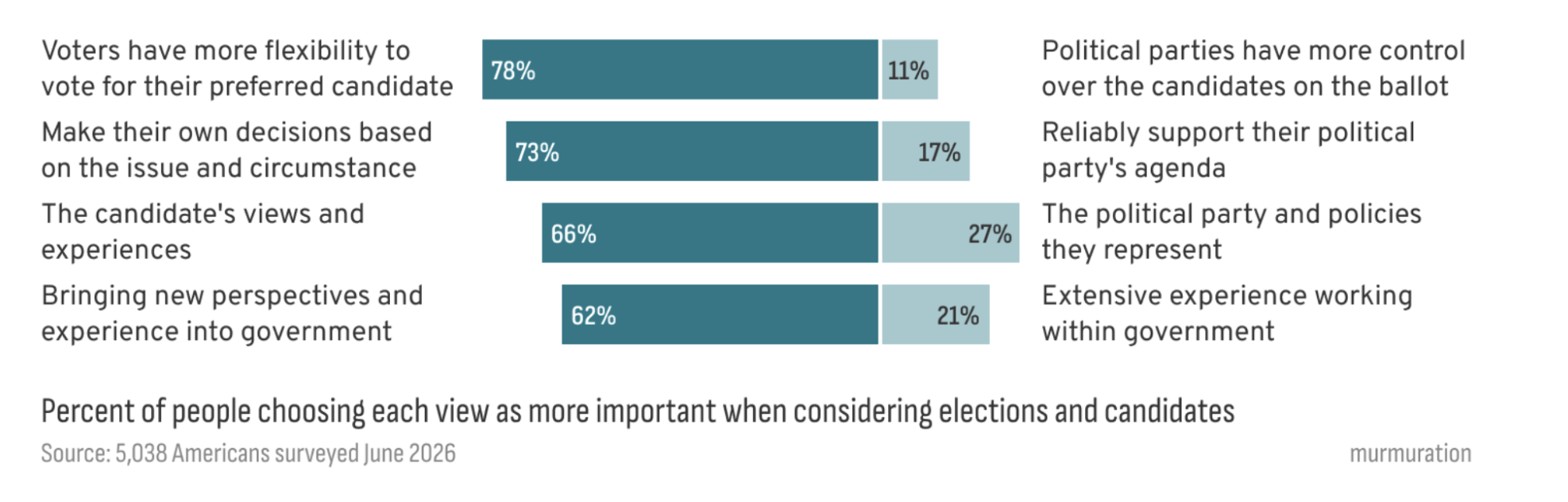
78% say it's more important for voters to have flexibility to support their preferred candidate than for parties to control who's on the ballot.
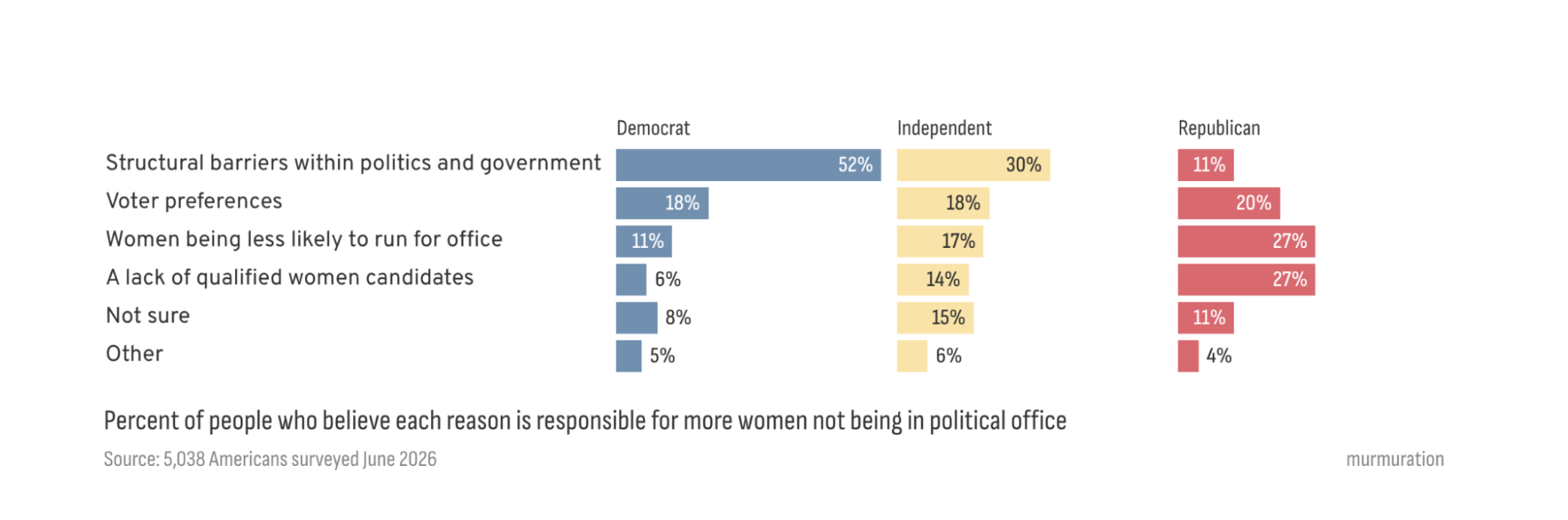
When asked why there aren't more women in office, the top answer was barriers within politics and government itself, not a shortage of qualified candidates or women's willingness to run.
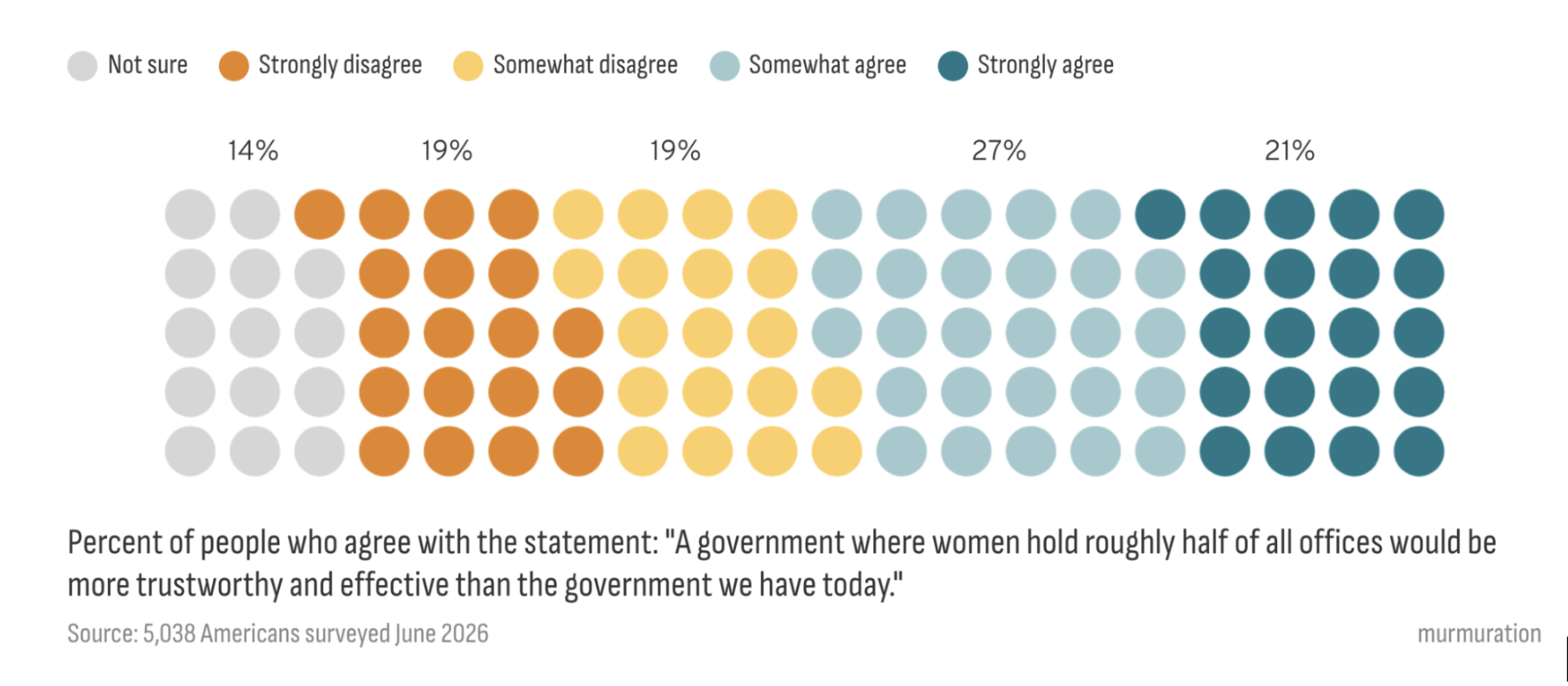
48% believe a government where women hold roughly half of elected offices would be more trustworthy and effective than the government we have today.
Adults under 35, especially young women, are the strongest supporters of increasing women's representation and of structural reforms to how elections work.
Lasting change happens when the people closest to their communities have the opportunity to help shape their future. Throughout history, women have been at the heart of building stronger communities through everyday acts of leadership, service, and civic participation. It's imperative that women have not just one, but many seats at the table, so that their experiences, perspectives, and needs are fully considered in the spirit of democratic representation.
Emma BloombergFounder & CEO, Murmuration
This survey reinforces a pattern we see consistently in our own research: the public increasingly names structural barriers, not candidate quality, as the reason women remain underrepresented. That is a significant shift in how Americans talk about this issue, and it is one our Gender Parity Index (GPI) has tracked for thirteen years through a different lens: outcomes, not opinions.
Where the GPI shows that women's representation has not kept pace with rising candidate numbers and campaign investment, this polling shows that Americans already sense why. They are naming the same structural ceiling in our research documents. That alignment between public perception and measurable outcomes is an opening for the work ahead.
The findings also reinforce something we have long argued: solutions that expand voter choice and reduce structural barriers, such as ranked choice voting and other election system design, are not just reform for reform's sake. They respond directly to what the public says it wants: more flexibility, more independent leadership, and elections designed to produce fairer outcomes.
Americans are not simply frustrated with politics. They are looking for a democracy that feels more representative, more responsive, and more reflective of the people it serves. Within that search, women's representation is a practical test case: a clear, measurable way to see whether our institutions are actually designed to produce fair outcomes.
For RepresentWomen, this data reinforces our focus. We are not just working to elect more women. We are working to design systems, from ranked choice voting to legislative modernization, that remove the structural barriers standing in the way, so that representation reflects the country it serves.