
This week I attended a remarkable Folger Theater production of my favorite Shakespeare play: Measure for Measure. The play can be fairly called a comedy, and I laughed aloud several times. But the director’s decision to set the play in a segregated city in the American South underscores its seriousness, as it grapples with inequality, the seduction of power, the nature of justice, and what we are ready to accept as truth.

Renea Brown is mesmerizing in her role as the heroine Isabella. On a path to pursuing her dream to be a nun, she is thrust into the world of powerful men when tapped to seek mercy for her brother, who faces capital punishment when the city’s interim leader Angelo decides to enforce the city’s laws against sex outside of marriage. While powerfully making her case, Isabella submits to “the male gaze” – Angelo requests a second meeting alone with her, and there proposes that she can save her brother only by having sex with him – trading her chastity for her brother’s life. When she threatens to go public with his lechery, he uses lines that resonate over the centuries, from the #MeToo movement to the Cornell 7 case.
“Who will believe thee, Isabel. My unsoiled name, the austereness of my life, my vouch against you, and my place in the state, will so your accusation o’erweigh that you shall stifle in your own report and smell of calumny….. Say what you can, my false o’erweighs your true.”
Shakespeare keeps after this theme of who you can believe when the Duke, who has returned in disguise, finds out about Angelo’s villainy. He sets up a chance for Isabella to make a public witness where he first takes Angelo’s side, knowing that the public would not believe her without further evidence that he then engineers – following which, in a last ironic twist, from his own position of power makes Isabella his wife.
“My false o’erweighs your true.” This is the fundamental reality that we must address to have true equality across sexes – and that we have yet to achieve.
Among this week’s stories is a deeply disturbing New York Times profile of women in the Arizona legislature who are particular targets of hate and threats of violence. Outside of politics, the great Coco Gauff pulled out of a major tennis tournament after an explosion of racist, sexist attacks that drew the condemnation of the United Nations’ human rights office; she had fairly asked for a rule enforcement that US Open champion Alexander Zverev had asked for without controversy in the same tournament.
We have so much work to do. I feel fortunate to be doing that work with so many of you.
Milestones: Second National Women's Rights Convention (1851); Margaret Sanger opens the United States' 1st birth control clinic in Brooklyn, New York (1916); and Dr. Frances L. Willoughby is the first woman doctor in the regular U.S. Navy (1948).
Birthdays: Charlotte Clymer, writer & advocate; Rachel Hutchinson, research analyst at FairVote; Ann Petry, 1st African American woman to self over 1 million copies of a novel, Gina McGuire, author; Mary Hays McCauley, “Molly Pitcher” of the Battle of Monmouth (1778), legendary water-carrying heroine of the American Revolution; Edith Sampson, lawyer, first Black American to be appointed as a UN delegate, first to be elected U.S. circuit judge; Lillian Gish, consummate actress, from one-reelers like “An Unseen Enemy” (1912) to “The Whales of August” (1987), wrote Lillian Gish, the Movies, Mr. Griffith, and Me (1969), Kay Ivey, Governor of AL; Jennifer Pierotti Lim, co-founder of Republican Women for Progress; Edith Wilson, former First Lady; Victoria Spivey, record producer, blues singer in 1920s, played a featured role in “Hallelujah”(1920), which had an all-black cast, Kristen Juras, Lt. Governor of MT; Marguerite Rawalt, lawyer, president of the National Federation of Business and Professional Women (1954-56), supporter of the ERA and entire feminist agenda, particularly including the word “sex” in Title VII of Civil Rights Act of 1964; Cheri Bustos, former U.S. Rep; Mary Hennessey; Mae C. Jemison, 1st Black woman to travel in space; Vilma Socorro Martinez, lawyer, first female U.S. Ambassador to Argentina (2009), civil rights crusader, one of first women on the board of the Mexican American Legal Defense and Education Fund; Letitia James, New York Attorney General; Claudia Marconi, former Running Start Fellow; Terry McMillan, author; Brittney Griner, basketball player who was detained in Russia
Women Elected Leaders in the Crosshairs
Steven Hill has a sobering commentary on the Democracy SoS Substack. Please read the whole piece, here’s an excerpt:
A study by the Brennan Center found that women holding state and local office in the US were three to four times as likely as men to experience gender-based abuse; and women state legislators were nearly four times as likely as men to experience abuse of a sexual nature. Moreover, women as well as people of color legislators reported experiencing more severe and threatening forms of abuse than their male or white respondents.
In interviews, one female state legislator related her experience of strangers “identifying my address or talking about my daughter or my mom or, you know, making overt rape or death threats. . . . My husband just showed me a thread on Reddit yesterday about people talking about — men — what they would do to me. And we women just sort of have to compartmentalize it.”...
Not surprisingly, women in office, and especially women of color, report having to take extra time and adopt special tactics to stay safe. Women state legislators are nearly twice as likely as men to change their travel routes because of abuse concerns, and more than six times as likely as men to avoid traveling alone. Fifty-five percent of women of color legislators said they avoid traveling alone. And nearly half of women officeholders said they were less willing to run for reelection or higher office because of the shocking levels of threats and abuse.
This is serious, Taliban-like stuff. Another study found that female mayors are more likely than men to experience physical violence, harassment and psychological abuse, and those who suffered physical violence were more likely to have considered ending their political careers. A separate study by the same researchers concluded that women state senators with higher levels of power (party or committee leaders) were more likely than other women to experience psychological abuse and sexualized abuse and violence; Democratic women state senators faced more sexualized abuse and violence than Republican women. Another study found that, among congressional candidates, women of color were most likely to experience sexist, racist and violent abuse online…
The IPU report shows a shocking list of harmful and dangerous behaviors directed at female parliamentarians, stretching out along a malicious continuum of abuse: 66% were subject to humiliating sexual or sexist remarks; 42% had humiliating or sexually charged images of themselves spread through digital media; 44% were subjected to threats of death, rape, beatings or abduction; 33% were the victims of harassment in the form of insistent and uninvited behavior or verbal contact that some of the targets found frightening; 26% were subjected to one or more acts of physical violence, and 22% were subjected to one or more acts of sexual violence.
That’s shocking: over one fifth of female legislators were subjected to sexual violence. How can a woman legislator focus on doing her job when she is immersed in such a hostile work environment? And when she is hearing constant stories from her female colleagues of their own abuse and mistreatment? The fact that they continue in the face of this persistent male bellicosity and posturing shows an astounding amount of courage..
“America’s Elected Officials are Living in Fear”
The New York Times released companion pieces this week about rising harassment against elected leaders. In “America’s Elected Officials Are Living in Fear,” a “Times investigation has found that violent threats have become a new normal among public officials, reshaped private lives, cost millions in security and pushed people out of office.” The piece is long, but incredibly important. It includes:
Women are often more aggressively targeted than men, and harder to recruit, said Greta Neubauer, the Democratic minority leader in the Wisconsin State Assembly. Mothers are more apt to avoid the risk to themselves and their families, she said.
If potential recruits don’t bring up fears of violence on their own, Ms. Neubauer does. “There is an amount of risk that you and your family are going to need to accept if you choose to do this,” she regularly says to potential candidates. “And we want to make sure that you are fully aware of that in advance.”
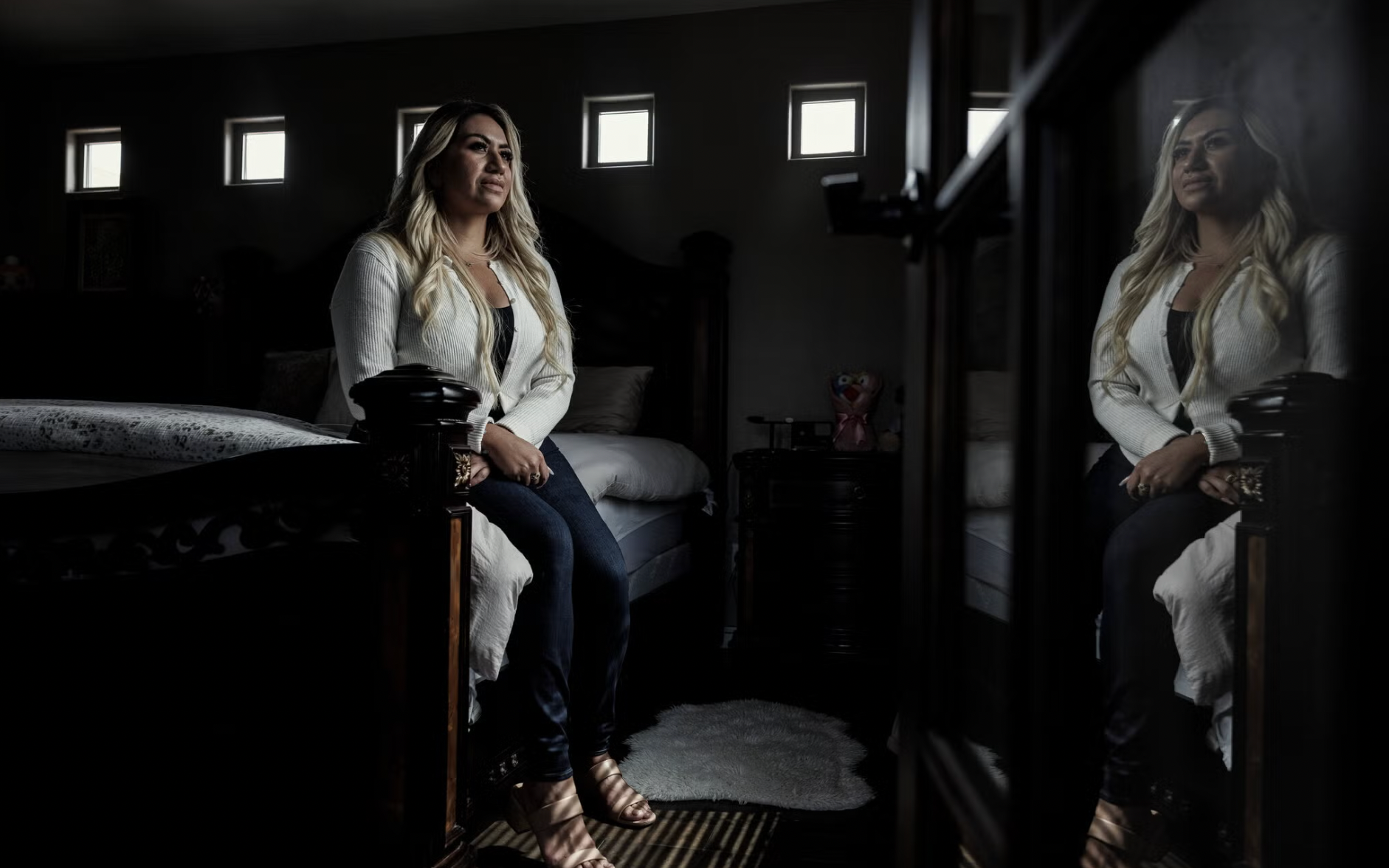
Along with that investigation, the Times tells the stories of two women state legislators in Arizona, Alma Hernandez and Analise Ortiz. Here’s an excerpt that includes one recommended policy: allowing candidates to use campaign funds for security:
Alma Hernandez’s home used to feel like her sanctuary. Now it feels like a fortress. In recent years she has installed cameras, alarms and a lock that opens with her fingerprint. She put iron bars on her windows and a blinding floodlight on her front porch. She cut down two trees in her yard after the police told her they could aid an intruder, and her brother moved in to protect her when the death threats intensified.
Ms. Hernandez, an Arizona state representative since 2019, did not know she was signing up for a dangerous job. But these days, serving in public office increasingly means looking over your shoulder.
“Politicians are no longer treated like we’re human,” she said. Ms. Hernandez, a fourth-term Democratic lawmaker who is Mexican American and Jewish, has received threats from the far left and the far right. They have come in response to her outspoken support for Israel, her championing of vaccines and her first campaign, which drew attention from David Duke, a former leader of the Ku Klux Klan…
Last year, Arizona’s secretary of state, Adrian Fontes, a Democrat, allowed candidates for office to use campaign cash to pay for security, citing the dangerous political environment. That decision helped Analise Ortiz, a Democratic state senator. Last year, her online posts alerting residents that immigration agents were near a school attracted a string of sinister threats, including several that said she would be hanged.
“Walk around with security cause I promise you three months,” one person wrote. Another said Ms. Ortiz’s “car and home and family are easy to find.”
Ms. Ortiz made a list of safe places and lived in undisclosed locations for two weeks as the threats rolled in, she said. “It’s remarkable that in the United States of America in 2026, as a state senator, I had to fear for my life,” said Ms. Ortiz, whose district is west of Phoenix.
When she returned home, Ms. Ortiz, one of the statehouse’s leading progressives, installed a camera system and petitioned a court to conceal her address. She also bought a gun and trained to use it. “It’s horrible we have to think that way,” Ms. Ortiz said. “But ultimately, my home and loved ones need to be protected.”
Ms. Ortiz and Ms. Hernandez represent opposing factions of Arizona’s Democratic Party, but they agree that violent rhetoric has reshaped both of their lives. “What she experienced and what I experienced are symptoms of the same problem,” Ms. Ortiz said.
Congresswoman Ilhan Omar Targeted by Dept of Justice as Election Looms
Steven Hill and the Times stories focus on political threats from private individuals. This week brings the prospect of another, even more disturbing, threat against women leaders: the government itself. Here’s more from detailed coverage in The 19th.
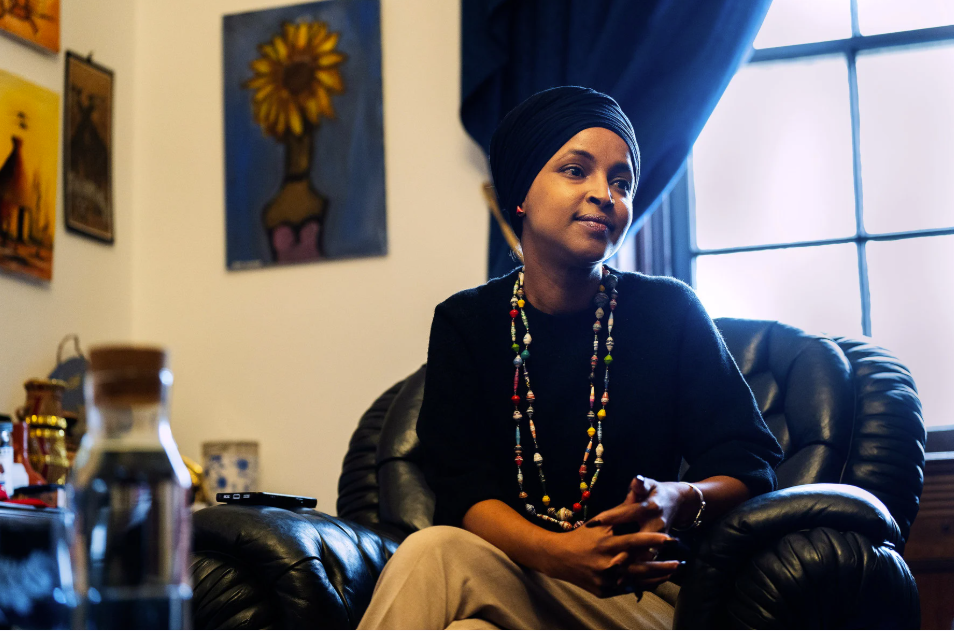
Federal agents on Monday searched the Washington-area home of U.S. Rep. Ilhan Omar, a Democrat from Minnesota and member of the “Squad” who has been a frequent critic — and target — of Republican President Donald Trump. The Department of Justice confirmed to news organizations that the search, which was authorized by a judge, was related to an investigation by the Department of Homeland Security (DHS).
Omar was born in Somalia, and her family fled a civil war there when she was a child. She spent time in a Kenyan refugee camp before immigrating to the United States, where she became a citizen at age 17…
“I’m ok,” Omar wrote on social media after the search. “Make no mistake: this is an attempt to target political enemies and weaponize federal law enforcement. For ten years, Trump has targeted me with baseless lies and smear campaigns. This is just the latest escalation in his campaign of political intimidation.”
“I will not be silenced,” she added.,.
Trump has often directed his ire at women, particularly Black women. The Trump administration investigated New York Attorney General Letitia James after she opened a civil fraud investigation into the president. Fani Willis, the district attorney in Fulton County, Georgia, has also been the subject of an investigation after her probe into potential 2020 election interference on behalf of the president.
Trump’s attempt to fire Federal Reserve Board member Lisa Cook last year was blocked by the Supreme Court. He subsequently created a three-member committee to investigate whether Cook engaged in mortgage fraud. James, Willis and Cook are all Black.
Cities led by Black women, like Los Angeles and the District of Columbia, were among the first targets of Trump’s federal power grab as he moved to militarize law enforcement in liberal-leaning areas…
Omar’s home was searched 22 days before the November 3 midterm elections, when she and her 434 peers in the House will face reelection. Though there are no hard-and-fast rules about the Justice Department taking actions related to investigations as elections approach, the law enforcement agency has historically shied away from making public moves regarding candidates close to elections to avoid appearing to help or hinder their chances.
The 2016 presidential election was thrust into a tailspin in its final days when then-FBI Director James Comey said just 11 days before Election Day that the agency had revived its probe into whether Democratic nominee Hillary Clinton had improperly sent official State Department communications from her personal email account. Comey had said in July that the FBI’s investigation had concluded, finding that Clinton had been “extremely careless” but had not acted with criminal intent.
Trump fired Comey upon taking office. His administration said Comey had violated longstanding principles related to investigating political candidates near election dates.
Women May Make History on November 3, Yet Results Could Be Contested
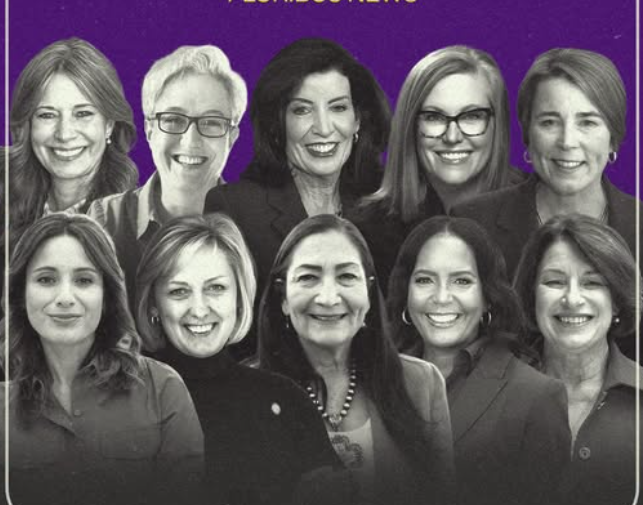
The RepresentWomen team has been tracking this November’s elections closely for what they could mean for women’s representation, and for lessons about the impact of different rules, structures and intentional efforts to recruit, train, and support women candidates. I’ve shared in recent weeks invaluable analysis from the Center for American Women and Politics and wanted to share our own toplines of what is looking possible for women in the U.S. Senate and the centrally important office of governor.
The U.S. Senate: For all the national attention on major U.S. Senate races across the country, women’s representation a year from now may be lower than the 27 seats they told today. This November, only three competitive races involve a woman facing off against men — with their results determining whether the number of women drops to 26 or rises to as much as 29.
On the Republican side, Maine’s Susan Collins seeks re-election, while Iowa’s Ashley Hinson is in a tossup. On the Democratic side, Alaska’s Mary Peltola is taking on an incumbent. With two sitting U.S. Senators — Minnesota’s Amyu Klobuchar and Tennessee's Martha Blackburn — favored to win election for governor, their decisions for appointing their replacements next year will be key for women’s representation.
Governor: Our team lifts up the importance of the office of governor in our Gender Parity Index, as executive leadership greatly defines public perception of who wields power. With women governors in 14 states, the range of outcomes is rather stunning, as summarized in this Roll Call article.. Women’s representation increasing to at least 16 seats is a responsible projection, but with women making up 19 Democratic nominees alone, a Democratic tide could lead to as many as 20 women governors next year, while a string of close losses could mean as few as nine. Here’s a brief summary of the contests between men and women.
Among Republicans, Alaska is the only competitive race for a Republican woman facing men, with Bernadette Wilson needing to run an effective ranked choice voting campaign to win. Stacy Garrity is in a longshot race against Josh Shapiro in Pennsylvania, while in the four all-women contests, Republicans are favored to win two (in New Hampshire and Tennessee), lose one (in Minnesota) and have a chance in Oregon.
Last year, Democrats began with two women governors elected, and that number could soar in 2026. In addition to those four all-women contests where Democrats likely will win three, Democratic women are facing off against 15 Republican men to lead their states. They are strongly favored to win in two states (Massachusetts and New York); favored in five states (Arizona, Maine, Michigan, New Mexico, and Rhode Island); face a tossup in two states (Georgia and Ohio), are highly competitive in three states (Kansas, Texas, and Vermont); and face more uphill battles in three states (Idaho, Nebraska, and Oklahoma).
“Democrats Must Not Take their Opportunity to Win the Midterms for Granted”
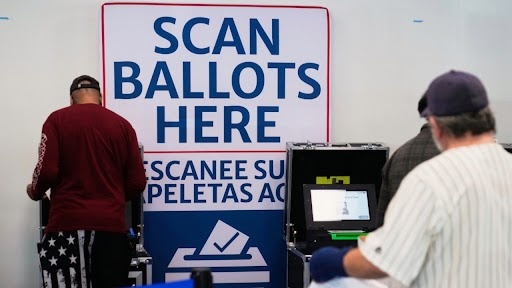
Yet, such a wave for women is not guaranteed. It will come down to voters — and readiness to accept the results as they are. I appreciated these insights from astute analyst and Democratic leader Donna Brazile from The Hill.
The Jan. 6, 2021 attack on the U.S. Capitol by Trump supporters trying to stop Congress from certifying Joe Biden’s legitimate victory remains a sobering reminder of the importance of respect for the will of the voters and a peaceful transfer of power…
Even outstanding candidates can lose elections. I’ve seen this happen many times to Democrats I supported, such as when Vice President Kamala Harris ran for president against Trump in 2024.
I know Harris would have made a great president, but like her, I accepted the judgment of American voters who returned Trump to office. Unless candidates run unopposed, all elections have to end with losers as well as winners. America has a long tradition of elections administered by Democratic and Republican state and local officials. Protecting that tradition is a responsibility that transcends party. It is what makes our country exceptional and the leader of the free world.
So, my final bit of advice is for Americans of every political persuasion: Believe in our democracy and in free and fair elections.
CAWP: Overview of Women on State and Federal Election Ballots
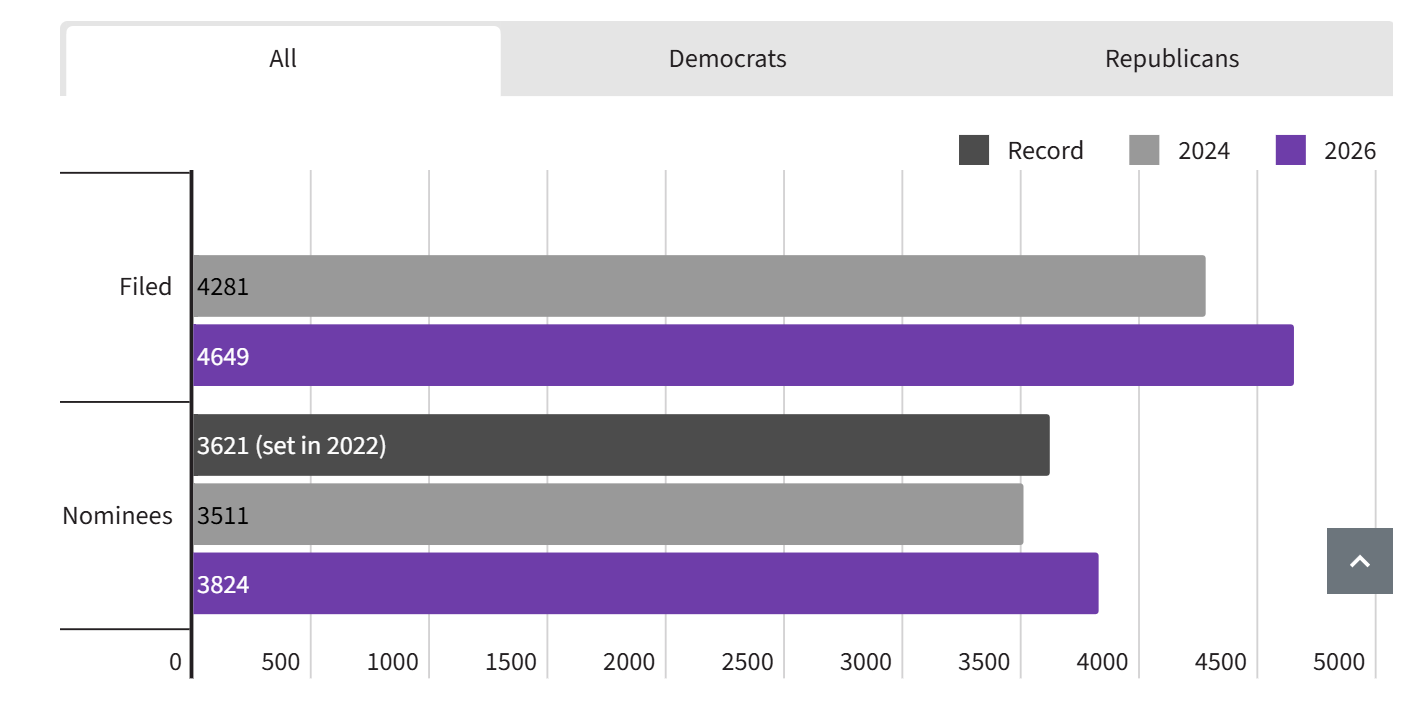
Our friends at the Center for American Women in Politics track women nominees closely. Here’s their summary from a recent release:
Here is the latest data on women nominees in 2026. Numbers marked with an asterisk* indicate new records. Find all data on our Women Candidates in 2026 page.
U.S. Senate
- 19 women are nominees for Senate. This is fewer than the record of 23, set in 2018, and the 21 who were nominees in 2024. Women are 26.8% of Senate nominees in 2026.
- 10 Democratic women are nominees for Senate. This is fewer than the record of 15 nominees, first set in 2018 and again in 2024. Women are 28.6% of Democratic Senate nominees in 2026.
- 9 Republican women are nominees for Senate. This matches the record of 9, set in 2020, and exceeds the 6 who were nominees in 2024. Women are 25% of Republican nominees in 2026.
U.S. House
- 271 women are nominees for House. This is fewer than the record of 298, set in 2020, but more than the 259 who were nominees in 2024. Women are 31.8% of nominees for House.
- 198 Democratic women are nominees for House. This is fewer than the record of 204, set in 2020, but more than the 191 who were nominees in 2024. Women are 45.5% of Democratic nominees for House.
- 73 Republican women are nominees for House. This is fewer than the record of 94, set in 2020, but more than the 68 who were nominees in 2024. Women are 17.6% of Republican nominees for House.
Governor
- 26* women are nominees for governor.This is more than the previous record of 25, set in 2022 when there were a similar number of gubernatorial contests. Women are 35.1% of gubernatorial nominees.
- 19* Democratic women are nominees for governor. This is more than the previous record of 16, set in 2022. Women are a majority of Democratic gubernatorial nominees, making up 52.8% of nominees
- 7 Republican women are nominees for governor. This is fewer than the record of 9, set in 2022. Women are 18.4% of Republican gubernatorial nominees.
Statewide [Including Governor]
- 131 women are nominees for statewide executive offices, including governor. This is fewer than the record of 144, set in 2022.
- 89 Democratic women are nominees for statewide executive offices. This is fewer than the record of 90, set in 2022.
- 39 Republican women are nominees for statewide executive offices. This is fewer than the record of 52, set in 2022.
State Legislatures
- 3,794* women are nominees for state legislatures. This is more than the record of 3,621, set in 2022, and the 3,511 who were nominees in 2024.
- 2,571* Democratic women are nominees for state legislatures. This is more than the record of 2,402, set in 2018, and the 2,321 who were nominees in 2024.
- 1,197 Republican women are nominees for state legislatures. This is fewer than the record of 1,291, set in 2022, but more than the 1,167 who were nominees in 2024.
These numbers can potentially change before Election Day. To find the most up-to-date numbers, as well as additional data and analysis, visit Women Candidates in 2026 page.
Hannah Pingree: The Nation’s Youngest Woman House Speaker May Become Governor of Maine
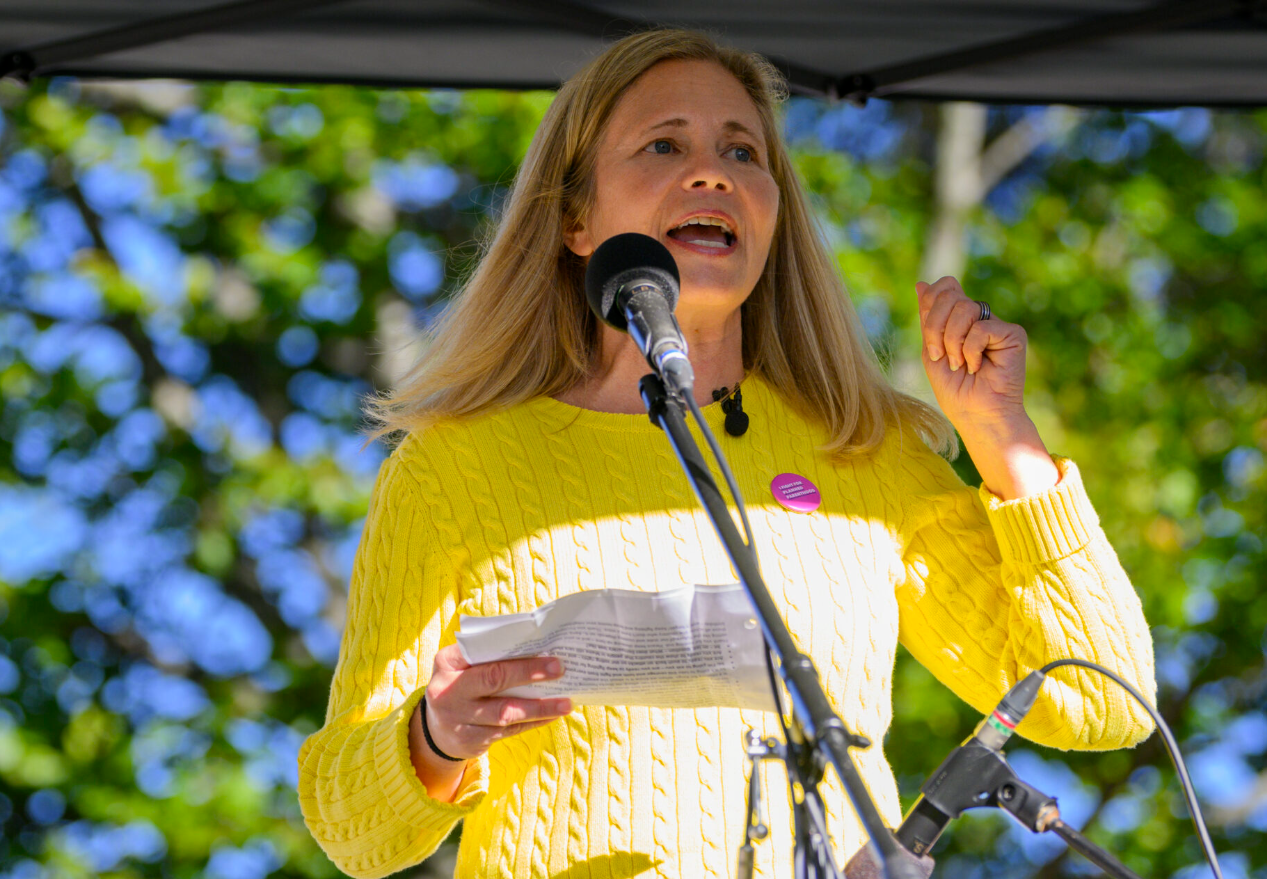
When only 31 years old, Hannah Pingree was elected to be speaker of the Maine House of Representatives. She’s now poised to be the state’s second-ever woman governor, following incumbent governor Janet Mills who emerged from the state’s first ranked choice voting primary among seven candidates in 2018.
Here’s an excerpt from a profile of her candidacy from WMTV News.
Hannah Pingree was the youngest woman in the country to serve as a state house speaker. Now, the Democrat seeks to become Maine's second female governor.
Pingree was in second place in the Democratic field at the end of primary night back in June before eventually beating front-runner Nirav Shah in the final round of the ensuing ranked-choice voting tabulation.
"I think ranked choice was a very positive process," Pingree said. "It ended up being a race where we talked about the issues. There were not a lot of negative attacks. And after the race was over, all four of my primary opponents have supported me. They've been helping me in my campaign."
Pingree is a former legislator. She served as the Speaker of the Maine House and was the director of Policy Innovation and the Future in the Mills administration, an office created by Gov. Janet Mills…. Pingree has been campaigning for more than a year, focusing on the issues.
"Day one I'm ready to roll up my sleeves and work with school districts all across the state of Maine to implement this," Pingree said talking about implementing the science of reading. "We also know that things like universal pre-K really help kids to be ready to learn when they get to kindergarten. There's much more we need to do."
On education, she wants to look at other parts of the country and see what's working and to implement it here. Another priority of Pingree's is housing. She wants to get every homeless veteran off the street in Maine and cut red tape so projects can get off the ground faster. She also wants to invest $100 a year in affordable housing.
No Black Woman Has Been Elected Governor – Keisha Lance Bottoms Could Change That
Source: Georgia Recorder
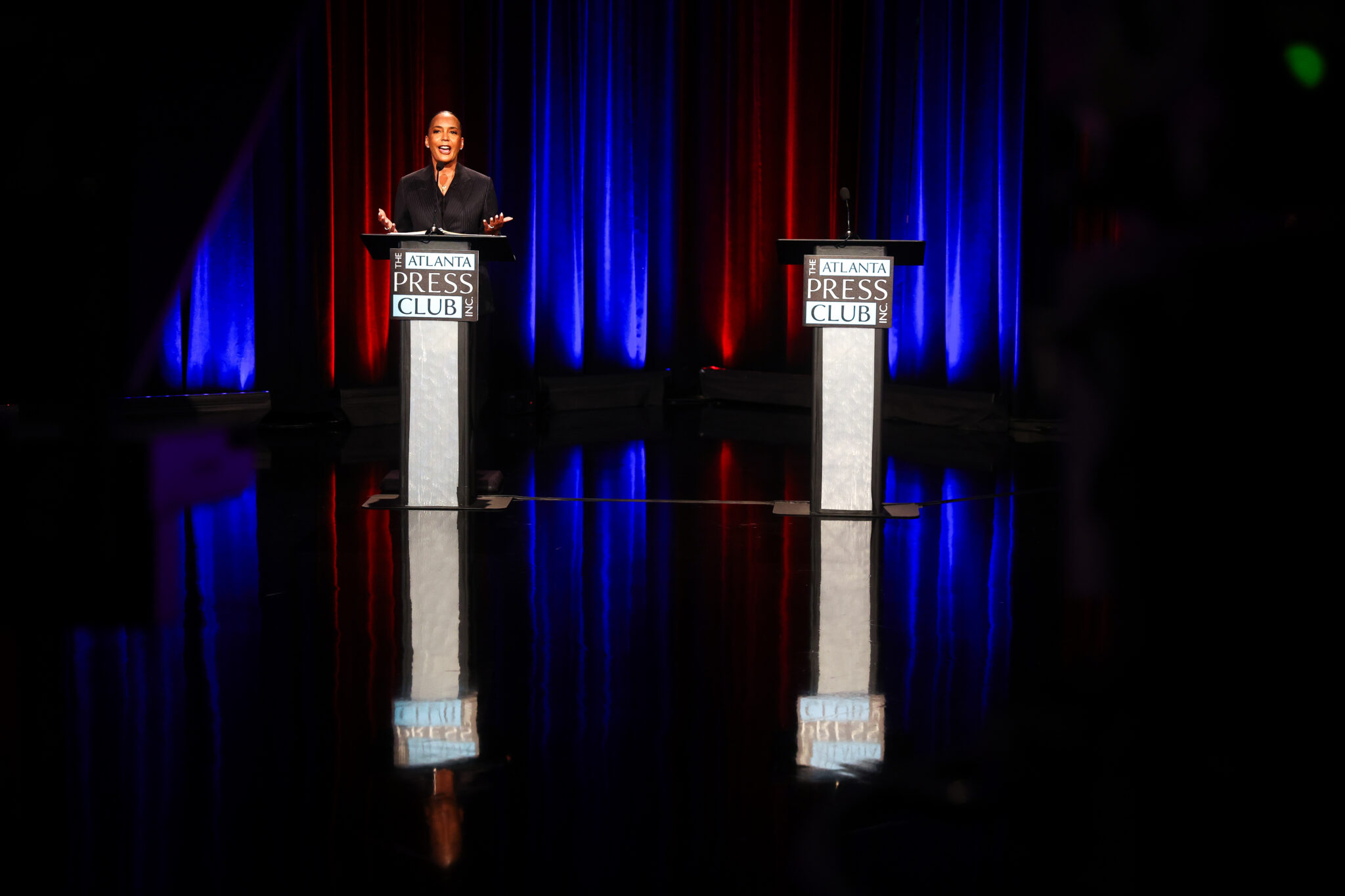
Just one day before early voting began in Georgia, Keisha Lance Bottoms, the Democratic nominee for the state’s governor, stood by herself on the debate stage after her opponent Rick Jackson declined to participate in the debate. If elected, Bottoms would become the first Black woman governor in U.S. history.
More from the Georgia Recorder.
Keisha Lance Bottoms, the Democratic nominee for governor, debated against an empty podium Monday night after GOP nominee Rick Jackson declined to participate in the Atlanta Press Club’s debates.
The Loudermilk-Young debate series, organized by Atlanta Press Club in partnership with Georgia Public Broadcasting, is a two-day event featuring statewide candidates on the ballot in the general election. Early voting for the Nov. 3 election starts Tuesday.
Jackson, a wealthy healthcare executive, instead spent the day flying around the state talking to reporters and supporters, with stops planned for Columbus, Macon and Savannah, and ended the day with a rally near Augusta.
Bottoms and Jackson appeared together on the same stage last week for a town hall-style debate that will likely give Georgia voters their only side-by-side look at the candidates competing to be the state’s next top leader.
Bottoms, a former mayor of Atlanta, used the half-hour forum Monday night to promote her platform, such as expanding Medicaid, fully funding pre-K and creating a fund for affordable and workforce housing. And, except for a few instances, she largely veered away from attacking her opponent, rarely gesturing to the empty podium as candidates often have in past debates when their opponents are absent.
During the debate, Bottoms had the opportunity to ask the podium a question she would have asked Jackson had he been there. She took the opportunity to discuss Georgia’s six-week abortion ban, which hasn’t been a big topic on the campaign trail so far. And she pointed to comments Jackson made over the summer, which were reported by the Atlanta Journal-Constitution, that a doctor would need to have evidence to prove an abortion was necessary to prevent facing legal consequences under the Georgia law. His campaign has disputed that as a mischaracterization.
“If he were here, I would ask, how do you prove that you have been raped in order to get an abortion?” Bottoms said at the debate. “He’s not here because he’s on his private jet flying around the state rather than having to answer to the people of Georgia about this irresponsible position.”
South Carolina Will See the State’s First All-Women Race For U.S. Senate
Source: AP News
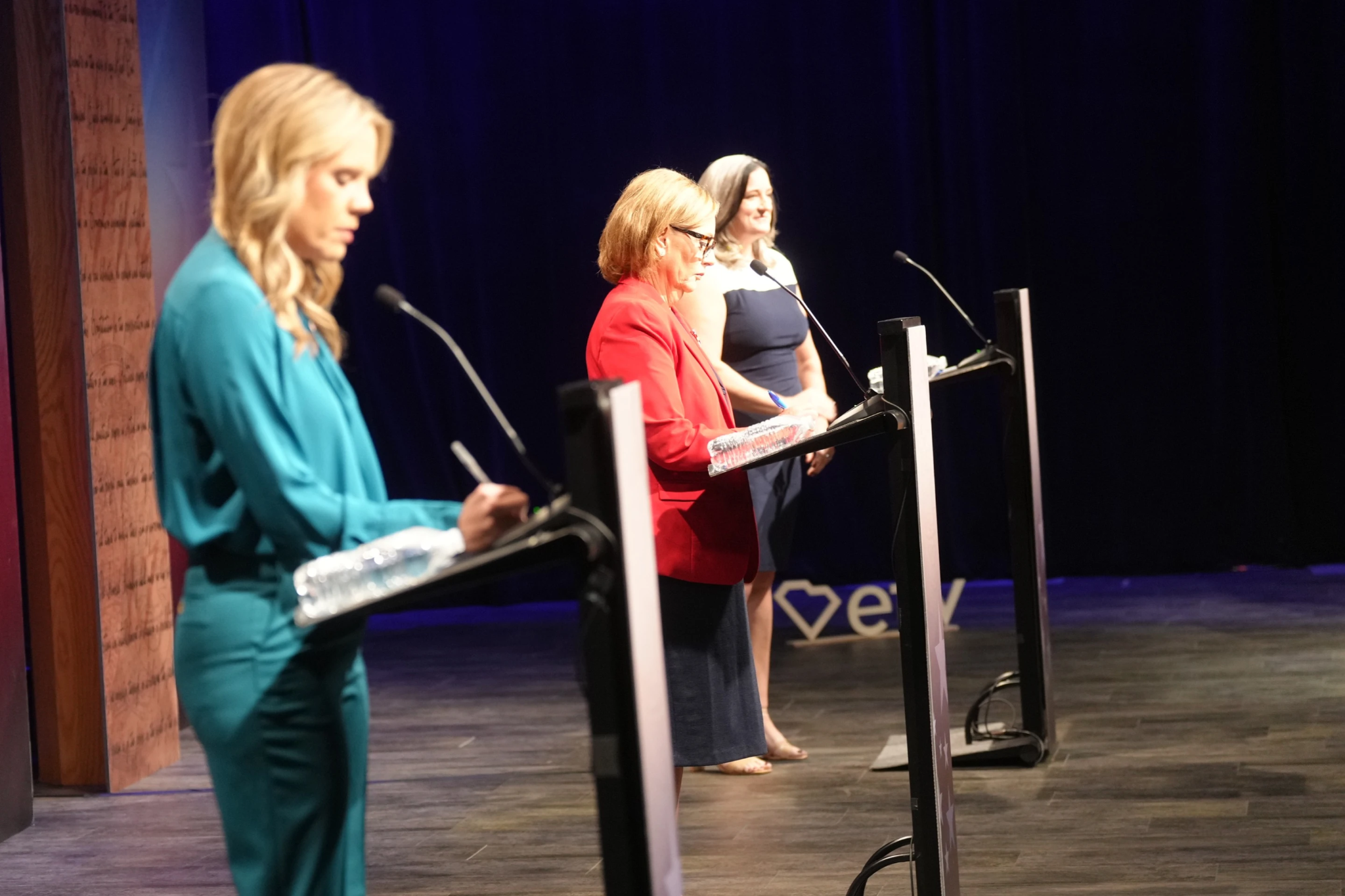
Early voting in South Carolina begins on Monday, Oct. 19, where for the first time voters will pick between three women to become the state’s newest Senator and the first woman to hold the position. Late last week, Republican Sen. Darline Graham, Democratic candidate and pediatrician Dr. Annie Andrews, and Libertarian candidate Kasie Whitener took to the debate stage, marking a historic moment for South Carolina.
The New York Times reports:
Dr. Andrews is running against Senator Darline Graham, a political novice facing skeptics within her own party, at a time when the political environment is rapidly deteriorating for Republicans. Democrats are tied or in the lead in Senate races in five reliably Republican states, according to new New York Times/Siena University polls. That puts victories in Kansas, Mississippi and South Carolina within the party’s sight lines, if at their outer reaches.
Dr. Andrews will emerge next month as either a symbol of a massive Democratic comeback, or a cautionary tale of the limits of progressive optimism. Two weeks ago, the Cook Political Report shifted the race from solidly Republican to likely Republican. Only two years ago, Mr. Trump carried South Carolina by more than 17 points.
…
Although Dr. Andrews’s campaign has out-raised and outspent Ms. Graham’s, the main super PAC for Democratic Senate candidates has not invested in the race. And Republicans have only just begun airing attack ads against Dr. Andrews. Some Democrats fear a reprise of 2020, when Jaime Harrison, a former state Democratic Party chair, mounted an energetic campaign against Senator Lindsey Graham, Ms. Graham’s brother who died in July, but finished 10 points behind him.
Dr. Andrews has been traversing the state for 18 months, promising to reverse President Trump’s policies that have caused prices to rise, with a particular emphasis on health costs and children’s health care. She has also softened her language on past positions that could alienate South Carolina’s conservative electorate, including transgender policies.
A fast-talking, denim-loving mother of three, she has pitched herself as an anti-Democratic Party Democrat, a pediatrician with a work ethic who loves her job but is willing to set it aside to help her state. If elected, she has vowed to leave the Senate after two terms.
In 2022, she ran for a House seat against Representative Nancy Mace and lost by more than 10 points.
Hillary Clinton and Kara Swisher Team Up for “High States” Podcast
Hillary Clinton. Source: New York Times
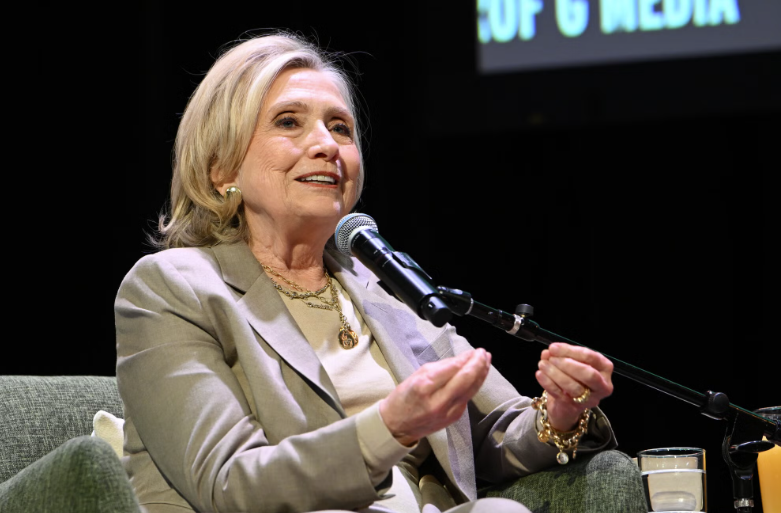
Former U.S. Senator, Secretary of State and Presidential candidate Hillary Clinton is coming to headphones near you. Here’s more from The New York Times:
Hillary Clinton has rarely been far from the spotlight since her 2016 presidential bid. She has written best-selling books, taught at Columbia University and even tried her hand on Broadway as a producer for the Tony Award-winning musical “Suffs.” Her next act? Podcaster.
With the midterm elections looming, Mrs. Clinton is preparing to make her voice heard on a new podcast series, called “High Stakes,” alongside the well-known technology journalist Kara Swisher. Starting Wednesday, Mrs. Clinton and Ms. Swisher will break down the race to control the House and the Senate in weekly episodes that run through mid-November.,,
The idea for the podcast came this spring at the sprawling home of former Atlantic owner David Bradley in Washington’s upscale Kalorama neighborhood. Ms. Swisher turned up to the soireé, which was being held for Mrs. Clinton, wearing a T-shirt and jeans and began peppering the former secretary of state with questions about a variety of topics — from the upcoming midterm elections to the continuing war in Ukraine.
Ms. Swisher said she thought Mrs. Clinton’s answers were concise and intelligible, and Ms. Swisher wondered why Mrs. Clinton had not taken another swing at podcasting after her solo interview show, “You and Me Both With Hillary Clinton,” ended in 2023.
The two got a test-run when Mrs. Clinton filled in for Ms. Swisher’s regular “Pivot” co-host, Scott Galloway, in August. Ms. Swisher wanted to give listeners the version of Mrs. Clinton she saw that evening, and persuaded her to team up.
“There’s a thing about the secretary, where it’s like, ‘Oh, if you knew her in the room, she’s so funny,’” Ms. Swisher said, adding, “We’re going to try to show you that room.”
Japan’s Prime Minister Takaichi’s Comments on Domestic Work Sparks Debate on Gender Roles
Source: The Washington Post
Next week, RepresentWomen will launch the Asia Brief as part of the Country Brief Series — an international research series starting in 2021. The percentage of women heads of government across the continent remains significantly low at just 4%, and Japan is the only country with a woman prime minister.
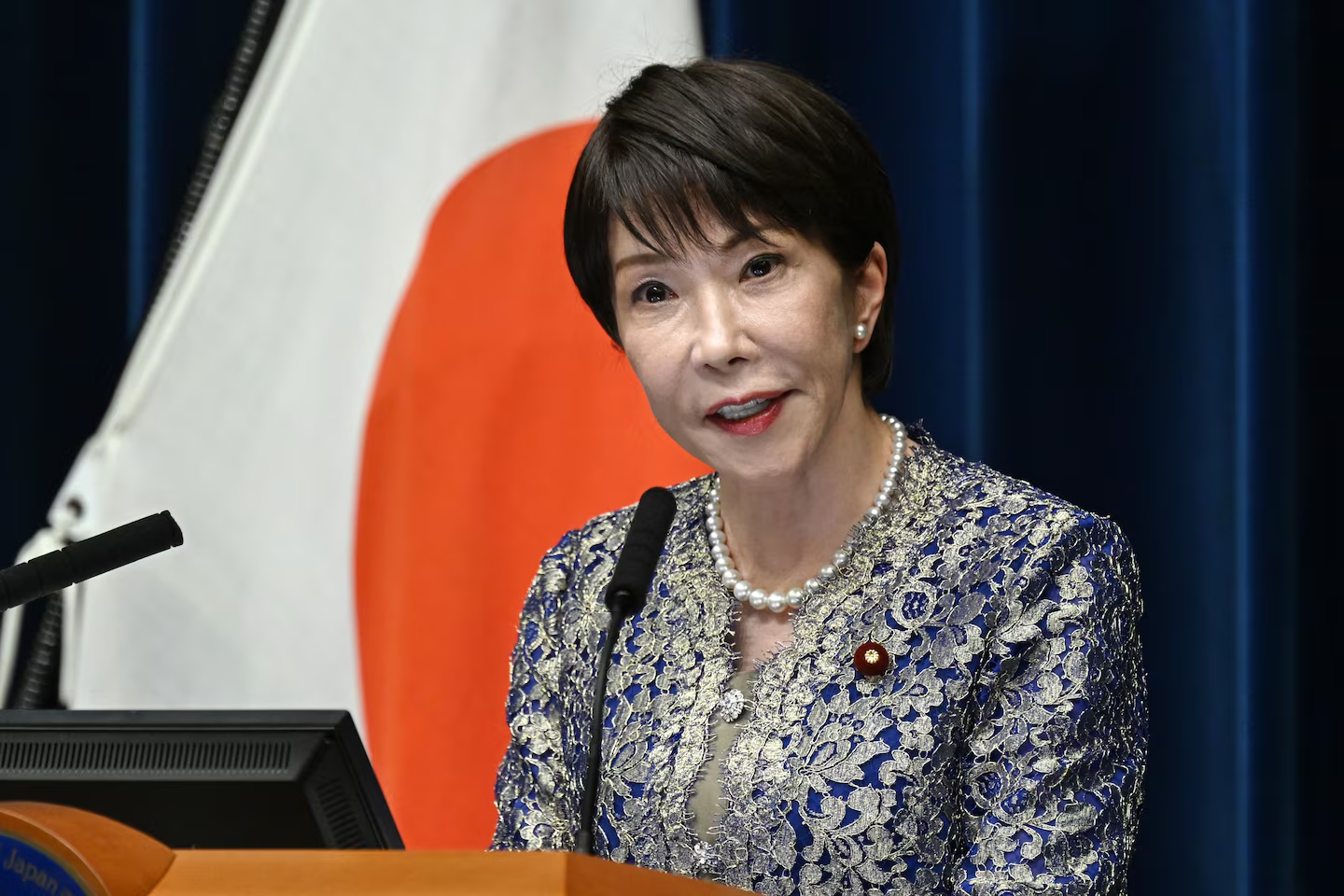
Prime Minister Sanae Takaichi took office last year. This week, she sparked a national debate after telling parliament that household chores and makeup add hours to her workday compared with her male predecessors. Critics call it a defense of outdated gender roles. Others point to a system built for men. Read more from The Washington Post:
Japan’s Prime Minister Sanae Takaichi ’s comments about the additional work she has to take on as a woman compared to her male predecessors have sparked a debate about gender roles in the country and have put her performance under the spotlight.
On Wednesday, Takaichi said she works longer hours than her male predecessors because she needs to fulfill requirements for women, such as house chores and applying makeup.
“In the morning, I take a bath, fix breakfast and do the dishes, then apply makeup,” Takaichi told a parliamentary session Wednesday. “Doing these things, I feel I’m spending three or four more hours than male prime ministers.”
It took a while for her aides to learn that she needs extra time to fix her makeup and be more presentable before going on camera, Takaichi said.
Her emphasis on makeup, bathing and house chores quickly backfired, because she was seen as promoting old-fashioned gender roles and excessive working hours that have long been considered problems in Japan.
In a country where gender roles remain rigid and long hours at work are the norm for men, working women are also burdened with house chores and child care. Women spend nearly five hours doing house chores daily, compared to about 40 minutes spent by an average male, the latest government figures show.
Comments on social media noted that many working women in Japan who raise children or take care of elderly parents face even heavier demands than Takaichi, saying that her comment is a matter of time management and her outdated view on gender equality.
P.S. This week my husband and I attended a lovely gala for Peace of Mind, a terrific organization dedicated to providing students with tools for finding, and building, peace. It was founded by the amazing Lynda Ryden, the mother of the young woman whom our son is marrying next month! I am not quite sure how to label our relationship after the wedding, but we are very glad to count Linda and her husband Jeremiah Cohen as dear friends already!

The sunset over the Potomac River – provided the perfect backdrop for the Peace of Mind Gala held this week in Washington, DC that featured student presentations, great swag, and Linda’s books, including one about her daughter Rosie’s brain!
.png)