Election Day in the United States is just a few days away, on November 3rd. I cast my ballots for federal, state and city offices this week, and it was a special feeling. It takes me back to being a child, surrounded by adults who cared about our democracy on frosty November mornings in those heady election days in the 1960s and 1970s in upstate New York.
I was drawn to social justice work during high school at Germantown Friends School, and eventually spent a lot of time with activists who rolled their eyes at elections. Not me. I knew that it mattered who represents us. That’s why at Swarthmore College, I ran for student government, rewrote the bylaws, and ultimately served as president.
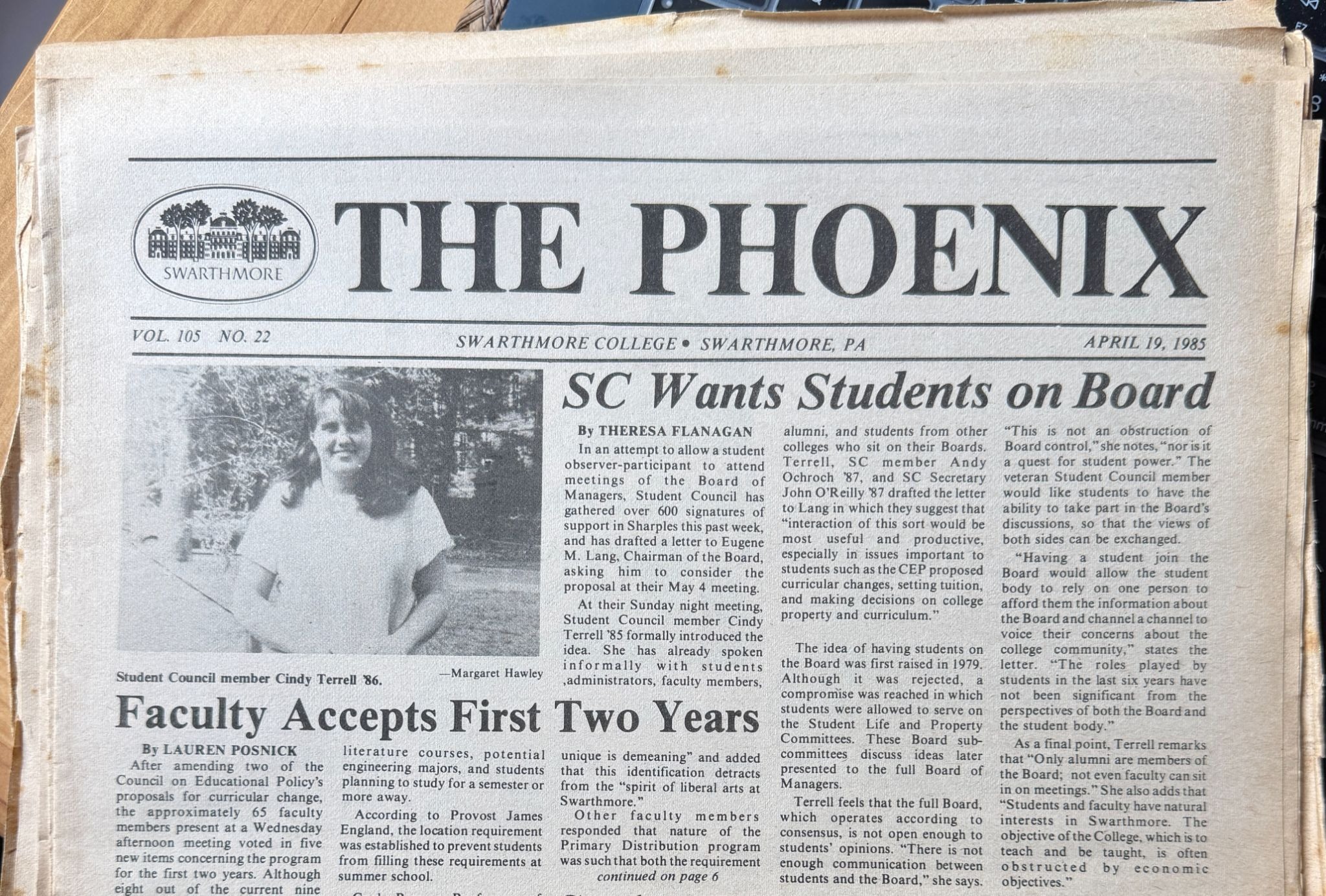
As an undergraduate, I worked on my first congressional campaign, a thrilling upset win in a House race. After graduation, I did field work for a string of candidates that led to managing statewide campaigns for the ERA and presidential candidates. There’s nothing quite like finding someone, or something, you believe in and helping build a team of volunteers to make the case and get out the vote.
It was a natural evolution for me to co-found FairVote with Rob Richie and others in 1992 and serve on its board for 28 years. When you care about elections, you want them to be meaningful for everyone. All of us should have that feeling of finding someone you believe in and helping them win — to have that greater faith in government because you see yourself in it. With our current rules, that’s not the case for too many people. We need electoral reform.
My commitment to a more reflective democracy then took me to found and build RepresentWomen. Faith in government is deepened when women are fully at the table - and so is its quality. I live in the suburbs of Maryland, where residents have never had a woman president, a woman governor, or a woman county executive. In sharing my support on social media for our terrific Takoma Park mayor Talisha Searcy, a thoughtful young Black Woman, it was important to lift up that replacing her with her 79-year-old male opponent with anger management issues is the truly last thing we need.
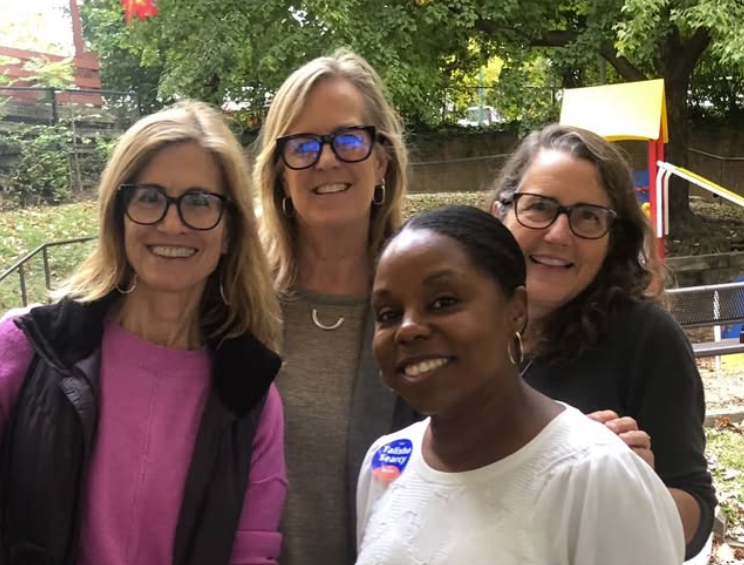
My friends and I support Takoma Park mayor Talisha Searcy’s bid for re-election.
Women have been made subordinate for millennia. And we still are around the world. Our democracy needs women — urgently. I am so proud of the work we’re doing and the partners we support in that vision.
This brings us back to elections. Not every woman running is better than the men they may be running against, but, collectively, the 2026 elections mark a huge opportunity to make history for women — and for all of us to make our voice heard. Please make a plan to vote!
On election night and beyond, please follow our 2026 Elections Tracker that will report results for women candidates across all 50 states, plus Washington, DC, in real time – more details below!
Milestones: First medical school for women, the New England Female Medical School, opens, in 1874 it merges with Boston University to become one of the world’s first co-ed medical schools; Price Waterhouse v. Hopkins decision prohibits sex-based stereotypes to be used in employment decisions (1989); and the Pregnancy Discrimination Act is approved (1978).
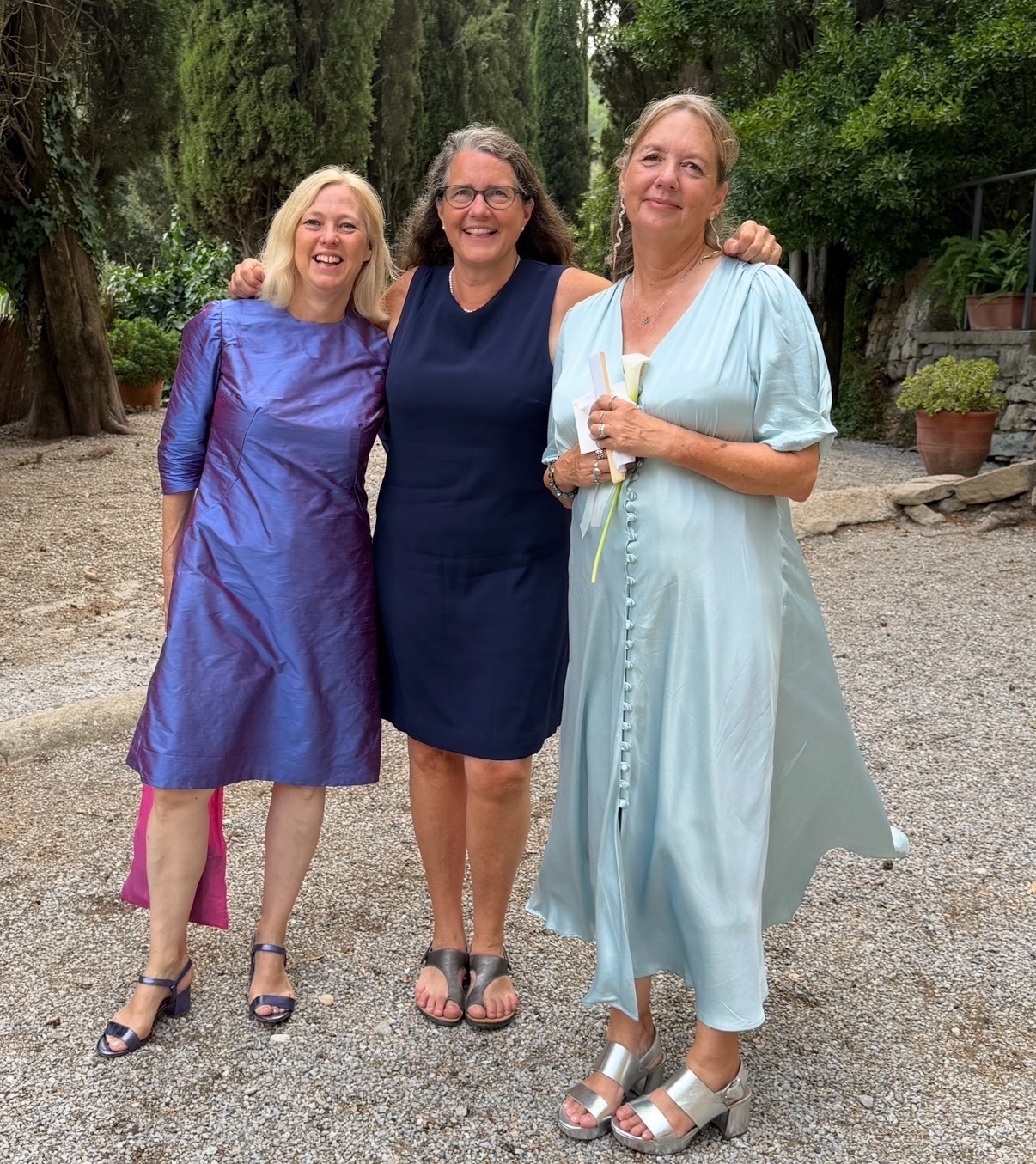
With Belinda Phillpot and her sister Melanie, RepresentWomen’s resident artist, this summer in the mountains above Barcelona
Birthdays: Belinda Phillpot, National Gallery of Art in London; Liz Popolo; Hillary Rodham Clinton, former U.S. Secretary of State; Jean Sinzdak, Associate Director of the Center for American Women in Politics; Sylvia Plath, American poet and novelist; Maxine Hong Kingston, award-winning author of The Woman Warrior, an autobiography about the Chinese-American female experience; Julia Roberts, actress; Teresa Vilmain, political consultant; Anna Dickinson, orator, early champion of the rights of women and Blacks, supported interracial marriage; Victoria Pelletier , former RepresentWomen staffer, Molly Bean Hayes daughter of RW champ Tim Hayes; Marcia Fudge, Secretary of Housing and Urban Development; Sheri Klein, Senior Director for Research & Strategy at RALLY; Louise Bates Ames, child psychologist; Judi Chamberlin, Psychiatric Survivors Movement activist, Martha Jefferson, former First Lady; Nastia Liukin, Olympic gold medalist in gymnastics; Irma S. Rombauer, American cookbook author; Ruth Gordon, actress; Juliette Gordon Low, founder of Girl Scouts of the USA; Louise Talma, composer, first American woman to receive the Sibelius Medal, taught music theory and musicianship at Hunter College for 51 years.
Women on the Ballot: RepresentWomen’s 50-State Scorecard
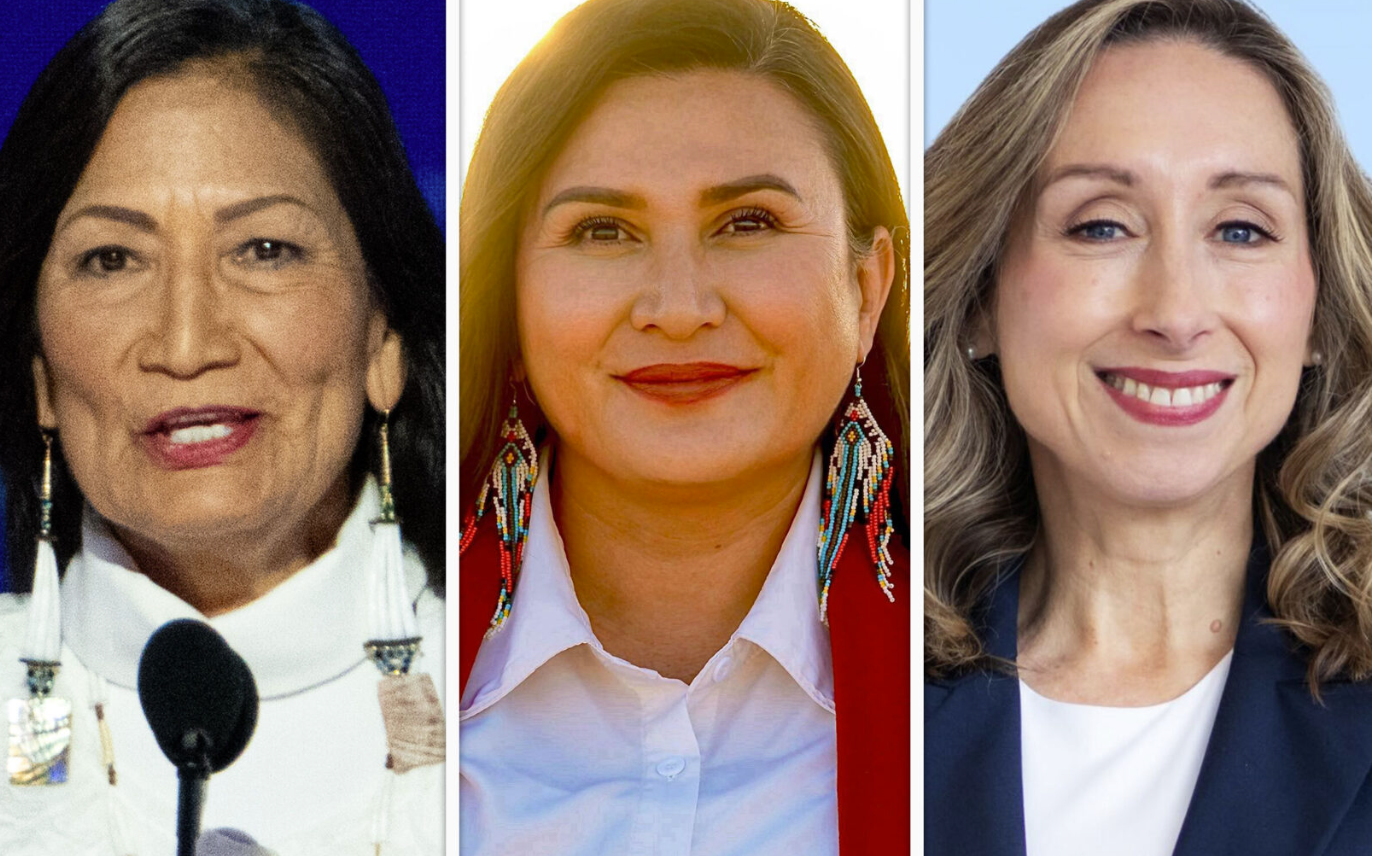
Candidates of working class backgrounds featured in Roll Call.
Careful readers of my Weekend Reading columns will know we’ve written and shared a slew of analyses and data on the U.S. elections this year and what they mean for women, including our rundowns of elections for governor, U.S. Senator, and attorney general, great data and analysis from the Center for American Women and Politics, and stories about women running for Congress and local office. In that spirit, this week’s reading concludes with a detailed review of Secretary of State races featuring women.
This could be a particularly remarkable year for one office in particular: governor. While it’s possible that women only advance modestly from their current 14 seats, there are scenarios where they win 20 seats, which would mean more than half of Democratic governors would be women — a nice complement to women already likely to surge into majority status among Democrats in state legislatures. We need women to flourish in both parties to secure and sustain parity, but this could be a huge step forward.
Our team has assembled a RepresentWomen 2026 Elections Scorecard that focuses on where women have chances to win major statewide offices. We will be updating it in real time as the results come in. Please check it out!
Congressional Candidate Cait Conley in New York: “Don’t Mansplain”
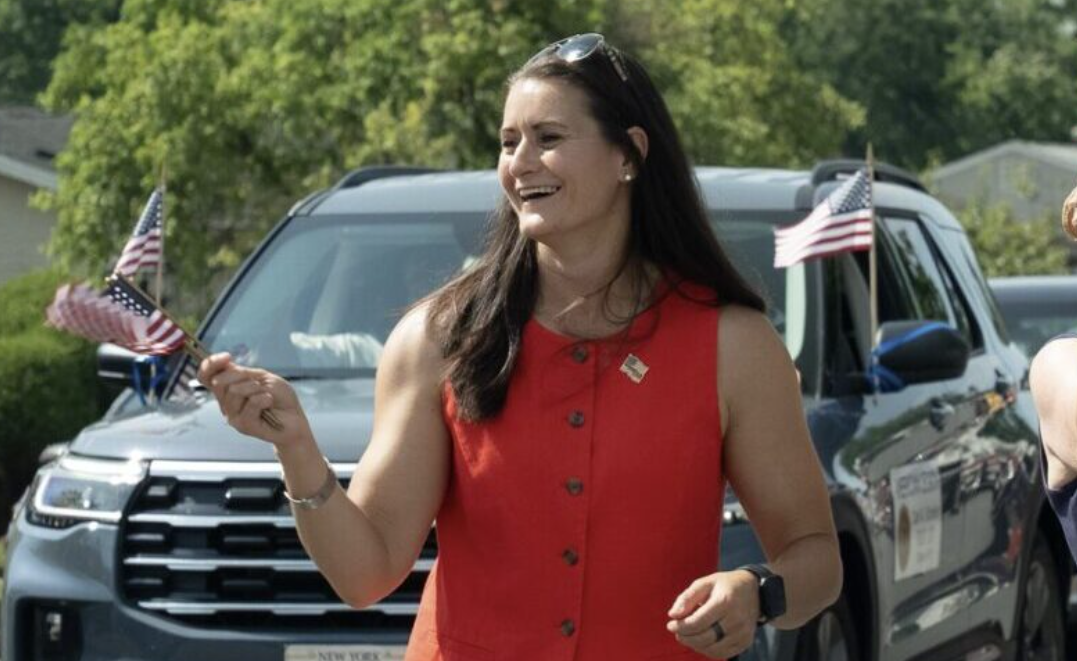
Cait Conley on the campaign trail. Source: Hudson Independent
In a debate moment closely echoing one I experienced this fall in the Takoma Park mayoral race, New York State congressional candidate (and past speaker at RepresentWomen’s Democracy Solutions Summit) Cait Conley has galvanized women in her race against Republican Mike Lawler, the leading opponent of ranked choice voting in Congress. Here’s coverage from The 19th:
Betsy Abrams, a 67-year-old executive assistant, showed up at a political rally held in a park on the banks of the Hudson River wearing a shirt that read, “Sit over there, I don’t need your mansplaining.” She was also holding a stack of yard signs for Cait Conley, the Democratic challenger in New York’s 17th Congressional District.
Abrams didn’t support Conley in the primary, but she’s been impressed with her on the campaign trail. Conley, who’s challenging Rep. Mike Lawler in one of the country’s most competitive races, also won Abrams over in an October 15 debate in a heated back-and-forth over a question about whether there should be a federal standard for consent.
Conley told Lawler: “I do not need you to mansplain to me what sexual assault and domestic violence against women is and the appropriate response. Don’t start. Sit over there.” As a survivor of abuse herself, Abrams said, “It hit a chord with me.”..;
Conley, who has served multiple tours of duty overseas as a military police officer, said rates of sexual assault and domestic violence are “unacceptable.”
“I think we do need to relook at how the law enforcement structure around violent crimes on campuses is, and make sure that every victim gets access to quality law enforcement and justice, regardless of ZIP code,” she told The 19th. “America is about freedom, equality, and justice for all, but that’s not what’s happening right now.”
A Massive Gender Gap in the Rhode Island Election for Governor
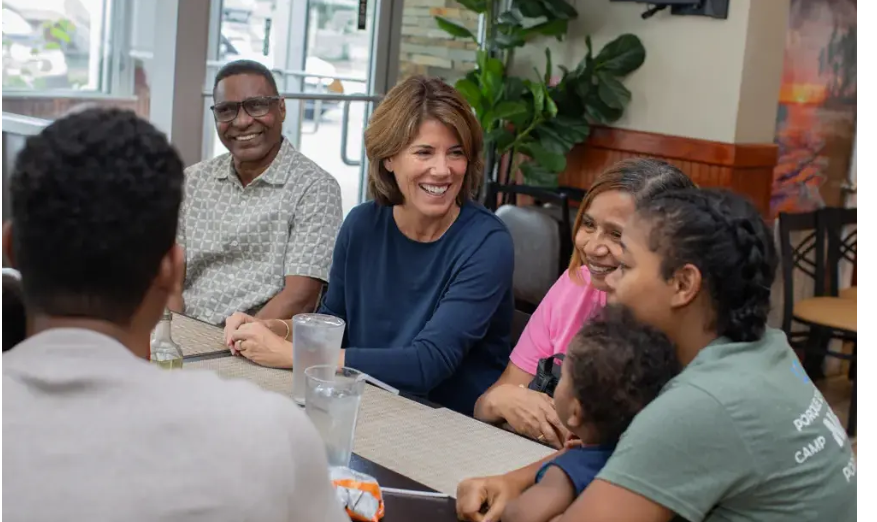
Helena Foulkes is leading in the Rhode Island gubernatorial election. Source: HelenaFoulkes.com
It’s been more than four decades since my former Feminist Majority boss Eleanor Smeal elevated the concept of the gender gap among voters — a trend that has become a truism. Women are more likely to support Democrats than men as a rule, but sometimes the gap rises to truly remarkable proportions. That jumped out to me when looking at polls in a surprising competitive race for governor in Rhode Island, where Democratic nominee Helena Foulkes faces two men, independent Ken Block and Republican Aaron Guckian.
In an Emerson College poll earlier this month, Foulkes was ahead overall with 44% to Block’s 35% and Guckian’s 10%. Among women, however, her margin over Block was 53% to 23% even as Block led her among men by 47% to 35%. In the election for Lt. Governor, women favored the Democratic nominee Sabina Mastos by 54% to 34% over Republican nominee John Loughlin, yet men backed Loughlin by 57% to 32%.
Here’s more from Helena Foulkes during her first campaign for governor in 2022:
I'm running for governor of Rhode Island because I'm tired of seeing career politicians make promises but then fail to deliver results. I have experience overseeing a large budget and being a trailblazer in a field where only 15% of CEOs are women. At CVS, I led teams that built the groundbreaking ExtraCare customer discount program and created digital programs to make prescription drugs more affordable. I was responsible for 200,000 employees and managed an $80B budget–I had to deliver for my team and the people I served every single day.
I also have experience working with government. I worked with the Obama administration to boost insurance enrollment after the passage of the Affordable Care Act, and later with the Raimondo administration to strengthen healthcare in Rhode Island. As governor, I will deliver for the people of Rhode Island and will be ready to make the hard decisions needed to make our state thrive.
Ranked Choice Voting on the Ballot and in Action
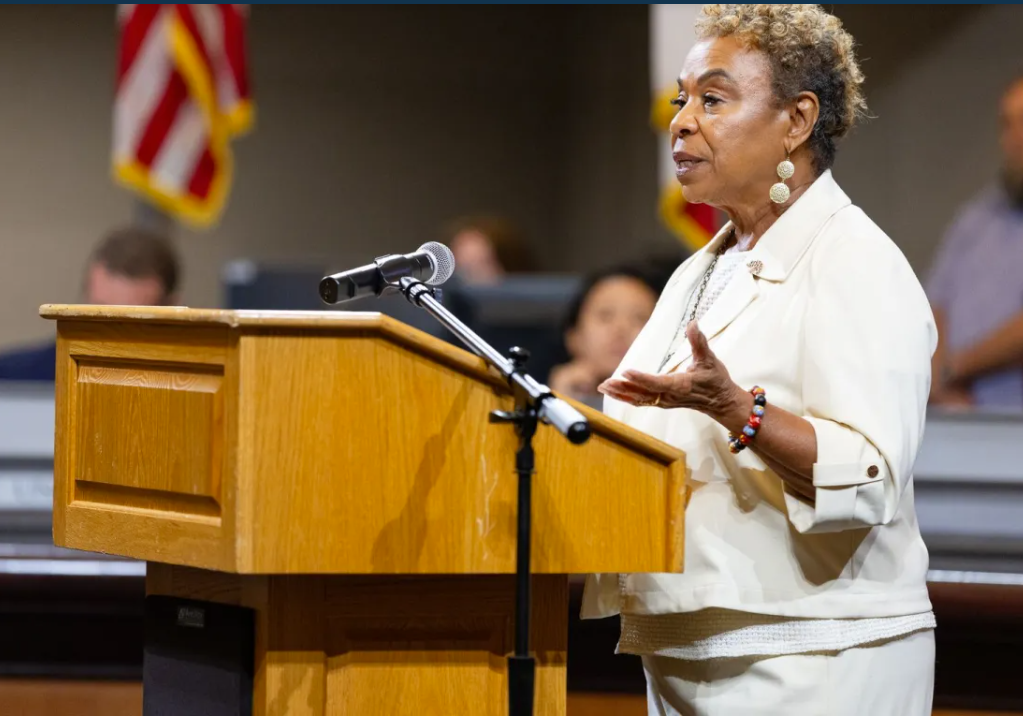
Oakland mayor Barbara Lee is running for re-election with ranked choice voting. Source: Oaklandside
RepresentWomen research shows ranked choice voting’s (RCV) value when it comes to the election of women — and fostering more collaborative campaigns. That’s why I was pleased to read two new releases from our friends at FairVote about RCV in the 2026 elections. The string of stories of collaborative campaigning is inspiring
Before turning to excerpts from the FairVote releases, I wanted to share a way you can help support RCV. Alaskan voters can defend their RCV system by opposing Ballot Measure 2, while three cities – Honolulu, Irvine (CA), and Longmont (CO) — are voting to adopt it. If you know voters in these jurisdictions, please ask them to support better elections.
What to know about ranked choice voting in the midterms: The midterm elections are a week away, and ranked choice voting (RCV) will get a national spotlight. RCV races in Alaska and Maine could determine control of Congress. There are also 14 cities and counties using RCV, and four RCV ballot measures Today’s article shares everything you need to know about ranked choice voting in the midterms…
Three cities – Honolulu; Irvine, CA; and Longmont, CO – will vote on whether to adopt ranked choice voting. Honolulu is home to 70% of Hawaii’s population; together, the three cities are home to 1.3 million people. RCV has won 34 of its last 35 ballot measures at the city level.
Here are FairVote’s articles on the ballot measures:
- Three cities to vote on ranked choice voting in November
- Who supports Honolulu Question 5?
- Who supports Irvine Measure D?
- Who supports Longmont Questions 3C and 3D?
For more information on these ballot measures, visit My Vote Counts Hawaii, Voter Choice Irvine, and Ranked Choice Voting for Longmont.
Ranked choice voting elections & collaborative campaigning in 2026: The midterm election is just a week away. In many places, that means a flood of attack ads and negative campaigning. But in cities, counties, and states that use ranked choice voting (RCV), many candidates are taking a different approach: asking their voters to rank a rival second.
Community and political organizations are also playing nicer in RCV cities. In choose-one elections, interest groups typically back one candidate and tear down their competitors. But with RCV, many unions, clubs, and newspapers are backing multiple candidates in the same race. Read on to see how RCV is encouraging a more collegial style of campaigning in places like the California Bay Area; Alaska; and Portland, OR.
Her Bold Move Profiles 15 Endorsed Candidates “Down Ballot”

Source: Her Bold Media
Unless you live in a city or state legislative district that is competitive, it’s easy to overlook these critically important offices, where literally thousands of women are on the ballot this year. I appreciate Her Bold Media for profiling 15 such candidates in this new Substack post. Here is the introduction, followed by excerpts from three of their profiles:
Her Bold Move is working to elect more women in states where abortion bans are being written by rooms full of men. We’re enormously proud to have endorsed 137 candidates up and down the ballot in 33 states this election cycle, and we wanted to highlight just a few of our phenomenal women candidates who are ON THE BALLOT this Election Day!
Amara Hunter is running for District Attorney of Forsyth County, North Carolina, challenging a nearly 20 year incumbent. Hunter has worked in the criminal justice system for more than 30 years, including as an Assistant District Attorney and an Assistant Public Defender in Forsyth County. Her mission is to reform the system from the inside—not just being tough on crime, but right on justice. If elected, Hunter will ensure that victims of domestic violence are listened to and that the root causes of domestic violence are addressed, including creating a task force on domestic violence.
Gloria Romero Roses, running for Florida State House, is committed to address Florida’s alarming maternal and infant mortality rates. As Board Chair of the Women’s Fund of Miami Dade, Romero Roses helped create the Alliance for Infant and Maternal Health with the mission of accelerating the measurable reduction of maternal and infant mortality. If elected, she will bring that work to the state house. Romero Roses had a competitive primary and is in for a competitive general to flip this open seat. Her opponent is a former state rep who touts his “proven conservative record” and connections with Trump and DeSantis. He has also indicated support for banning all abortions, even in cases of rape and incest.
Khara House is running for a second term on Flagstaff City Council after first being elected in 2022. An Arizona resident for nearly two decades, House is a committed community leader who has served on the city’s Commission on Diversity Awareness and Housing Commission and has been involved with organizations including the NAACP Flagstaff, Coconino County’s African Diaspora Advisory Council, and NAMI Flagstaff. She is a longtime advocate for housing, behavioral health, and community engagement. Leaders like House are needed at all levels of government to ensure that women’s needs are prioritized and met by their local communities.
Taiwan’s Gender Quota Law Profiled for Its Remarkable Impact

Su Chiao-hui campaigning for a mayoral post in Taiwan. Source: New York Times
The New York Times business section this week featured lessons from Taiwan’s gender quota law in local elections — and how it has unleashed a pipeline of candidates up and down Taiwan’s government. Here’s an excerpt:
The United States view of Taiwan is often through the lens of a possible conflict with China or its dominance in advanced chip manufacturing. But behind the silicon shield is a vibrant democracy of 23 million people that was the first in Asia to legalize same-sex marriage and had a voter turnout of over 70 percent in its 2024 presidential election.
It has also been running one of the world’s longest experiments in political affirmative action. For decades, Taiwan has used quotas and reserved seats to bring women into electoral politics. Today its political representation by women is among the highest in the world, and, as new research suggests, few of them were ultimately elected based on quotas.
Women hold 42 percent of Taiwan’s legislative seats, the highest share in Asia and comparable to Nordic countries. It elected its first female president in 2016 and re-elected her four years later. It has also elected two female vice presidents since 2000.
“People often argue that elections should simply be about choosing the best and most capable,” said Chang-Ling Huang, a professor at National Taiwan University who has studied gender politics for more than 20 years. Taiwan’s experience shows that “gender quotas are precisely what allow a society to truly elect the best and the most capable.”
“Otherwise,” Ms. Huang added, “patriarchal systems simply exclude qualified women from the race.”
Since the 1990s, a trend of gender quotas in elections has spread around the globe, with more than 130 countries, including more than two dozen in Europe, introducing constitutional, electoral or political party quotas for women in elections, according to data from the International Institute for Democracy and Electoral Assistance, an intergovernmental organization…
What if Taiwan had never adopted gender quotas? A redo of history isn’t possible, of course, but Japan provides a fairly good comparison. Women in both Japan and the Republic of China won their suffrage right after the World War II. And Taiwan’s election system resembles Japan’s. But Japan never reserved seats for women, and today women hold only 15 percent of seats in Parliament.
Jacinda Ardern to Focus On Leadership and Social Cohesion as Lecturer
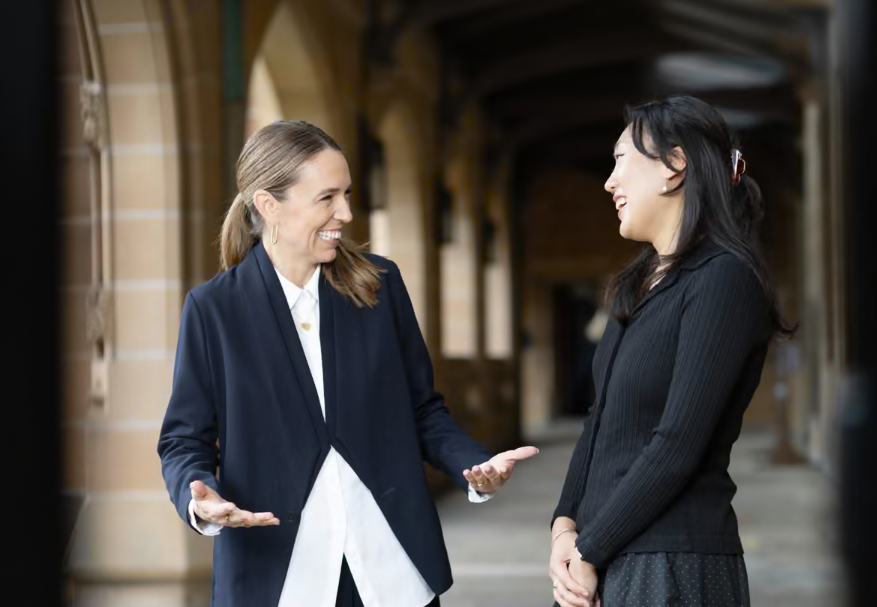
Jacinda Ardern in Sydney. Source: The Guardian
Still the most popular political leader in New Zealand, former prime minister Jacinda Ardern has been an inspiration for her outright willingness to offer a different kind of leadership The Guardian reports on her new role:
The former New Zealand prime minister Jacinda Ardern will lecture and mentor at the University of Sydney after moving to Australia earlier this year. Ardern begins this month and her work will focus on empathetic leadership, social cohesion and civic trust. The University of Sydney said Ardern would be based in its school of public health, exploring ways to address global health challenges and focusing on equity, inclusion and wellbeing.
The former prime minister will host guest lectures and masterclasses and will engage in mentoring, but the university said it was not a full-time teaching role. “I’m delighted to be joining the University of Sydney,” Ardern said. “I’ve found myself especially focused on the question of leadership since leaving office – and how we can better support and encourage the kind of leadership needed to tackle our many global challenges.”
New York Times: “What Trump Is Trying to Do to Ilhan Omar Should Scare Us All”
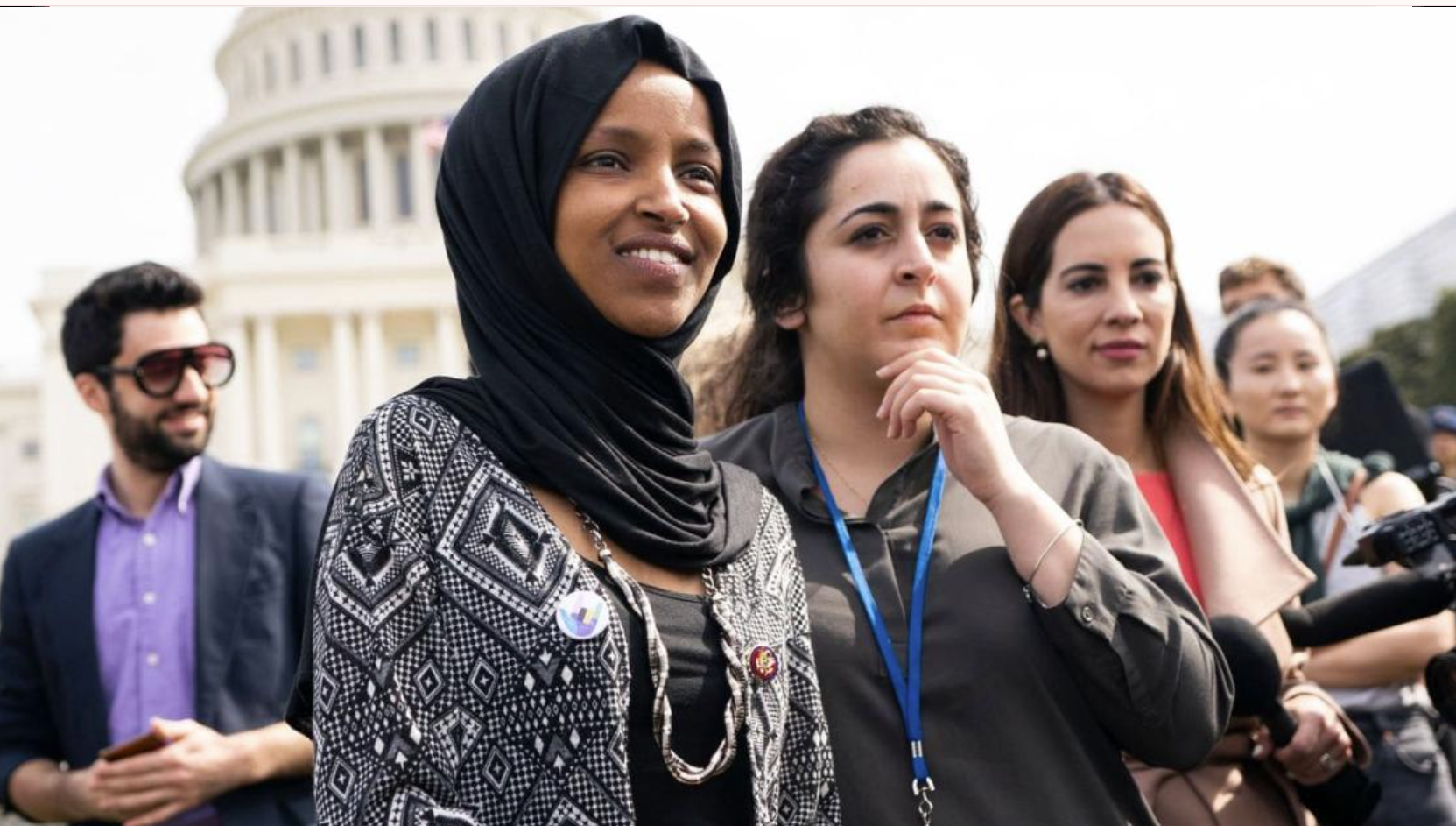
The New York Times last week published a powerful editorial on the shocking effort by the Trump administration to strip Congresswoman Ilhan Omar of her citizenship and deport her: “Trump Is Turning to an Old Tool of Authoritarian Repression.” Here’s an excerpt:
The revocation of a political opponent’s citizenship has long been a tool of authoritarian repression..Now comes a new effort to do so from President Trump’s administration. Last week, federal agents searched the Washington home of Representative Ilhan Omar, a Minnesota Democrat and a Somali immigrant, apparently as part of a federal investigation of her citizenship. The search should disturb all Americans, regardless of whether they agree with Ms. Omar’s political views.
The investigation of her is a chilling example of the federal government using its immense power to silence a critic. It is an affront to free speech, the rule of law and American ideals. It continues the Trump administration’s use of denaturalization as a weapon. In May and early June alone, the government began proceedings to take citizenship from 33 people, more than in any other entire year since at least 2008.
Ms. Omar is by any definition a political opponent of Mr. Trump’s. She is among the most progressive representatives in Congress, an original member of the so-called Squad, along with Representative Alexandria Ocasio-Cortez, and a frequent critic of the president. Mr. Trump, for his part, has repeatedly vilified her in public over the past seven years, often in ugly, racist ways that play into his broader fearmongering and lies about immigrants and Muslims. He has called her “garbage,” “scum,” “a disaster,” “a troublemaker” and “a terrible person.” He has mocked the head scarf she wears. He has said she should return to Somalia, which he has derided as having “nothing but crime, bedlam, filth.”
In an interview with The New York Times in January, he called for her deportation. “Ilhan Omar is a woman that should be immediately thrown out of Congress and sent back to her, her country, from where she’s always complaining about,” he said. When Tyler Pager, a Times reporter, followed up to ask if she should lose her citizenship, Mr. Trump replied, “Oh, absolutely.” Nine months later, federal agents from the Department of Homeland Security entered her home and seized her phone, computers, notebooks and passport. They did so in the final weeks of Ms. Omar’s re-election campaign, violating a Justice Department standard against taking public action in an investigation of a candidate within 60 days of an election.
Mr. Trump’s allies have claimed, among other things, that Ms. Omar’s father misrepresented her age during her naturalization process 26 years ago by saying that she was 17 — and thus still a child — rather than 18. We do not pretend to know whether the allegations have merit. Yet as tempting as it may be to focus on them, they are not the main issue.
A Deep Dive into the Key Office of Secretary of State
Connecticut Secretary of State Stephanie Thomas. Source. Bolt Magazine.Type image caption here (optional)
The office of Secretary of State is about foreign affairs in the national government. But in states, nearly all Secretaries of State have a very different responsibility: the health of our elections. In this era of a president using this bully-pulpit to seed doubt and distrust about our elections, standing up for our election administrators has never been more important. That starts with electing Secretaries of State with that commitment.
Bolts magazine has done a terrific job reviewing elections this year and the 35 states where November elections will shape how those states run elections in 2028. I’ll quote from its introduction, then lift up examples of women on the ballot.
All in all, 35 states, plus D.C., are voting in November, directly or indirectly, on who runs their elections. In 23 states, voters are doing this directly by electing the public official—typically the secretary of state—who will oversee elections. In another 12 states and D.C., voters are selecting the officials who will then appoint their state elections chiefs. These contests will shape what election administration looks like in critical swing states, and decide who is actually running election mechanics in 2028, the next presidential cycle…
Election deniers are, once again, running to oversee elections in the swing states of Arizona and Nevada. Arizona’s contest features Republican Alexander Kolodin, who was disciplined by the Arizona State Bar for his role in a lawsuit trying to overturn the 2020 results, and Nevada’s features Republican Jim Marchant, who wants to unregister every voter in the state…
But these offices also matter in more subtle but important ways. Elections leaders can influence whether citizen initiatives make the ballot. They have the power to help the most marginalized in the electorate register and cast a ballot, or can choose to make that process more difficult. They often set the scale of voter roll purges. Even where they can’t unilaterally change voting procedures, they are often major players in state legislative debates on all manners on election policy. In Colorado, for instance, Democratic secretary of state nominee Amanda Gonzalez helped author a landmark law to require polling places in local jails, and she told Bolts she plans to advocate for continued expansion of voting access for incarcerated people.
Many of these key elections do not feature women candidates, but here are ones where they do - with the women nominees not necessarily the ones I would support. This is a long section, but valuable for a glimpse into how debates over elections are playing in states.
Arkansas: The Republican nominee and frontrunner is Kim Hammer, a man who has used his time in the state senate to sponsor “a barrage of laws last year that created new hurdles for citizen-led initiatives.” Democrat Kelly Grappe, the founder of a civic engagement nonprofit, has criticized those changes, saying. “I believe that role should amplify the power of the people and empower the people.”
California: “Secretary of State Shirley Weber is running for reelection and is favored to win over Republican Donald Wagner… The candidates disagree on the biggest election-related issue on California’s ballot, Proposition 39, which would require people to present an approved government-issued ID at the polls. Weber opposes the measure, telling KQED, ‘Oftentimes those things are put in place merely to deter people from voting, to make it more difficult for people to vote.’ Data from other states show that similar measures have suppressed voting.
Colorado: “Democrat Amanda Gonzalez faces Republican James Wiley in the race to replace two-term Democratic Secretary of State Jena Griswold, who is now running for state attorney general. Gonzalez currently oversees elections in populous, suburban Jefferson County, and before that she ran the Colorado branch of the national voting rights group Common Cause. She has for many years been a key figure in turning Colorado into one of the most accessible states for voters, helping to author plenty of legislation aimed at protecting and expanding voter rights.”
Connecticut: “Secretary of State Stephanie Thomas, a Democrat, is running for a second term against Peter Lumaj, a Republican who has run unsuccessfully for state and national offices, including secretary of state, several times in the past. .. Thomas, meanwhile, has rebuffed Trump’s accusations and urged confidence in election processes.”
Georgia: The new Secretary of State will be ““either Democrat Penny Reynolds Brown, a former Fulton County judge and one-time court television personality, or Republican Tim Fleming, a state representative .. [Fleming] also said ‘mail and absentee ballots is where the fraud is’ and that he wants to eliminate no-excuse mail voting; as a state lawmaker, he already sponsored legislation to limit drop boxes. He also pushed for Georgia to withdraw from ERIC, the multi-state data-sharing project that is meant to detect fraud but was targeted by right-wing conspiracy theories. Reynolds Brown, who wants to expand early voting and ballot dropboxes, is trying to become the first Democrat in 20 years to hold this office.”
Massachusetts: “Bill Galvin, a Democrat, has been in office since 1995 and has occasionally frustrated progressives who wanted more ambitious expansions of ballot access. This year, though, Galvin has led the effort to advance a measure on the November ballot to allow people to register to vote on Election Day. He is also running for a ninth term and will face Republican Anne Brensley, who got her party’s nomination via a write-in campaign in the GOP primary in September after unsuccessfully running for lieutenant governor earlier this year.”
Nebraska: “Secretary of State Bob Evnen, a Republican, has done a whole lot to curry favor in the GOP. Among other things, he teamed with the state’s attorney general to shut down voting rights for people with past felonies; he tried to kick a Democrat off the ballot for U.S. Senate; and he complied with, and then downplayed, the DOJ’s controversial request for Nebraska’s voter data…. Petersen faces Democrat Sarah Slattery, who runs a winery and event space, in November. Slattery says she wants to expand voter access, including by advocating for same-day voter registration, and she opposes strict voter ID rules adopted in 2023. Even in a potential blue wave year, she faces long odds.”
New Mexico: “[Current Secretary of State Maggie] Toulouse Oliver is term-limited, and Democrats have nominated a local elections administrator to replace her: Amanda López Askin, who currently serves as the clerk of Doña Ana County and touts her experience as an elections official. López Askin, who once faced death threats from a disgruntled candidate, says she’d fight federal incursions in elections. López Askin faces Republican Ramona Goolsby, who wants to roll back some of New Mexico’s recent reforms, including the state’s permanent absentee voter list that was set up in 2024. Asked by the Santa Fe New Mexican who won the 2020 presidential election, Goolsby never answered and said there were ‘issues’ with mail voting.”
Ohio: “[Incumbent Frank] LaRose is barred from seeking a third term, and Treasurer Robert Sprague is the Republican nominee to replace him. Sprague, like LaRose, is vocal about combatting non-citizen voter fraud, despite overwhelming evidence that it hardly exists. Sprague also says he will support Trump by looking to eliminate dropboxes for mail ballots. He faces Democrat Allison Russo, a state representative who says Ohio’s elections are ‘already safe and secure,’ voted against the bill to bar the grace period, and recently posted on social media, ‘President Trump continues to focus on debunked conspiracies and election lies in order to cling to power.’
South Dakota: “Republican incumbent Monae Johnson was ousted this summer after just one term as secretary of state…In the GOP convention in June, Johnson was passed over for an even more conservative challenger, Heather Baxter, a state representative who wants to hand count ballots, a longtime priority for legislators on the far right. In a twist, Johnson has since endorsed Democratic nominee Terrence Davis, writing in a local news outlet: ‘South Dakota deserves a Secretary of State who will strengthen confidence through performance rather than provocation.’
Vermont; “This is the third consecutive cycle in which Secretary of State Sarah Copeland Hanzas, a Democrat, faces H. Brooke Paige, a [male] Republican who has followed Trump in baselessly claiming that the 2020 presidential race was ’stolen.’ Copeland Hanzas defeated Paige by 30 points in 2022 and then by 19 points in 2024. ‘It is highly worrisome to hear people echoing false claims and misinformation about the safety and security of our elections,’ Copeland Hanzas told Bolts during her first run. ‘The purpose of these claims is to discourage people from participating in elections.’”
Dolores Huerta: Si, Se Puede
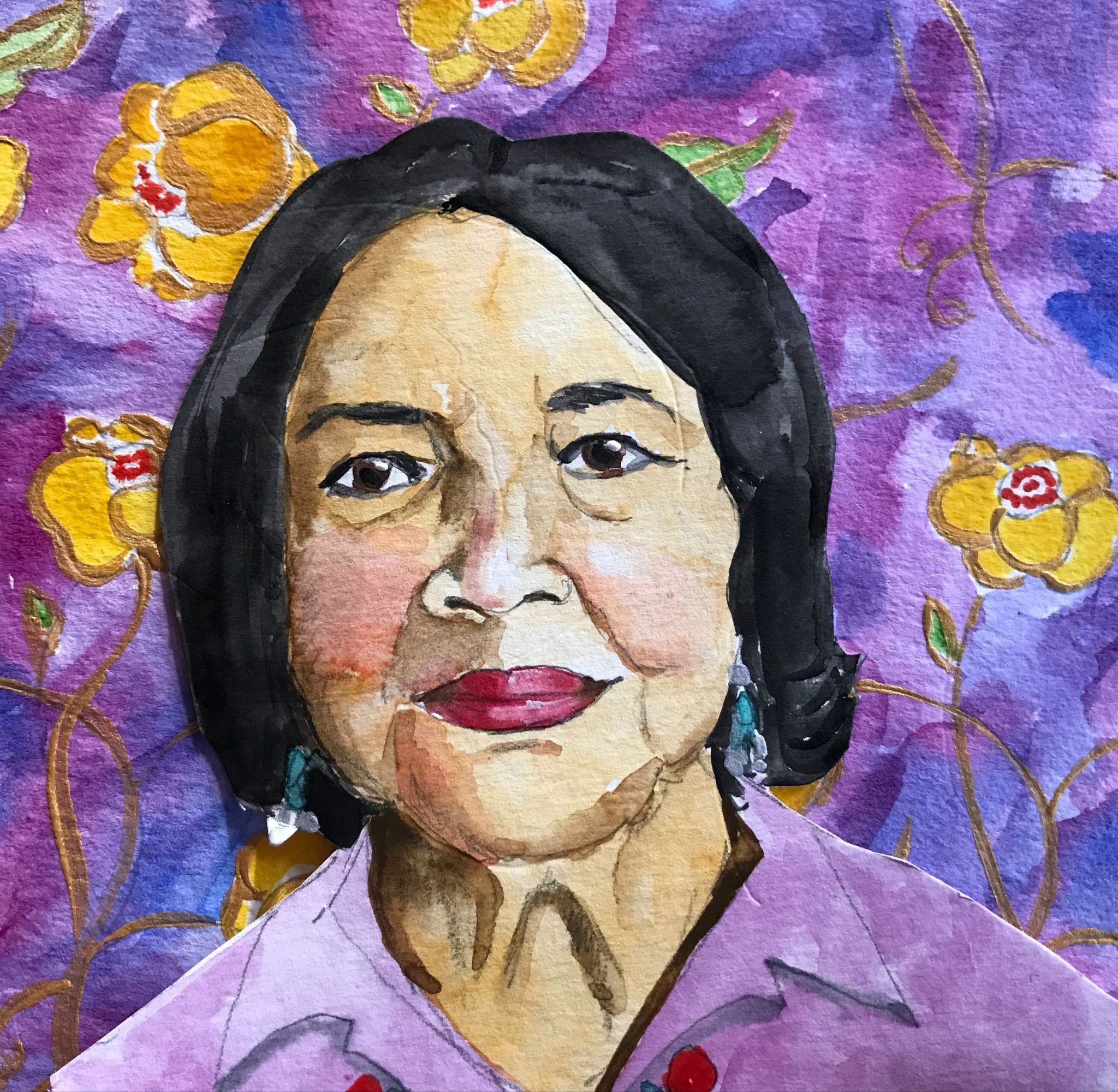
Dolores Huerta, painted by Melanie Phillpot
The ever-inspiring Dolores Huerta died on Wednesday. I first had the honor to work with Dolores when we both worked at the Feminist Majority Foundation in the early 1990s, where one of her key projects was the exploration of a new woman-centered political party. That kind of bold thinking led her to join me on the board of Citizens for Proportional Representation, led by my husband Rob Richie, which soon became the Center for Voting and Democracy and, ultimately, FairVote. Ms. magazine published a piece by my team celebrating her on her birthday just this April.
Dolores was a passionate, persistent, dedicated and brilliant organizer and speaker. She has come to represent the accomplishments of the United Farm Workers, which she played a lead role in shaping and building. Tributes will abound. Let me add my voice with her signature cry: Si, se puede.. “Yes, it is possible.” May we work toward achieving her dreams — and all of ours.
P.S. Every Halloween I am reminded of the cautionary tale of my husband’s ninth great grandmother, Susanna North Martin, a property owning, sharp-tongued widow, hanged for witchcraft in Salem, MA in 1692. I wrote about her last year in this piece “The Witch Was Never the Villain. She Was the Beginning of Women’s Power” – which became one of my most “shared” columns ever. It’s shocking, really, that her story still resonates so deeply. Please use this link to make a donation to RepresentWomen to support our work to build enduring women’s political power and change the narrative around how we treat strong women.
Heading 1
Heading 2
Heading 3
Heading 4
Heading 5
Heading 6
Lorem ipsum dolor sit amet, consectetur adipiscing elit, sed do eiusmod tempor incididunt ut labore et dolore magna aliqua. Ut enim ad minim veniam, quis nostrud exercitation ullamco laboris nisi ut aliquip ex ea commodo consequat. Duis aute irure dolor in reprehenderit in voluptate velit esse cillum dolore eu fugiat nulla pariatur.
Block quote
Ordered list
- Item 1
- Item 2
- Item 3
Unordered list
- Item A
- Item B
- Item C
Bold text
Emphasis
Superscript
Subscript