
This edition of Weekend Reading comes to you from the desk of Livia Follet, one of RepresentWomen’s Communication Fellows.
This week, we mark 33 years since Ruth Bader Ginsburg was sworn in as the second woman to serve on the Supreme Court. She served 27 years until her death in 2020. I still remember where I was when the news broke, riding my bike through campus in Boulder, Colorado with my roommate. I remember the sharpness I felt in my stomach because I knew what her death meant for the country, for democracy, for women.
Not long after her death, I would first step foot into The Cottage, the original women’s dorms at CU Boulder that now house the Gender Studies department. I spent my college years as a student watching the fall of Roe v. Wade and its horrific aftermath. I took classes on violence against women and girls, feminist theory, and colonialism. It’s safe to say I graduated angry. In the words of Gloria Steinem, “The truth will set you free, but first it will piss you off.”
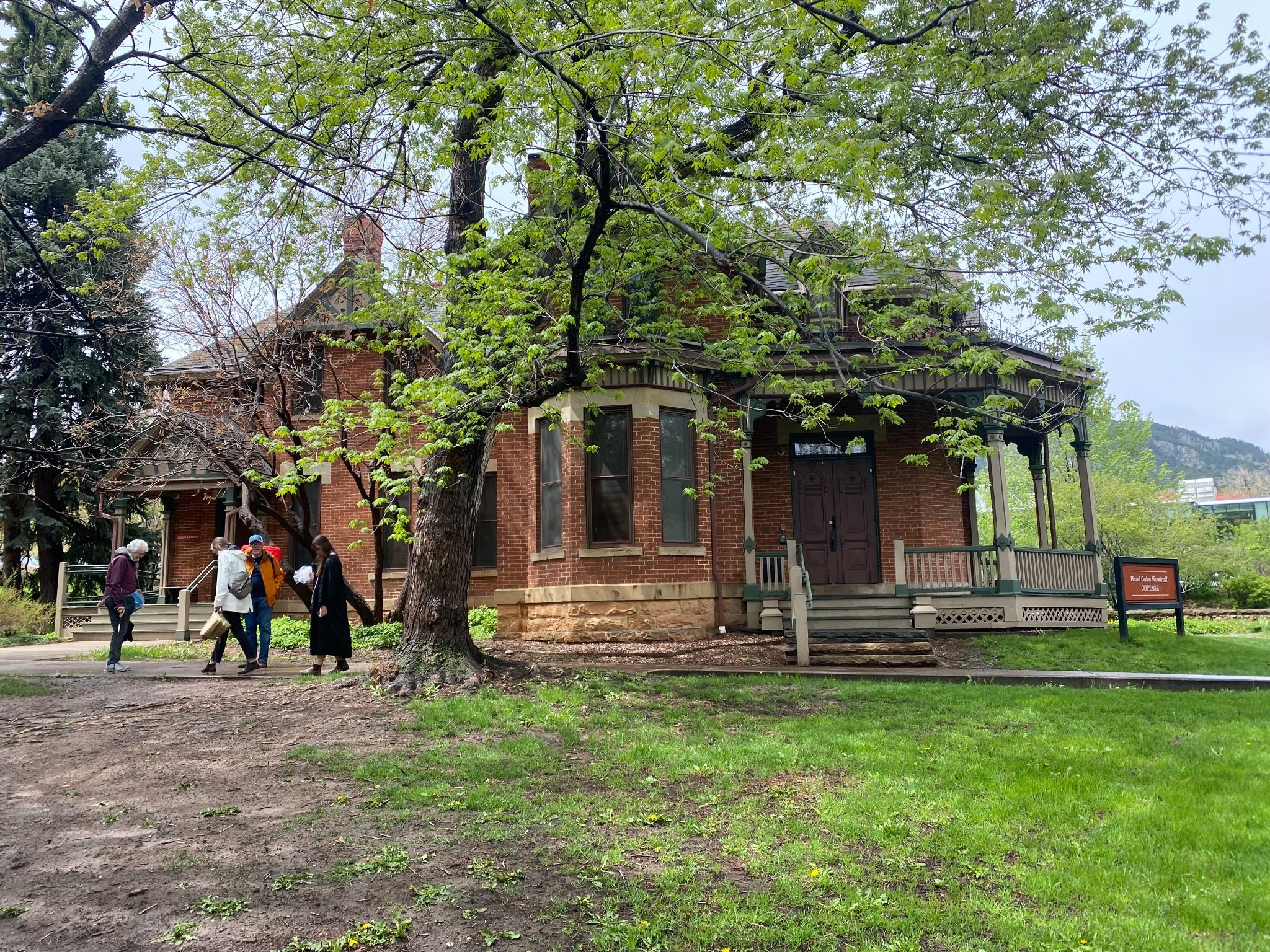
I also graduated with a lot of hope; most of it came in the form of writing. I carried the words of the feminist scholars I read in The Cottage—Sarah Ahmed, Leanne Betasamosake Simpson, Angela Davis—with me through my time as an editorial fellow at Ms. magazine. There, I covered everything from voting rights to abortion bans. Every time lawmakers attack the Gender Studies degree that I received, every time the Safeguard American Voter Eligibility (SAVE) Act rears its head, every time a woman dies because abortions are banned in her state, I think about how this pain is by design. It is a tactic to ensure that women do not have a voice in the room nor a seat at the table.
Every day that I sit down to write, I remember the walls of The Cottage—the tall bookshelves and the comfortable armchairs. I have a picture of Audre Lorde’s words on my bulletin board, reminding me, “I am not free while any woman is unfree, even when her shackles are very different from my own.”
Now that I have joined the RepresentWomen team as a communications fellow, these words remain ever-present in my mind, especially when I think about what fair and equal representation means to me. It means ensuring that all women have the opportunity to make their voices heard—especially women and girls who have historically been told that their voices do not matter or are not as significant. These women are my neighbors here in Astoria, New York who live in fear of Immigration and Customs Enforcement. They are Black women in the South defending the right to the ballot box. They are mothers in the West Bank whose homes are being destroyed by settlers. They are young girls in Afghanistan fighting for their basic human rights.
The health of our democracy is directly tied to how well it represents and includes women. Studies show that when more women are in positions of power countries see stronger democratic institutions, less corruption, and a more responsive government. Investing in women is investing in strong democratic systems.
So, as I sit down each day to take part in this work, I try to remind myself of my feminist roots. I think back to The Cottage and the world my classmates and I dreamt within the brick walls—one where women and people of all gender identities could move freely. I believe now, as I believed then, that this world is on the horizon.
Milestones: Ruth Bader Ginsburg was sworn in as the 2nd woman to serve on the Supreme Court (1993); Billie Jean King was awarded the Presidential Medal of Freedom (2009)
Birthdays: Rosanna Arquette; Wendy Raymond, president of Haverford College; London Breed, Mayor of San Francisco; Elizabeth Holtzman, the youngest woman elected to US Congress; Marjorie Velazquez, NYC Councilwoman; Kimberly Driscoll, Lt. Governor MA; suffragist & abolitionist, first woman to gain a college degree in MA; Janet Yellen, Secretary of the Treasury; Heidi Hartmann, founder & former president of the Institute for Women's Policy Studies; Ethel Payne, first African American woman radio & TV commentator at a national news organization (CBS, 1911); Marianne Schnall, founder of What Will It Take; Julia Child, chef, author, & TV personality; Amanda Dilulis, senior program manager at She Should Run; Melinda Gates, philanthropist; Briahna Joy Gray, journalist; Florence Harding, former First Lady (1860); Elaine Luria, former U.S. Rep.; Madonna, singer, actress, & LGBTQ activist

Cynthia Terrell in RealClearPolitics Opposes DNC Ban of Ranked Choice Voting
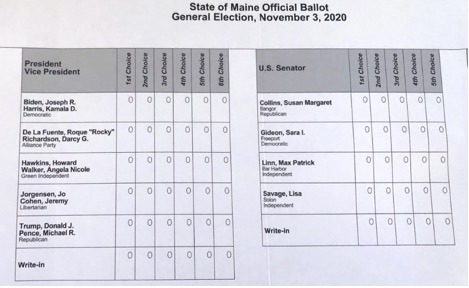
Cynthia Richie Terrell may be on sabbatical this month, but the possibility of the Democratic National Committee banning the tallying of ranked choice voting ballots in 2028 presidential primaries was too important for her to stay silent. While others are opposing the ban, including Congressman Jamie Raskin in a terrific thread of posts, what ranked choice voting means for women and for better politics for all is an essential part of the story. Here’s an excerpt from Cynthia’s new commentary in RealClearPolitics:
On August 15, the DNC is set to finalize a rule banning state parties from using ranked choice voting to select delegates in the 2028 presidential primary cycle – overriding laws that voters in Maine and Washington, D.C., passed for themselves and plans in several states where parties run their primaries. It has gotten little national press coverage, yet is exactly the kind of “internal politics” story that actually determines whether voters get the kind of candidates they say they want.
There’s a narrow case for why this ban is so wrong-headed. Ranked choice voting (RCV) would be used to give a second chance to voters whose candidate finishes below the 15% threshold that the party establishes to earn delegates with proportional representation. In four states where RCV was used in Democratic presidential primaries in 2020, 98% of voters ended up with their vote counting toward a candidate earning delegates. A total of 99.8% of voters cast valid ballots, and nearly 90% of backers of trailing candidates ranked a backup who won delegates.
But there’s a broader point about democracy that matters to most Democrats. New polling by my organization, RepresentWomen, conducted with Murmuration, found that Americans across party lines want more voter choice. Seventy-eight percent said it’s more important for voters to have flexibility to support their preferred candidate than for parties to control who’s on the ballot. Nearly six in 10 said the country needs major changes to how elections and representation work. This is not a fringe sentiment. It’s the broad public verdict on elections that frustrate and alienate voters…
Younger voters see the stakes here more clearly. Our polling found that adults under 35 favor ranked choice voting as an improvement over the current system by a wide margin, while support drops off sharply among voters over 65 – the demographic that dominates the committee actually writing the rule to ban RCV….The DNC can spend mid-August finalizing a rule when nobody’s watching. Or it can back off and let the states that want ranked choice voting use it.
Where RCV Would Matter: Democratic Nominee Won’t Step Aside in Montana
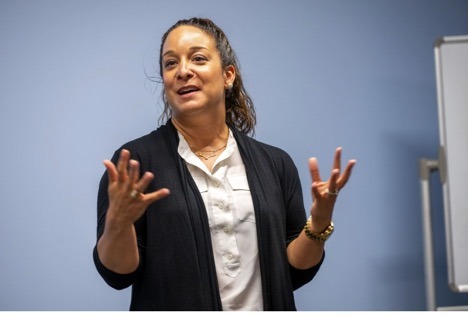
One of the ways ranked choice voting boosts women candidates is that it allows them to ignore calls to “wait their turn”. Montana provides a new example with the Democrats: U.S. Senate nominee Alani Bankhead refused to drop out to give a man running as an independent a better chance of winning. Dropping out would not be an issue if Montana had RCV as used for elections in Alaska, D.C. and Maine. Politico covers the story:
Montana’s Democratic Senate nominee on Monday refused to drop her campaign to clear the way for an independent candidate, setting up a crowded race that is likely to help Republicans win in November.
Alani Bankhead made certain with hours to go before Monday’s deadline that she would not step aside to give independent Seth Bodnar — who is backed by former Sen. Jon Tester (D-Mont.) — a clearer run at Republican Kurt Alme.
“I’ll never bow down,” Bankhead said during a press conference ahead of the 7 p.m. Eastern Time deadline to drop out. “I am in this race to win it and I am staying through Nov. 3.”
Bankhead accused her opponents of being “hand picked” by the establishment while she won the Democratic Primary…Bodnar and his allies have upped their focus on Bankhead in recent days. A super PAC backing Bodnar has been hammering her on television while another group is posting signs around the state calling for her to drop out.
Progress for Women across 9 State Primaries led by Minnesota and Tennessee
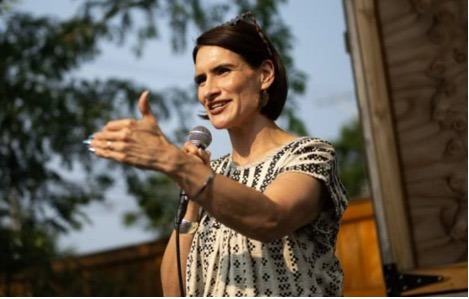
The August primary season remains busy. Women have had narrow losses in key primaries, including Wisconsin narrowly missing out on electing Francesca Hong as its first woman governor, but other wins set up chances for history in November, including Tennessee and Minnesota electing their first-ever women governors. The Center for American Women and Politics is the go-to resource for what’s happening in the primary season for women. Here are our highlights from its detailed rundown of the nine states that held primaries over the past week.
Minnesota: Minnesota is all but assured to elect its first woman governor in an all-woman general election contest between U.S. Senator Amy Klobuchar (D) and state Speaker of the House Lisa DeMuth (R). This contest is currently rated as “Solid Democrat” by Cook Political Report. Minnesota is one of 17 states that has never had a woman governor. …Lieutenant Governor Peggy Flanagan (D) and Michelle Tafoya (R) will compete in an all-woman, open-seat contest for the U.S. Senate in Minnesota that is currently rated as “Likely Democrat” by Cook Political Report. If successful in November, Flanagan would be the first Native American woman in the U.S. Senate. Tafoya, if successful, would be the first Latina and the first Republican woman to represent Minnesota in the U.S. Senate. Women are 5 of 16 (31.3%) major-party nominees for U.S. House in Minnesota, including 4 of 8 (50%) Democrats and 1 of 8 (12.5%) Republicans. All 4 (3D, 1R) incumbent women nominees are favored to win re-election in November.
Tennessee: Tennessee is all but assured to elect its first woman governor in an all-woman general election contest between U.S. Senator Marsha Blackburn (R) and Memphis City Councilwoman Jerri Green (D). This contest is currently rated as “Solid Republican” by Cook Political Report. Tennessee is one of 17 states that has never had a woman governor…. Of the 6 (5D, 1R) women nominees for [nine seats in the] U.S. House, only incumbent U.S. Representative Diana Harshbarger (R) is currently favored to win in November.
Alabama: Of the 3 (2D, 1R) women nominees [in 7 House seats], only incumbent U.S. Representative Terri Sewell (D) is currently favored to win in November.
Connecticut: Of the 3 (2D, 1R) women nominees [in 5 House seats], both (2D) incumbents are currently favored to win in November. The sole (1R) non-incumbent woman nominee is running in a general election contest that currently favors her opponent. Women are 3 of 12 (25%) major-party nominees for statewide elective executive office in Connecticut [but not governor].
Hawaii: Incumbent U.S. Representative Jill Tokuda (D-HI) – the only woman currently representing Hawaii in Congress – is currently favored to win in November.
No women advanced in contests for Hawaii’s statewide elective executive offices. Incumbent Lieutenant Governor Sylvia Luke (D-HI) did not run for re-election.
South Carolina: Incumbent U.S. Senator Darline Graham (R) advanced to a runoff election to secure the Republican nomination for U.S. Senate in South Carolina. Graham was appointed to fill out the current term of her brother, U.S. Senator Lindsey Graham, upon his death in July 2026. The winner of the special election primary runoff election on August 25, 2026 will replace former Senator Graham on the general election ballot for a full Senate term that will begin in 2027.
Vermont: Amanda Janoo (D) won the Democratic nomination for governor of Vermont. She will challenge incumbent Governor Phil Scott (R) in a contest currently rated as “Solid Republican” by Cook Political Report. …Women are 4 of 12 (33.3%) major-party nominees for statewide elective executive office in Vermont, including 4 of 6 (66.7%) Democrats and 0 of 6 (0%) Republicans. … Incumbent U.S. Representative Becca Balint (D) – the only woman who has served in the U.S. House from Vermont – is currently favored to win in November.
Wisconsin: Women are 2 of 10 (20%) major-party nominees for statewide elective executive office in Wisconsin, including 2 of 5 (40%) Democrats and 0 of 5 (0%) Republicans. Incumbent Secretary of State Sarah Godlewski (D) ran successfully for the Democratic nomination for lieutenant governor. If successful in November, Democratic nominee for secretary of state JoCasta Zamarripa would be the first Latina in statewide elective executive office in Wisconsin. …. Women are 2 of 14 (14.3%) major-party nominees for U.S. House in Wisconsin, including 2 of 7 (28.6%) Democrats and 0 of 7 (0%) Republicans…Incumbent U.S. Representative Gwen Moore (D) – the only woman currently representing Wisconsin in the U.S. House – is currently favored to win in November. Rebecca Cooke won the Democratic nomination to challenge incumbent U.S. Representative Derrick Van Orden (R) in a contest currently rated as a toss up by Cook Political Report.
Japan’s Woman Prime Minister and Work-Life Balance
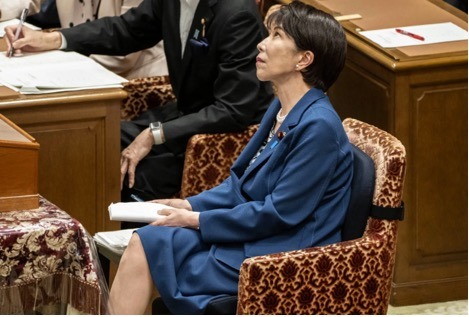
Women famously must put in extra hours at home after a day on the job — like Ginger Rogers doing all of Fred Astaire’s dance moves, but backward in heels. Revelations from Japan’s prime minister, Sanae Takaichi, about how little sleep she gets, even as she does chores at home, have put a spotlight on this problem in Japan. The New York Times reports.
Monday was Sea Day in Japan, a public holiday when many people escape the summer heat by swimming, surfing and lounging at the beach. But not Prime Minister Sanae Takaichi.
Ms. Takaichi spent the holiday weekend rereading policy documents and dealing with a backlog of thousands of emails, according to a social media post on Tuesday. She wrote that she eked out a “full five hours of sleep for the first time in ages” — better than the “zero to three hours” she said she is accustomed to. And she said she spent her limited free time ironing undergarments, sewing fraying skirts and reinforcing loose jacket buttons.
With her comments, Ms. Takaichi seemed eager to present herself as a down-to-earth leader who doesn’t stop working on behalf of Japan’s citizens. Instead, her post, which has been viewed more than 31 million times, has set off a national debate about work-life balance and the hazards of sleep deprivation….
Some commentators argued that Ms. Takaichi, the first woman to serve as prime minister in Japan, should be given more support in her position. While previous leaders often relied on their wives for help at home, Ms. Takaichi appeared to be tackling more domestic duties, according to Yoko Iwama, a professor at the National Graduate Institute for Policy Studies in Tokyo.
“Establishing a support system that allows a Japanese prime minister to focus entirely on their duties — without having to handle household chores personally — would contribute to women’s advancement in society,” Ms. Iwama wrote in the Nikkei, a prominent business newspaper.
New Barometer on Women’s Representation in Morocco
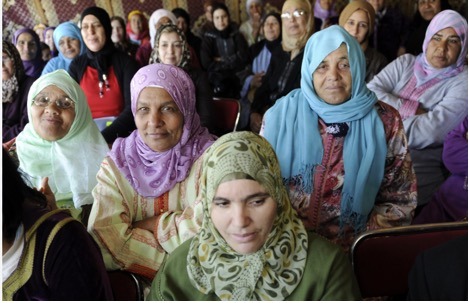
Ahead of the September 2026 elections, the Democratic Association of Moroccan Women has announced the launch of a “barometer of women’s political representation,” designed to assess parties’ commitment to genuine equality. It builds on the NGO’s work against gender-based political violence. From Yabiladi:
The initiative applies “principles of evaluation and accountability, with the aim of helping monitor political parties’ respect for women’s political rights” and promoting a democracy based on gender parity. It will therefore serve as a “monitoring and evaluation tool” for performance in the field of women’s political empowerment.
The mechanism is based on five areas. It looks at the extent to which political parties are involved in promoting women’s representation, as well as whether they have clearly stated positions in favor of parity-based reforms. The barometer also assesses “the governance of candidacies.”through “the proportion of women candidates in local legislative constituencies, the adoption of transparent and fair criteria in selecting candidates committed to an equality agenda, as well as openness to women leaders and the renewal of candidacies for former women parliamentarians.”
The assessment also covers “support and empowerment, by monitoring the financial and technical resources, as well as training initiatives, made available to women candidates by political parties.” It also examines “political communication and media” and “the visibility given to women leaders during election campaigns.”
Finally, the tool will focus on “preventing political violence against women, by evaluating prevention, reporting, and protection mechanisms, both within the organization and beyond it.” Following this analysis, the ADFM will produce a report to be published at a later date.
A Record Number of Women are Running for U.S. House
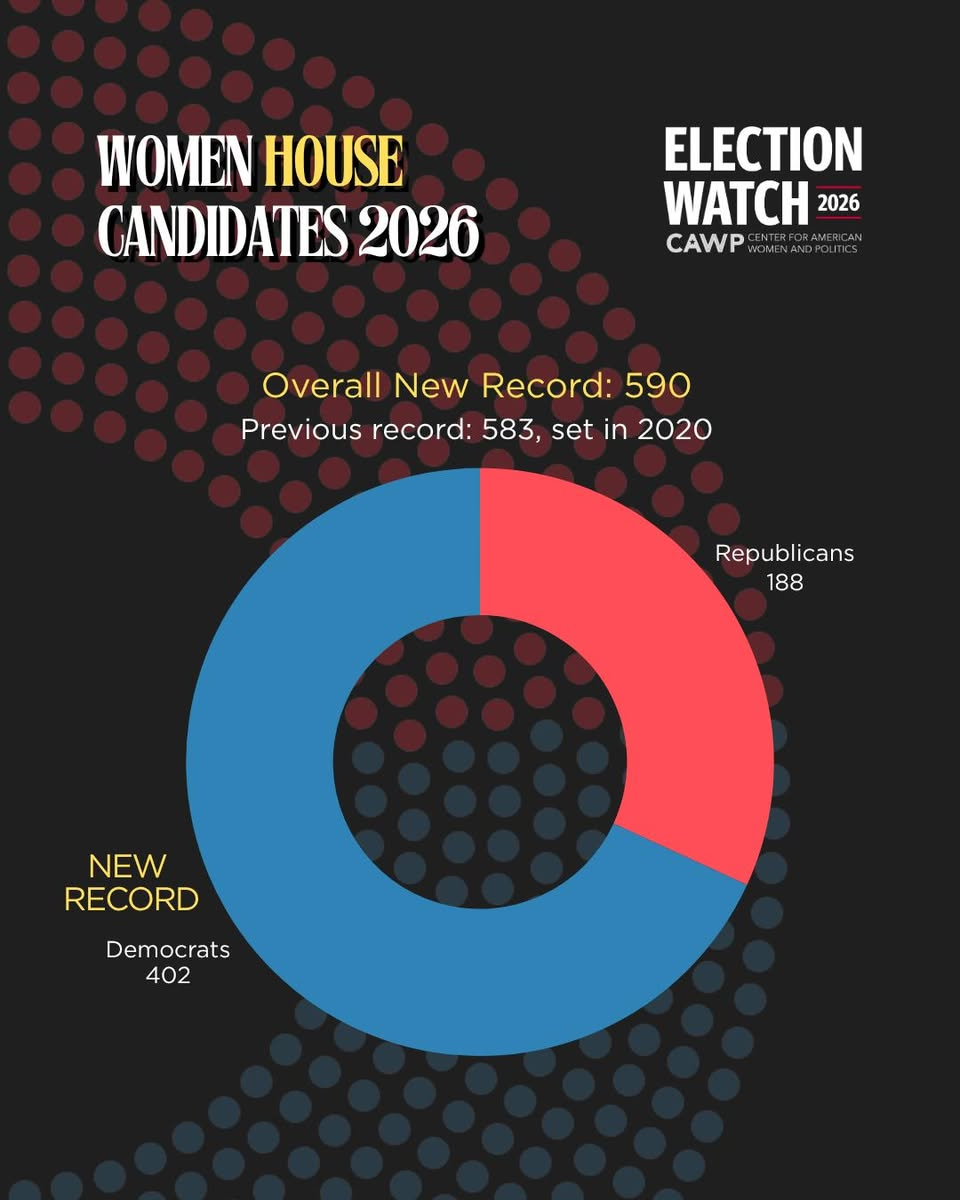
New data from the Center for American Women and Politics (CAWP) shows that 590 women filed to run for House seats in the 2026 midterm elections, up from the previous record of 583 set in 2020. In the last election cycle, 467 women ran for House seats.
More from CAWP:
This new record is driven in large part by a considerable increase in the number of Democratic women running.
Because the number of Democratic men running for the U.S. House is also up from 2024 to 2026, women are still just over one-third (33.6%) of all Democratic House candidates. The increase in House candidates since 2024 is much smaller for Republicans, and women are just 19.1% of Republicans running this year. Women are 27% of all House candidates in 2026, nearly identical to their representation (26.8%) in 2024.
“Reaching new highs for women candidates creates more opportunities for increasing the number of women in office,” said CAWP Director of Research Kelly Dittmar. “But achieving gender parity among candidates, nominees, and officeholders will only happen if elevating women is a priority for both parties.”
Elon Musk Invests in Repealing Alaska’s Ranked Choice Voting System

Elon Musk gave $1.5 million towards repealing Alaska’s voting system which uses ranked choice voting (RCV) and open primaries, which are proven to promote women’s representation in government.
Ballot Measure 2, which if passed would repeal Alaska’s method, will appear on the November ballot despite a prior initiative to repeal the system failing in 2024.
Read more from Alaska Public Media:
Musk gave $1.5 million last month to the Aurora Action Network, a Wisconsin-based political action committee that has already collected contributions from numerous billionaire megadonors, including Dick Uihlein, Jeff Yass, Timothy Mellon and Hilcorp owner Jeffery Hildebrand. Aurora Action Network then gave the repeal campaign $1 million in late July.
Musk’s contribution, which make up a sizable share of the repeal campaign’s fundraising, could prove pivotal for the future of Alaska’s elections.
The ballot measure would revert Alaska to closed partisan primaries and pick-one general elections. It would also eliminate campaign finance laws that enable Alaska voters to know when big spenders like Musk give money to Alaska campaigns.
A group that opposes the ballot measure — and supports the state’s current voting system — continues to have a cash advantage, having raised over $5 million to support its campaign, also from Outside megadonors.
Judy Eledge, the chair of the repeal group who has long championed conservative causes in Alaska, thanked Musk for the contribution in a statement issued Friday.

Over the weekend I officiated the wedding of two of my closest friends at their family cabin in Colorado! We reminisced, ate delicious food, and danced to bluegrass until the sun went down. And of course, there were plenty of happy tears to go around. Congrats to Mike and Alexx! 🍊
.png)
