Every 250 Years, an Empire Falls. On Women's Equality Day, Let's Build Something Better.
A reflection from RepresentWomen’s Communications Director, Alana Persson, on the 54th Anniversary of Women’s Equality Day
RepresentWomen and Alana Persson
This article was originally posted to RepresentWomen's Substack.
One hundred and six years ago today, the 19th Amendment was officially certified, and women’s suffrage became the law of the land, for some women, decades before others. Congress marked the anniversary as Women’s Equality Day in 1971. This year, I find myself thinking less about how far we have come and more about how the room we are still trying to get into was never built to let us all the way in.
This publication’s readers may remember the People’s Bill of Rights 250 from earlier this summer, when Alicia Keys began asking millions of followers whether they knew the Equal Rights Amendment still isn’t part of the Constitution. RepresentWomen has been part of that coalition from the start, and our Programs and Partnerships Manager, Tamaya Dennard, spoke again yesterday, hours before Women’s Equality Day, at a virtual gathering convened by Keys, with Kelly Rowland and Maren Morris alongside her. But the question of why our founding document still falls short isn’t new to us either.
Thanks for reading RepresentWomen Publication! Subscribe for free to receive new posts and support my work.
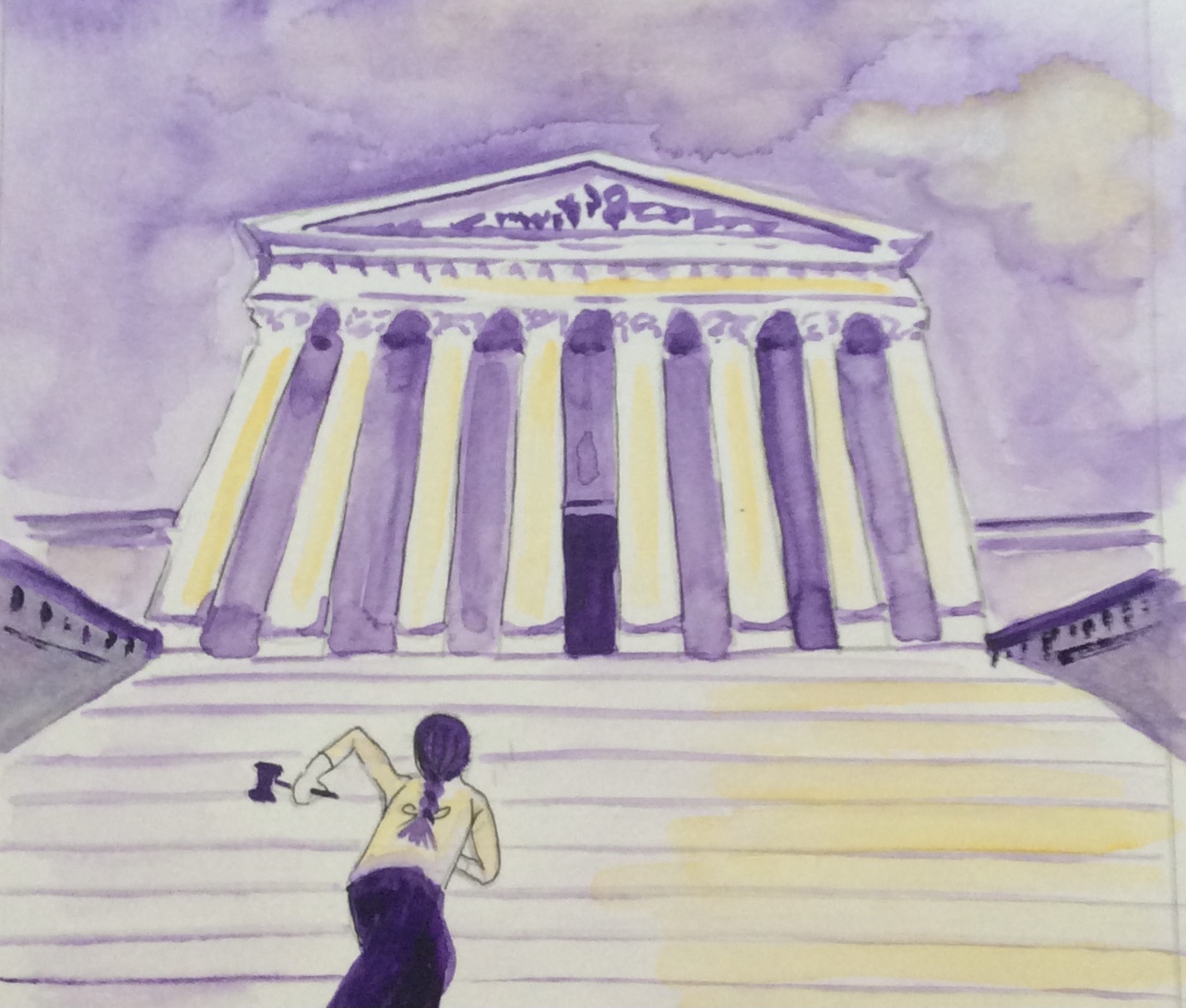
At RepresentWomen’s Democracy Solutions Summit this past March, legal scholar Dr. Michele Goodwin walked our audience through just how young, and how unrevised, the U.S. Constitution actually is. The inequality built into it, she explained, was not an accident. The civil liberties the founding generation enshrined, due process, free speech, freedom from cruel and unusual punishment, were written for men. Women were property under the law, a reality especially stark for Black women and for Indigenous women whose land was already occupied, and later for immigrant women targeted by laws like the Page Act, which presumed Asian women entering the country to be sex workers. Goodwin explained how that exclusion did not end with the 19th Amendment in 1920: a “Jane Crow” persisted for decades after, one in which women could not open a bank account or a credit card in their own name until shockingly recently, and in which coercive sterilization, appallingly, still occurs today.
Goodwin put the country’s unfinished business plainly:
“We are a very young country, but we actually have a very old constitution. There are other countries that regularly update their constitution and have already baked in sex equality into law, while we’re still grappling with a document that is inconsistent with the ways of the world.”
RepresentWomen’s work asks a related but distinct question. Even if every constitutional right were guaranteed on paper, would the system that elects our leaders actually produce a government where women hold our fair share of power? Right now, the answer is no, and the data tells us why.
Here is what we know, because we have spent thirteen years measuring it: the United States is not short on qualified women, nor is it short on women willing to run. This year’s Gender Parity Index, RepresentWomen’s national report card tracking women’s representation across all 50 states, found that women’s share of political seats did not move at all in the past year, even as more women ran for office than ever, and campaign funding for women reached new, extreme, highs. The national parity score sits at 28 out of 100. A “C.” Barely over halfway to a government that reflects the people it governs.
Internationally, the picture is no better. According to the Inter-Parliamentary Union, the United States now ranks 84th in the world for the share of women in its national parliament, behind dozens of countries with far less wealth and far younger democracies than our own.
That gap between effort and outcome is not a candidate problem. It is not a funding problem, either. It is a structural one. The rules of the system itself, the way we draw districts, the way we count votes, the way we finance campaigns, the way legislatures operate, were not built with women in mind, and they have not been redesigned since. Every cycle, women run harder and raise more, and every cycle, the needle barely moves. That is what an iron ceiling looks like: not a lack of ambition, but a lack of opportunity baked into the system by design.
The good news is that we know what breaks through it, because we see it happening. In cities that use ranked choice voting, where voters can rank candidates instead of choosing just one, women hold 55 percent of city council seats, nearly double the national rate. Maine and Alaska, the two states that use ranked choice voting statewide, offer a preview of what happens when the system itself changes shape. It is not a mystery. It is a design choice, and we are capable of making a different one.
The country appears ready to. New national polling conducted by Murmuration in partnership with RepresentWomen found that when Americans are asked why there are not more women in office, the most common answer is not “there aren’t enough qualified candidates” or “voters aren’t ready.” Rather, the answer points to the structural barriers that are baked into politics and government itself. Nearly six in ten Americans say the country needs major changes to how elections and representation work. And it is young women, in particular, who are the most energized about what comes next: the survey’s strongest advocates for both structural reform and for a democracy that finally reflects the country it serves.
I watched that energy in real time yesterday. When Tamaya shared where the country actually stands, a “C” grade at home, 84th in the world, the room did not deflate. It sharpened. Women do not disengage when they learn the system was built without them in mind. Conversely, they lean in, because now they know what to build instead.
That is the spirit the People’s Bill of Rights is asking us to carry into the next 250 years: not nostalgia for a founding document that never fully included us, but the clear-eyed, collective work of deciding, in our own living rooms and across every difference between us, what a truly representative democracy would actually require. Every 250 years, Maren Morris said on yesterday’s call, an empire falls. That is not a warning. It is an invitation, if we are willing to use this moment to choose what comes next, together.
Today, on Women’s Equality Day, RepresentWomen is proud to stand inside that coalition, not as a bystander, but as an organization doing the work: measuring the gap, naming the structural ceiling, and building the policy solutions, like ranked choice voting and proportional representation, that can finally close it. Constitutional guarantees and structural electoral reform are not competing projects. They are two halves of the same unfinished promise. Women have always led this country forward. It is long past time our political systems were designed to let them.
%20(3).png)

.png)