Over the years, I’ve learned that the most important questions about democracy rarely arrive dressed up as policy debates. They arrive more often in conversations with friends, colleagues, and community members who are trying to understand how the rules shape their ability to have a meaningful voice in the decisions that affect their daily lives.
Lately, those questions have started to sound familiar. If I just changed my name, what do I need to do to stay registered? What happens if my documents don’t match? How much time does this take, and what if I don’t have it?
These aren’t abstract questions either. They’re deeply personal ones. And they’re coming up again as Congress revisits the SAVE America Act — legislation that would significantly change how people register to vote in elections.
Much of the public debate around the SAVE Act has focused on election security and proof-of-citizenship requirements. But from where I sit, the more urgent conversation is about how these policies would function in practice, and how they would disproportionately affect women’s ability to participate as voters. History tells us that when voter participation becomes more complicated, more time-consuming, or more expensive, the effects are not evenly distributed. Women, in particular, tend to feel those impacts first.
At RepresentWomen, we’ve spent years studying how political systems shape who participates and who is ultimately represented. One of the clearest lessons from that work is that participation is not a side issue for women’s political power, it’s foundational. The rules that govern access to the ballot help determine whose voices shape our democracy long before any election results are tallied.
That’s why this moment matters.
As debate around the SAVE Act resurfaces, we believe it’s essential to slow the conversation to ask harder questions about lived reality: how name changes, caregiving responsibilities, financial barriers, and administrative complexity intersect with voter access, and what that means for women’s representation over time.
To help unpack those questions, RepresentWomen is hosting a public, educational webinar on Tuesday, February 10, from 7:30–8:30 PM ET. We’ll be joined by election and democracy experts and Members of the Democratic Women’s Caucus, including Representative Teresa Leger Fernández (NM-03) and Representative Delia Ramirez (IL-03), for a nonpartisan conversation focused on how the SAVE Act would operate in practice, and what’s at stake for women’s political participation and representation.
I hope you’ll join us for this important conversation.
“MEGA-lomania” Bill on Elections is War on Voting Rights, Voter Choice, and Women
House Republicans have introduced the so-called “Make Elections Great Again” (MEGA) Act, a bill that Democracy Docket called perhaps the greatest threat to voting rights our country has ever seen. Part of this bill would ban any use of ranked choice voting — and indeed any alternative voting system — for federal elections, which would overturn adoptions in states like Alaska, Maine and Washington, D.C. Stephen Richer, recently the Republican election clerk of Arizona’s largest county wrote for Cato Institute “MEGA” Bill Supersizes the Federal Government’s Role in Election Administration about how the bill gets into issues that should be left to the states.
Democracy Docket issued an analysis, “New GOP anti-voting bill may be the most dangerous attack on voting rights ever,” that included: “Republicans in Congress have unveiled a new bill that would impose the most extreme voting restrictions ever proposed at the federal level. The new bill goes far beyond even the SAVE Act, which the House passed last year and which one historian called “the most extraordinary attack on voting rights in American history.”
Harvard professor Danielle Allen took on the bill in the Renovator:
Last week, Republicans in Congress introduced the MEGA bill. They call it the Make Elections Great Again Act. I call it the Megalomania bill. This bill moves forward an agenda that the president had tried advancing as an executive order to extend further federal control over state election systems.
Perhaps the most important provision of the MEGA bill is a ban on the use of ranked choice voting for federal elections. Both Alaska and Maine already use RCV for federal elections, and one reason they do that is to ensure that the people as a whole — not a small partisan base — determine who represents them in office. Because when the people as a whole control elections, and when a majority winner is required, the election system cannot be anywhere nearly so easily captured by corrupt or hyperpartisan interests, as has occurred across the many states without RCV.
Grassroots advocates who work on RCV have always understood that their measure was a counterweight to the forces of corruption. No surprise, then, that the forces of corruption are now taking it on. They understand its power, too. But this isn’t a fight between a megalomaniac President and another branch of government. This is a fight between the president and the people.
Good news: The people are ready. Here is Meredith Sumpter, CEO of FairVote, with a message to all Americans about why we need to stand up for our power to choose an election system that puts power back in our hands: FairVote Reacts to the MEGA Bill.
FairVote’s Meredith Sumpter also issued a statement last week that included:
“Republicans in the U.S. House have introduced a major new elections bill that is full of unfunded, unworkable, and anti-voter mandates. Among other things, the bill would prohibit ranked choice voting in federal general elections – even though it’s already used in some form in several states.
“This raises fundamental questions. Why sabotage a party-neutral reform that works for voters? Why would Washington D.C. override the American people who’ve chosen ranked choice voting for their elections? Why are politicians in D.C. more focused on trying to control elections than actually competing for votes? 9 out of 10 Americans say our Congress is not working or listening to them. Yet, these members want to ban the reform that could get our elected representatives back to work for voters. The only path to a strong, functioning republic is to respect voters and empower our elected leaders to work for them.”
RepresentWomen for years has worked with women’s and electoral reform groups to showcase the positive impact of RCV for women, including playing a key role in electing Maine’s first woman governor, Alaska’s first Native Alaskan woman to Congress, and women to a majority of seats on city councils elected by RCV. It is deeply troubling that Republicans want to shut down our states' advancement of this reform. As I wrote on Ranked Choice Voting Day earlier this month:
"Building a thriving democracy in the United States requires strategies that address the root causes of the imbalance of power. That power imbalance cannot be addressed by trying to “win” the next election cycle for “our” side. Adopting better voting systems, campaign finance rules, and election processes are necessary ingredients to give us all real power to elect the candidates who represent us and the ability to hold them accountable.”
Forthcoming Memoir by Former First Lady of Iceland, Eliza Reid, “The First Lady Next Door”

Finding your voice often matters most when you feel least prepared to use it. That idea sits at the heart of The First Lady Next Door, the forthcoming memoir by Eliza Reid, the former First Lady of Iceland, and is one RepresentWomen will explore next month at the Democracy Solutions Summit.
Reid will join RepresentWomen for a featured conversation on Wednesday, March 11, at 3 PM EST, bringing a global perspective on leadership, democracy, and the often unseen realities of women navigating power.
Before her life took an unexpected turn, Reid was a writer, entrepreneur, and mother of four, focused on meeting deadlines, growing writers’ retreats, and managing the daily rhythms of family life. Politics was not part of the plan. But in early 2016, her husband ran for president of Iceland, and won.
Almost overnight, Reid ‘s life forever changed. As is written in the overview of her forthcoming book:
“Suddenly, Canadian—born Eliza was catapulted into a new life as First Lady of her adopted country, with the eyes of a nation watching her every move—as someone's wife. Absent an instruction manual (she Googled how to curtsey before meeting the Queen of Denmark), she decided to do what she'd always done: figure it out on her own terms.
Part fish out—of—water story and part fairy tale, The First Lady Next Door takes readers from rural Ontario to Timbuktu, and from the White House to Buckingham Palace. Eliza shows how embracing authenticity in all its messiness can become our greatest strength, even when the world expects polished perfection. After all, our everyday moments are what create the roadmap for making the unexpected count.”
At its core, Reid’s story is not just about public life. It’s about what happens when ordinary women are thrust into extraordinary circumstances, and how leadership often emerges not from ambition, but from necessity.
These themes were front and center last fall when RepresentWomen’s Katie Usalis interviewed Reid at the Reykjavik Global Form. Standing in a hall surrounded by women heads of state and global leaders, Reid resisted the idea that progress belongs to those with titles. Instead, she emphasized what she called “the collective power of individuals.”
“We can’t just have a trickle-down approach,” she says. “Even when we have these great women leaders … we don’t say, ‘Oh look, we have women leading in so many top positions, therefore I, who am not in one of those positions, don’t need to do anything.’”
The conversation, later published in Ms. Magazine, featured Reid alongside Washington State Representative Liz Berry and Irish Senator Alison Comyn, examining democracy reform, the power of women’s leadership, and the structural barriers shaping women’s political power nationwide. Reid’s insights — grounded, candid, relatable, and globally informed — underscore why her voice is such a powerful addition to this year’s Democracy Solutions Summit.
For those interested in following her work more closely, Reid also publishes thoughtful, short monthly reflections on her Substack, which you can access here. Additionally, her memoir will be released this spring and is available for pre-order now.
New York Governor Kathy Hochul Finds Common Ground on Child Care
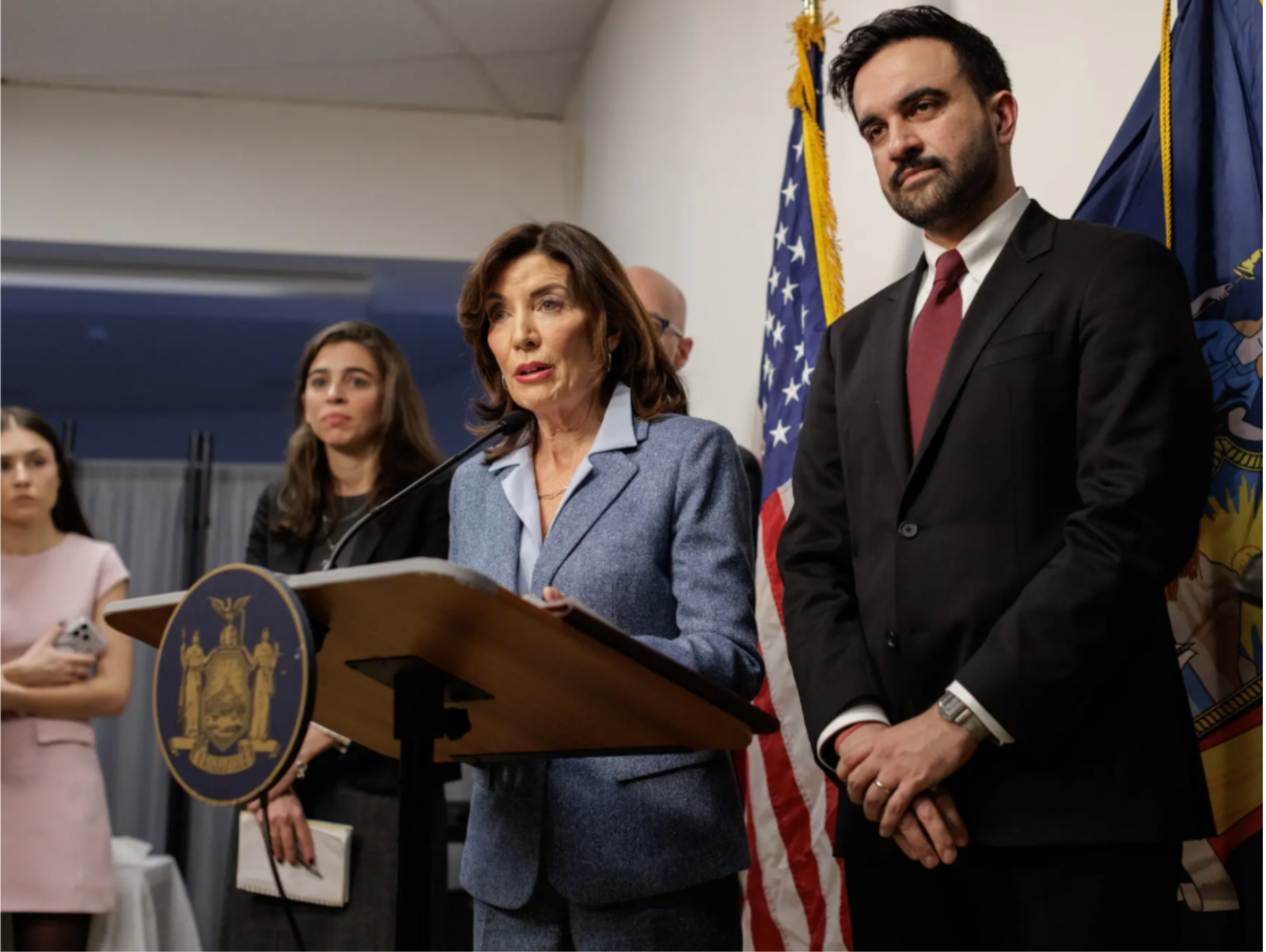
Hats off to New York Governor Kathy Hochul for seeking common ground with New York City’s new governor, self-defined democratic socialist Zohran Mamdani. The New York Times featured a story on Zohran Mamdani and Kathy Hochul are Pals Right now. In sharp contrast to the ongoing feuds that her predecessor, Andrew Cuomo, had with local leaders, Hochul worked to find common ground with a mayor elected from a different wing of the Democratic party. From the story:
“Now, the moderate governor has entered into a pragmatic alliance with the progressive mayor, with both deciding that it represents the best chance of delivering their signature priorities. On Thursday, the two stood beside one another at a Y.M.C.A. in Flatbush, Brooklyn, to announce Ms. Hochul’s support for a plan to expand child care access for children ages 2 and up within four years in New York City, and set the state on a path to universal child care statewide.
Flanked by fleets of Democratic officials from across the ideological spectrum, Ms. Hochul beamed. “This is the day that everything changes,” she said, calling Mr. Mamdani an “extraordinary partner.”
Latinas for Trump Co-Founder Warns Fellow Republicans on Immigration
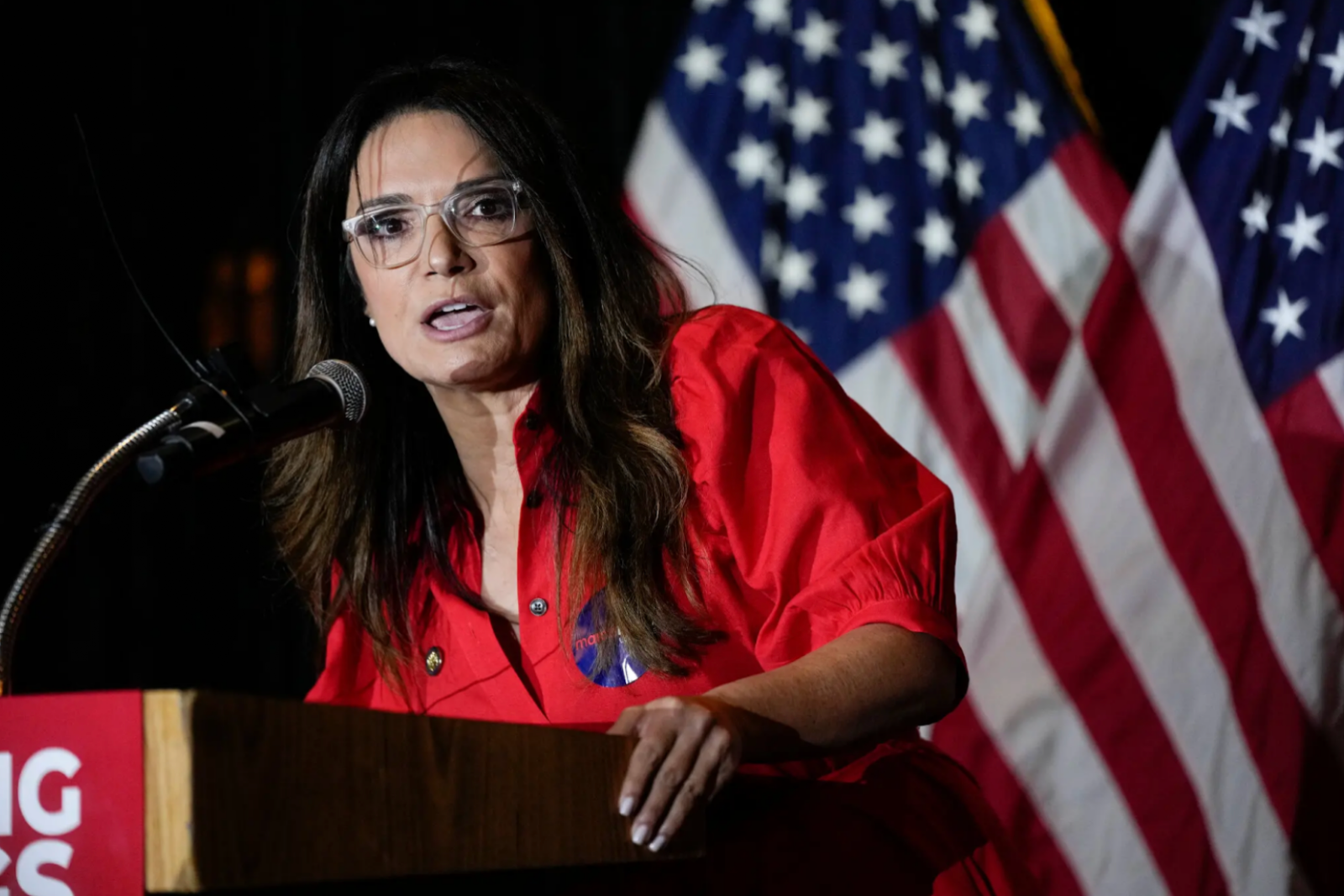
I join most Americans in reacting in horror to the heavy-handed tactics pursued by the Trump administration’s Department of Homeland Security in Minneapolis and other Minnesota cities. Two American citizens have been killed by federal immigration officers with ICE and the Border Patrol, with appalling and now-discredited efforts to blame the victims for their deaths. While leading administration figures like JD Vance and Stephen Miller have led in such attacks on the victims, one particularly reprehensible response to the murder of Alex Pretti came on Facebook from Florida Congressman Randy Fine: “An armed seditionist attacked federal law enforcement today as they were rounding up foreign invaders in Minneapolis. The insurrection was put down. Well done. I stand with ICE as they fight these foreign invaders and their treasonous allies. “
Republican state senator Ileana Garcia, a Coral Gables resident who co-founded Latinas for Trump, sees it differently. As reported in the New York Times, Garcia is concerned about the overt racial profiling and indiscriminate aggression against citizens, legal immigrants, and undocumented people alike. The Times story begins:
“The Trump administration’s immigration crackdown over the last year has gone from uncomfortable to untenable for Ileana Garcia, a Republican state senator in Florida.
A Transportation Security Administration officer at the Tallahassee airport overheard her speaking Spanish and asked whether Ms. Garcia, who was born in Miami, was an American citizen. She worried for the first time that Immigration and Customs Enforcement agents might stop her son, a young adult, because he looks Hispanic. Constituents have asked her for help finding immigrant relatives arrested by ICE.
Ms. Garcia, 56, has had enough. The Republican Party is in trouble, she said in an interview, predicting that it will lose this year’s midterm elections if the White House does not soon reconsider its harsh immigration enforcement tactics.
“We should not be afraid as a party to speak up, to course correct,” she said. That was before Saturday, when Border Patrol agents shot and killed Alex Pretti, a 37-year-old I.C.U. nurse who was protesting in Minneapolis, and federal officials sought to portray him as a “domestic terrorist.” Ms. Garcia said she was “dumbfounded.”
Minnesota Senator Amy Klobuchar Enters Governor Race as Favorite
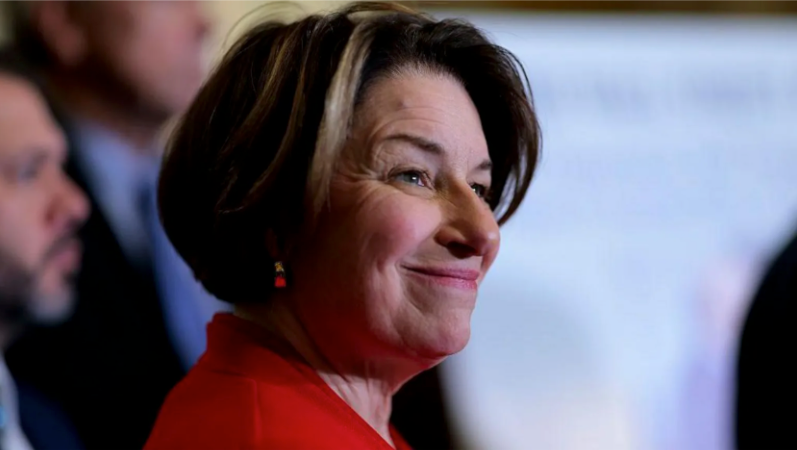
After weeks of speculation and a surprising tweak to the political landscape in Minnesota, U.S. Sen. Amy Klobuchar has announced her candidacy for governor in the 2026 election, stepping into a race reshaped by Gov. Tim Walz’s decision not to seek a third term and by intense national debates over immigration enforcement and state governance. In her campaign launch, Klobuchar framed her run as a response to the challenges facing Minnesota and its values, signaling her priorities while addressing the state’s recent struggles, from federal intervention to community trauma. As The Guardian reports on her campaign announcement on Jan 29th:
“Minnesota, we've been through a lot,” Klobuchar said in a video posted on X on Thursday morning, calling out political violence across the state, including the recent killings of Renee Good and Alex Pretti by Immigration and Customs Enforcement (ICE) agents dispatched to the area by Donald Trump.
She continued: “We cannot sugarcoat how hard this is, but in these moments of enormous difficulty, we find strength in our Minnesota values of hard work, freedom and simple decency and goodwill. These times call for leaders who can stand up and not be rubber stamps of this administration.”
She also emphasized: “I’m running for every one … for every Minnesotan who wants ICE and its abusive tactics out of the state we love.”
Klobuchar is already the frontrunner by double digits in November's governor contest, as the best-known Democratic figure to declare their candidacy ahead of the primary elections. Republicans, meanwhile, have not won a statewide race since 2006.
Women Lieutenant Governors in Illinois and Minnesota Reach for U.S. Senate in 2026
Peggy Flanagan's (left) campaign announced the endorsement of U.S. Senator Tina Smith (D-Minn.). Source: Red Lake Nation News
It’s not always easy for lieutenant governors to step up successfully in elections for governor or U.S. Senator, but women are making strong runs for Senate this year. In Minnesota, Peggy Flanagan leads polls and just secured the endorsement of incumbent Senator Tina Smith in her bid for the Democratic nomination, while in Illinois Juliana Stratton has the backing of Governor J.B. Pritzker in her bid. Red Lake Nation News spoke with Senator Smith about the importance of Flanagan’s support:
"I've worked as an organizer, at City Hall, as Lieutenant Governor, and as United States Senator. I know what this job takes, especially in this perilous moment," said Senator Tina Smith. "We need leaders who have the courage to take bold action, challenge the status quo and fight for people, so they can be safe and afford their lives. That's why I'm endorsing my friend Peggy Flanagan for United States Senate. Peggy has delivered for Minnesota, and she's always stood strong for all of us. I'm proud to endorse Peggy and am ready to work as hard as I can to make sure Minnesota sends another progressive fighter to the U.S. Senate."
Senator Smith's endorsement adds to the growing support for Flanagan's campaign as Minnesotans rally around a progressive fighter willing to confront Trump's agenda head-on. Her endorsement underscores the clear choice in this race: whether to send a senator to Washington who will challenge Trump's agenda, or one who enabled it. With more than 80 endorsements and thousands of volunteers across Minnesota, Flanagan is building a bold, people-powered campaign rooted in progressive values and a refusal to accept politics as usual."
New York Governor Kathy Hochul Forms All-Women Ticket for Re-Election
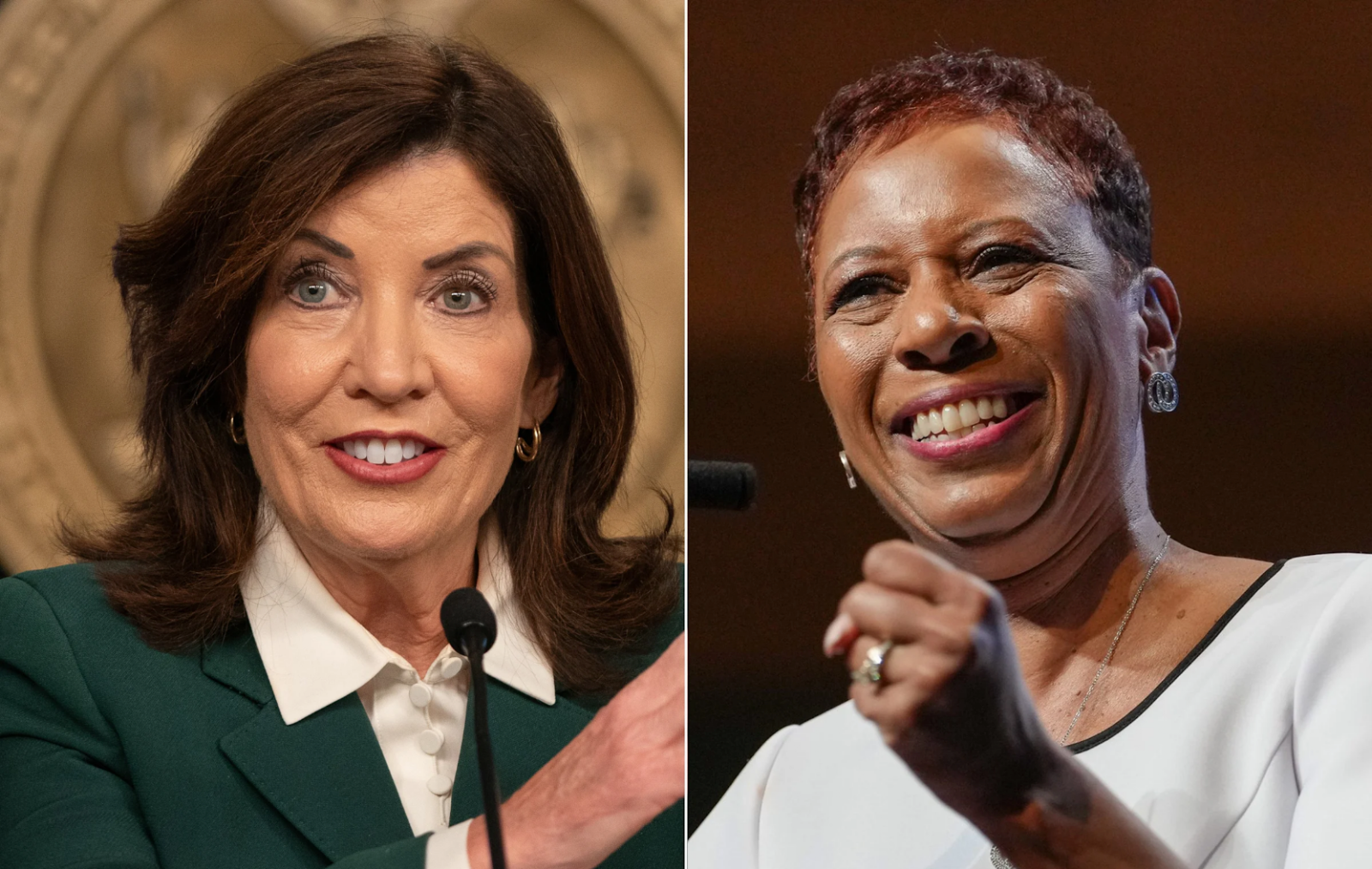
We’ve had generations of all-male tickets for governor and president in the United States, making it a breakthrough for New York governor Kathy Hochul to pick recent New York City council speaker Adrienne Adams as her running mate this year. Adams was a late entrant into the New York City mayoral primary this year, where she finished fourth in first choices, but would have defeated second-place finisher Andrew Cuomo if pitted head-to-head. The Daily News reports:
Gov. Kathy Hochul Wednesday picked former NYC Council Speaker Adrienne Adams as running mate in her fall Democratic reelection campaign, forging the first all-female ticket in state history. Hochul tapped Adams as her lieutenant governor candidate to help her win over minority voters in New York City, lauding their shared working class roots.
“I need a fighter in my corner who’ll stand strong for New York families. Adrienne Adams is that fighter,” Hochul said in a statement. “We’re going to continue investing in public safety, bringing costs down, and making this state a place where all families can thrive,” Hochul added.
U.S. House women trying to replace GOP US senators in Iowa and Wyoming
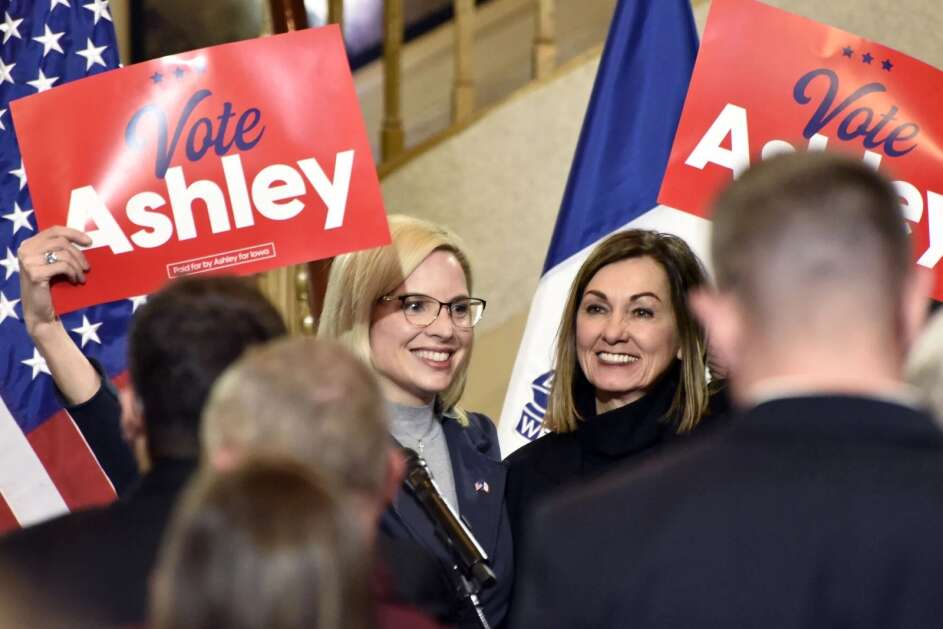
With several Republican U.S. senators, including Sen. Joni Ernst of Iowa and Sen. Cynthia Lummis of Wyoming, announcing they will not seek re-election in 2026, two Republican women from the U.S. House have stepped up to compete for those open seats, giving the GOP strong contenders while spotlighting the importance of women’s leadership in a party with comparatively fewer women in Congress.
In Iowa, U.S. Rep. Ashley Hinson, a three-term representative who was one of the first Republican women elected to the Iowa delegation, officially launched her campaign to succeed Ernst. From her announcement and early campaign messaging, Hinson made clear she sees the race as both a defense of Republican control and an opportunity for voters to choose a candidate who reflects their priorities. Most recently, Gov. Kim Reynolds has endorsed her campaign.
Meanwhile, in Wyoming, U.S. Rep. Harriet Hageman, who represents the state’s at-large congressional district and gained national attention for her decisive GOP primary victory over former Rep. Liz Cheney, also announced her campaign for the open Senate seat left by Lummis’s retirement. With strong support from national Republican leaders (i.e., Senate Majority Whip John Barrasso) and a base energized around a conservative agenda, Hageman’s bid highlights how women from the House are stepping into statewide campaigns after building their political careers in the lower chamber.