One of the things I have come to believe most deeply, after years of traveling the world to understand how other democracies work, is that the United States has a great deal to learn from what other countries have tried — both what has worked, and what hasn't. That conviction didn't come from reading reports. It came from being in the rooms.
It came from sitting in the Irish parliament, listening to women legislators describe what shifted after gender quotas were introduced for candidate lists: more women running, more women winning, and with them, a different set of questions being asked in the chamber. It came from conversations in New Zealand, where advocates talked about proportional representation not as a technicality but as a matter of fundamental fairness: if your vote doesn't help elect someone, it essentially disappears. Their system was designed so that it wouldn't happen, and the diversity of their parliament reflects it.
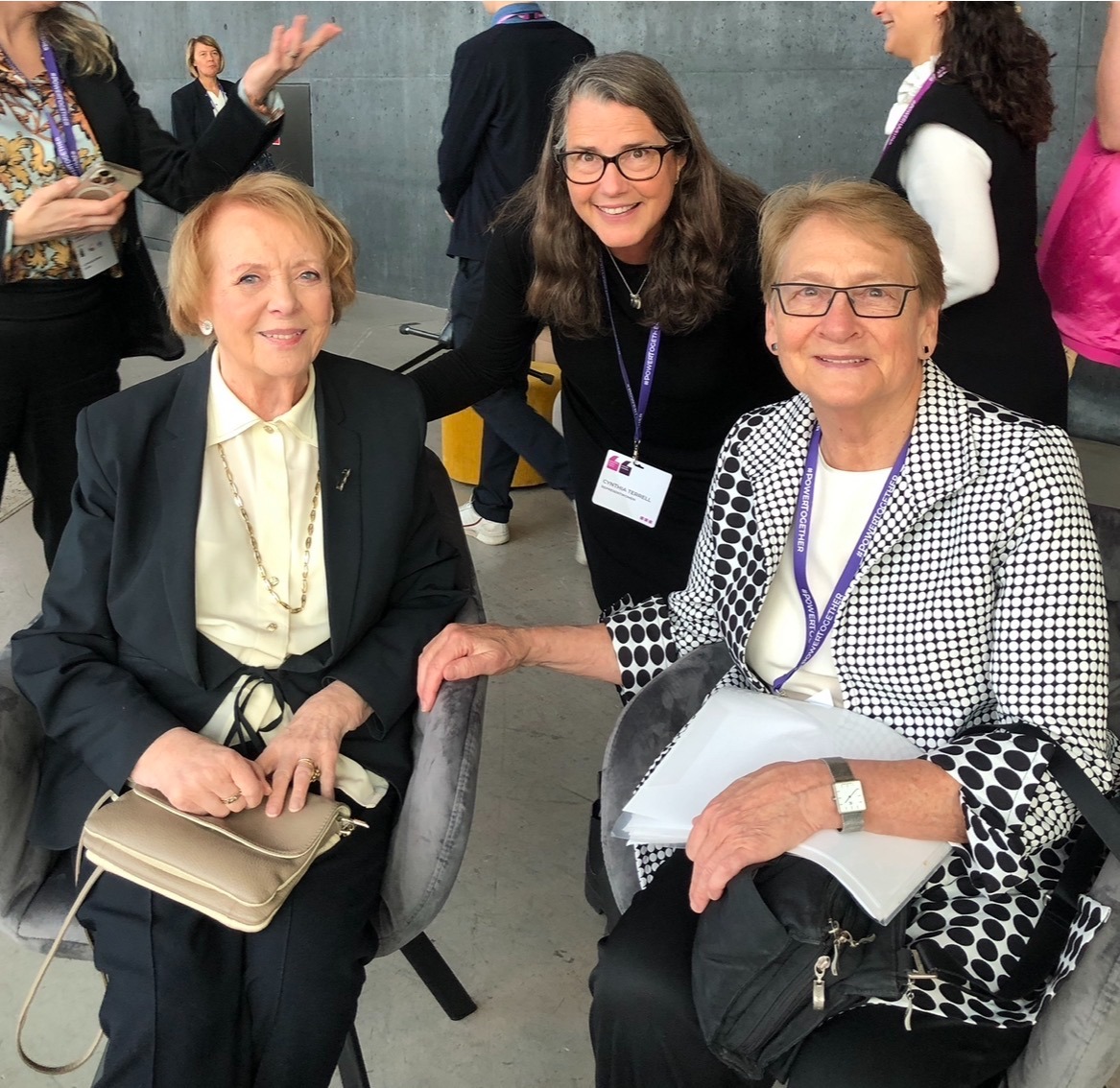
That conviction deepened at the Athens Democracy Forum, where debating the future of democracy in the very city where it began carries a weight that is hard to describe. And it has been renewed, again and again, in Iceland at the Reykjavik Global Forum, co-hosted each year by the government and parliament of a nation that has led the world on gender equality for over a decade. Sitting alongside women prime ministers, parliamentarians, and civic leaders from across the globe, all wrestling with the same core question we work on at RepresentWomen — how do you build systems that finally reflect the people they are meant to serve? — has been one of the most clarifying experiences of my career.
What each of those experiences taught me is that progress on women's political representation is never accidental. The countries that have made the most meaningful gains got there by changing their rules: adopting proportional representation, ranked choice voting, gender quotas, and placement mandates. When it comes to the countries still struggling, often, they work with systems that were never designed with women in mind.
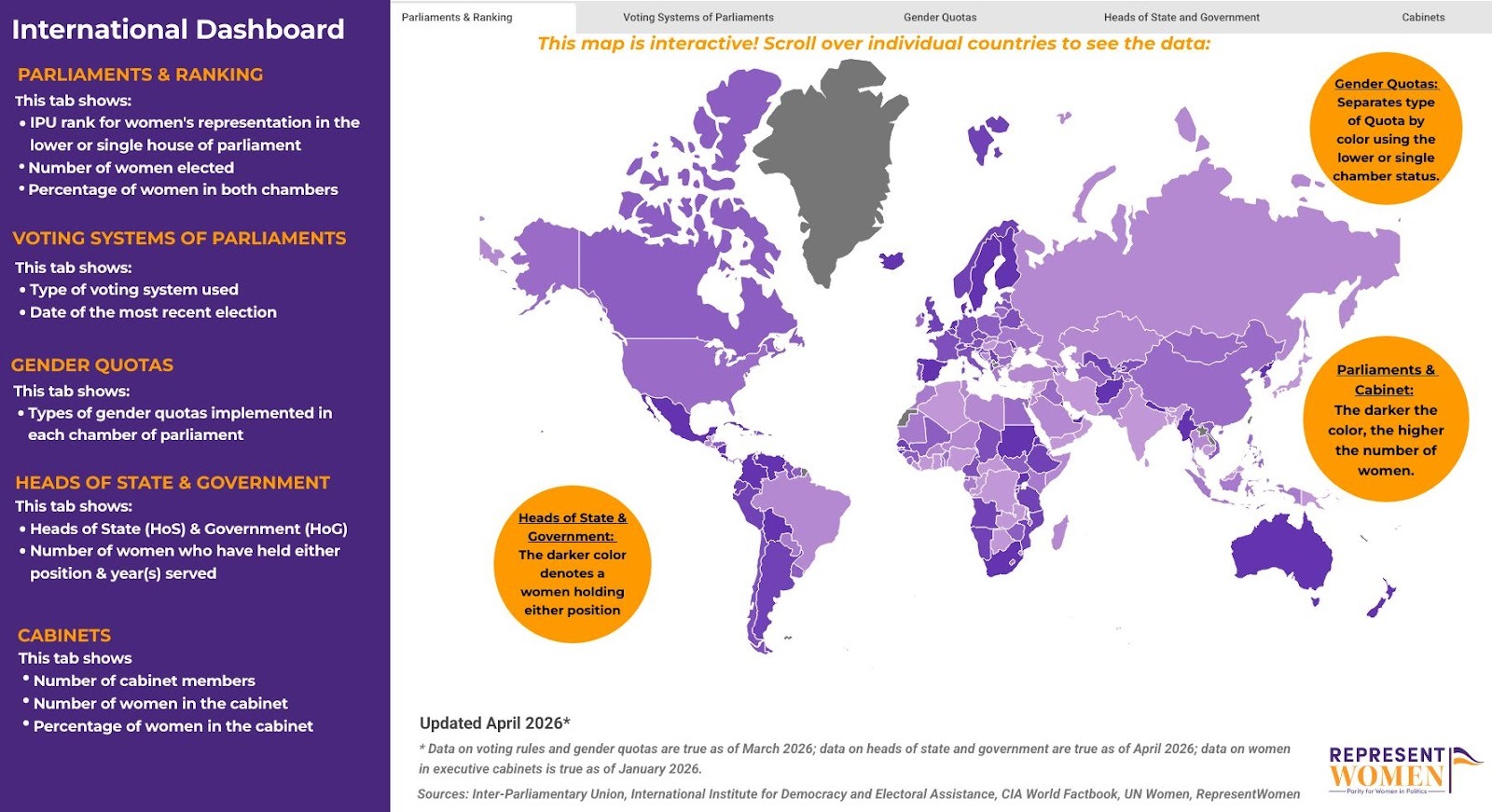
Which brings me to something I am genuinely excited to share with you. Starting this month, we will dedicate a full edition of Weekend Reading to international elections and women's representation news from around the world. Our incredible International Research Manager, Fatma Tawfik, reviews this landscape continuously — monitoring elections, quotas, seat shares, and structural reforms across dozens of countries — and her work work deserves a dedicated spotlight. I also invite you to explore our International Research page at RepresentWomen, which brings together the most comprehensive data and analysis we have on women's representation globally. It is one of the resources I am most proud of, and I hope you will find it as useful as I do.
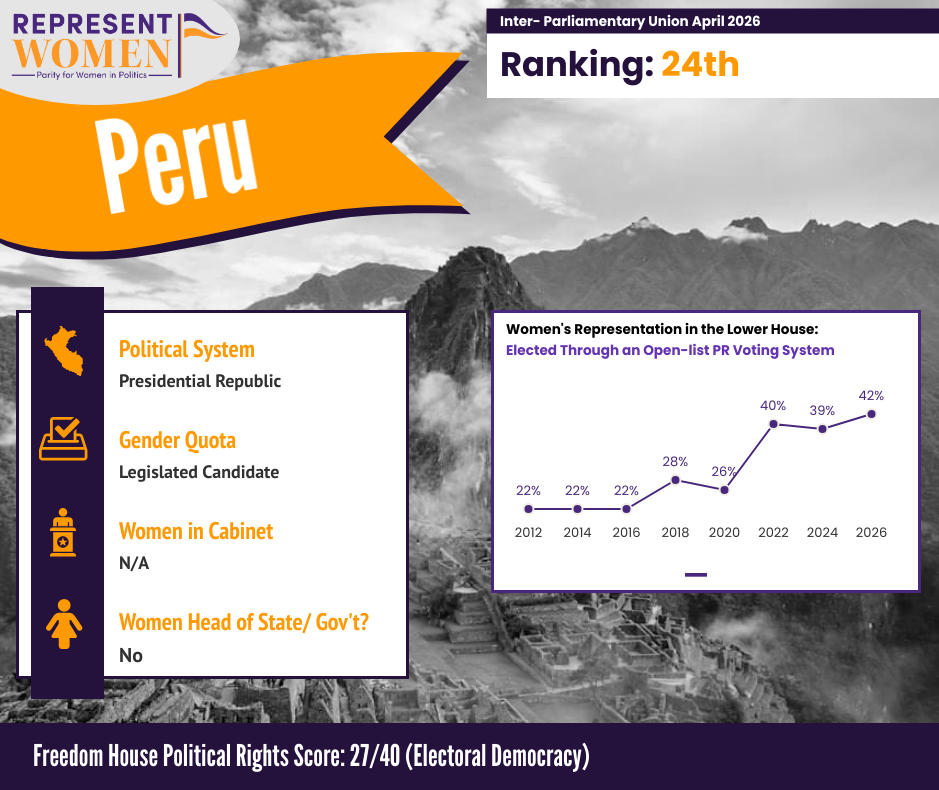
This April, we are watching six elections across four continents, and the range alone tells a story worth paying attention to. In Peru, the first round of the presidential election was held on April 12th and 13th — extended by a day after logistical failures left tens of thousands of voters without ballots. As votes continue to be counted, Keiko Fujimori is leading the first round with roughly 17% of the vote, all but certain to advance to the June 7th runoff. She would be the country's first woman president if she wins — but the second candidate for the runoff remains unclear, with several contenders locked in a tight statistical tie. Peru is a fascinating case study in how electoral systems shape representation: the legislative elections happening alongside the presidential race operate under a 50% candidate quota with placement mandates, helping Peru maintain 41.5% women's representation in its legislature — one of the highest in the region.
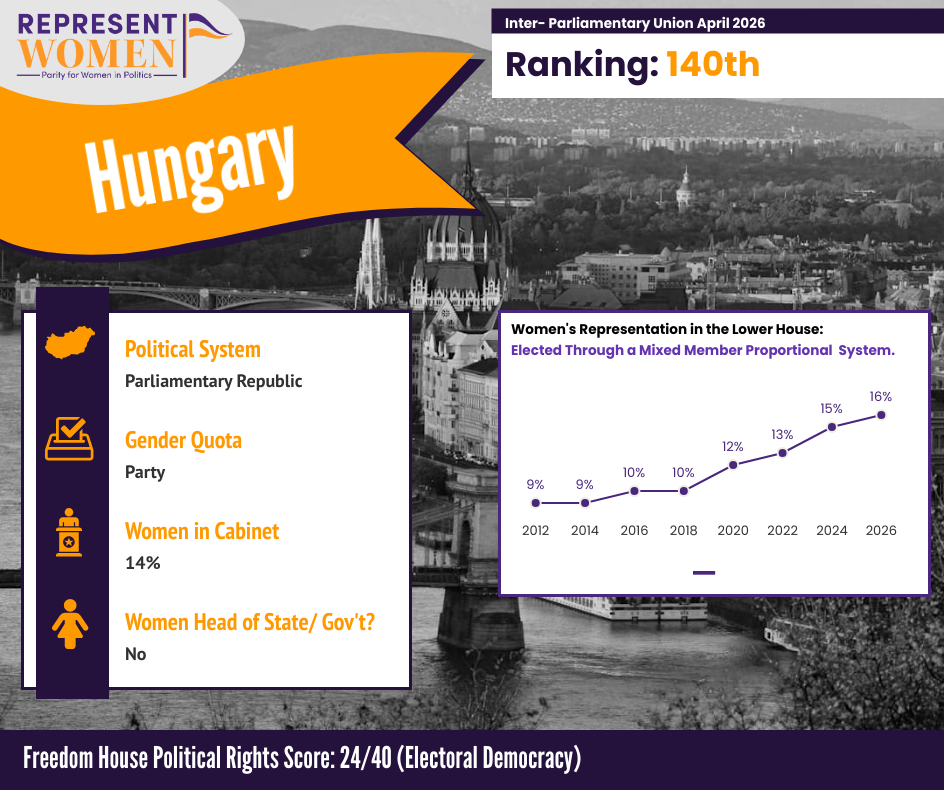
Meanwhile, in Djibouti and Benin, the presidential fields are entirely male — a reminder that representation doesn't shift on its own without intentional change to the systems that govern access to power. Hungary's parliamentary election is a study in incremental progress and its limits, with women holding 15.6% of seats and no legislated quota in place. Bulgaria heads into a snap election this Sunday, April 19th, following the government's collapse, and Antigua and Barbuda faces another cycle under a first-past-the-post system and without a gender quota, making meaningful gains unlikely.
Taken together, these elections are a kind of living laboratory for the choices democracies make and the outcomes those choices produce. I am so grateful to our research team for bringing this work to all of us, and I hope these monthly international editions become something you look forward to as much as I do.
Milestones: Eva Bowring became the first woman Senator from Nebraska; Satya Rhodes-Conway, became the first LGBTQ mayor of Madison, WI (2019); Congressional Caucus for Women's Issues wasformed (1977).
Birthdays: Clara Beyer, Rep. Don Beyer's grandmother & New Deal labor policy expert; Celinda Lake, noted pollster; Akshi Chawla, researcher & Gender Advocates for Parity team member; Sarah Michelle Gellar; Crystal Hudson, NYC Councilwoman; Loretta Lynn; Anne Sullivan, teacher & companion to Helen Keller (1866); May Edward Chinn, first African American woman doctor who helped develop the Pap smear (1896); Laurie Muchnick, fiction editor at Kirkus Reviews; Eva Bowring became the first woman Senator from Nebraska; Satya Rhodes-Conway, became the first LGBTQ mayor of Madison, WI (2019); Jennifer Garner, actress; Julie Won, NYC Councilwoman; America Ferrera, actress; Stephanie Lopez, Director at LatinasRepresent; Katherine Maher, CEO of National Public Radio; Mary Fuller; Lani Guinier, constitutional lawyer; and Dana Nessel, 1st openly LGBTQ person elected to statewide office in MI.
16 Years of Attacks on Women's Rights — Hungary Just Said Enough
Last weekend, Viktor Orbán conceded defeat after 16 years in power — and for advocates of women's rights and democracy globally, the moment carried real significance. Orbán's record on women is extensive and damning: he banned gender studies from universities, framed gender equality as a national threat, mandated invasive counseling requirements for women seeking abortions, refused to ratify the Council of Europe's treaty on ending domestic violence, and allowed no women's rights organizations to receive government funding since 2010. Hungary now sits second-to-last on the European Institute for Gender Equality's index. As Women's Agenda editor Angela Priestley writes, this wasn't just a bad record — it was a model being actively exported:
“Since 2010, no women’s rights organisations have received funding from Orbán’s government. And when a journalist asked in 2015 (the same year that the Canadian government announced a gender balanced cabinet) why there were no women in his government, Orbán responded that women can’t handle the stress of Hungarian politics. When the Council of Europe’s treaty on ending domestic violence was set to be ratified, Orbán refused to sign it because of the word “gender”.
It’s no surprise that Hungary sits second-last on the European Institute for Gender Equality’s index, nor is it a surprise that academics have described what Orbán has built during his time in power as an “anti-liberal gender regime”.
Part of the authoritarian playbook that’s been seen in Hungary and copied elsewhere, including in the United States and Poland, is to frame feminists and queer people as enemies of the state, pushing populations to direct their grievances and economic anger at those seeking more progressive rights. Hungary has been exporting this model, especially via the CPAC conferences, which Orbán has hosted and at which Australians like Tony Abbott have enthusiastically participated in (Abbott has also described Orbán as Hungary’s “greatest modern leader”).
We’ve been seeing a “backsliding” of women’s rights globally in recent years. Attacks on women’s rights are a primary mechanism of authoritarianism, rather than just a side-effect, something Orban hasn’t only been demonstrating but also actively spreading elsewhere.
As we look at what’s happening in the United States under Trump, and also what’s happening in Australia with the rise of populist movements – including here this week as the Coalition launched a hardline migration policy featuring throwbacks to the White Australia policy – I’m finally feeling a strong sense of hope regarding the potential for change.
So take a moment to enjoy what happened in a small European country last weekend.
It was beautiful to see thousands of people taking to the streets of Budapest, chanting “two-thirds” as they marked the significant majority who voted against Orbán. They were energetic and inspiring in their singing and dancing, demonstrating that a new dawn for democracy is possible. With gender equality and democracy interlinked — and authoritarian rule causing havoc on women’s rights — the defeat of an authoritarian poster child marks a turning point for women and girls globally.”
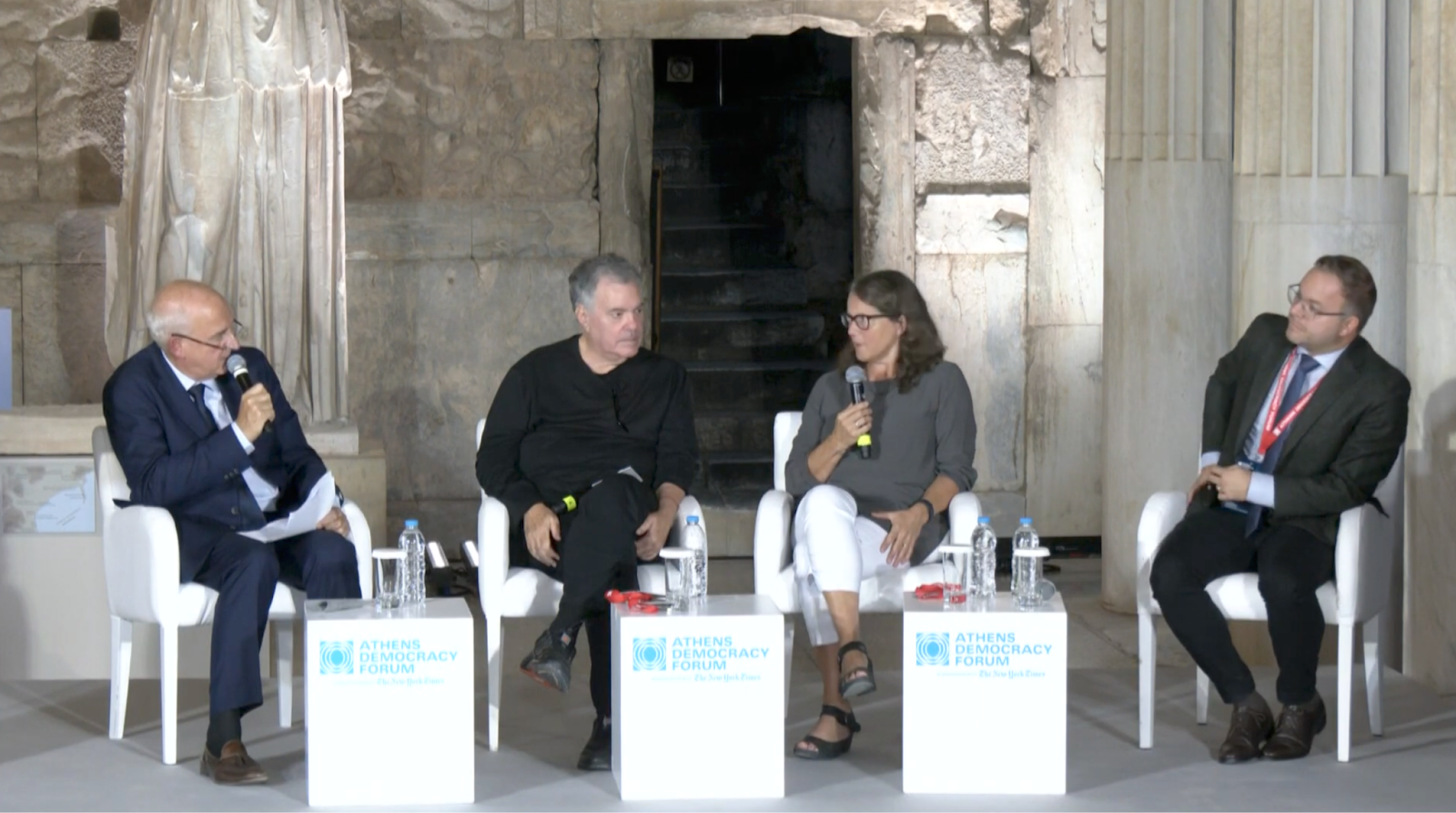
Following this election result, I’ve thought about my experience at the Athens Democracy Forum, where I appeared alongside Balázs Orbán, Political Director to the then Prime Minister of Hungary, in a session on polarization, conflict, and the possibility of fragile peace. Speaking alongside the key architect of Orbán's political project, speaks to the urgency of this work, and to the importance of being at every table where power is being discussed.
At RepresentWomen, we know that the rules and systems governing who holds power determine outcomes for everyone, and that when those systems are captured by leaders who view women's equality as a threat, the damage extends far beyond any single election cycle. Hungary's result is a reminder that democratic backsliding is never inevitable, and neither is progress. The work of building systems that include and protect women's political power has to happen before the strongman arrives, not after.
Nepal Shows What's Possible While The Rest of South Asia Shows What's in the Way
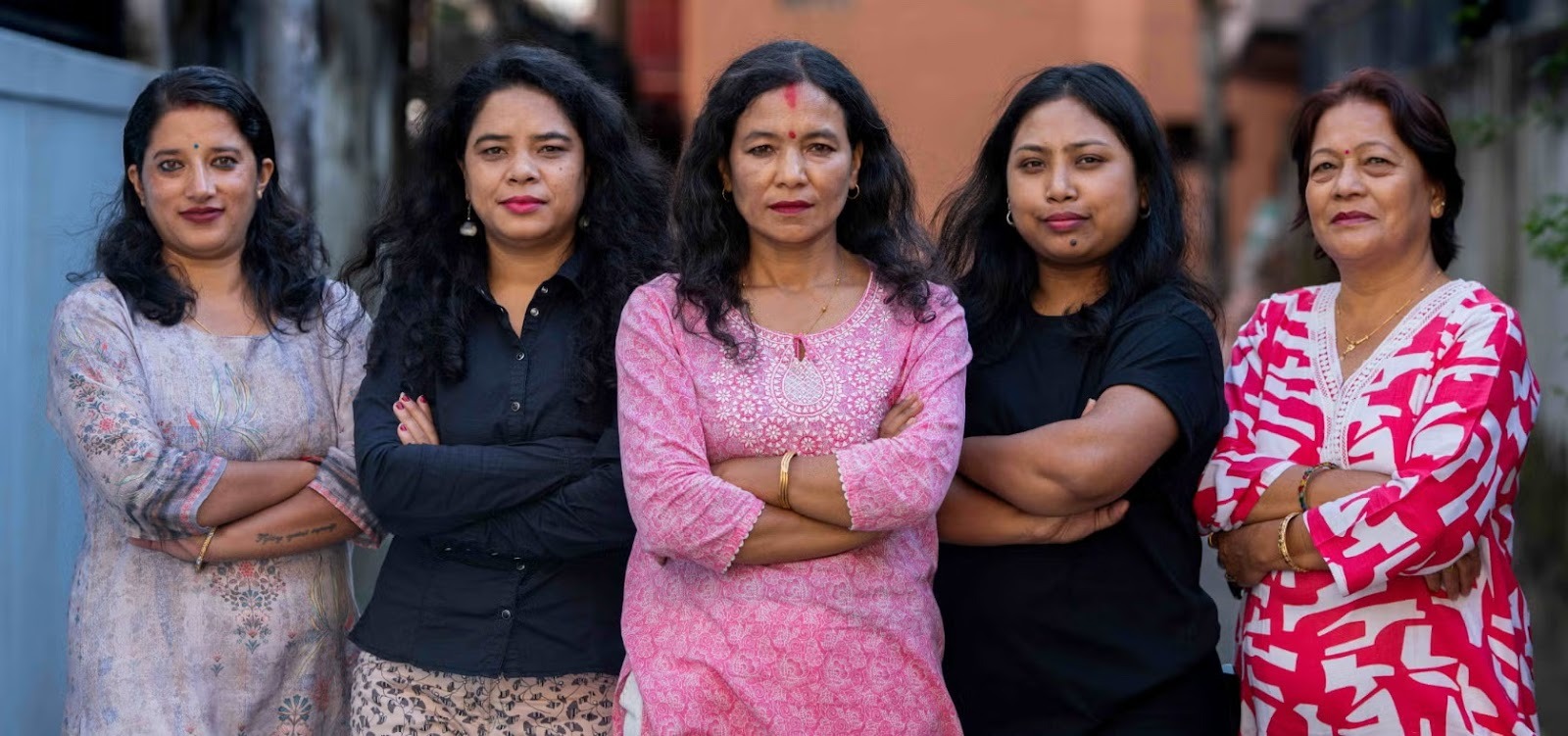
Across South Asia, women make up only 7% of ministerial seats and 15% of national parliaments — numbers that reveal just how far the region has to go on women's representation. A new analysis by PhD scholar Jazib Mumtaz uses Nepal as a case study in what structural commitment to gender parity can actually produce, and contrasts it with the fragmented, often symbolic progress of its neighbors. Here is an excerpt from the piece:
“Every South Asian nation has a largely patriarchal system of governance. This is demonstrated by the fact that women make up a disproportionately small percentage of representatives in elected bodies at all levels of government, and numerous studies have shown that even those women who are elected face significant obstacles to their ability to participate.
But it needs to be noted that the women's movement in South Asian nations has become stronger over the past 20 years, and calls for greater equal representation are being made throughout the subcontinent. Affirmative action laws have been implemented in several nations to guarantee a minimum level of female representation in government, but they haven't been enough to significantly and sustainably increase women's participation in governance.
Nepal's recent departure from deeply ingrained male chauvinism is an important turning point in the democratic development of South Asia and provides a useful comparison with its neighbours – Bangladesh, India and Pakistan. Nepal's 2015 Constitution serves as the foundation for the country's institutionalisation of gender inclusion through required quotas, which guarantee that women hold at least one-third of parliamentary seats and are heavily represented in local administration.
A shift from symbolic representation to substantive involvement has been made possible by this systemic approach, which has allowed women to enter politics and progressively influence policymaking. The establishment of a new government represents a significant institutional and generational change in Nepal's political landscape.
It is encouraging that the new administration has nominated five female ministers to the 15-member cabinet, guaranteeing for the first time 33 per cent female representation and meeting Nepal's constitutional mandate.
The fact that the female ministers have been assigned significant responsibilities in the areas of law, agriculture, general administration, justice and legislative affairs, health and population, and women and children affairs is encouraging.
Additionally, 96 women were elected to parliament, the highest so far in Nepal's history, though only 14 were directly elected, reflecting the age-old male chauvinism of political parties with regard to nominations.”
Nepal's progress didn't happen by accident; it happened by design. That's the core argument RepresentWomen makes every day: when the rules change, outcomes change. The question for every democracy, in South Asia and beyond, is whether the political will exists to build systems that make women's leadership the norm, not the exception.
Bangladesh's Gender Gap Isn't a Pipeline Problem — It's a Party Problem
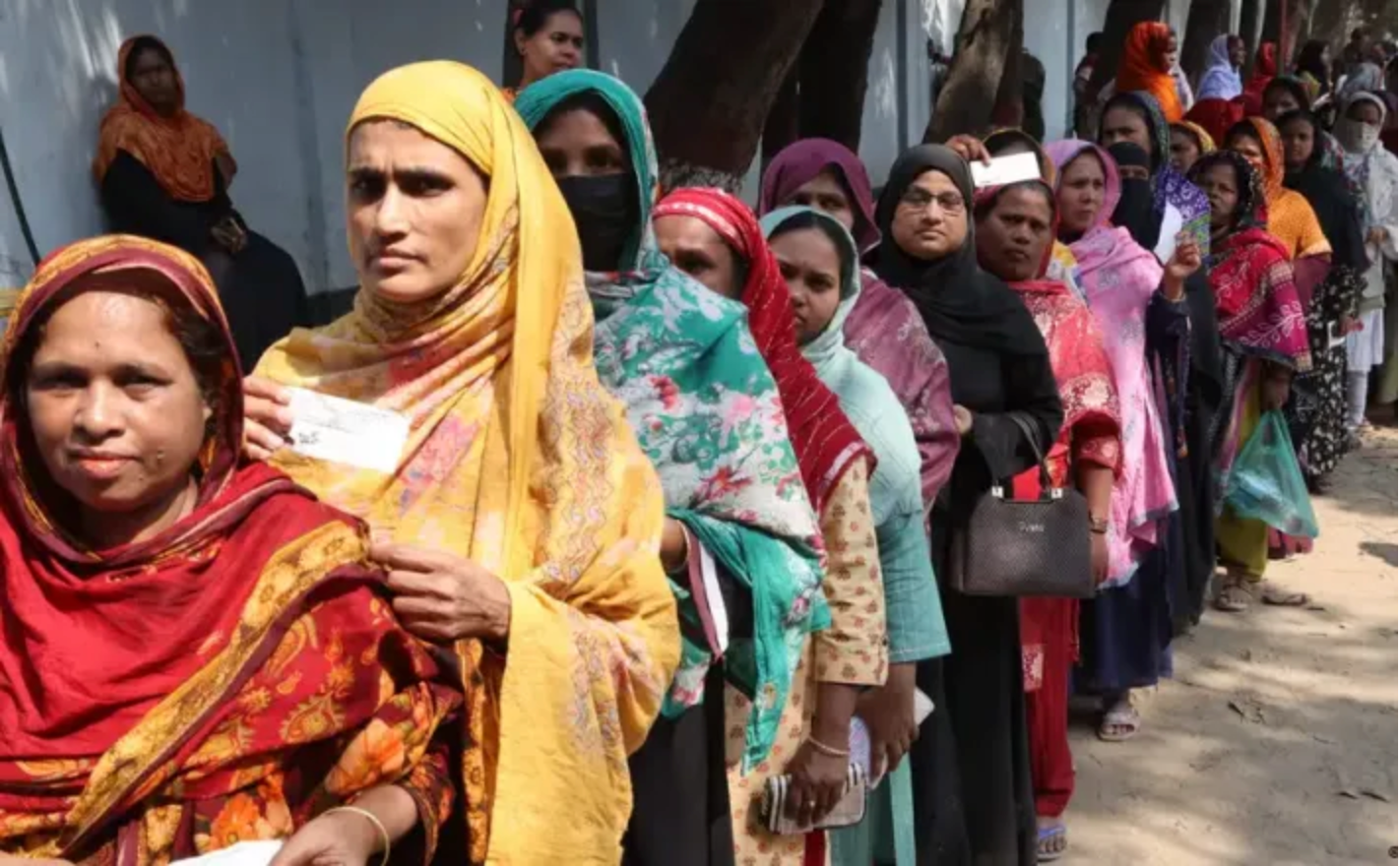
Bangladesh's electoral landscape tells a familiar story: women show up as voters, but the path to leadership remains blocked. A recent UNDP-convened dialogue in Dhaka put the numbers in stark relief — Bangladesh's own law mandates 33% female representation in political party committees by 2030, yet the current level sits at just 2.33%. The conversation that followed pointed to the same structural truth that RepresentWomen has long championed: quotas alone are not enough. Here is a segment illustrating the current electoral realities for women in Bangladesh:
"Bangladesh's Election Commissioner, Anwarul Islam Sarker, placed the responsibility squarely on political parties, stating, "Political parties must take more initiatives regarding nominations for women candidates. The Election Commission acts as a referee; without initiatives from both sides, progress is not possible."
The UN agency said that other leaders also echoed the call for a cultural shift within political structures during the session.
The dialogue emphasised that the solution extends beyond quotas to creating an environment where women can safely and confidently step into public life.
Election Commissioner, Tahmida Ahmad, emphasised that "good governance and proper implementation of law enforcement are essential to ensure safety, which will encourage women's participation."
The gains from this shift extend far beyond political equity, with Bangladesh Chief Election Commissioner A M M Nasir Uddin offering a "compelling economic perspective", noting that "if women's unpaid household work were monetised, Bangladesh's GDP could triple."
UNDP's Resident Representative, Stefan Liller, added, "When women lead, democracy becomes stronger, and communities and societies prosper. International Women's Day reminds us that a strong democracy depends on women participating fully, not only as voters but also as leaders and decision-makers."
The dialogue concluded with a renewed partnership between UNDP and the BEC, signalling a shared commitment to advancing the institutional reforms and sustained advocacy.
Emphasising the broader message, the UNDP said, "Advancing women's political leadership is not just a matter of rights or justice, but a fundamental necessity for the prosperity and strength of Bangladesh's democracy."
Pakistan Report Confirms What RepresentWomen Has Long Argued: Representation Without Power Is Not Enough
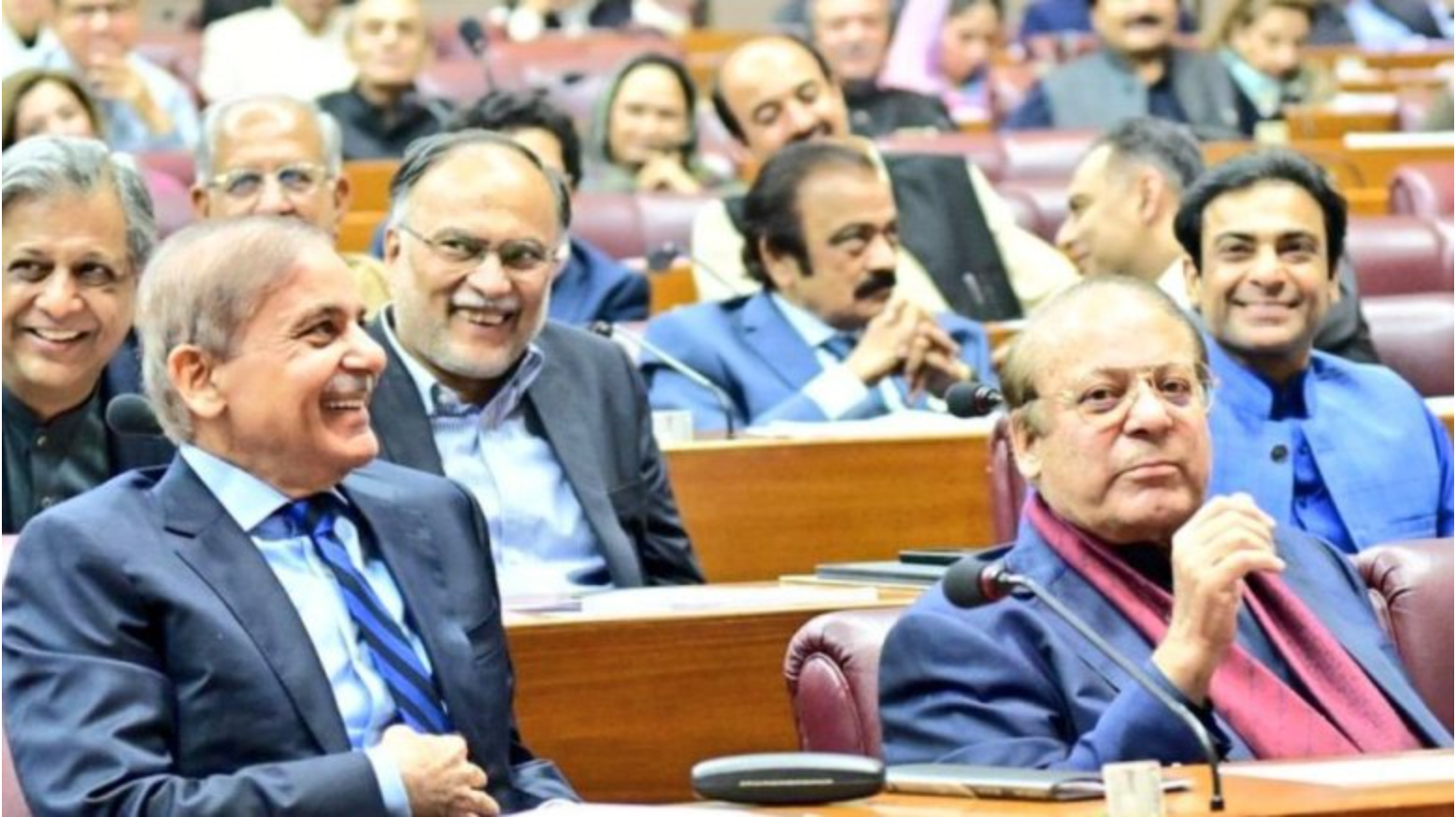
A new report from Pakistan's Free and Fair Election Network offers a striking case study in the gap between women's presence and women's power. Women's presence in Pakistan's Parliament remains quota-driven — presently, only one woman has been elected on a general seat, while the rest have become members of Parliament through reserved seats, with leadership positions from Chairman to Opposition leader remaining dominated by men. Here is an excerpt from the piece:
An editorial in Dawn said, "The Fafen report shows Pakistani women in Parliament have shown competence, range and commitment. The question is no longer whether they can perform. It is whether the political system will allow them to lead."
Women parliamentarians contributed beyond their numerical strength, they did so in various policy areas, from economic management to national security and taxation.
On a per capita basis, women performed better than their male counterparts, submitting an average of 12 agenda items each compared to 11 by men.
Their legislative priorities rejected the stereotype that women lawmakers only highlight 'women issues' as more than half of their agenda focused on national-level concerns, implying that if space exists, women parliamentarians are not only present but substantive contributors.
"Yet the report also reveals the limits of this progress. The Senate's Gender Responsiveness Score stands at 0.9, indicating that women's legislative initiatives receive less attention than those of their male colleagues. More tellingly, most female Senators fall into the 'rarely spoke' category in plenary debates. But the deeper constraint lies outside the chamber," an editorial in Dawn said.
"Women's presence in Parliament remains overwhelmingly quota-driven. Of the current cohort, only one woman has been elected on a general seat; the rest entered through reserved quotas. Leadership positions -- from Chairman to Opposition leader -- remain male-dominated. This is a failure of political parties. Parties control the pipeline of power.
Reform must start at the party level if the imbalance in Pakistan is to be corrected.
Political parties need to actively promote women as candidates on general seats. It demands investment in development of candidate, equitable ticket distribution and pathways into party leadership."
This is exactly the structural barrier RepresentWomen works to dismantle. Women winning seats is necessary, but insufficient. When recruitment pipelines are controlled by parties that don't actively invest in women candidates on general seats — and when leadership positions remain male-dominated by default — representation becomes symbolic rather than transformative.
The lesson from Pakistan applies globally: rules and systems determine outcomes. Quotas can open a door, but without broader reforms to how parties recruit, how tickets are distributed, and how leadership pipelines are built, women will continue to be present without being powerful.
That's why RepresentWomen advocates for systemic change; not just more women on the ballot, but redesigning the rules that govern who runs, who wins, and who leads.
Zero Women in the Room Where the Iran Peace Talks Happened
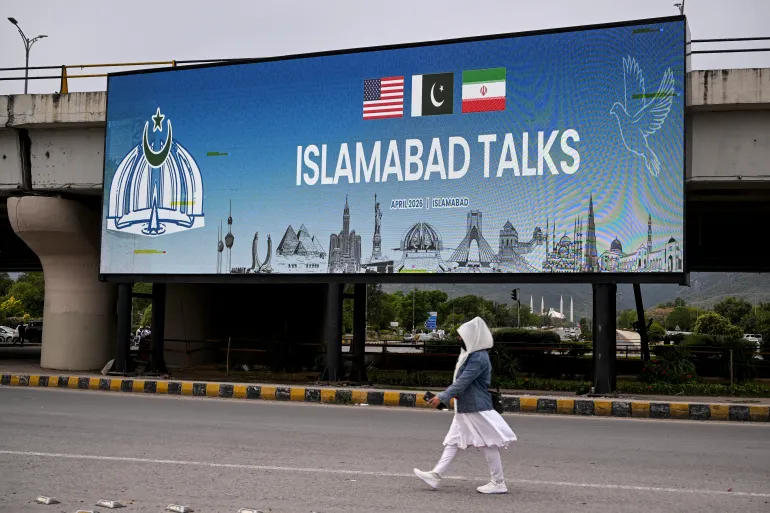
Last weekend, JD Vance traveled to Islamabad for high-stakes peace talks aimed at ending the U.S.-Israeli war on Iran. The talks ended without resolution. Her Bold Move, an organization focused on electing women to office, ran a quick check on who was in the room, and the answer speaks for itself.
The eleven decision-makers directly or indirectly involved in the negotiations included Donald Trump, JD Vance, Steve Witkoff, and Jared Kushner for the United States; Mohammad Baqer Qalibaf and Abbas Araqchi for Iran; Shehbaz Sharif, Asim Munir, and Ishaq Dar for Pakistan; and Benjamin Netanyahu and Israel Katz for Israel. Not one was a woman.
The stakes of that absence are real. Research tracking peace agreements between 1989 and 2011 found that when women are involved in peace negotiations, agreements are 35% more likely to last 15 or more years. The consequences of war fall hardest on women and children. The people negotiating its end are exclusively men, and this round produced no agreement.
Her Bold Move makes a direct connection between this moment and their work in electing women up and down the ballot. Their candidates include social workers, immigration lawyers, public defenders, nurses, OB/GYNs, and domestic violence advocates. The type of people whose professional lives have been shaped by the human costs of policy failure. The logic is simple: if you want the rooms where world-altering decisions are made to look different, you have to start by changing who's elected.
The Best Argument for Women in Politics? Watching Women Govern
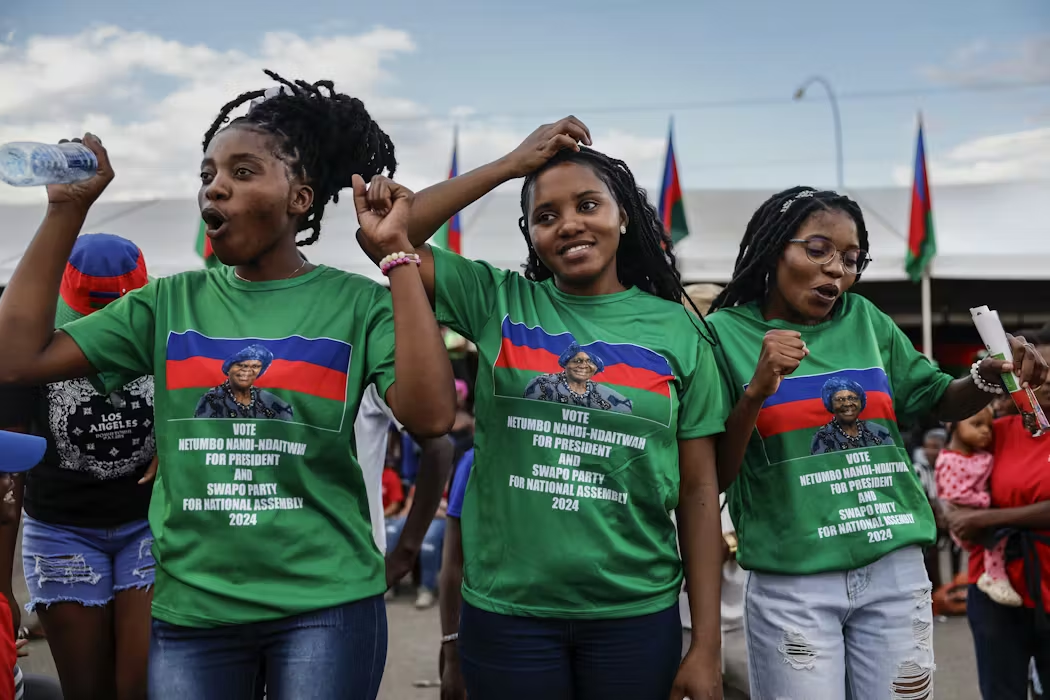
An article in The Conversation recently highlighted some encouraging research on gender parity quotas, and its findings cut directly against one of the most persistent fears in the field. The study, titled “Seeing is believing: Voluntary gender quotas change female leadership stereotypes” published in Research and Politics, examined what happened in Namibia after its dominant political party quietly rewrote its internal rules in 2013 to alternate men and women on its parliamentary candidate list. Women's representation in the National Assembly nearly doubled overnight, from 21% to 41%. But the more important factor was what happened outside Parliament. Using nationally representative surveys from 2006 to 2017, the author found that women in communities where female MPs were most visible became significantly more supportive of women's right to hold political office.
Just as striking is what did not happen. Men did not become more supportive, but they did not become less supportive either. The feared backlash did not materialize. And crucially, public opinion did not shift when the quota was announced. It shifted only after women actually took office and became plainly visible as leaders.The conclusion of the paper describes how these results map onto the current political landscape:
"The key contribution of this article is to demonstrate these effects in a case where pre-existing attitudes among voters were unlikely to confound SWAPO’s decision to adopt its quota policy. It remains the task for future empirical work to examine whether the findings generalize beyond the Namibian context. Nevertheless, this article demonstrates that quotas voluntarily adopted by political parties can be an effective tool for changing public opinion, especially in contexts where legislative or constitutional measures are unavailable."
At a moment when the Gen Z gender gap on equality is widening and anti-suffrage voices are growing louder, this study is a powerful case for why structural reforms that get women into office matter.
India Is About to Reserve a Third of Parliamentary Seats for Women With a Catch
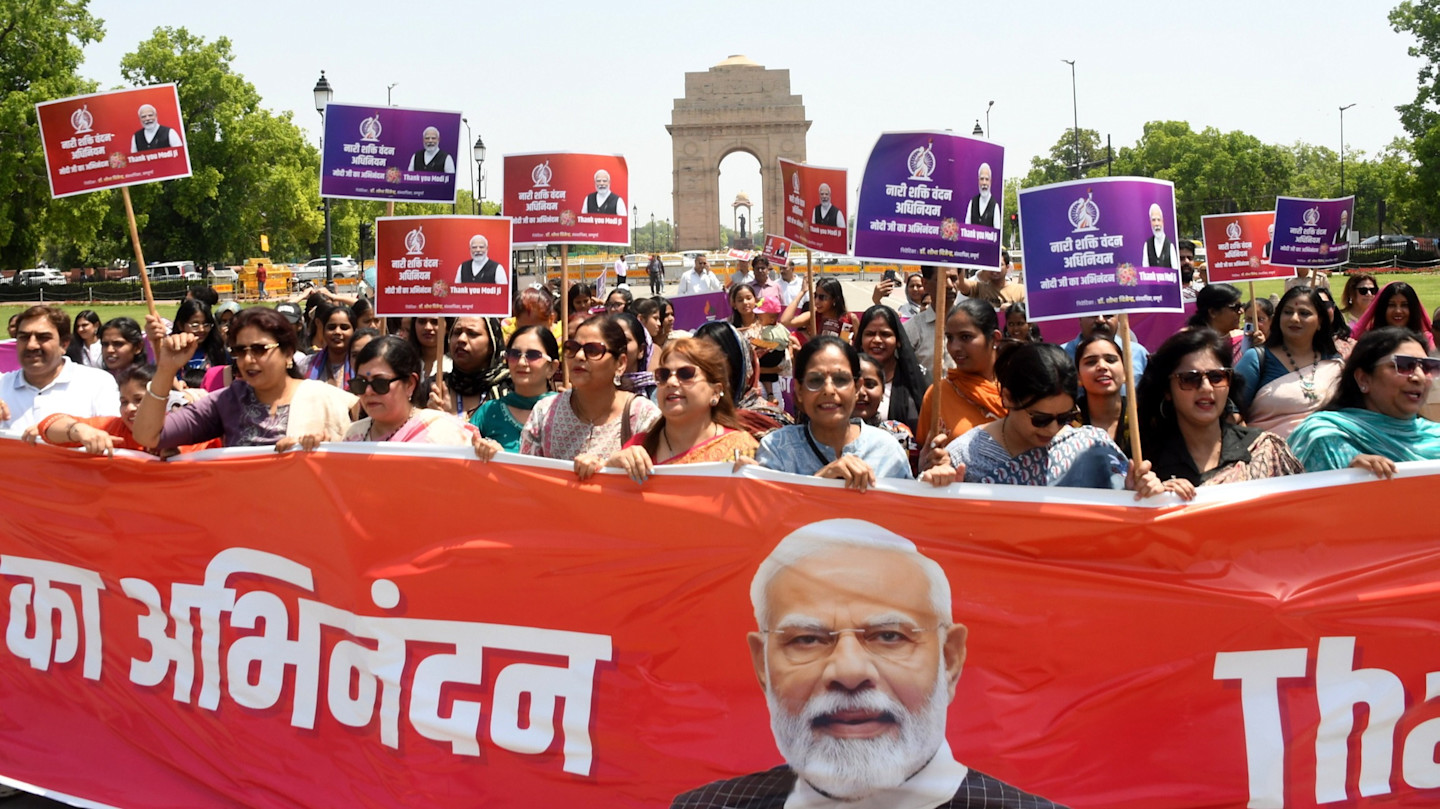
India is on the verge of one of the most significant expansions of women's political representation in the world but the legislative package carrying it is deeply contested.
Prime Minister Narendra Modi's government is set to vote on a constitutional amendment that would reserve one-third of seats in India's lower house for women, while simultaneously expanding the Lok Sabha from 543 to 850 members which would make it the world's largest democratically elected lower house. The Financial Times writes:
"The constitutional amendment is part of a wider legislative package that includes a plan to reserve one-third of parliamentary seats for women.
Modi said the bill was an overdue “sacred opportunity”.
“We have got the chance to include half of the country’s population in the decision-making process,” he told parliament on Thursday.
Ranjana Kumari, chair of the advocacy group Women Power Connect in New Delhi, said that after a “long battle”, the move was “overdue”. With just 13 per cent female [well below the global average of 27.5%] representation in parliament currently “it will change the nature of power”, she added.
But the women's quota is bundled with a redistricting plan "delimitation" that some say is designed to benefit Modi's Bharatiya Janata Party (BJP).
Critics, however, say delimitation favours the ruling Bharatiya Janata Party. They argue Modi’s proposal tips the balance towards the northern, poorer and more populous states where his party enjoys electoral dominance, while giving less representation to opposition-controlled southern states where the BJP has historically performed poorly."
Opposition leader Rahul Gandhi called it "an attempted power grab using delimitation and gerrymandering." Tamil Nadu's chief minister went further, burning a copy of the bill in protest.
This story illustrates a tension that runs through electoral reform globally. Structural changes that would genuinely advance women's representation can be and often are introduced in ways that serve other political agendas simultaneously. The case for women's seats in parliament is strong on its own terms. Whether it survives the politics surrounding it is another question.
P.S. —
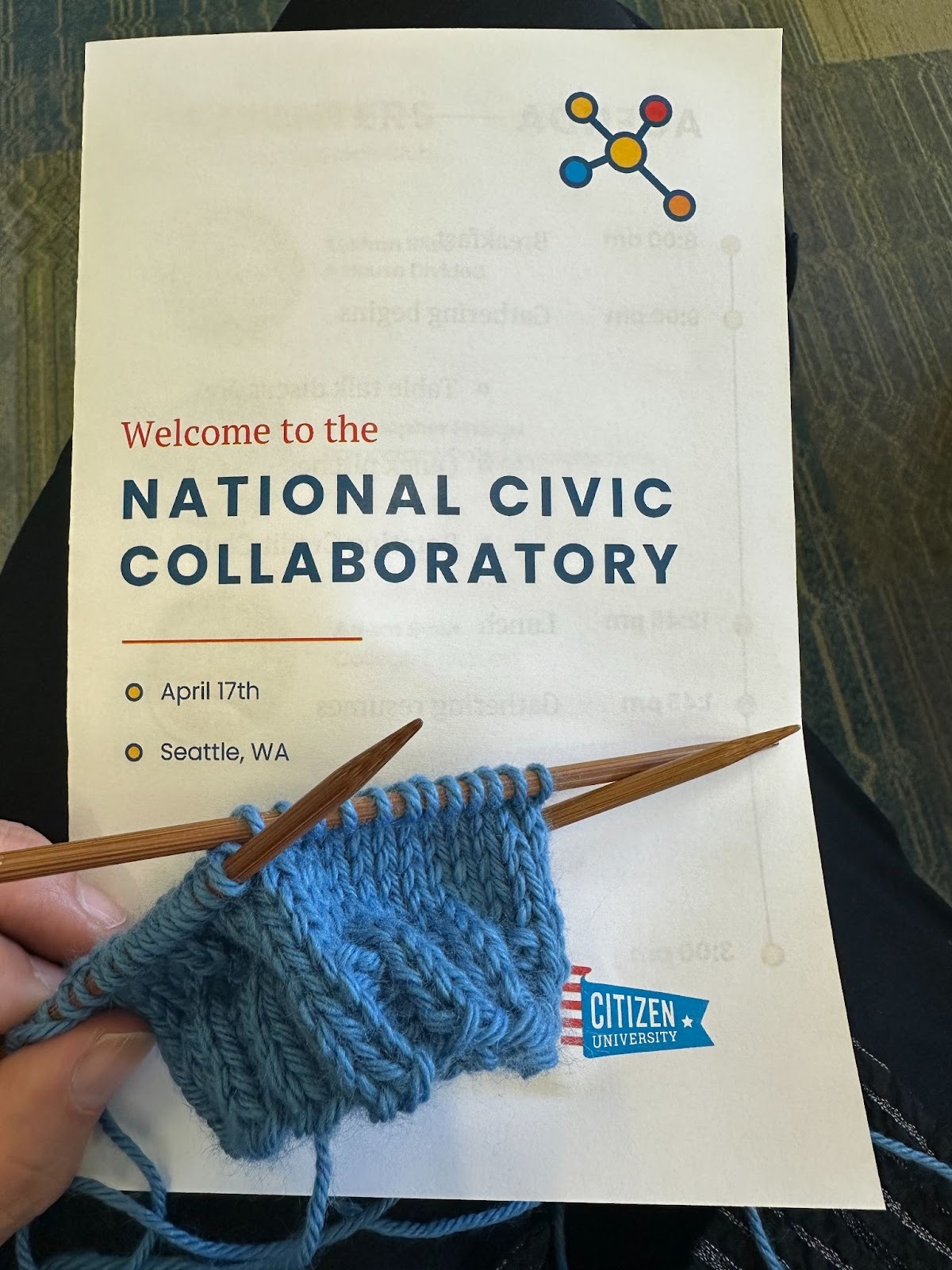
It's amazing to be with fellow democracy advocates at Citizen University's Civic Collaboratory, led by the incomparable Eric Liu. Eric was one of the three co-chairs of the American Academy of Arts and Sciences' Commission on the Practice of Democratic Citizenship, whose landmark report Our Common Purpose: Reinventing American Democracy for the 21st Century recommends several of the core electoral reforms we champion at RepresentWomen, including ranked choice voting and proportional representation.
.png)
.png)