Last week, I had the privilege of traveling to Seattle, a city that holds a special kind of energy right now for those of us who care deeply about the future of democracy. I returned home energized, a little road-weary in the best possible way, and deeply grateful for the community of allies and advocates who continue to make this work feel less like a mission and more like a movement.
As I mentioned last week, the trip included the always-invigorating Civic Collaboratory hosted by Citizen University — it is always such a gift to be in the room with Eric Liu and fellow democracy advocates who share our conviction that building a more representative democracy is both urgent and possible. Beyond the Collaboratory, I was also fortunate to connect with long-time friends and allies of RepresentWomen in Seattle, including the incomparable Melinda Mann, who generously co-hosted our Building Women’s Power By Design gathering alongside Vickie and Diane Rawlins. It was an intimate evening bringing together Seattle-area advocates, community leaders, and allies to talk about the structural and policy reforms at the heart of RepresentWomen’s work.
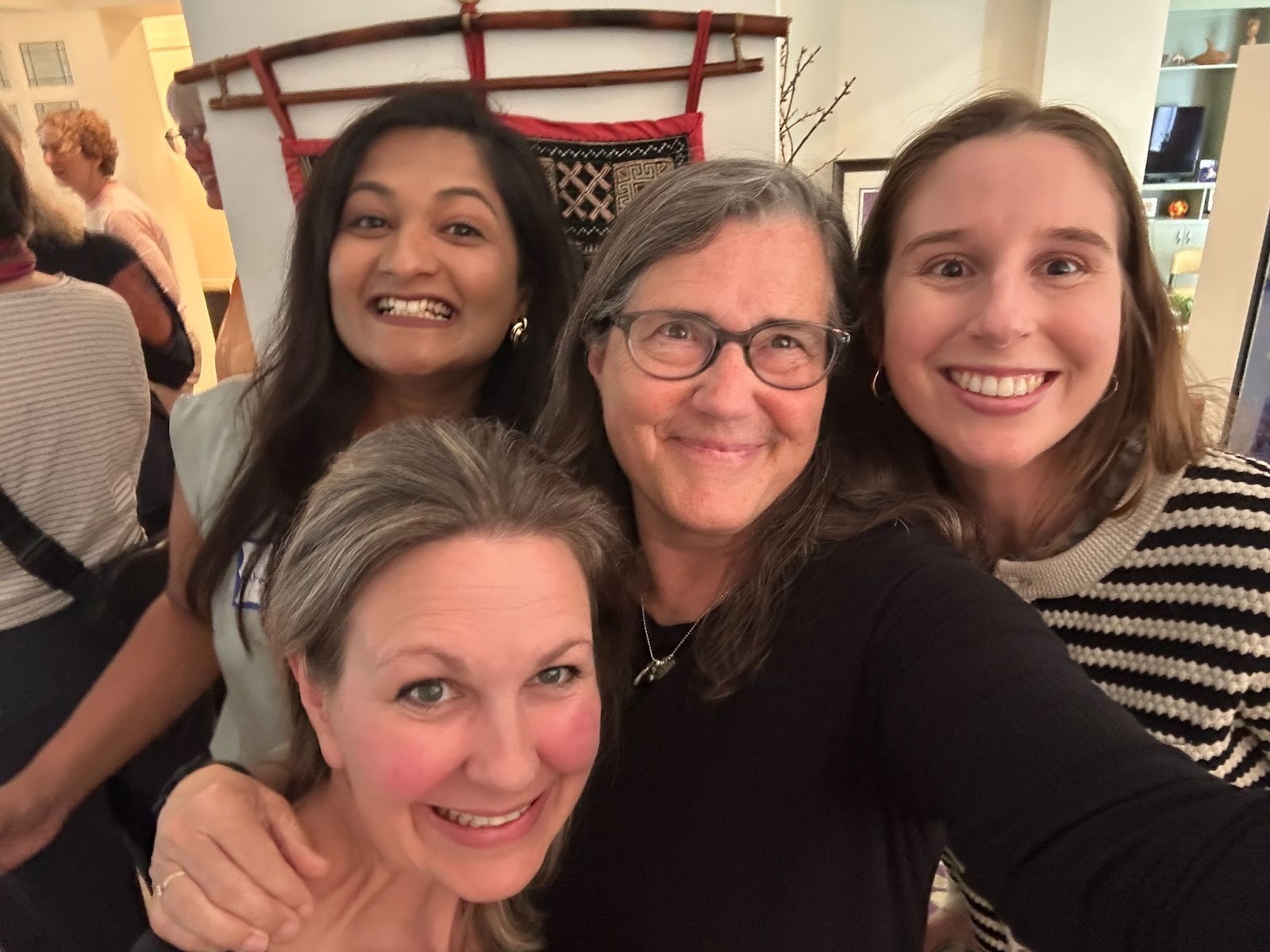
It is always a fabulous time whenever these lovely ladies are in the room! I am already looking forward to being back in Seattle so I can spend more time with Aparna Ghosh, Dinah Stephens, Louisa Duggan.
I was heartened to field so many insightful questions from the group about ranked choice voting and proportional representation, our Gender Parity Index, and the legislative modernization work we are doing to help states and localities design systems that are more inclusive and effective. What struck me was how strong the appetite is in Seattle right now for exactly this kind of work; people are paying attention, they are engaged, and they want to know how to plug in. That energy is something I carry home with me every time, and with every city I visit, I am struck by how much it continues to grow. No matter what corner of the country I find myself in, the momentum is building.
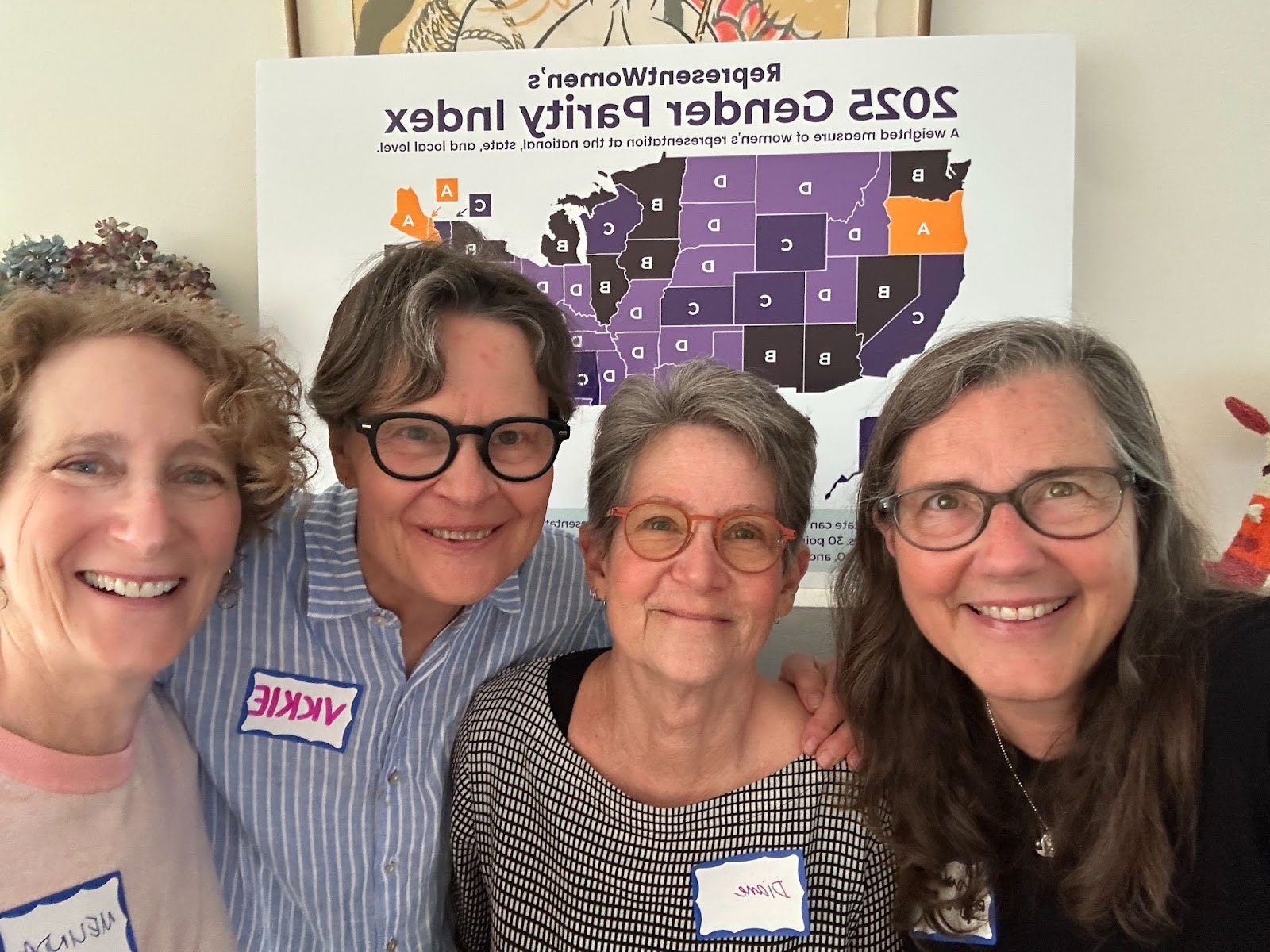
I am so grateful for Melinda Mann, Vickie & Diane Rawlins who graciously co-hosted the RepresentWomen Salon in Seattle on Sunday!
These gatherings are one of my favorite parts of this work. They remind me that the movement for a more representative democracy is not just happening in Washington, D.C., or in state capitols — it is happening in living rooms and community spaces across the country, led by people who believe, as we do, that teamwork makes the dreamwork. And the timing in Seattle feels particularly meaningful: with ranked choice voting coming to the city next year, there is real urgency around building the relationships and coalitions that will make implementation a success. A heartfelt thank you to Melinda, Vickie, and Diane for making the evening possible, and thank you to everyone who showed up excited to join us in this important work. If you’d like to learn more about ranked choice voting’s coming debut in Seattle, you can find out more from our fabulous partner organization, FairVote Washington!
Milestones: Nebraska ratified a bill granting women suffrage in municipal and presidential elections (1917); Barbara Walters became the first woman nightly news anchor (1976); and Chloé Zhao became the first woman of color and the first woman of Asian descent to earn best director at the Academy Awards (2021).
Birthdays: Sarah Bryner, Public Agenda; Maria Perez, co-director of Democracy Rising; Shirley Temple, actress & former U.S. Ambassador to Ghana (1928); Jen Simon, co-founder of Wyoming Women's Action Network; Barbra Streisand, singer, actress, & philanthropist; Ella Fitzgerald, First Lady of Song (1917); Mercedes Narcisse, NYC Councilwoman; Patti Russo, ED of the Women's Campaign School at Yale; and Julia Ruutila, union organizer, activist, & journalist (1907).
Analilia Mejia Sworn Into Congress as the First Congresswoman to Succeed Another
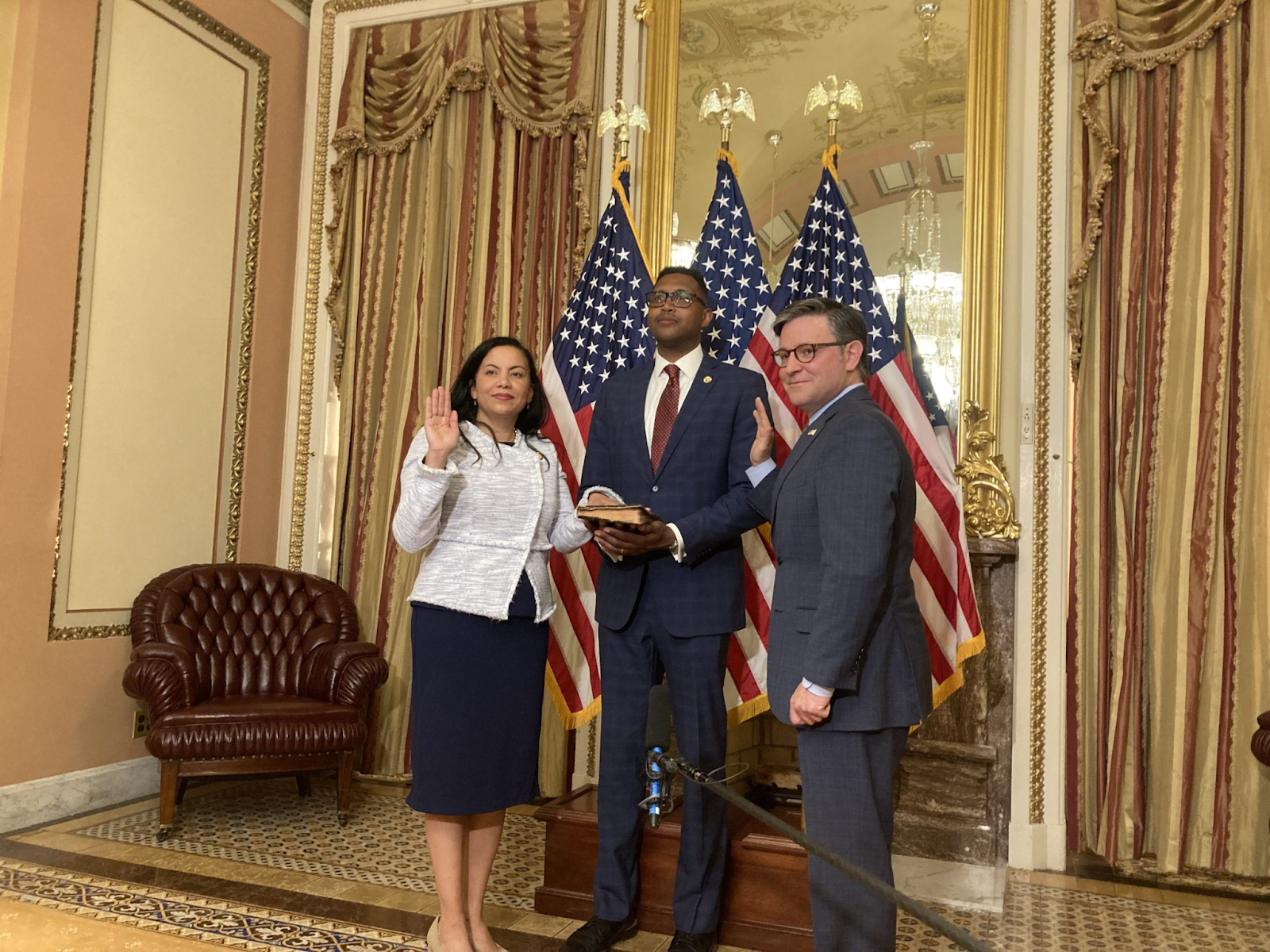
Rep. Analilia Mejia at a swearing-in ceremony with House Speaker Mike Johnson. Source: New Jersey Globe
This week brought another first worth celebrating: Rep. Analilia Mejia was sworn into the US House on April 20, becoming New Jersey's newest congresswoman just four days after winning a special election by a 20-point landslide. She is the first-ever New Jersey congresswoman to succeed another congresswoman, replacing Gov. Mikie Sherrill, who vacated the seat after winning the governorship in November.
Mejia's path to Congress was an underdog story. She beat ten opponents in a Democratic primary upset in February, many of them far better-funded and more electorally experienced, before securing the general election win.
Before Congress, Mejia served as national political director for Bernie Sanders's 2020 presidential campaign and as deputy director of the U.S. Women's Bureau at the Department of Labor under Biden. Her career roots are in labor organizing and advocacy for working families, where she helped win the $15 minimum wage and paid sick days in New Jersey.
Her arrival narrows the Republican House majority, meaning Speaker Johnson can afford no more than one GOP defection on party-line votes. The New Jersey Globe writes:
“With Mejia now in office, the Republican House majority has narrowed to just 218 seats to 214, meaning that any two Republican defectors can join with Democrats to sink a bill. (The indefinite absence of another New Jersey House member, GOP Rep. Tom Kean Jr., for medical reasons makes the Republican majority’s math even more of a headache.)
As her first official acts in office, Mejia signed onto a discharge petition led by fellow New Jersey Rep. Donald Norcross (D-Camden) reforming the National Labor Relations Act, then voted for a non-controversial bill on 9-1-1 outages. She said that as she settles into office, one of her first priorities will be making sure her constituents back at home remain informed about what’s going on in Washington.
“Voters in New Jersey’s 11th are hungry for information,” she said. “They want to understand what’s happening in Congress, what’s happening with this war, what’s happening in terms of trying to rein in the worst tendencies of this administration.”
NYC Mayor Backs Lindsey Boylan - First Cuomo Accuser - for City Council
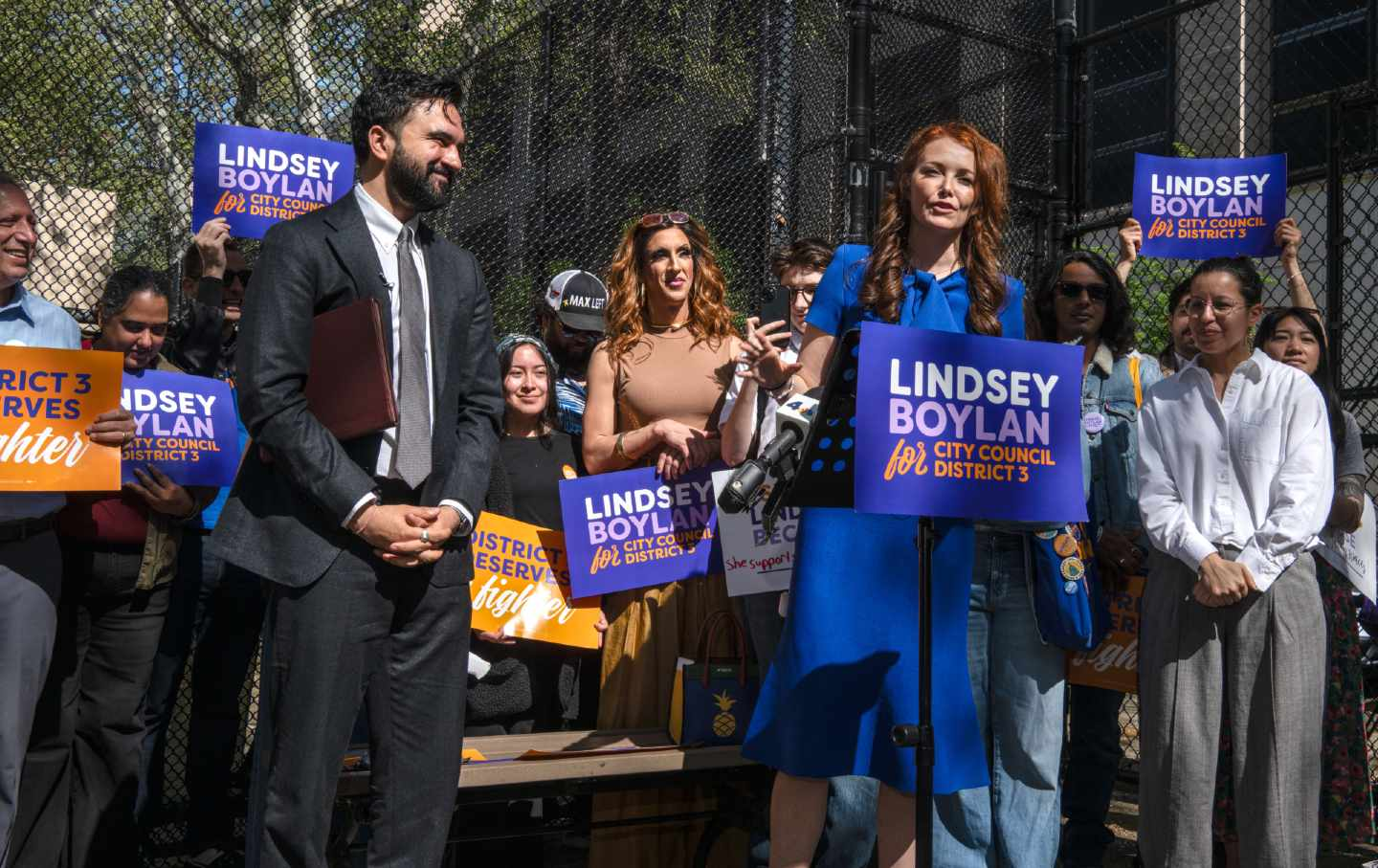
Mayor Zohran Mamdani has thrown his support behind Lindsey Boylan in a Manhattan City Council special election. Boylan was the first woman to publicly accuse former Governor Andrew Cuomo of sexual harassment. A state attorney general report later concluded that Cuomo had sexually harassed 11 women, including Boylan, leading to his resignation in 2021. Mamdani, who defeated Cuomo in last year's mayoral race, is now using his political capital to send her to City Hall. The Associated Press reports:
“Boylan “represents the kind of fearless leadership this moment demands,” Mamdani said in a statement.
“She has shown a willingness to tell hard truths, to challenge entrenched power, and to stand up for working people even when it isn’t easy. That courage matters,” he said.
"Lindsey Boylan represents the kind of fearless leadership this moment demands," Mamdani said in his endorsement. "She has shown a willingness to tell hard truths, to challenge entrenched power, and to stand up for working people even when it isn't easy." …
Mamdani, in his endorsement, acknowledged a wider objective: building support in the City Council.
“As we work to usher in a new era in our city’s politics, and advance our affordability agenda, I need partners in the work like Lindsey and that’s why I am proud to endorse her campaign for City Council,” he said.”
on The endorsement puts Mamdani at odds with City Council Speaker Julie Menin, who is backing Boylan's main competitor, Carl Wilson, a former Council aide. Wilson has also secured endorsements from Rep. Jerry Nadler, Comptroller Mark Levine, and former Council Speakers Corey Johnson and Christine Quinn. The special election is April 28, with ranked choice voting in play.
Boylan's path from the first woman to publicly call out a powerful man's abuse of power to a candidate for elected office is the kind of story that doesn't get told enough. The same courage that made her a target then is now, in Mamdani's framing, why she belongs in public life.
Beth Macy Is Running to Be the First Woman to Win Virginia's 6th District
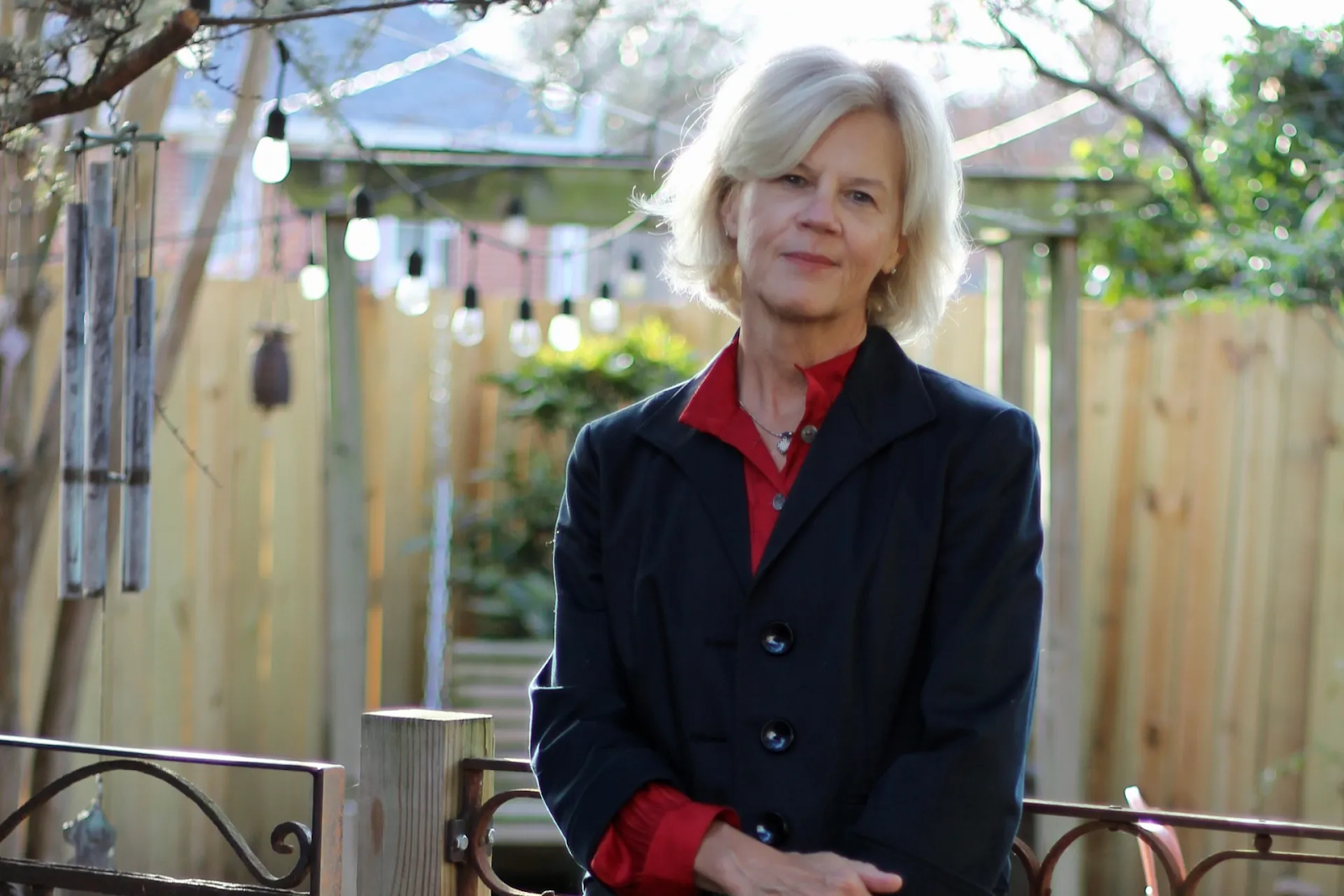
Virginia's 6th Congressional District has never elected a woman and Beth Macy wants to change that. Macy, the Roanoke-based journalist and author best known for Dopesick, her investigation into Purdue Pharma's role in the opioid crisis later adapted into an award-winning Hulu series, launched her congressional campaign in November and is running against Republican incumbent Ben Cline. However, now that voters have passed the redistricting amendment, Cline has not said whether or not he will run in the new 6th.
Despite the unknown and challenging terrain ahead, Macy has secured Gov. Abigail Spanberger’s endorsement and is seen as a front runner. Yet firsts like this are still rare. The Daily News Record draws on political scientists to explain why in relation to Macy’s bid for office:
“It wasn’t until 2011 that women in the House of Representatives had a restroom near the chamber floor, a comfort which men in the House had long enjoyed, said James Madison University Professor of Political Science Kristin Wylie. In the Senate, women had had a chamber-adjacent bathroom since 1993.
“The legislature was built by men for men, with women being excluded from it,” Wylie said. “So these spaces weren’t built for us. So, as more and more women enter the spaces, very physically, it changes the space.”
Global data from the Inter-Parliamentary Union shows that while the United States has made some progress in increasing the percentage of women in government, it still has a long way to go.
Each month, the organization lists a global ranking of women in national government. In the April ranking, Rwanda was number one, followed by Cuba, Nicaragua and Costa Rica. The United States ranked 83, below Malta, Barbados and Tajikistan, but above Lithuania, the Philippines and Sierra Leone…
… Jennifer Lawless, a professor of politics and chair of the politics department at the University of Virginia, said that the biggest barrier to women winning is that not enough of them run for office. When women run for open seats, they do just as well as men do, Lawless said.
However, Lawless noted, “Because the overwhelming majority of incumbents are still men, and incumbents are more likely to win, that’s part of the reason we see so many men still holding office.”
Wylie agreed with this assessment.
“Women do better in open seats than in these contested seats, and there are fewer open seats. Incumbent advantage is a huge part of the challenge for women,” she said.
But, Wylie said, that doesn’t mean that women shouldn’t run and can’t win.
“I think maybe an upside of the increasing dysfunction in our government is a growing reticence among the electorate to support the same old same old and being open to change,” she said.”
Women Lead Less Than 7% of Kentucky's County Governments
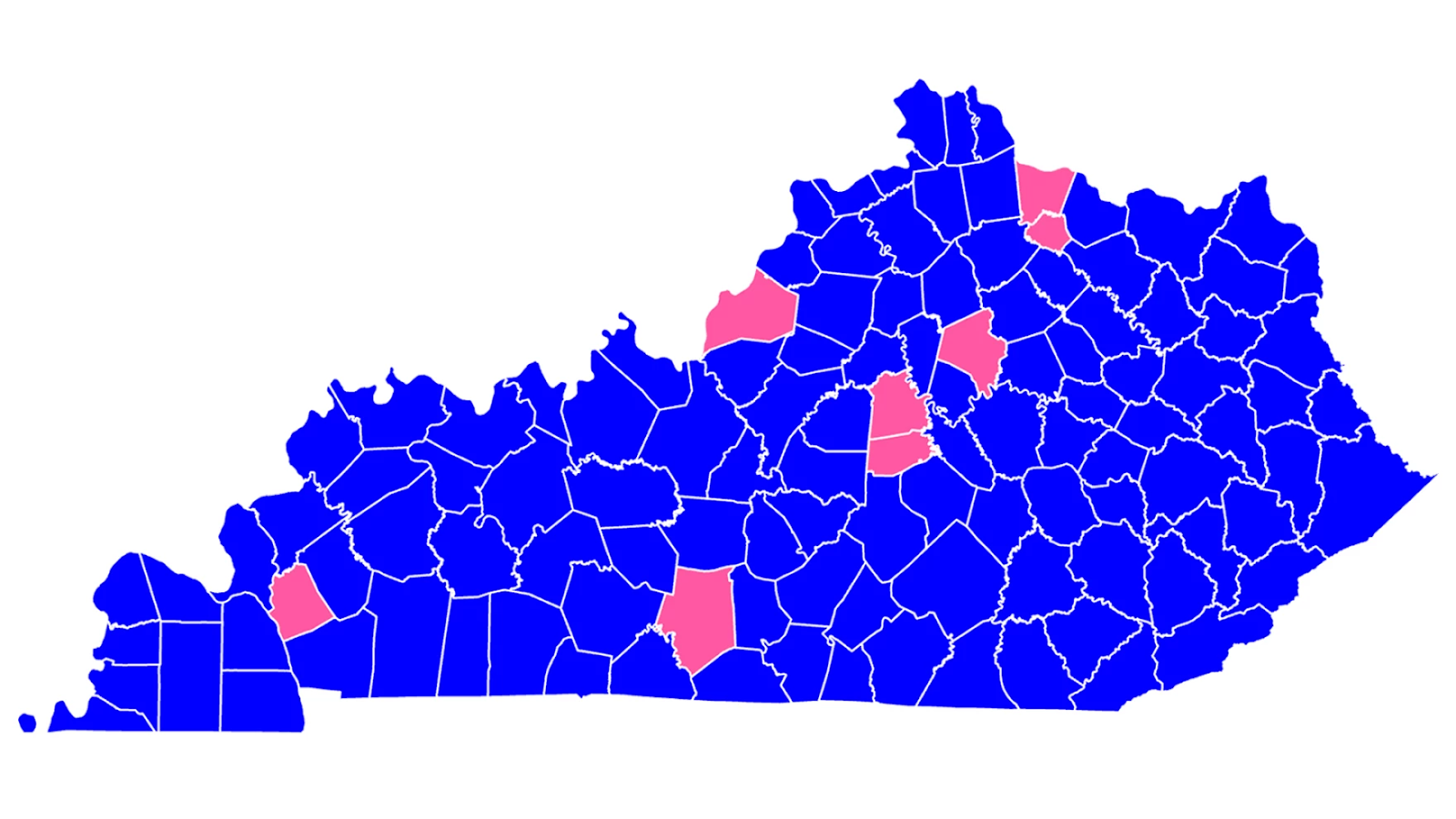
A new report from WKMS Public Radio puts a number on a gap that rarely makes headlines: out of 120 county judge-executive positions in Kentucky, roles that function like county mayors, overseeing budgets and local policy, only eight are currently held by women. That's less than 7%, even though women make up more than half of the state's population. WKMS interviewed experts to explain why:
“Jean Sinzdak, an associate director at the Center for American Women in Politics at Rutgers University, said that statistic isn’t unexpected.
“Under-representation by gender is nothing new,” Sinzdak said. “In local offices overall, across the country, women are only about a third of all local offices. This is even lower than that, but it's not a surprise.”
The number of Kentucky women holding judge-executive offices has doubled from four years ago. But according to the Lexington Herald-Leader, it’s still down from 1998, when nine women served as judge-executives.
One potential barrier for women trying to get elected is the incumbency advantage – the increased likelihood that those who currently hold an office will be re-elected. Sinzdak said men hold the vast majority of elected offices across the nation, which gives those incumbents an advantage over challengers, including women running for the office.
“Men [traditionally] have held those positions, and some positions [they’ve held] for decades, and so it's a barrier for any newcomer,” Sinzdak said.”
However, there are signs of movement. The number of women serving as county judge-executives has doubled from four years ago, and nearly 40 counties have at least one woman running for the role in this year's elections. Emerge Kentucky, a training program for Democratic women candidates, has graduated over 300 women since 2009, with 46 currently serving in elected offices. Executive director Blair Haydon said diversity is central to their recruitment, "We need every type of woman at the table, and all those experiences and backgrounds matter in these elected positions."
The story also has a direct connection to last week’s story on Roz Welch, who wrote the Newsweek op-ed featured earlier in this issue, is running for Jefferson County Clerk in Louisville, one of the very races this report covers. The pipeline to representation runs through these local offices and Kentucky is one place where that pipeline is still under construction.
All Three Trump Cabinet Departures Have Been Women
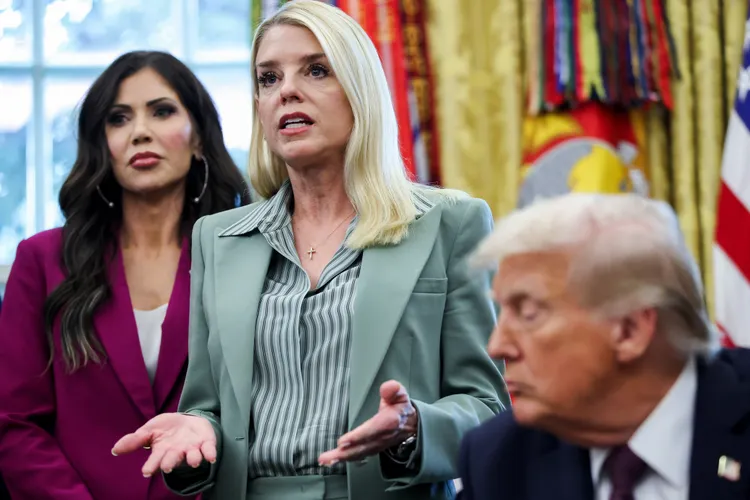
In the span of six weeks, every Cabinet member to leave the Trump administration has been a woman. Homeland Security Secretary Kristi Noem was ousted on March 5. Attorney General Pam Bondi was fired on April 2. And on April 20, Labor Secretary Lori Chavez-DeRemer resigned amid an inspector general investigation into misconduct allegations, including claims her husband was banned from Labor Department headquarters after two women staffers accused him of sexual assault.
"It's not that you wouldn't think that a president would let a Bondi or a Noem or a Chavez-DeRemer go," Debbie Walsh, director of the Center for American Women and Politics at Rutgers, told Axios. "But it's why only those three and not others."
The contrast is stark. The 19th notes:
“FBI Director Kash Patel and Commerce Secretary Howard Lutnick have both also drawn criticism and speculation that their jobs were on the line.
Trump has, at times, sidelined women and not punished men in his administration who have found themselves in hot water. He initially nominated Rep. Elise Stefanik of New York as his ambassador to the United Nations, but withdrew her nomination amid concerns over Republicans’ narrow House majority.”
Each of the three women had genuine issues. The pattern that the men have faced calls to resign yet remain in their jobs regardless of controversy is consistent with what research tells us about how accountability works differently by gender in positions of power. A 2025 study in Politics & Gender found that women politicians in the US are held to narrower and higher standards than men. Results find voters scrutinize women more heavily from the start and reach a tipping point of rejection more quickly when problems emerge, even while giving men considerably more leeway for similar transgressions. Women in leadership are held to stricter standards and are more readily removed when things go wrong, even as men in comparable or worse situations persist.
When Women Lead Cities, The People and The Environment Thrive
Anyone who has spent time in Washington, D.C. knows it is something of an anomaly in the American urban landscape. It is genuinely walkable, transit-connected, and designed — at least in part — around the idea that not everyone arrives by car. While I do have a car, I’m fortunate that my home in Takoma Park sits close enough to the Metro that I can walk to the station, hop on a train, and arrive in the middle of the city without ever touching a steering wheel. It’s a small thing, but it shapes my daily life in ways I have come to treasure: the rhythm of walking, the chance encounters on a platform, the feeling of moving through a city as a participant rather than a passenger sealed off from it.
Most Americans do not have this, which I find incredibly unfortunate. Sadly, the vast majority of people in this country require a car, not as a convenience, but as a necessity. And that is not an accident of geography or culture, but a design choice, made over decades by people in rooms where certain voices were louder than others. As was made evident in a new piece in The Guardian, it turns out that when you include more women in the decision-making room for city planning, you change what gets built. Here is an excerpt from the piece:
“Given the challenges that city dwellers face, what’s needed is an unprecedented shift in how governments approach infrastructure and policy. But in the vast majority of cities, small pockets of vested interests are digging in to loudly defend a system that works for them. Many city or local politicians mistake the volume of defiance as being representative of the larger community and fall back on empty rhetoric, and ultimately inaction.
But a minority of elected officials have demonstrated that opposition rarely reflects the true popularity of more inclusive urban transformation measures. In many cases, female leaders are spearheading change. Through their own experiences navigating the world as girls and women, as carers, and through decades of being invisible in the planning process, they often understand best that the status quo is not working. [...]
In Montréal, Canada, Valérie Plante, who served as mayor from 2017 to 2025, rolled out the most ambitious car-free scheme on the American continent, investing C$12m (£6.5m) to pedestrianise more than 9km along 11 different commercial arteries each summer; opening the streets in front of 2,100 local businesses, and improving their bottom lines. She is also the driving force behind the city’s Réseau express vélo (Express cycling network), which, when complete, will consist of 17 routes spanning 191km of protected lanes maintained throughout the year. Alongside improving how Montréalers move and enjoy their streets, Plante’s “sponge streets” programme is helping to create permeable and absorbent surfaces to offset flooding by introducing green in place of grey asphalt.”
The authors point out that this trend is not unique to Montreal, and the environmental benefits — in addition to the increased walkability — aren’t either. The same can be seen in Barcelona, where, during Ada Colau’s recent mayoralty, pedestrian space was increased exponentially:
“The administration reclaimed a million square metres of pedestrian space, using solutions like the “superblock”, a revelatory intervention that swaps the city’s asphalt expanses for neighbourhood plazas with paint, planters and political will. Over an eight-year period, she tripled the length of cycle lanes to 273km (170 miles), putting 90% of the population within 300 metres of at least one route. The results have been quite dramatic, with city officials citing the creation of 80 new hectares of green space, a reduction in car traffic of 50% and a cut in air pollution by 20% between 2019 and 2023.”
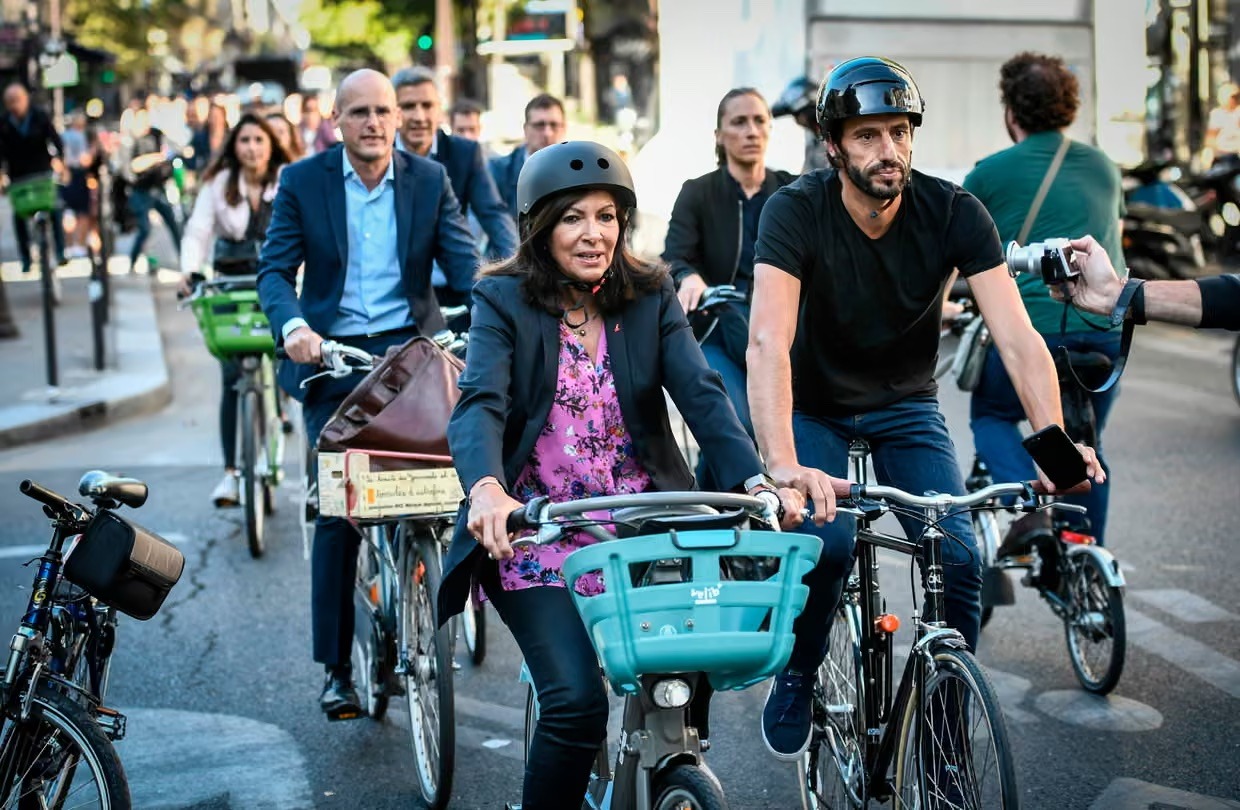
Paris has also seen the same trend under the leadership of former Mayor Anne Hidalgo, who invested in 1,000km of cycling routes, 350 of which are protected from car traffic. What unites these women, the authors argue, is not simply that they made good decisions. It is that their lived experiences — navigating the world as girls and women, as carers, as people who have spent their lives in bodies that public infrastructure was not designed for — gave them a different and fuller understanding of what a city should do.
This is precisely why representation is never just symbolic. When the wrong people are in the room, the wrong things get built, and the right things never get imagined at all. When women lead, cities are redesigned not for the wealthy few with cars, but for children walking to school, for older adults who need support moving safely through their neighborhoods, and for women who have always known what it feels like to navigate a street that wasn’t built with them in mind.
That is exactly the argument at the heart of our work at RepresentWomen: representation is not the end goal; it is the mechanism by which better decisions get made and better lives get built. When we work toward structural and policy changes that bring more women into leadership, we help create outcomes in which women’s needs are centered in the conversation. We are helping build cities that work for everyone. That is the world women mayors are already building, wherever they are given a chance, and it is the world we are working toward together.
P.S. — One of the quiet joys of this work is the remarkable people it brings into your orbit, and our dear friend Eliza Reid is exactly that kind of person. As the former First Lady of Iceland and a fierce champion of women's leadership, Eliza has long understood something that sits at the heart of everything we do at RepresentWomen: that representation isn't just about who holds office, but about how the systems around them are designed.

Her book, The First Lady Next Door, is now making its way across the United States on a tour that I am genuinely thrilled about, and I hope you'll join her if she's coming to a city near you:
- April 30: Washington DC, National Press Club
- May 5: New York City (Manhattan), Scandinavia House
- May 7: Los Angeles, CA, Zibby’s Bookstore
- May 9: Minneapolis, American Swedish Institute, (event link not yet posted)
- May 10: Montecito, CA, Godmothers Bookstore
If you're in any of these cities, please go. And if you know someone who should be in the room, bring them along. Eliza's voice is one we need right now, and this is exactly the kind of storytelling that reminds us why this work matters. 💜
.png)
.png)