Last December, I found myself sitting in a full room of democracy advocates in Miami for the movement’s annual convening. It is the kind of gathering where big ideas get tossed around with passion, and language gets debated with the intensity usually reserved for legislation. Everyone who attends takes advantage of every moment we share together, all in one place, as they don’t happen often. This particular afternoon, more than half of all participants piled into a crowded conference room to discuss movement messaging, and the task before us was coming up with a slogan for our collective work — something that would capture what we were all working toward. Suggestions flew around from every corner of the space, and a pattern emerged: rebuild, restore, reimagine. Words to capture the future of our democracy that all started with “re.”
Sitting next to me was RepresentWomen’s Founder and Executive, Cynthia Richie Terrell, knitting needles moving steadily and gracefully in her hands, working on a pair of gloves to give as a Christmas gift for someone she loved. She was listening — really listening, the way that Cynthia always does, nodding her head or moving her lips to the side in question — taking in every word, while her hands kept their quiet rhythm. I had been observing her facial expressions for a while, wondering when she’d share her thoughts, as I knew she had something important to say. The moment I’d been anticipating arrived when a member of the group suggested, “Renew our democracy.” It was then she stopped. She gently laid the knitting in her lap, looked up, and said something I have not stopped thinking about since.
“I don’t like using ‘re’ in this language,” she said, calmly yet assertively. “Because ‘re’ insinuates we are trying to go back and repeat something. But going back doesn’t make sense from the standpoint of women’s representation or race. The past didn’t include women or people of color in the building or imagining of this country, so we shouldn’t redo that. We need something new entirely, where what we are building has everyone at the table, women included.”
The room went quiet for a moment, and I found myself shaking my head in agreement. Although, admittedly, it was never something I had considered before she shared it out loud. The momentary silence that followed was not the uncomfortable kind, but the kind that comes when someone has said exactly the right thing and everyone knows it.
That moment captures the essence of Cynthia for me. And for those who have known her much longer than I, they’ll tell you the same thing: that has always been Cynthia. The person who will, without hesitation, push back with professionalism in any room she enters that sidelines women’s representation and minorities. For decades, she has been the voice in countless rooms — from the halls of Congress to international stages to movement meetings and local community hearings — ensuring that these voices are never forgotten.
This Monday, April 6th, Cynthia Richie Terrell celebrated her birthday, and this week’s Weekend Reading is dedicated entirely to her. Not because she would ask for that. She wouldn’t. But because the people who do the most visionary, tenacious work are often the least likely to stop and let themselves be celebrated. And because after more than four decades of changing the rules that determine who holds power in American democracy, Cynthia deserves to be seen.
Most people who follow this newsletter know Cynthia as its founder, the woman behind the weekly column on women’s representation that has been shaping conversations since 2014. It began as a list-serv among a small community of advocates, and is now published through Ms. Magazine and read by thousands. But Cynthia's work runs far deeper than any single platform or achievement. It's the essence of who she is and is her life’s calling.
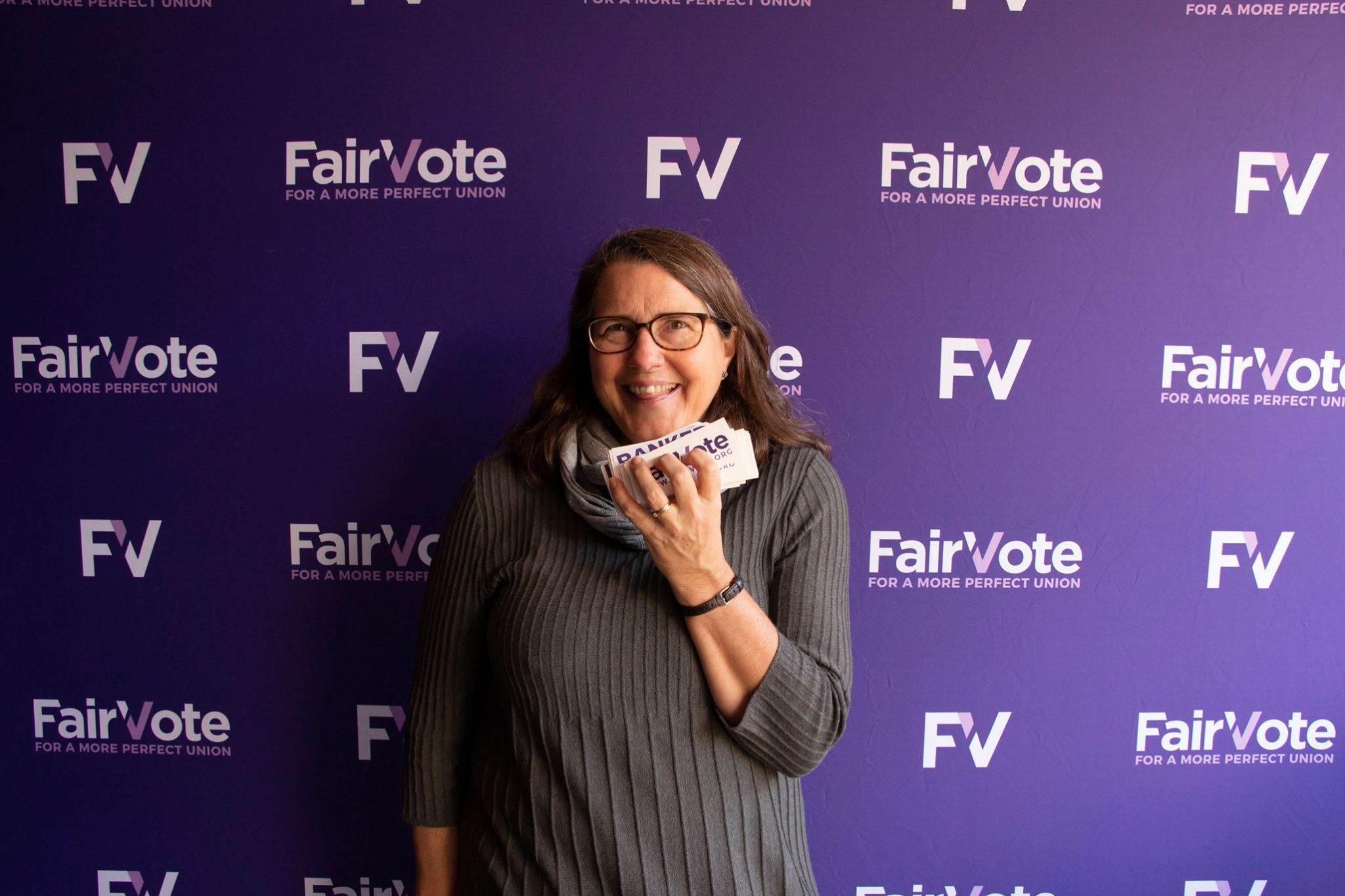
In the early 1990s, Cynthia co-founded FairVote when ranked choice voting existed in only two jurisdictions in the United States, and electoral reform was widely dismissed as an idealistic fringe concern. She believed otherwise, recognizing that our democracy needed new systems to ensure all voters had real power and true representation in government, and she committed herself to proving it. Today, ranked choice voting is law in dozens of cities and counties and is used statewide in Maine, Alaska, and Washington, D.C., with more than 30 million ballots cast under the system. The vast majority of Americans now know what ranked choice voting is, hear about it regularly, and many have used it themselves. What most of them don't know is that this transformation began with a small group of believers working against the grain, and that Cynthia was one of them from the very start.
Building on that foundation, Cynthia founded RepresentWomen to focus specifically on the structural barriers keeping women out of political power — not the pipeline, not the ambition, but the rules themselves. She launched the Gender Parity Index, now in its twelfth year, because a tool for tracking women's representation consistently across all fifty states did not exist, and it needed to. She testified before legislatures, educated policymakers, convened advocates across the women's representation and democracy space, and wrote — week after week, year after year — because she believed that evidence and persistence could move institutions that seemed immovable. Where others saw a pipeline problem, Cynthia saw a design problem. And she has spent every year since working to fix it.
It is rare to meet someone who has done this work for decades with the same conviction she brought to it on day one. Cynthia is that person. And while her commitment to the long game could be attributed to countless traits and reasons, we cannot overlook that she has done all of this as a Quaker, and that matters. Her commitment to integrity, equality, and speaking uncomfortable truths is not a professional posture; it is her lifelong framework for being in this world. It is why she has remained genuinely nonpartisan in a deeply partisan field, chosen the structurally honest answer over the politically convenient one, and built trust across sectors, parties, and borders that has held precisely because it has always been principled.
I could write a biography of Cynthia that would surely span hundreds of pages — and perhaps, one day, I will. But today, I want to end on one final, lesser-known story that even those who have followed her work for years may not be aware of. It is one that illustrates that her commitment to expanding who belongs in our democracy has never been limited to her professional role. It has always extended into how she lives, where she lives, and what she is willing to show up for simply because it is right.
In 2013, Cynthia helped lead the effort in her Takoma Park, Maryland, community to lower the voting age to 16, making it the first city in the country to do so. The inspiration was deeply personal: her own children, frustrated that decisions were being made about their lives and community without their say. Rather than tell them that was simply how things worked, she stood beside her children and their friends and decided to change the system’s structure. And they did. When those young voters turned out, they did so at a rate that nearly quadrupled the city’s overall average turnout — proof, in the most immediate terms, that when you design systems that include people, people show up.
That single act of democracy has since rippled far beyond Takoma Park. More than a dozen jurisdictions across the country have followed suit, and in Los Angeles — a city we have been working closely with to advance ranked choice voting and council expansion — the measure to lower the voting age to 16 has been approved for referral to the City Council for a vote. Hundreds of thousands of young people, including women who will grow up knowing they had a voice before they turned 18, have been brought into our democracy because one woman in her own community listened to the youth and decided the rules needed to change. That woman is Cynthia.
I am one of the countless young women whose life and work have been shaped by knowing Cynthia Richie Terrell — and I suspect everyone on our team, and across our broader community of partners and advocates, would say the same. And while months have now passed, I think about that moment in December often. The knitting in her lap. The precision of her words. The grace with which she offered a reframing that shifted the entire conversation, not to center herself, but to center the people who had always been left out. That is the quality that defines Cynthia's leadership more than anything else: she has spent her entire career asking who is missing from the table, and then quietly, persistently, changing the rules until there is room for them. On her birthday, and every day, we are grateful she is at ours.
Milestones: Sacagawea began work as an interpreter for the Lewis & Clark expedition; Cindy Hyde-Smith became the first woman Senator from Mississippi (2018); Jane Swift became the first woman Governor of Massachusetts (2001); Oveta Culp Hobby becomes 1st woman Secretary of Health, Education, & Welfare; and Ruth Bryan Owen became envoy to Denmark and the 1st woman to serve as a U.S. foreign minister. (1933)
Birthdays: Virginia Hall, American spy (1906); Ann Ravel, ally and former FEC Chair; Cynthia Richie Terrell, RepresentWomen Founder & Executive Director; Billie Holiday; Rene Redwood; Mackenzie Scott, novelist; Patricia Arquette, actress; Elizabeth Ford, former First Lady (1918); Barbara Kingsolver, novelist & poet; Mary Pickford, actress & co-founder of the Academy of Motion Picture Arts and Sciences; Robin Wright, actress; Cynthia Nixon, actress, activist, & politician; Melinda Henneberger, journalist at the Sacramento Bee and Pulitzer Prize winner; Dolores Huerta, labor leader & civil rights activist; Robyn Ellis, Senior Program Officer, Crimsonbridge Foundation; Charlotte Hill, co-founder of Fix Our House; Melinda Man, political consultant; Latanja Thomas; and Claire Danes, actress.
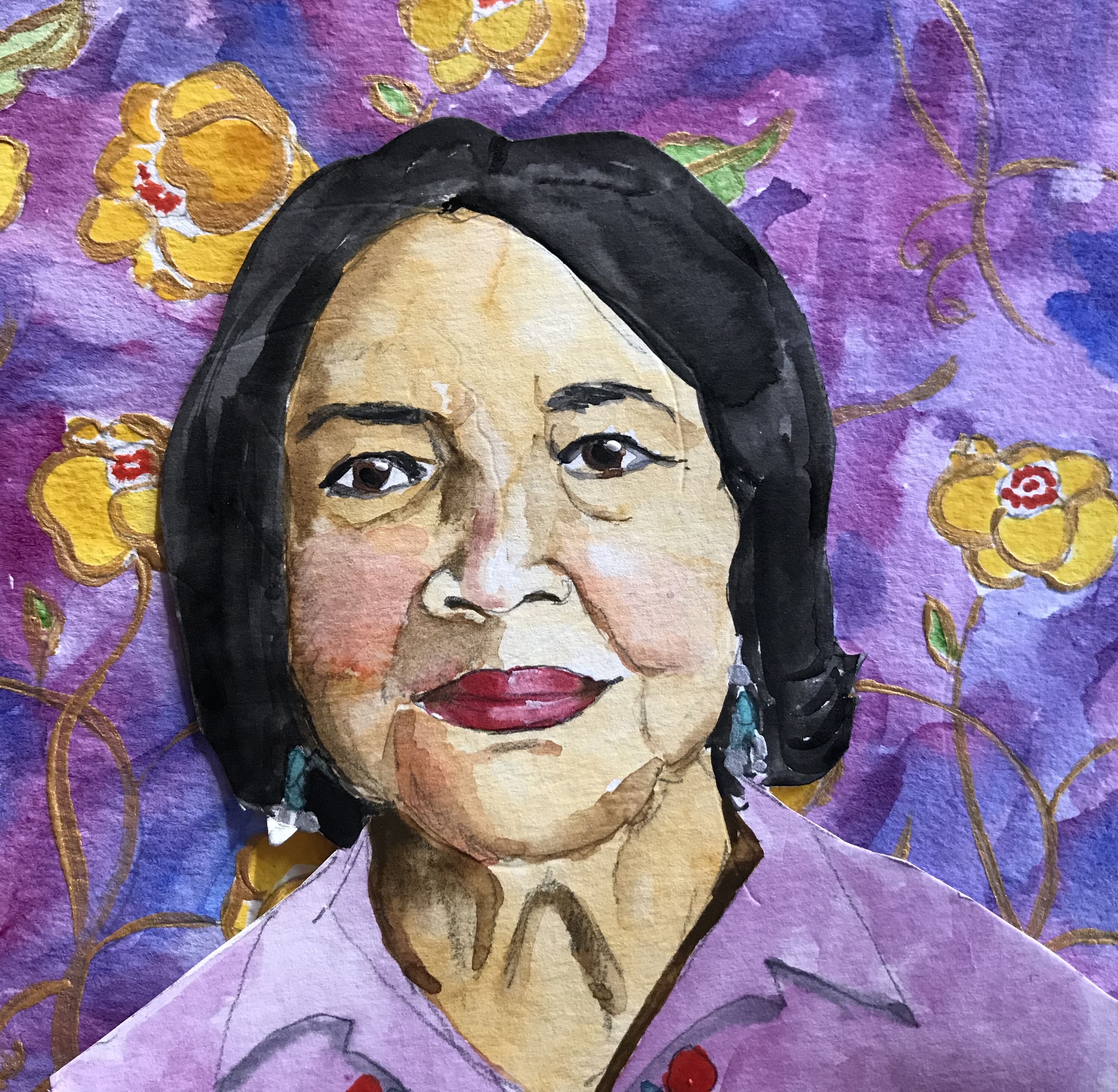
Upcoming Events: I’m excited to announce the launch of our new monthly Democracy Solutions Series, which kicks off on Wednesday, April 15th at 6 PM ET via Zoom! As promised during our Democracy Solutions Summit, this series will build off the conversations started during our three-day event, allowing topics to be discussed in greater depth. This month, we’re kicking off our series with a timely conversation: The Voting Rights Act and Women’s Representation: What’s at Stake Now! We hope you will join us!
Chris Taylor Wins Race for Wisconsin Supreme Court
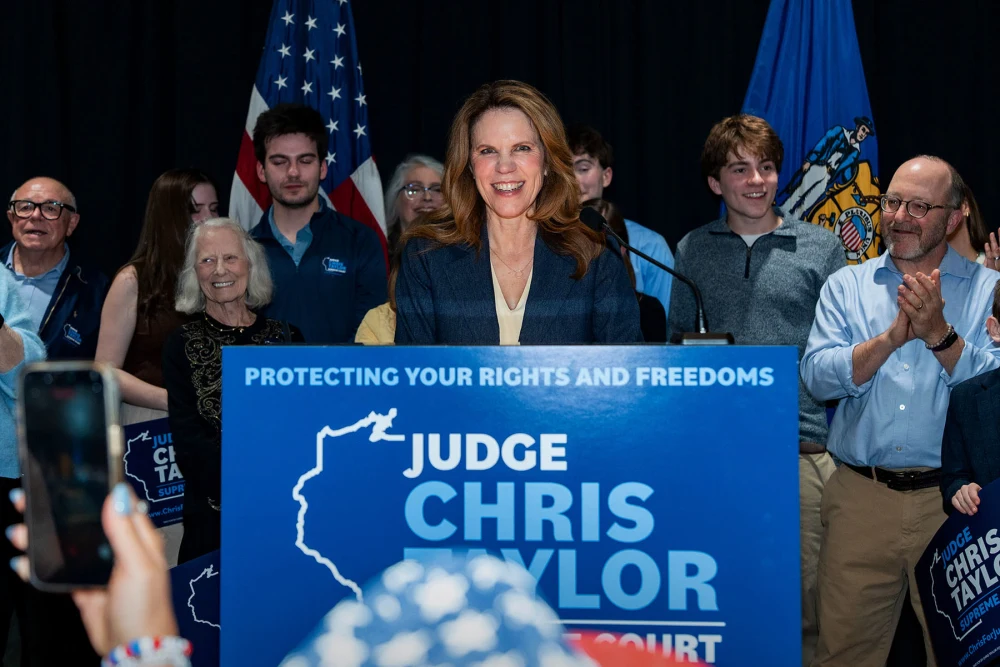
In a result with significant implications for the right to abortion, voting rights, and the limits of federal overreach in the states, Judge Chris Taylor won a seat on the Wisconsin Supreme Court on Tuesday April 7th, defeating conservative Appeals Judge Maria Lazar and expanding the court’s liberal majority to 5-2. This margin will effectively secure the ideological balance until at least 2030.
Taylor previously served as a Democratic member of the state Assembly and as an advocate for Planned Parenthood in Wisconsin. During her victory speech, some of her biggest cheers came from referencing that work. As WPI reports:
"I have always valued every woman's ability to make her own personal, private health care decisions," she told supporters at her victory party in Madison. Taylor described her campaign as one about energizing ordinary Wisconsinites.
“People are hungry for a government that works for them,” she said. “People are hungry for a judiciary that … protects our rights, that affords all Wisconsinites equal justice under the law.”
And without naming President Donald Trump, she framed her win in the context of national politics. “Politics has no place in the judiciary, and the judiciary is not a rubber stamp for any party, group or branch of government — including the federal government,” she said to cheers.
Taylor’s campaign was seemingly on sure footing from the moment she announced her candidacy. She got into the race in May and, within weeks, had earned the endorsement of the four sitting liberal justices, insulating her from any challenge from the left. Those justices joined Taylor at her victory party Tuesday night.”
The win continues a remarkable run for women on the Wisconsin Supreme Court. The liberal majority was first established with Justice Janet Protasiewicz's high-profile election in 2023, and defended last year when Justice Susan Crawford emerged victorious from the most expensive court race in American history.
Conservatives will face another open race in 2027 when Justice Annette Zeigler's seat comes up, and would need to win that race plus 2028 and 2029 to flip the court in 2030.
Iranian Women Elected to Office in US Reject Trump’s Iran War

Arizona Rep. Yassamin Ansari, speaks at a memorial for Iranian girls killed in the U.S. strike on a school, on the Capitol grounds in Washington. Source: The Intercept
A group of Iranian American women in elected office released a letter Tuesday calling for an immediate end to the US-Israeli war on Iran. In the letter they stated, "We believe democracy cannot be delivered through missiles, and freedom cannot emerge from destruction and more death of innocent lives”.
The letter's most prominent signer is Rep. Yassamin Ansari of Arizona, the first Iranian American Democrat elected to Congress, joined by 13 other women serving as city council members, state legislators, and Democratic Party delegates.
At the center of their argument is a rebuttal of how Trump and Israeli Prime Minister Netanyahu have invoked the Woman, Life, Freedom movement to justify the war. The Intercept writes:
“The Iranian American women who signed the letter, however, said that the war is only encouraging further crackdowns.
“The Iranian people must not become casualties of geopolitical rivalry or instruments of foreign agendas,” the signatories wrote. “We refuse the false choice between repression at home and devastation from abroad. Both deny Iranians the right to determine their own future…”
Ansari, the letter’s most prominent signer, said Monday that she plans to file articles of impeachment against Defense Secretary Pete Hegseth for “repeated war crimes,” including the bombing of a school that killed scores of young girls.
“As the daughter of Iranian immigrants who fled the brutal Islamic Republic, and the first Iranian-American Democrat elected to Congress, I stand in strong opposition to this illegal war,” Ansari said in a statement. “Iranians deserve freedom and democracy. That cannot be delivered through bombs and destruction of civilian infrastructure. Iran’s future must be determined by Iranians alone — free from war and authoritarian rule.”
The Far Right's Wish List Goes Beyond Voter ID - it Includes Repealing Women's Suffrage
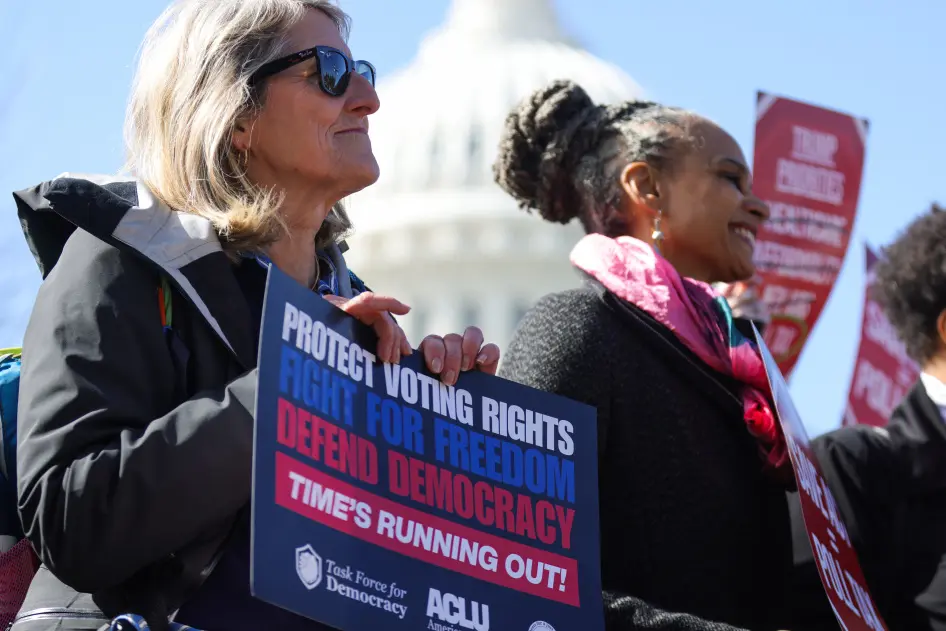
While Republicans publicly pitch the SAVE America Act as common-sense election integrity legislation, a vocal and growing faction on the far right is using the moment to push for something far more extreme, including rolling back women's right to vote entirely.
Kai Schwemmer, recently appointed as political director for the College Republicans of America, said in an online debate that he supports "family voting" - a Christian nationalist concept that would allow only the male head of a household to cast a ballot on behalf of his wife and children. But Schwemmer is not alone; many other political actors and influential figures have come forward in support of family voting. The Democracy Docket reports:
“In August 2025, Defense Secretary Pete Hegseth reposted a CNN interview with Doug Wilson, Hegseth’s Christian nationalist pastor, who doesn’t believe women should vote.
“Women are the kind of people that people come out of,” Wilson told CNN. “The wife and mother, who is the chief executive of the home, is entrusted with three or four or five eternal souls.”
Just before the 2022 midterm elections, as polling showed Democrats were performing well with women voters, another conservative pastor and YouTuber, Joel Webbon, tweeted that “the 19th Amendment was a bad idea.” He’s since used his large platform for misogynistic rants where he regularly advocates for revoking women’s rights.
“A woman as a mother is a precious gift, but a woman as a civil magistrate is the death of the nation,” Webbon recently posted on social media.
In 2024, Dale Partridge, another Christian nationalist pastor, posted on social media that “in a Christian marriage, a wife should vote according to her husband’s direction.” In January 2025, Partridge said Congress should repeal the 19th Amendment because he thinks women are too empathetic.
“I don’t think we should repeal the 19th Amendment because I don’t love women,” Partridge said. “I think we should repeal the 19th Amendment because I love America and American women and want to protect our nation from their suicidal empathy.”
As a separate Democracy Docket analysis notes, existing voter suppression laws already disproportionately harm women. Strict voter ID laws hit women harder because they are more likely to change their name after marriage, and restrictions on voting hours fall hardest on low-wage workers and caregivers, groups that are disproportionately women. Such bills and ideas are no longer marginal and are happening alongside a parallel open and escalating campaign to question whether women should be voting at all.
The Data Says a Woman Could Definitely Win the 2028 Presidential Election
Following an Axios report that leading Democrats are privately discussing whether the party needs to nominate a white, Christian man to win in 2028, Decision Desk HQ this week pushed back with a data-driven corrective that the two losses don't tell the story many think they do.
Trump's victories in 2016 and 2024 were two of the closest results in modern US history. The margins in the decisive Electoral College states amounted to just 0.06% and 0.15% of the national popular vote, outcomes that could have swung the other way under marginally different conditions. Geoffrey Skelley for Decision Desk HQ writes:
“Again, these close defeats loom large for Democrats because Harris and Clinton lost to Trump in particular. Part of this is down to a misbegotten belief on the left that Trump should be a uniquely weak candidate. That is a topic for another article (or forty). However, Trump is best understood as an atypical politician who still must navigate many typical political realities. For instance, Trump has an approval rating of about 40%, so it’s no coincidence that Democrats are favored to take back the U.S. House of Representatives this fall.
Individual qualities mattered to some extent not only for Trump but also Clinton and Harris. In 2016, Clinton and Trump ranked as the two most disliked major party nominees in modern times. Even if Trump had his weaknesses and rubbed many people the wrong way, Clinton proved to be a less-than-compelling alternative for an electorate looking for change. And in 2024, Harris somewhat infamously didn’t take opportunities to separate herself from an unpopular Biden administration, and she had to deal with perceptions that she was especially liberal in the wake of positions she took during her failed 2020 bid for the Democratic nomination. These are just short summaries of the shortcomings Clinton and Harris had, but they did matter.”
In addition, neither Clinton nor Kamala was running in a favorable economic environment. These are the kinds of "fundamentals" that shape presidential outcomes regardless of who's on the ticket. To conclude that Democrats can't win with a woman nominee ignores context and treats two narrow defeats as definitive proof is a significant analytical leap.
Digital Violence Is Pushing Women Out of Politics and the World Is Starting to Act
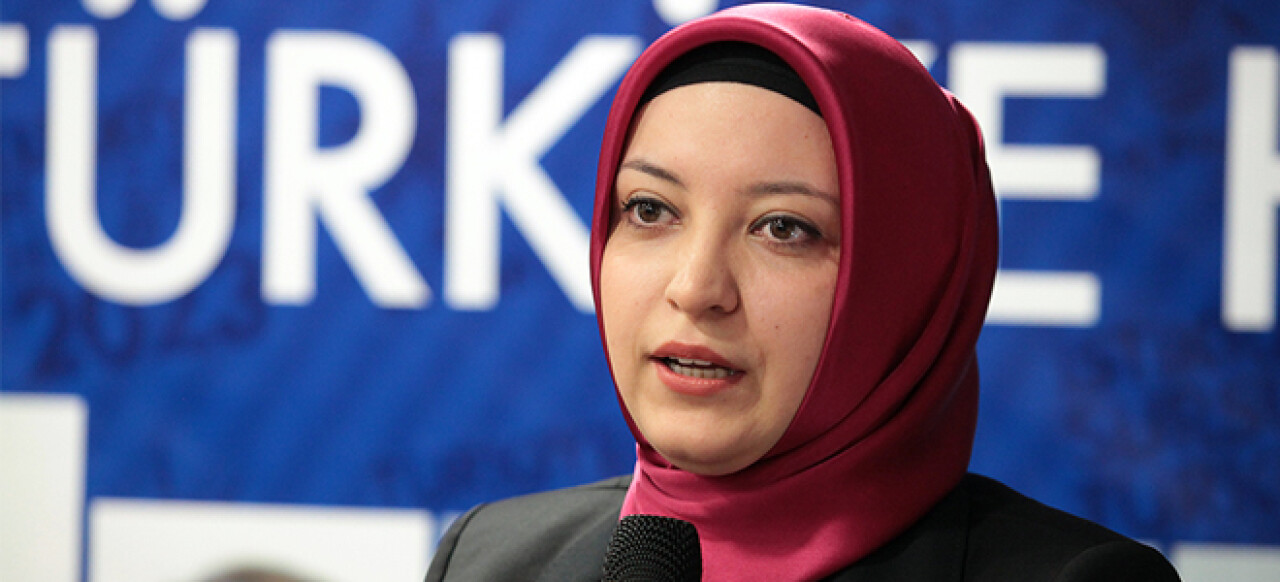
A new UN Women report from Turkey cuts to the heart of a problem that runs through every electoral system. At a two-day parliamentary meeting in Nevşehir, The Grand National Assembly of Türkiye (TGNA) Committee on Equal Opportunities for Women and Men (KEFEK) discussed how the barriers women face don't end when they get elected. KEFEK Chair Çiğdem Erdoğan named the problem directly:
"Violence against women in politics often appears as a multi-layered form of oppression, going beyond what is visible. This violence is far more frequently perpetrated through language, representation, and reputation than through physical threats. Female politicians face systematic defamation, targeting, digital harassment, and psychological intimidation."
She added that digital violence actively shortens how long they stay in office, alongside just deterring women from running. The meeting produced concrete cross-party proposals, including prioritizing digital crimes in the law, establishing rapid legal intervention mechanisms for victims, strengthening accountability for technology companies, and enshrining the right to be forgotten in law. Members of Parliament reached a consensus on the need for cross-party legislation.
The gender gap data showed young men growing more hostile toward women's equality. These phenomena constitute the environment and ecosystem in which women seek and hold elected office. As Erdoğan put it, "Every sentence we forged in Nevşehir is a torch on the road to a future in which no woman's voice is silenced in the digital world." The question is whether other legislatures are paying attention.
New Paper: “Potential" and the Gender Promotion Gap
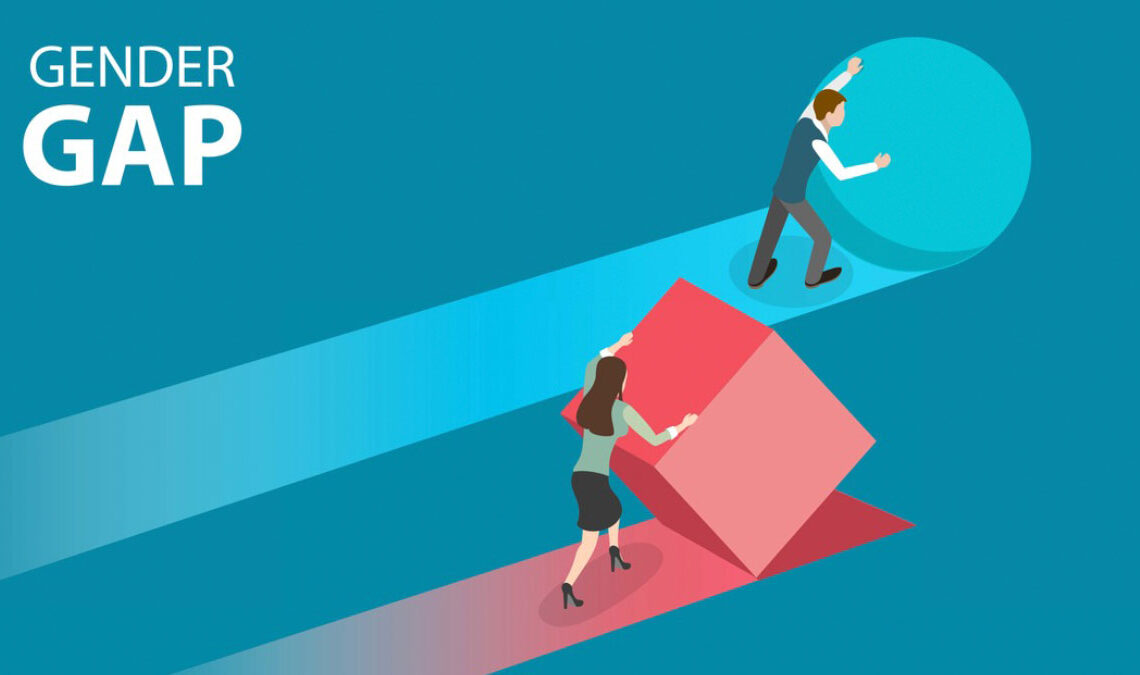
A new study in the American Economic Review offers some of the clearest evidence yet of how women get held back at work, which ironically has nothing to do with their performance. Researchers at MIT, Yale, and the University of Minnesota analyzed nearly 30,000 management-track employees at a large retail chain and found a striking pattern: women consistently received higher performance ratings than men, but substantially lower ratings on "potential" the subjective, forward-looking assessment that drives promotions. Those potential ratings account for roughly half of the gender promotion gap.
The crucial problem lies in the inaccuracy of the ratings. Women who received identical “potential” scores to their male counterparts consistently demonstrated superior performance in subsequent years. However, managers failed to revise their assessments even when presented with contradictory evidence.
The study identifies two drivers. The first is stereotyping. The results show that the gap was largest in counties with fewer women in management, consistent with the tendency to see leadership as a male trait. The second is that managers gave higher “potential” ratings to flight-risk employees as a retention tool, and those flight risks were disproportionately men. Therefore, women's organizational loyalty was used against them.
As a result, women made up 56% of entry-level workers but only 14% of district managers. Because pay is tied to job level, promotion gaps account for roughly 70% of the overall gender wage gap in the data.
Nonetheless, the authors provide alternatives to "potential" derived measures for promotion. They note on p. 28:
“Our results instead show that there may be large gains from finding ways to de-bias assessments of potential. One approach is to boost potential ratings and promotion rates for women who are rated as low-potential and high-performing. Such women are rarely promoted despite their tendency to succeed when they are. An alternative approach would substitute indicators of potential with one that is less prone to stereotypes of who may be an effective leader. In recent years, firms have made various attempts to improve and debias hiring and promotion policies, from the use of algorithmic and other new screening tools (e.g., Mocanu, 2022; Li, Raymond and Bergman, 2020) to training programs focused on conscious and unconscious bias.”
.png)
.png)