Our democracy works best when everyone has a seat at the table. But under winner-take-all elections, too many voices are shut out — especially women, people of color, and independent voters.
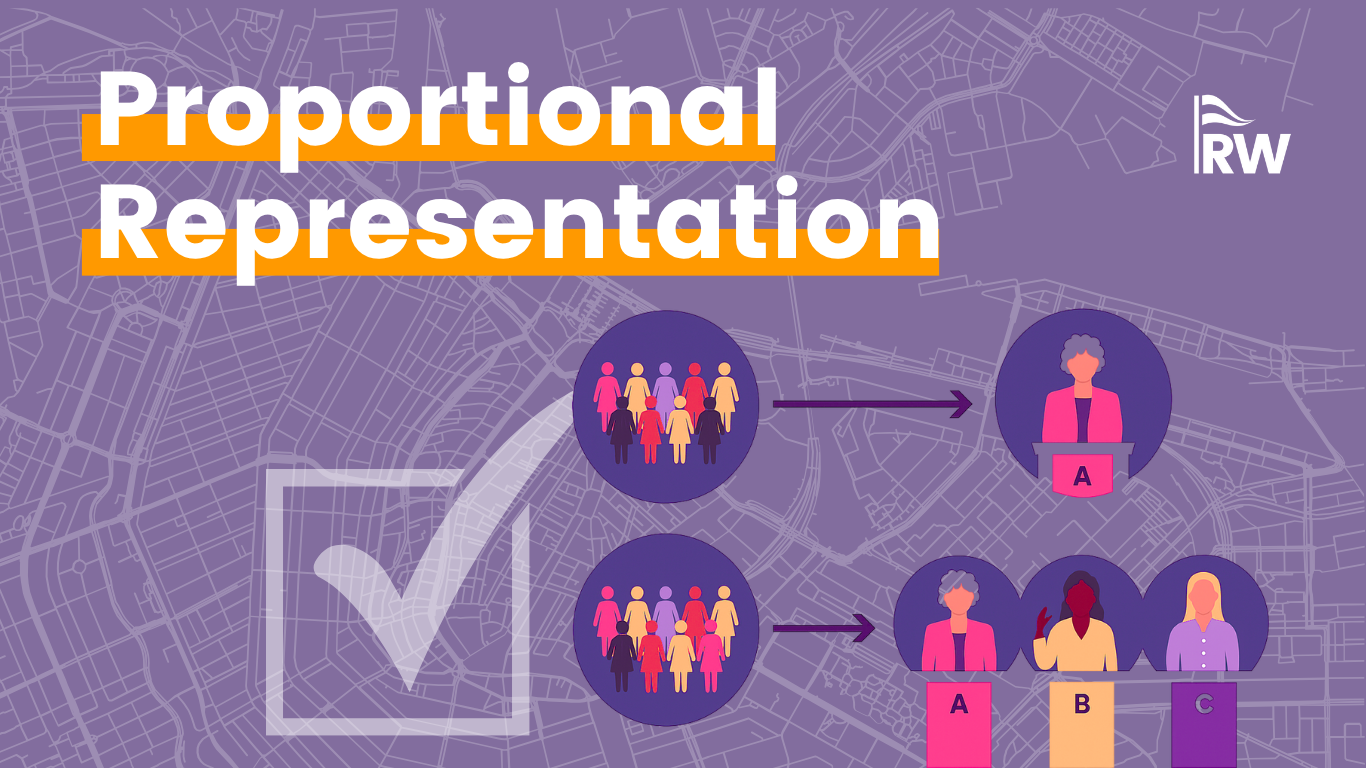
Proportional representation offers a proven solution. Instead of one winner per district, multiple representatives are elected in proportion to the votes cast. This simple change opens the political process to more women and underrepresented candidates, fosters diverse coalitions, and reduces the polarization that hinders progress.
Proportional ranked choice voting, used around the world and gaining momentum in the U.S., is the gold standard for delivering on this promise. It levels the playing field and moves us closer to gender-balanced governance in our lifetimes.
What is Proportional Representation?
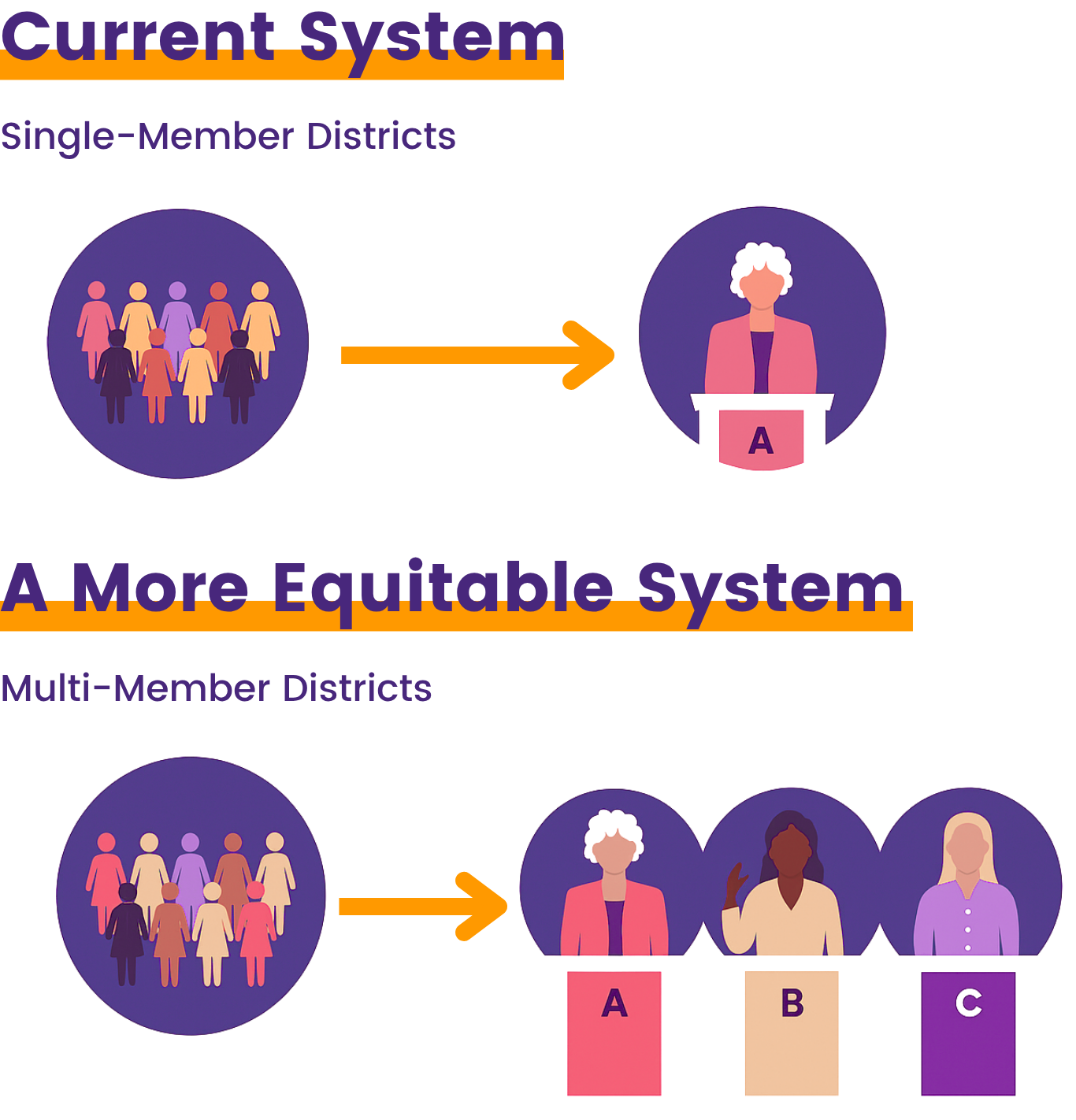
Most elections in the United States employ winner-take-all rules, where one candidate wins and everyone else loses. This system often wastes votes, locks out political minorities, and keeps the government from reflecting the people it serves.
Proportional representation (PR) is different. Instead of awarding all the power to a single winner, PR systems allocate seats in proportion to the share of votes each group receives. This means nearly every voter helps elect someone they support.
Watch a video to see how Proportional Representation works:
There are numerous ways to establish proportional systems worldwide. For the United States, the most effective and proven version is proportional ranked choice voting (PRCV).
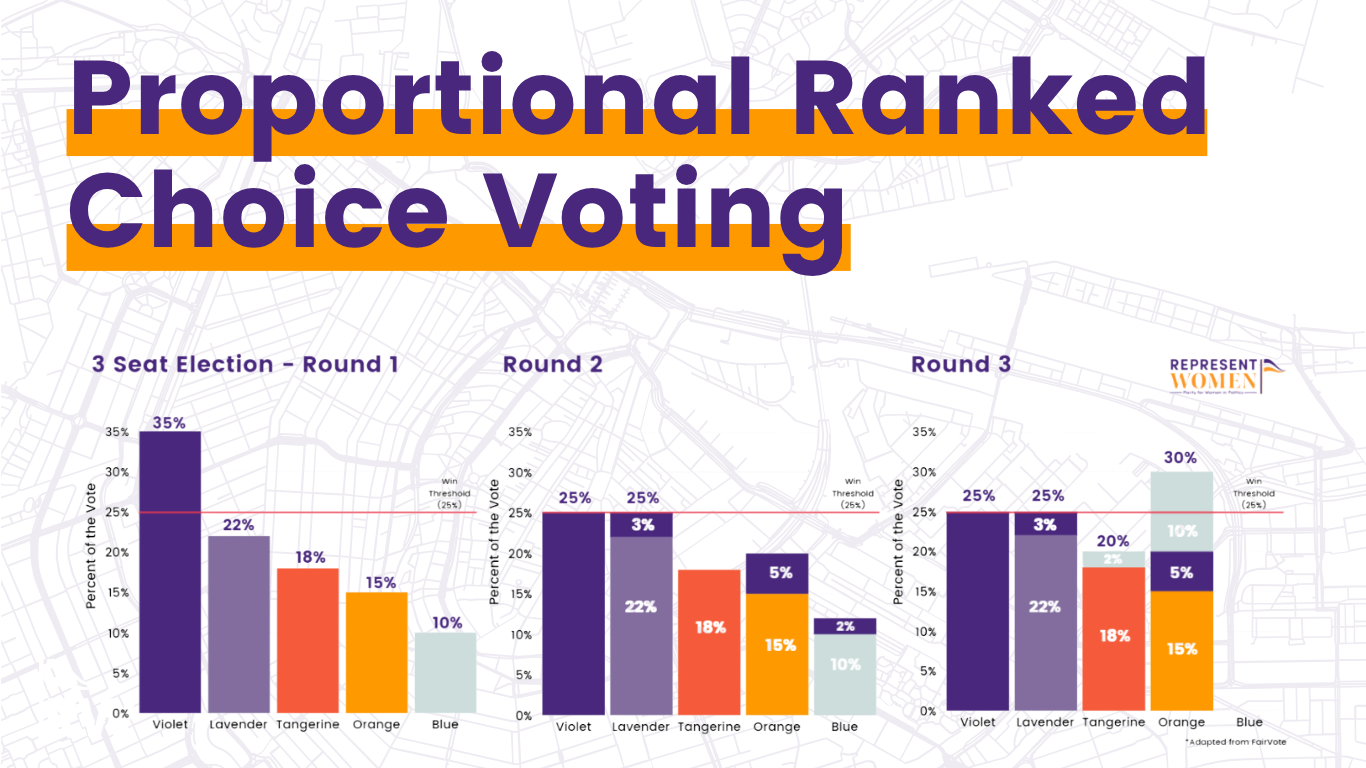
Proportional Ranked Choice Voting (PRCV) combines the fairness of proportional outcomes with the voter-friendly features of ranked choice ballots:
- Voters rank candidates in order of choice.
- Multiple candidates win seats in proportion to the votes cast.
- No ballot is wasted — nearly every voter helps elect someone.
The result is elections that are more representative, less polarized, and more open to women and underrepresented candidates.
PRCV in practice:
- Cambridge, MA, has used it for decades.
- Portland, OR, is implementing the largest PRCV elections in modern U.S. history.
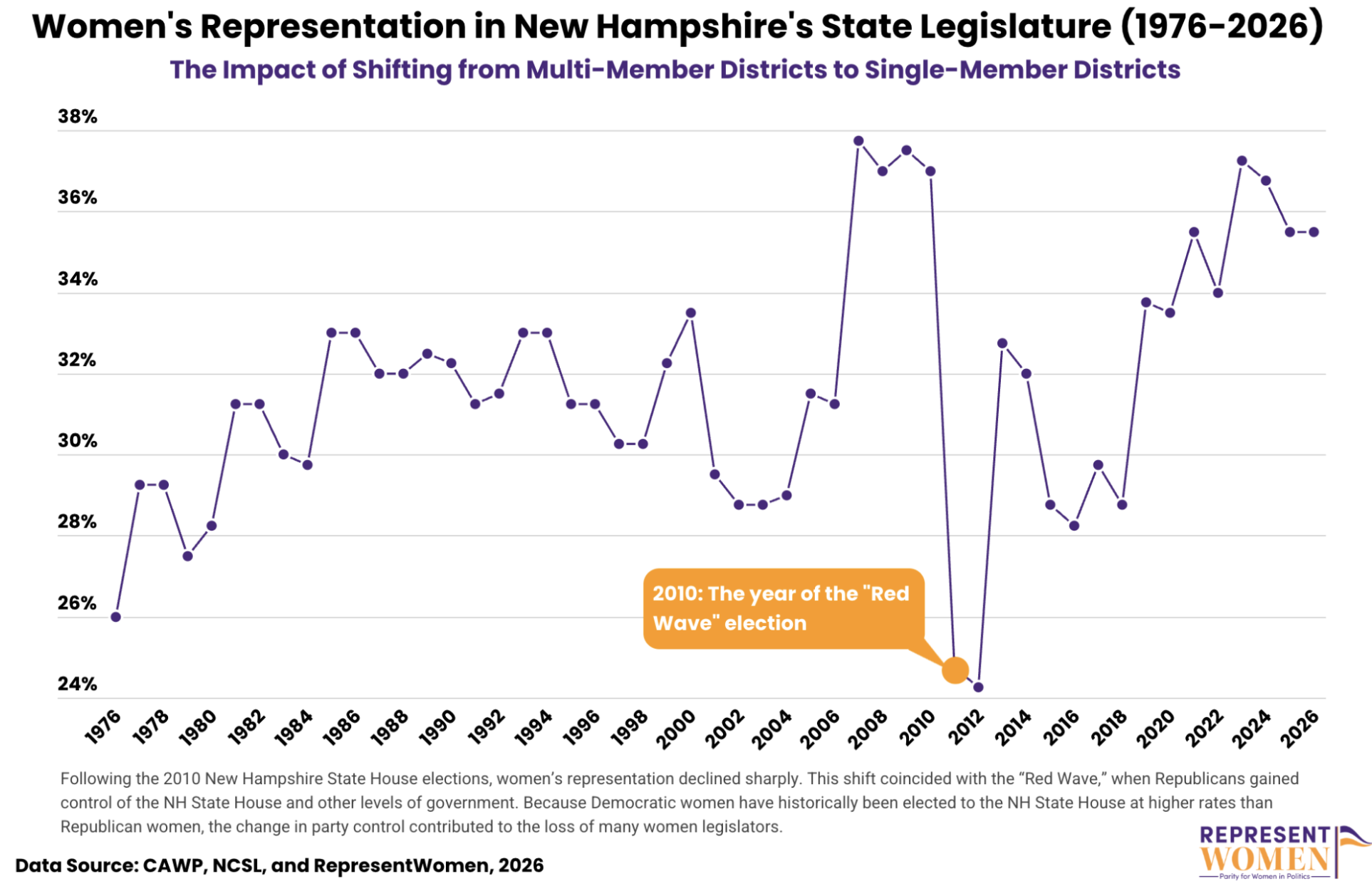
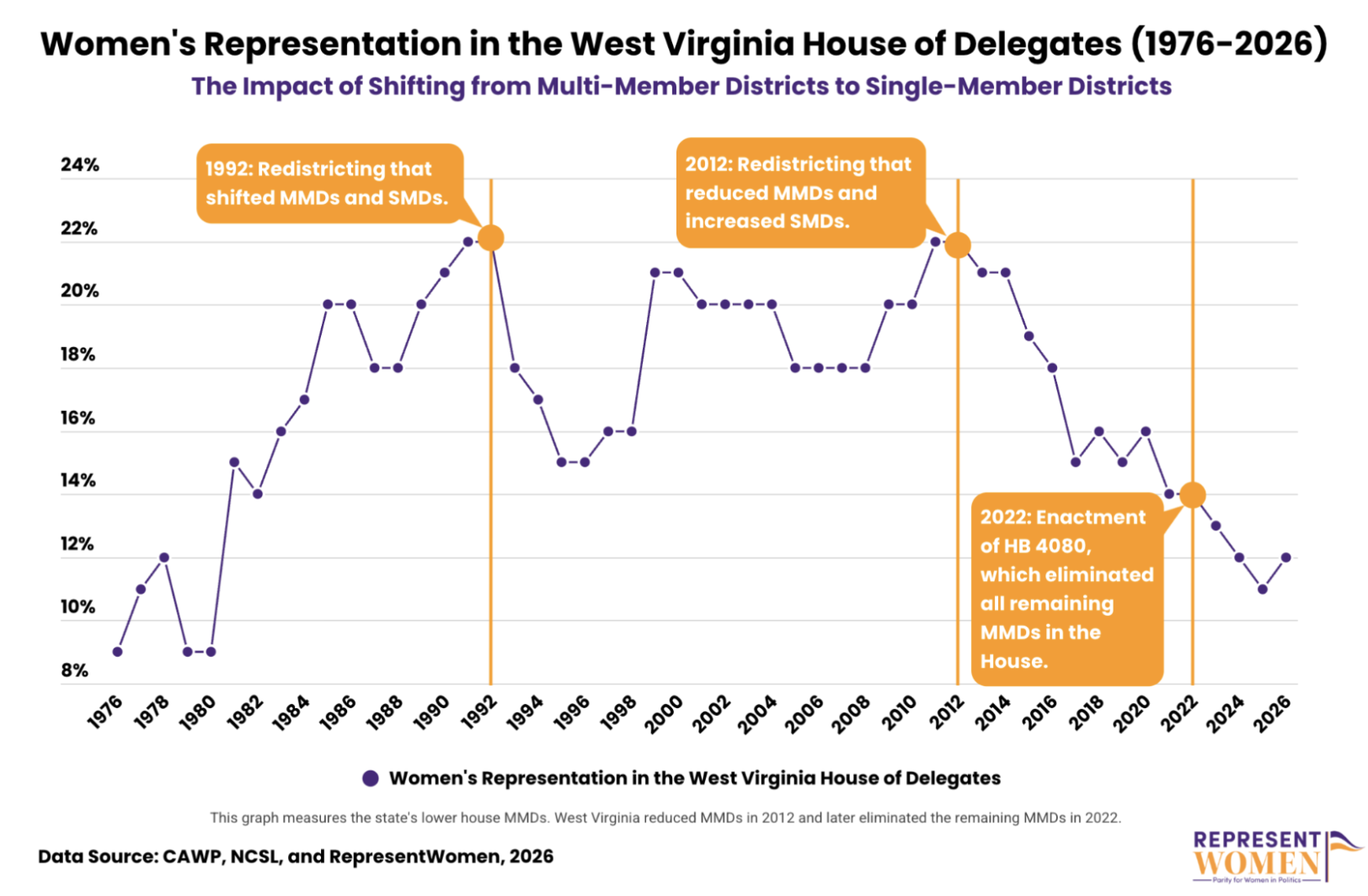
And the evidence is clear: multi-winner districts consistently elect more women than single-winner systems.
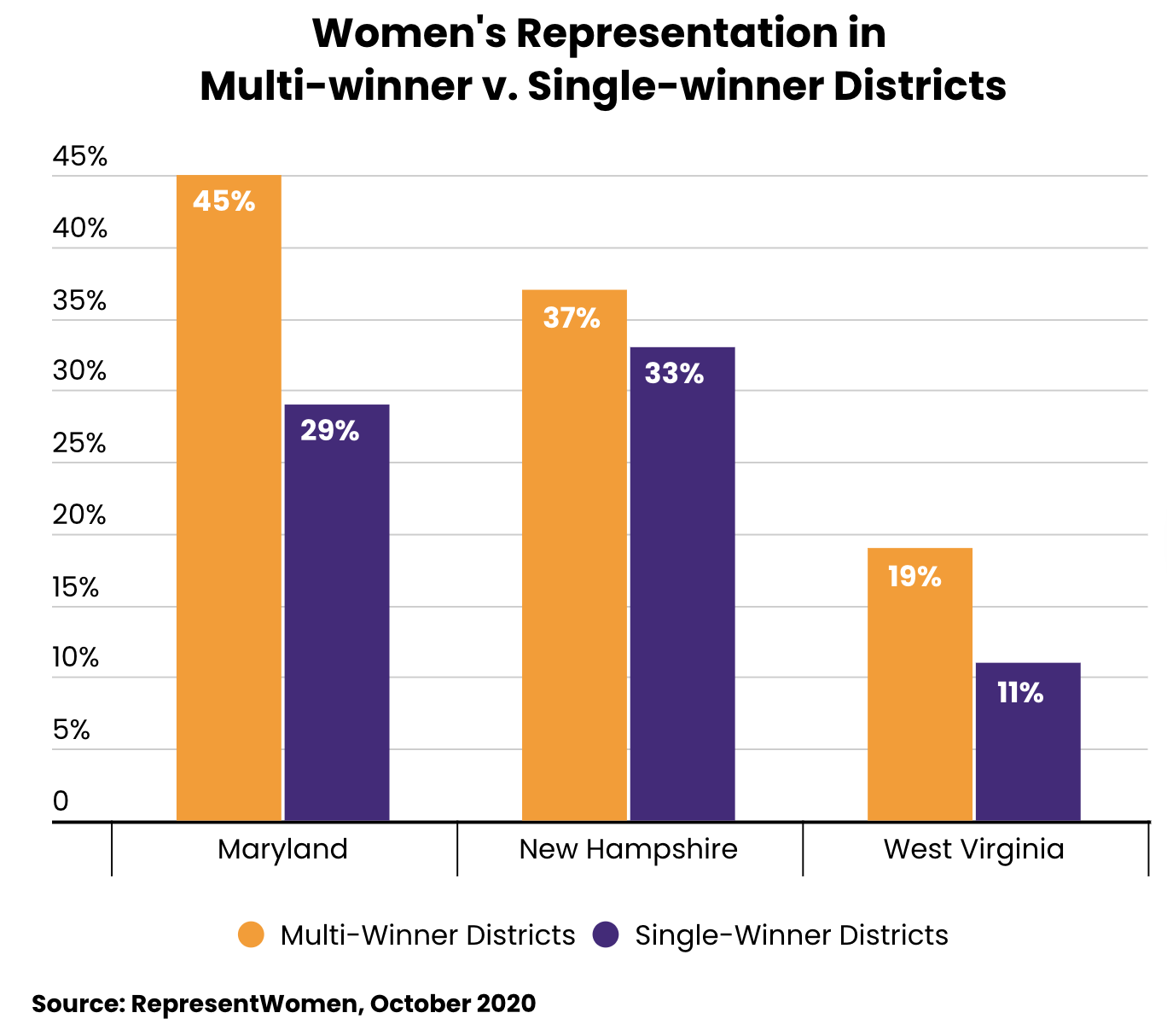
In states that use multi-winner districts, women hold more seats compared to those in single-winner districts.
How PR Levels the Playing Field for Women
Winner-take-all systems privilege incumbents and traditional candidates — disproportionately men. Proportional systems, by contrast, expand pathways for women.
PRCV addresses the biggest barriers women face in politics:
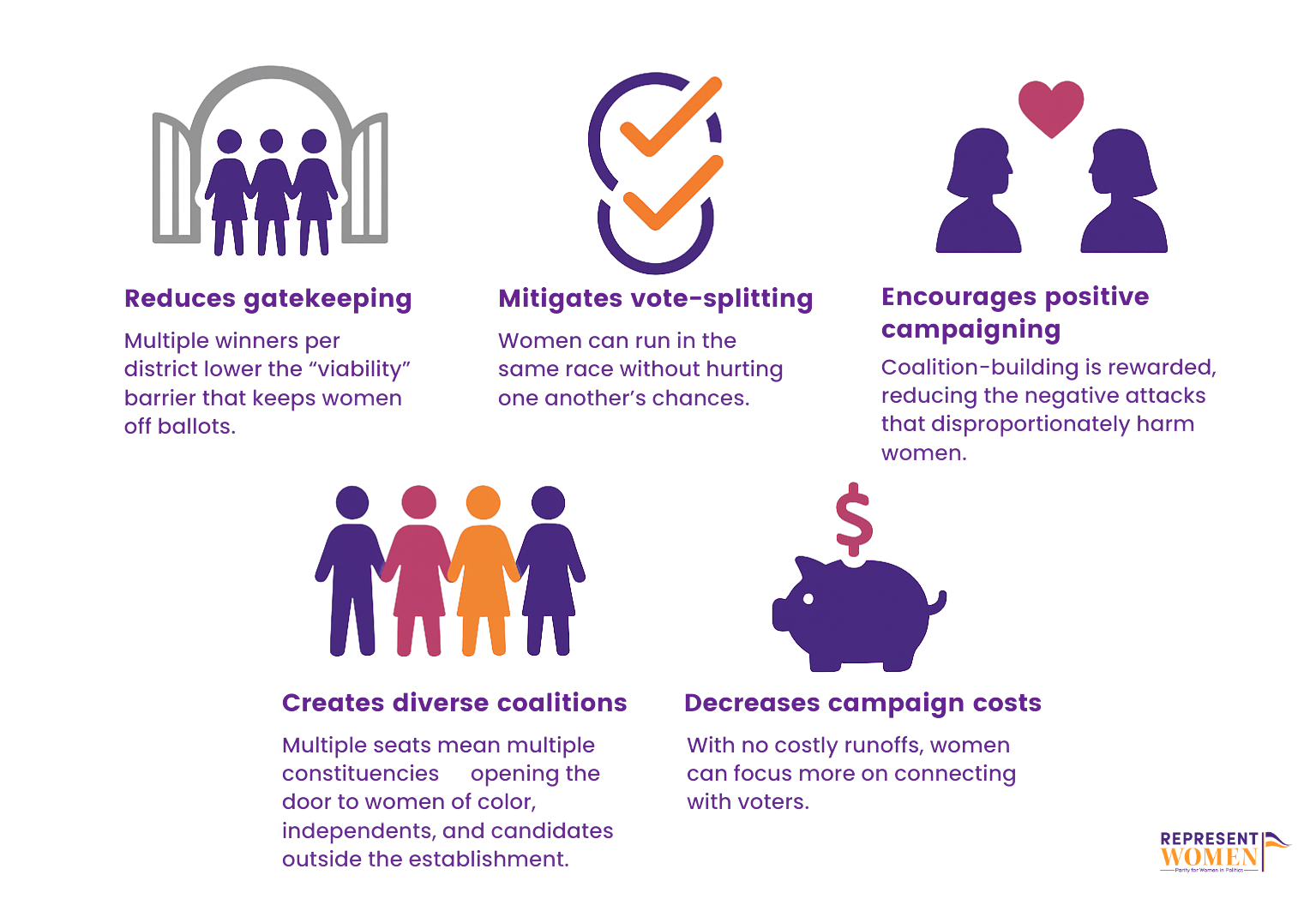
The result? Research shows women would likely win 40% more seats in Congress under PRCV, and historically, U.S. cities using PRCV saw women elected for the first time to offices in Cleveland, Hamilton, and New York.
Multi-Winner Districts Mean More Women
Multi-winner districts aren’t a new experiment — they’re already being used in state legislatures today, and the evidence is clear: they consistently elect more women than single-winner districts.
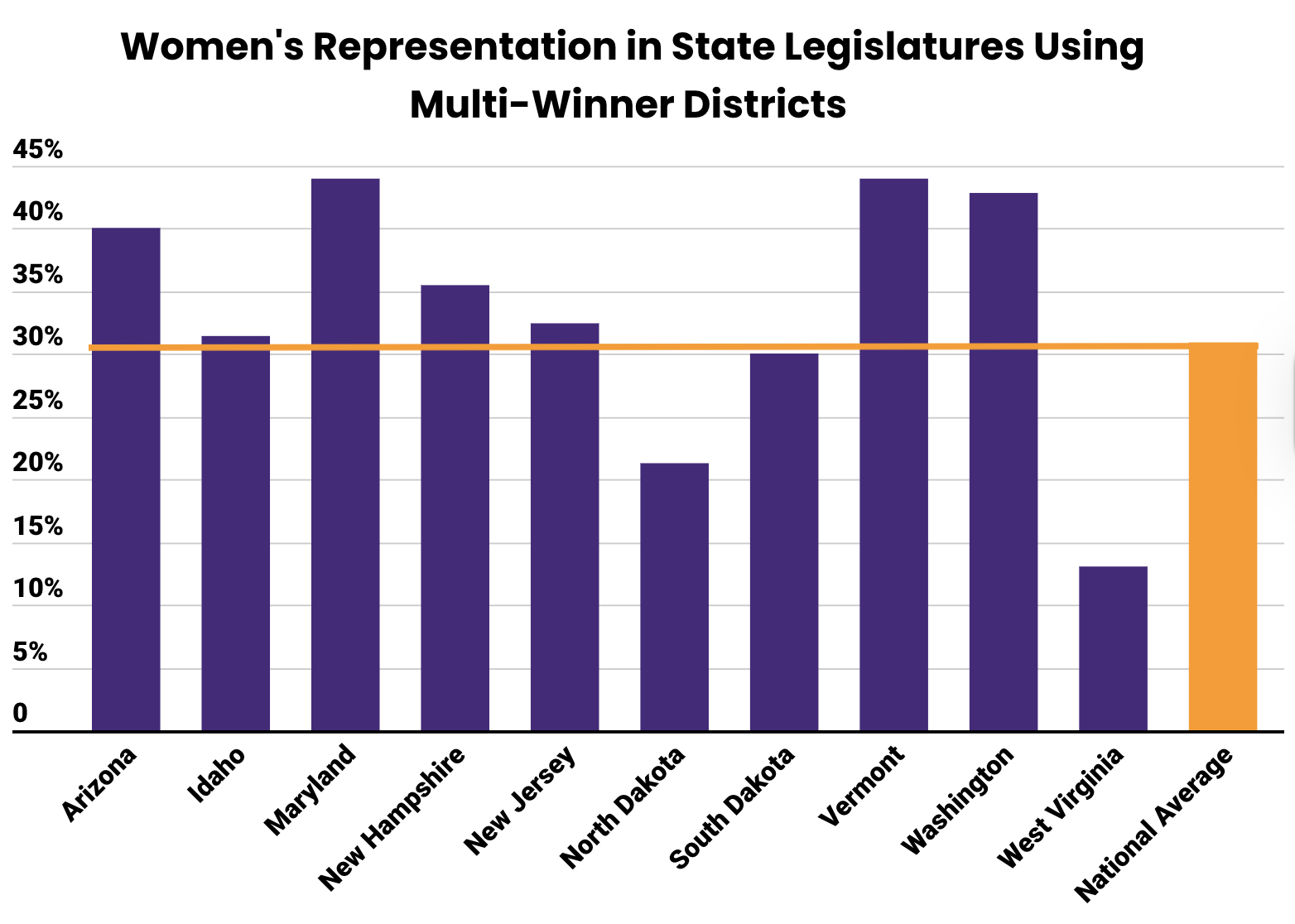
This isn’t a one-time effect. Decades of data confirm the trend: when voters can elect more than one representative per district, the playing field expands, gatekeeping diminishes, and more women step into leadership roles.
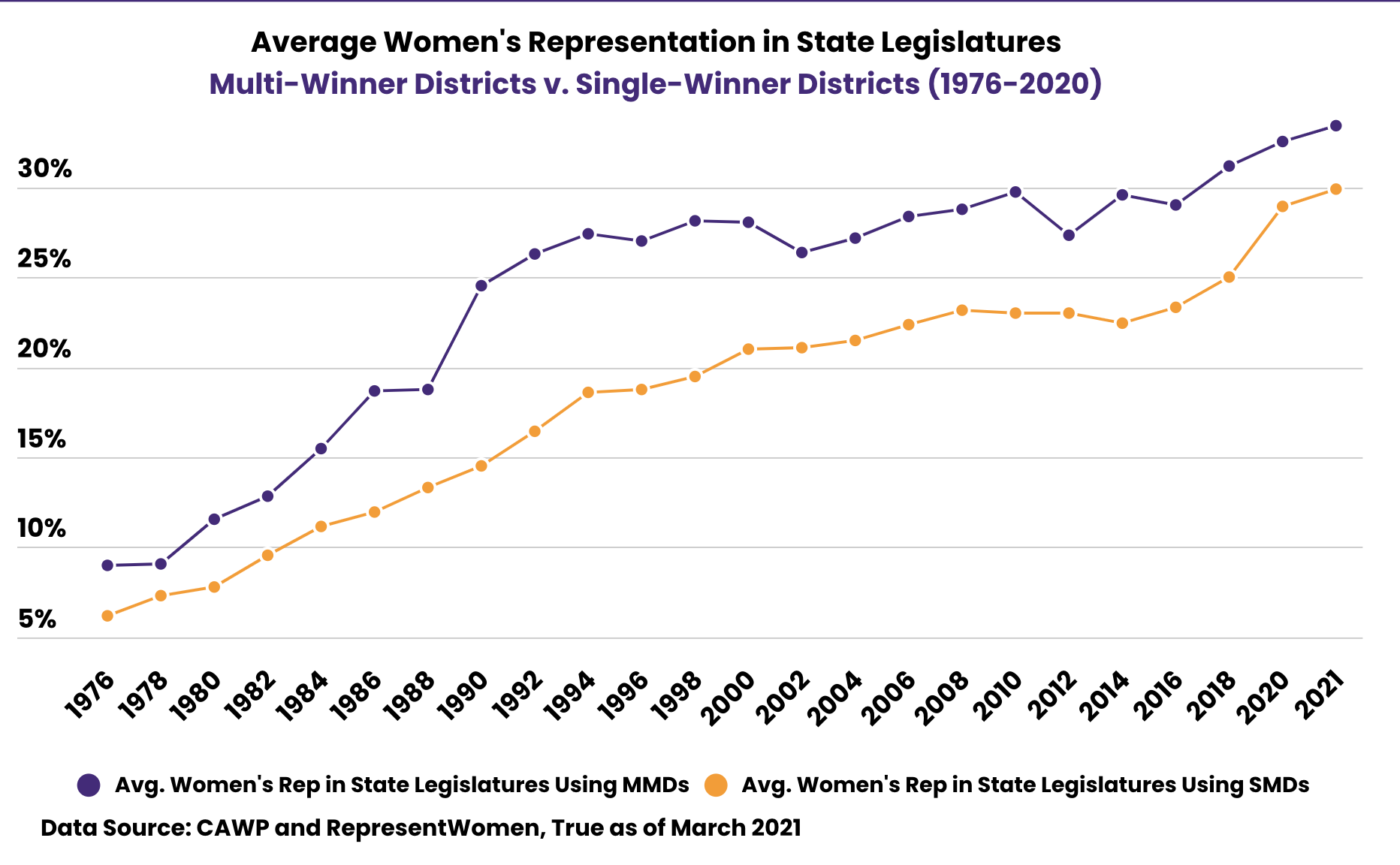
Together, this evidence shows that proportional systems work here at home — and they’ve been quietly reshaping state-level representation for years. If multi-winner districts can deliver fairer results in state legislatures, imagine what proportional ranked choice voting could do at scale for Congress and local governments nationwide.
Proportional Representation is Not New
While winner-take-all elections dominate in the United States today, proportional systems have long been part of our democracy — and they are the global norm.
- American Roots: More than 40 states have used multi-member districts at some point in their history, and several still do today. These systems prove that proportional representation is not foreign to the U.S. — it has deep roots in our own political traditions.
- Global Success: Around the world, proportional systems are the standard for fair representation.Countries likeNew Zealand, Ireland, and Australiause proportional ranked choice voting, while others, such asMexico, Sweden, and South Africa, use party-list proportional systems.These reforms have consistently expanded opportunities for women and underrepresented communities to win seats and lead.
At RepresentWomen, we draw on both U.S. history and international evidence to show what’s possible. To learn more about how proportional systems have advanced women’s representation around the globe, visit our International Voting Systems page.
Proportional Representation Delivers in Portland, Oregon
Portland, Oregon, recently became the largest U.S. city to adopt proportional ranked choice voting (PRCV). In its first election, the city council shifted from being dominated by a single district to reflecting the voices of the entire city. The results were historic: women, LGBTQ leaders, and candidates of color were elected together, creating the most representative council in Portland’s history.
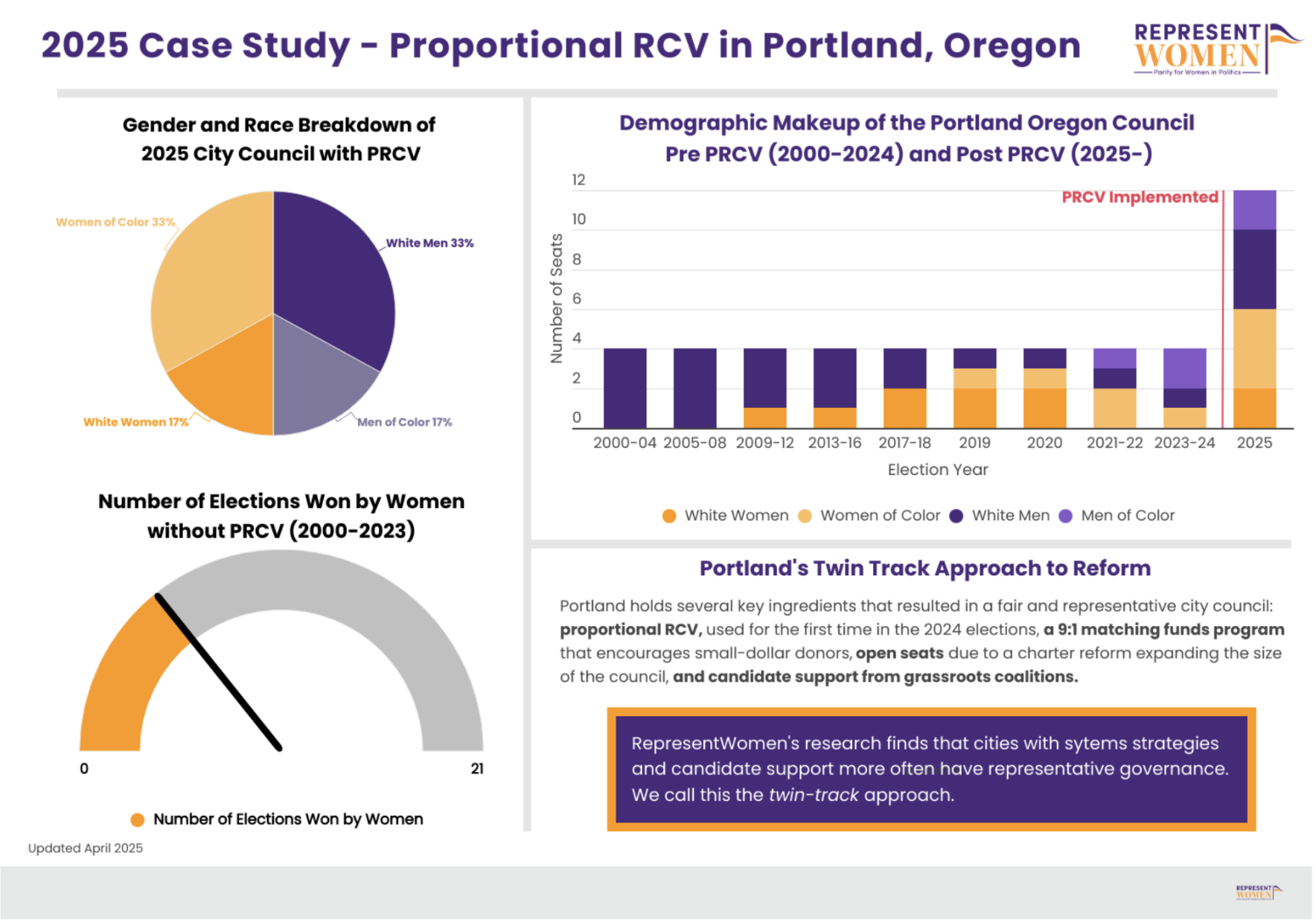
The impact was immediately visible. As research has long shown — and Portland confirmed — when we change the rules, we change who wins. At the council’s first meeting in January 2025, Council President Elana Pirtle-Guiney captured the shift:
“We see different constituencies … and bring different values to the table.”
Her words underscore how proportional systems allow multiple voices to coexist and collaborate.
Analyses of Portland’s first PRCV election also found high voter engagement, more competitive races, and more inclusive outcomes — with seats won not just by incumbents or dominant blocs, but by candidates representing a broader cross-section of communities.
Read our newly released 2025 Portland, Oregon report to learn more!
Building a Representative Democracy with PR
Proportional representation is not new — it has deep roots in the U.S. and is widely used worldwide. It delivers on three core promises:
- More representative outcomes that empower women and marginalized communities
- Stronger democracy where every vote counts
- Systems resilient against polarization and gerrymandering
The evidence is clear: to achieve gender-balanced governance, we must change the rules. Proportional ranked choice voting is the system best equipped to get us there.
Learn more about how PRCV transformed Portland’s elections: Read the 2025 Parity in Portland Report Now

%20(4).png)