There's a line I find myself reaching for in nearly every conversation I have about why RepresentWomen spends its energy on policy and structural reform rather than simply urging more women to run for office. We have never had a shortage of talented women; we have had a shortage of pathways to representation and leadership. Before Title IX, nobody needed to tell girls and women to try harder at sports. They were already extraordinary athletes. What they lacked was a roster spot, a locker room, a scholarship, a coach, a bus to the away game, and the access that talent alone could never build for itself. It is the same logic behind a curb cut: we never told someone in a wheelchair to try harder to access the concrete curb; we built a ramp. And it is the logic I carry into every conversation I have about women in office. The women I meet are ready — what too many of them still lack is a system built with them in mind from the start.
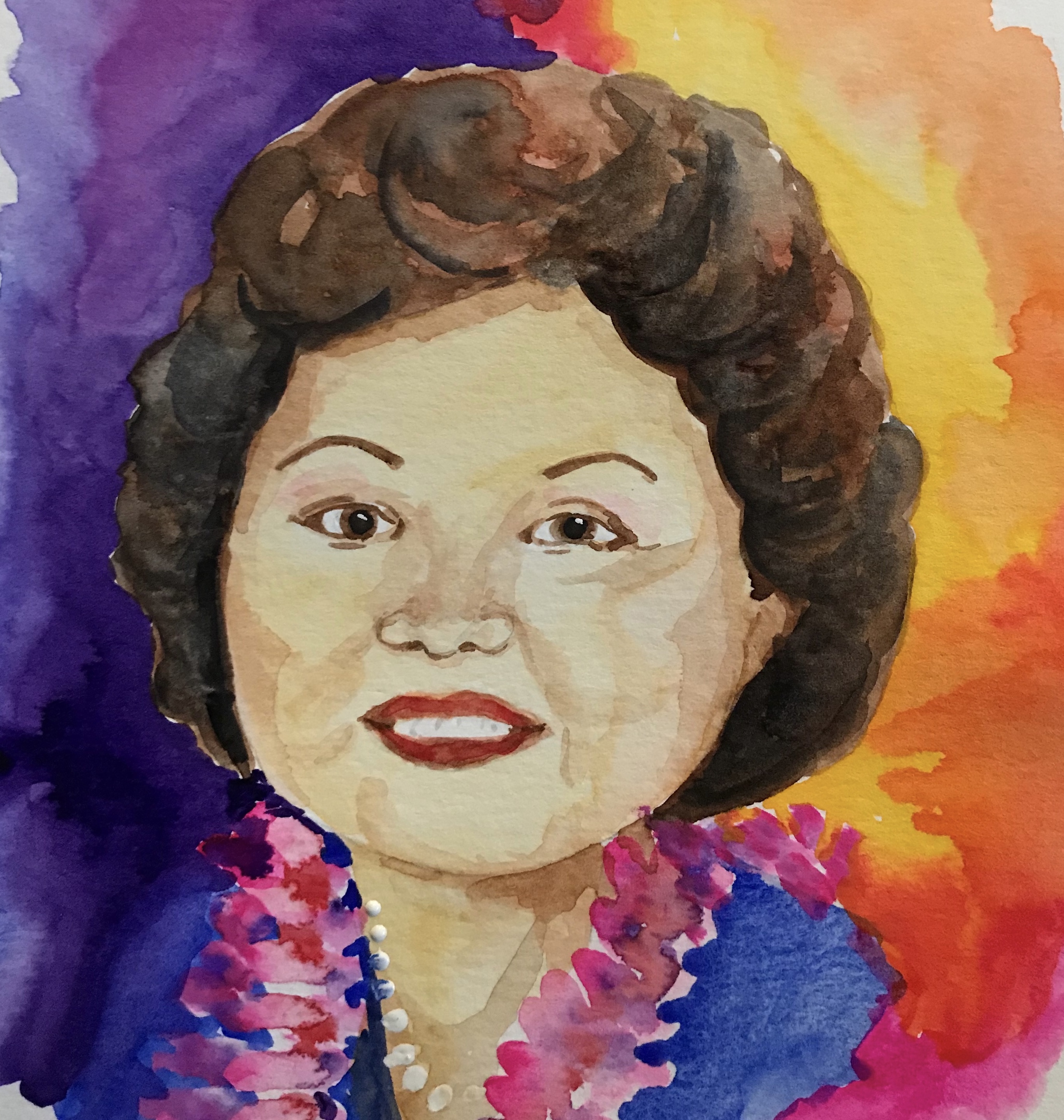
This week marked the 54th anniversary of Title IX, and it is one of the examples I return to most, not just on the calendar date but in nearly every version of that conversation above. I think of it as Patsy Mink's law, because in the truest sense, it is. The Representative from Hawaii authored and championed it, insisting that equal opportunity in education be written into law rather than left to custom or hope. It moved through every branch of government before President Nixon signed it in 1972. Patsy did not live to see the full reach of what she built. When she died in 2002, Congress renamed the law in her honor, the Patsy Mink Equal Opportunity in Education Act. I named her at this year's Summit, in the same long lineage of women whose names belong beside the rules they rewrote, not just the rooms they occupied.
What gets lost, I think, is how unsettled Title IX's meaning remained even after it passed. In 1984, the Supreme Court ruled in Grove City College v. Bell that its protections applied only to the specific program receiving federal funds, not to an institution as a whole. Congress disagreed and, in 1988, passed the Civil Rights Restoration Act to clarify that "program or activity" meant the entire institution. President Reagan vetoed it. Congress overrode that veto six days later, with a two-thirds majority in both chambers. Even a law this foundational had to be defended, branch by branch, in the open, on the record, which is exactly the kind of durability that an individual's goodwill can never offer on its own.
With the anniversary on my mind this week, I went back and watched some of the footage from our 2026 Democracy Solutions Summit panel on the Equal Rights Amendment and Title IX, looking for what still felt true months later. The line that has stayed with me since March came from Michele Goodwin, of Georgetown Law, almost said in passing as she explained why an unequal society had persisted for so long: "That was by design, and not by mistake." I could not have said it better myself.
And then there was Sarah Axelson, of the Women's Sports Foundation, whose reflection on what Title IX actually built has stuck with me ever since:
"Most people know Title IX for its application to sports. Title IX is a law that was passed in 1972, which very broadly just said you can't discriminate on the basis of sex in educational institutions. And that applied to everything. But uniquely, sports are the one place where we really separate by sex, and that's where its impact became most notable and most relevant. But we do see instances of the sheer number of higher ed degrees earned by women since the passage of Title IX, as well as medical and legal degrees. There has been a significant expansion of educational opportunities for women and men in non-traditional fields. But what I focus on is its intersection with sports. And we've seen exponential growth in opportunities for women and girls to participate in sports since the passage of Title IX. And this is important because we know the health, academic, and leadership benefits that girls and women attain through access to sports.
Sport teaches us life lessons. It teaches us how to fail, how to work as a team, how to manage our time, how to juggle schoolwork and sports practice, how to stay committed to something, and how to lead a team. And so what we see, that's really powerful, is that now that we have generations who have come through our educational systems with access to sport, we see women in leadership positions as a result of their sport experience and the skills gained through sport. It's been really critical in advancing opportunities for women, not just in education, not just in sports, but really overall, and increasing our society and women's achievement in society as well."
Sarah was just as honest about how much of that promise remains unevenly delivered: nearly 90 percent of colleges and universities still aren't offering proportional athletic opportunities to their female students, and the gains so far have reached white and suburban girls far more than girls with disabilities, girls of color, or LGBTQ youth. You can watch the full segment to learn more.
Title IX did not finish the work by passing; it simply made the work possible. That is what I keep coming back to, on this anniversary and every one before it: representation has never been a question of women trying harder. It has always been a question of whether we are willing to build the systems, the rules, and the pathways that finally let the talent we already have come through.
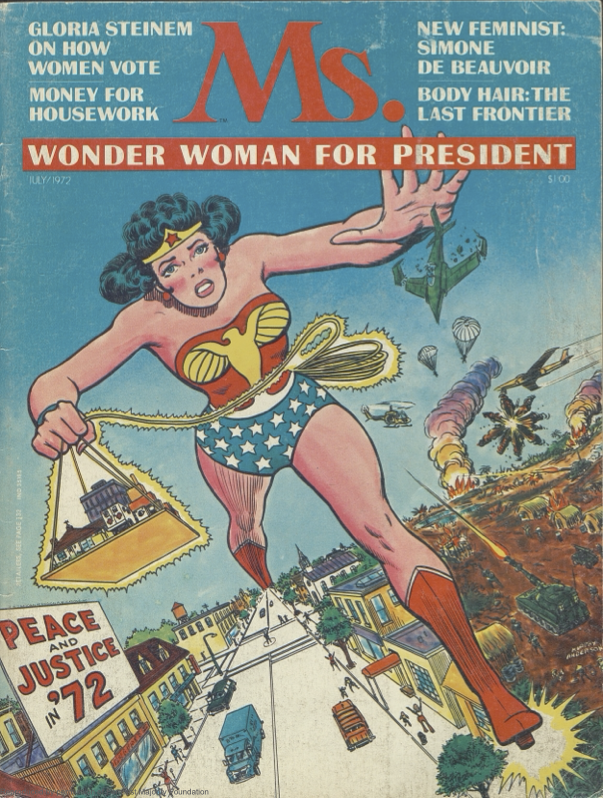
Milestones: Title IX signed into law (1972); Illinois passes a bill granting women suffrage (1913); Supreme Court legalizes same-sex marriage in all fifty states (2015); Ohio Civil Rights Commission v. Dayton Christian Schools Inc. decision upholds commissions right to investigate the unlawful firing of school teacher due to her sex; Laura Clay and Cora Wilson Stewart became first women to seek a major party presidential nomination at the DNC (1920). Supreme Court upholds women's constitutional right to abortion in Planned Parenthood v. Casey decision (1992); Ketanji Brown Jackson sworn in as the 1st Black woman to serve on the Supreme Court (2022); National Organization for Women is founded (1966); First Issue of Ms. Magazine is published (1972); The Women's Army Corps is created (1943); Title VII of the Civil Rights Act is establishes the Equal Employment Opportunity Commission (EEOC) and bars discrimination in employment on the basis of race and sex; Suffragists crash the Centennial Celebration in Independence Hall and present the Vice President with the "Declaration of the Rights of Women" written by Matilda Joslyn Gage (1876); Arizona passes a bill granting women suffrage (1912).
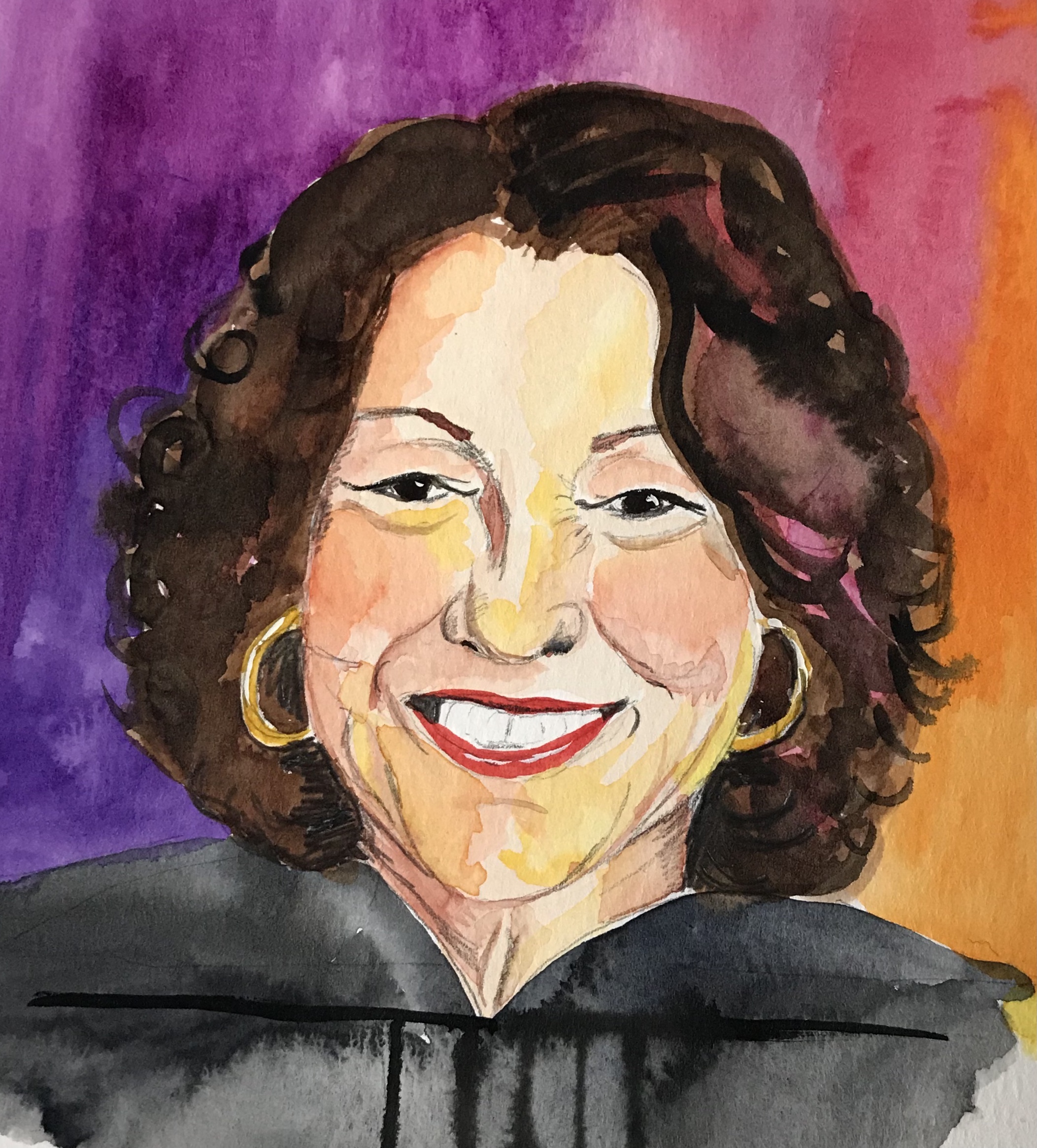
Birthdays: Octavia Butler, African American science fiction writer; Dianne Feinstein, former U.S. Senator; Ann Marie Staudenmaier, attorney at the Washington Legal Clinic for the Homeless; Rosemary Cohen, Parula Gardens Cooperative – Philadelphia’s only worker owned landscaping company; Meryl Streep, actress; Melanne Verveer, ED of the Georgetown Institute for Women; Busy Philipps, actress & reproductive rights activist; Gail Gugel; Sonia Sotomayor, first Latina woman Supreme Court Justice; Helen Adams Keller, American author; Carol Edgar; Sally Priesand, 1st woman Rabbi, Suzie Staudenmaier; Karen Bailey, Founder and Chief Strategist at Alignd on Purpose; Stephanie Donner, general counsel at Galvanize and co-author of When Women Vote.
How Maine’s Hannah Pingree Rose to the Top with Ranked Choice Voting
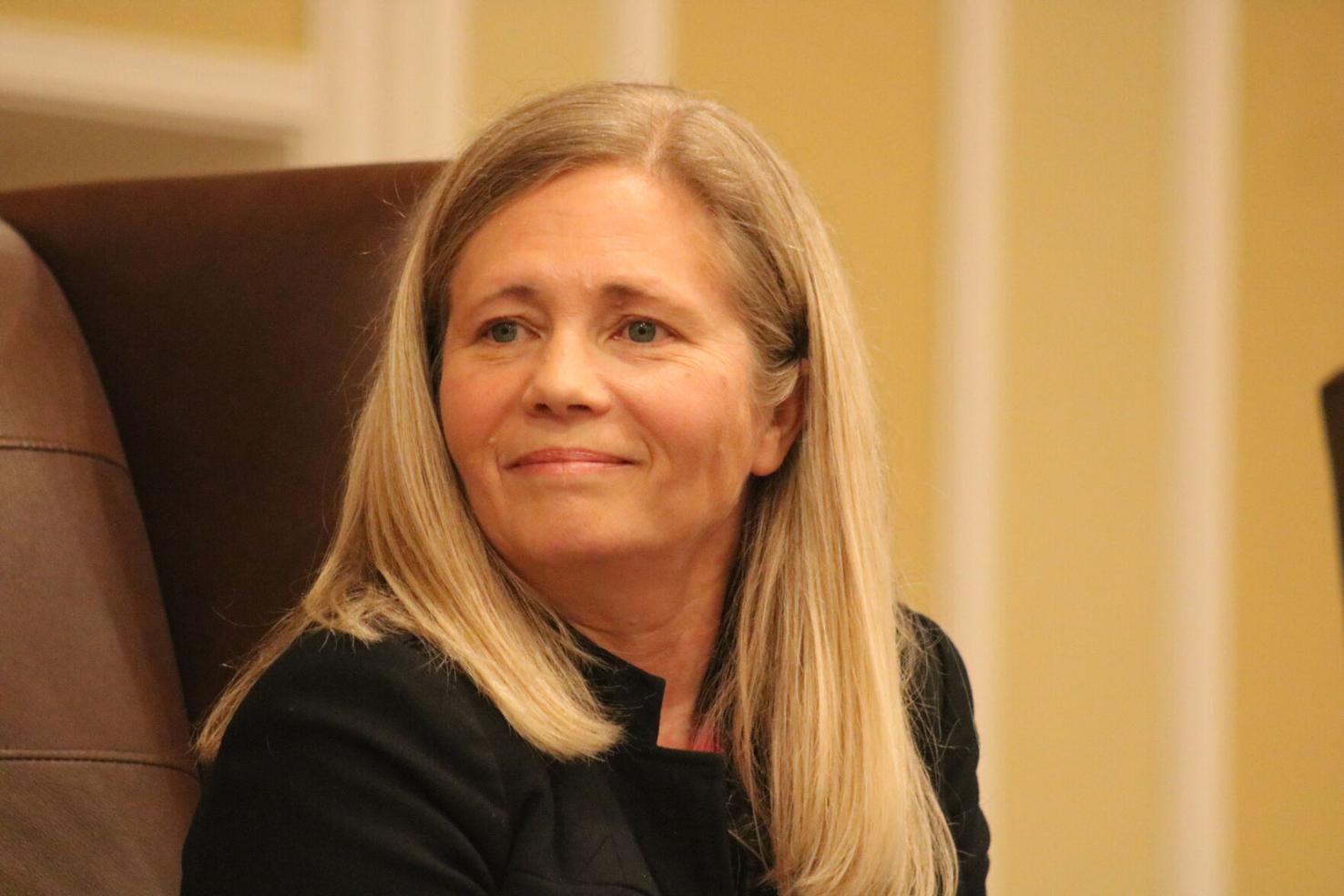
Hannah Pingree earned a convincing primary win. Source: Mt. Desert Islander
Using ranked choice voting (RCV), Maine this month had its highest voter turnout ever in a primary election, with 222,405 voters in the Democratic primary far exceeding previous highs in primaries for Senate (162,681) and governor (126,139). The five-candidate Democratic primary for governor was fractured in the first round, however, with Nirav Shah leading with only 26% of the vote. In second was former Maine House Speaker Hannah Pingree, with 23%.
But RCV gave voters more power to define their interests. Some 86% of Democrats used their rankings, with 99.7% casting a valid ballot. Pingree was clearly the most unifying candidate, however, and soared past Shah in the RCV tally. In each round, she picked up the most votes as the 5th-place, 4th-place, and 3rd-place candidates were eliminated and won in the final instant runoff with 56% -- more than doubling her number of votes to the most won by a nominee in Maine history and reflecting the fact that she would have defeated all other Democrats in simulated head-to-head contests. To top it off, Shah said in a debate that he was ranking Pingree second on his own ballot. Here’s FairVote’s video explaining what happened.
Pingree is in an excellent position to be Maine’s second woman governor, succeeding Janet Mills, who won the first gubernatorial primary with RCV in 2018. Former Portland mayor Ethan Strimling writes more in the Maine Beacon in his guest essay Ranked choice voting worked!:
"Maine has ranked choice voting. This ensures that the winner actually reflects the will of a majority of voters, not some small plurality (like Gov. Paul LePage received in 2010, and as Shah was receiving in this election).
The only real question was whether the candidates would have the courage to join arms – even though it meant accepting (or acknowledging?) that two of them wouldn’t win. Thankfully, they did. Spectacularly.
With two weeks to go, Hannah, Shenna, and Troy cross-endorsed, actively encouraging supporters to vote for the others as their second and third choice, while also pledging not to attack each other. It worked so well that the final tally was a landslide. Fully 32,000 of Shenna’s second place votes went to Troy and Hannah, with less than 10,000 going to Nirav Shah, catapulting Hannah into first place even before the final round. When Troy’s seconds and Shenna’s thirds were then distributed, Hannah got another 36,000 votes giving her (us) a double digit win over Shah.
That meant 75% of second-choice votes stayed in the coalition. And it means the Democrats (candidates and electorate) enter the general election remarkably united."
Washington, D.C.’s 1st-Ranked Choice Voting Elections Draw Most-Ever Primary Voters
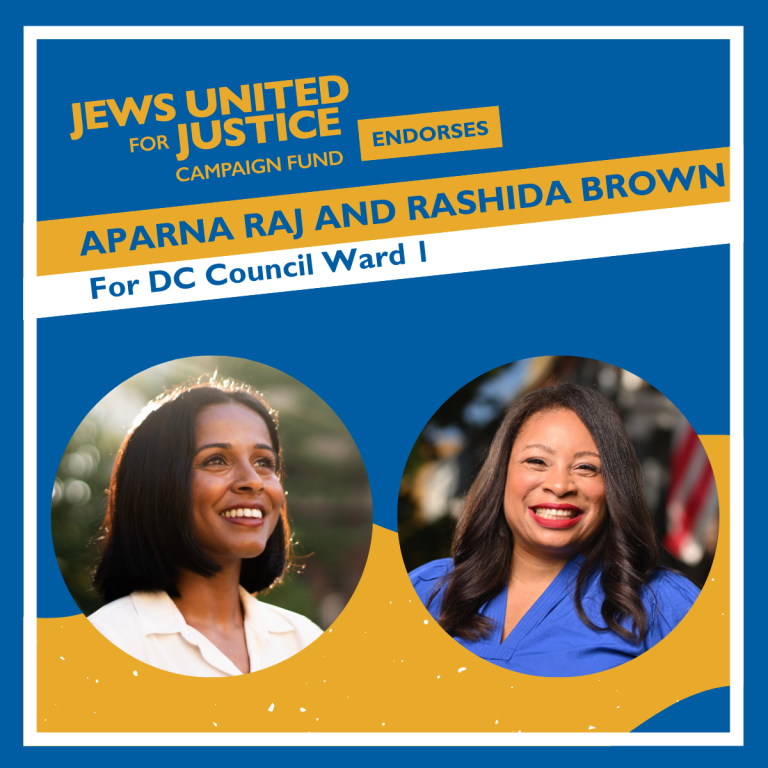
Ranked choice voting enables cross-endorsements. Source: Jews United for Justice
Washington, D.C. held its first primaries with ranked choice voting (RCV), with the most votes ever cast in the District's primary history. 38-year-old Janeese Lewis George earned the most votes ever for a Democratic nominee, winning easily in the first round. Two city council primaries triggered instant runoffs, including Aparna Raj in Ward 1, who had a convincing win in her first run for office.
To understand the RCV results, I enjoyed the District’s innovative approach to showing the RCV tallies. FairVote released this news release on voters’ reaction to the primary:
A new SurveyUSA poll finds that supermajorities of Washington, DC, voters say ranked choice voting is simple and support it… Polling was conducted among 542 likely and actual voters from June 12 to June 18. Key findings of the poll include:
- 74% say they support the ability to rank candidates on their ballots, while just 18% oppose it.
- 78% of Washington, DC voters say their ranked choice voting ballot is simple to complete, compared with 15% who say it is difficult. The percentage saying it is simple rises to 87% among respondents who had already voted.
- 71% say they understand RCV extremely or very well, with another 23% saying they understand it somewhat well. Only 5% say they do not understand it well.
- 68% of voters say independents should be allowed to vote in primary elections, while just 16% oppose it. This policy also passed as part of Initiative 83, and the Council voted yesterday to fund and implement it.
- 69% say they ranked two or more candidates in at least one race on their ballot. Among voters who ranked two or more candidates, 59% say “ranking allows me to support all the candidates who align with my values.”
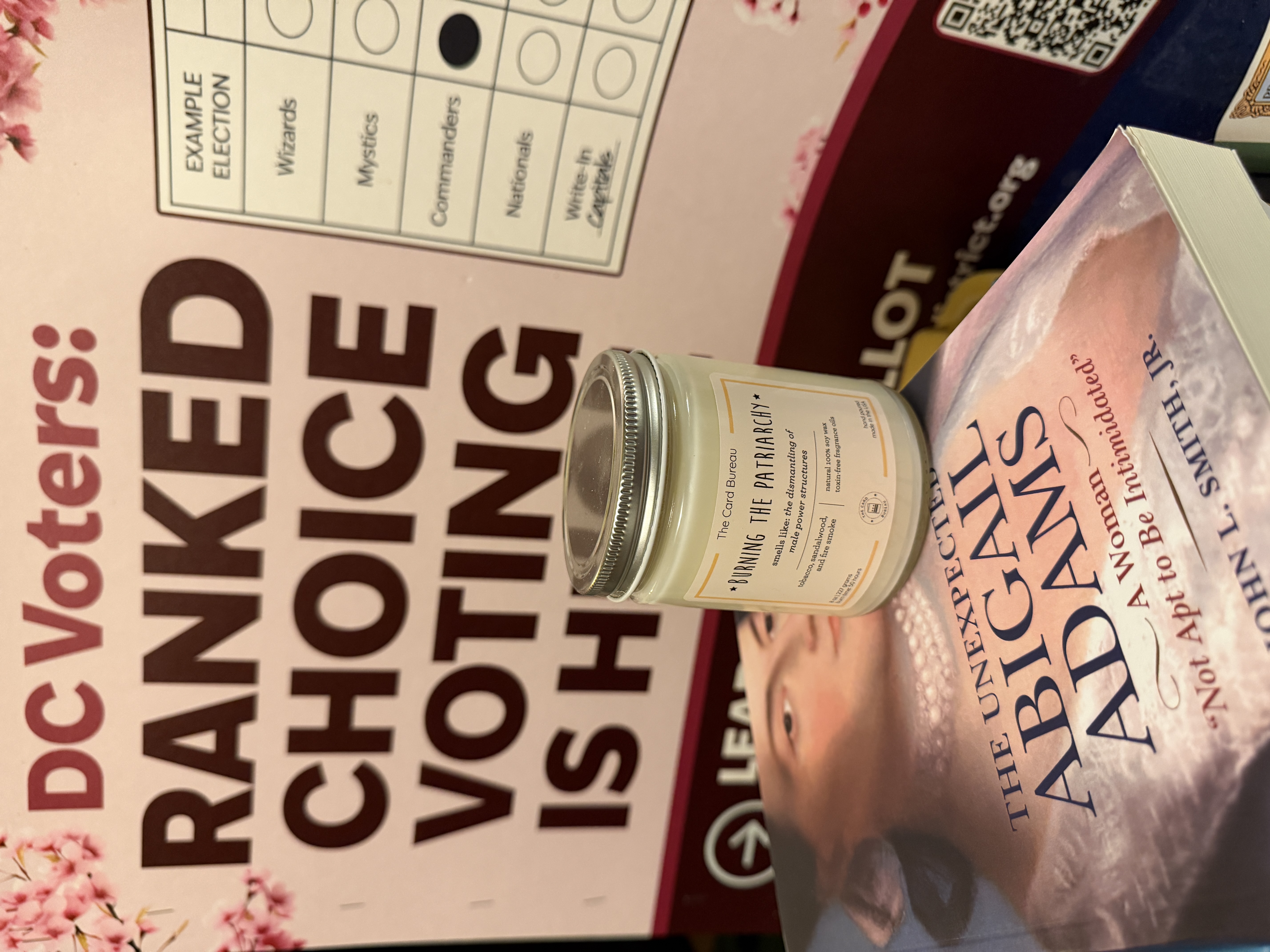
A little collage that includes a ranked choice voting sign from Rank The District, a book about Abigail Adams that I am eager to read, and a clever candle I found at Politics and Prose last night!
New York Congressional Primaries Elevate Women Favored to Win in November
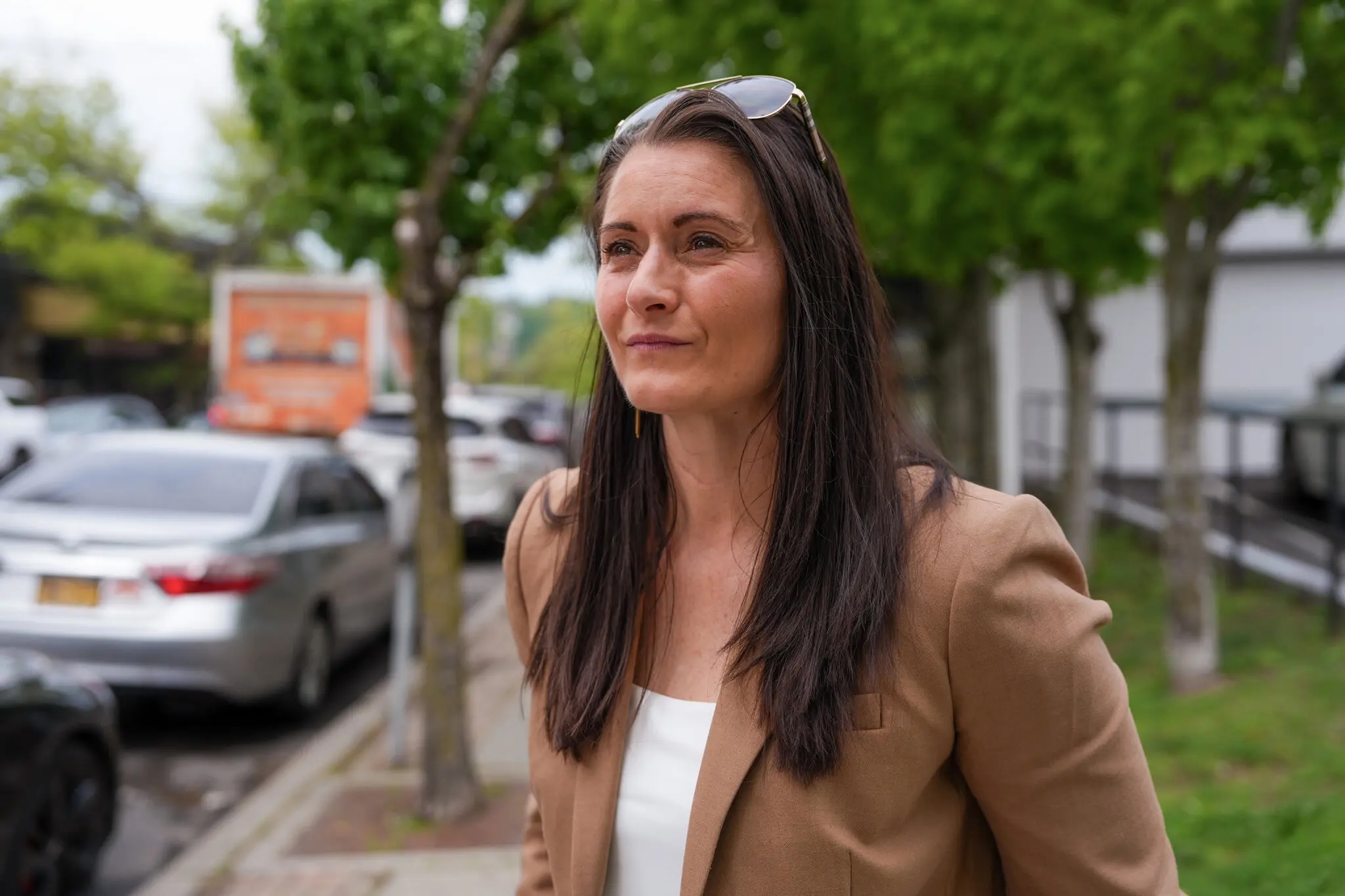
Cait Conley. Source: New York Times
Three women won hotly contested Democratic primaries in New York State and are favored to win in November, including two democratic socialists backed by New York City mayor Zohran Mamdani and an army veteran in a swing district held by electoral reform opponent Mike Lawler, who has been the lead sponsor of failed bills to ban ranked choice voting in the United States.
Conley was one of our speakers on election administration and democracy at RepresentWomen’s 2024 Democracy Solutions summit. Here’s City and State on her primary win:
Army veteran Cait Conley cruised to victory Tuesday, securing the Democratic nomination for the race to take on Republican Rep. Mike Lawler. “I’ve gone from the battlefield to the Situation Room when the stakes were life and death, and I sure as hell am not afraid of a lifelong political hack like Mike Lawler,” Conley said in a statement shortly after winning.
The Associated Press called the race for Conley soon after polls closed. With more than half the votes counted, she had 49%, while Rockland County Legislator Beth Davidson had 30% and Tarrytown Village Trustee Effie Phillips-Staley had 15%.
A West Point graduate, Conley had support from a wide array of national Democratic groups like the Bench, Majority Democrats, and Vote Vets, along with members of Congress like Hudson Valley Rep. Pat Ryan and Colorado Rep. Jason Crow. Conley’s service record positions her to reach the many service members, first responders, and their families who live in NY-17.
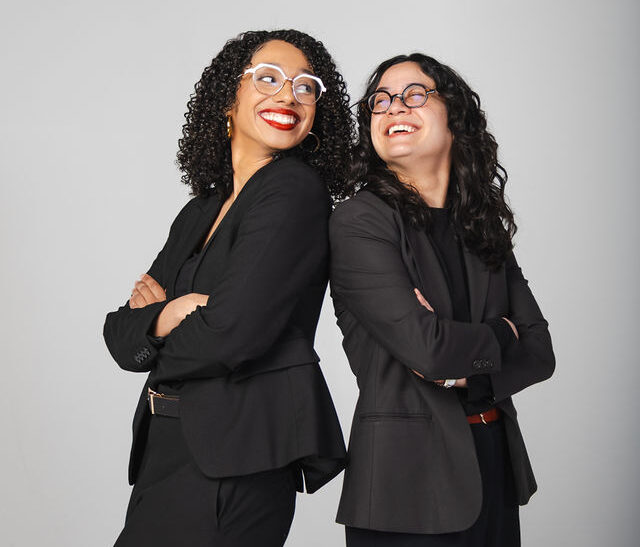
Darializa Avila Chevalier (left) and Claire Valdez (right). Source: Democratic Left
Underscoring the pluralism of views that often exist within a major party, Claire Valdez and Darializa Avila Chevalier surged to victory in congressional districts in New York City. Both women are Latinas in their 30’s who overcame great obstacles and heavy PAC spending to win - Valdez in an open-seat primary against an opponent with more traditional party support and Chevalier against a 10-year incumbent who chaired the Hispanic caucus. Here’s coverage in The 19th on their victories:
"Democratic socialists Claire Valdez and Darializa Avila Chevalier won their primaries for the U.S. House, a show of strength for the left wing of the party and a sign of Mayor Zohran Mamdani’s influence in New York City.
Chevalier, a Harlem-based organizer and doctoral student, defeated Democratic Rep. Adriano Espaillat in New York’s 13th District, a working-class seat including parts of the Bronx, Upper Manhattan and Harlem with a mostly Latinx and Black population. She ran a campaign rooted in both ideology and generational change against the 71-year-old Espaillat, the chair of the Congressional Hispanic Caucus who was the first Dominican-American and first formerly undocumented person to serve in Congress…’
Valdez defeated Brooklyn Borough President Antonio Reynoso and Council Member Julie Won to succeed retiring Rep. Nydia Velázquez, who was the first Puerto Rican person to serve in Congress and who represented the Brooklyn and Queens-based seat for three decades…
Both Chevalier and Valdez have backgrounds in organizing and are running economic populist campaigns: Chevalier is a community organizer and doctoral student, while Valdez was a clerical workers union organizer at Columbia University and a labor organizer at the United Auto Workers before getting elected to the state Assembly. Both are staunchly pro-Palestinian and support abolishing the Immigration and Customs Enforcement agency (ICE)."
Women Have Wins and Losses in Primaries in South Carolina, Utah, and Maryland
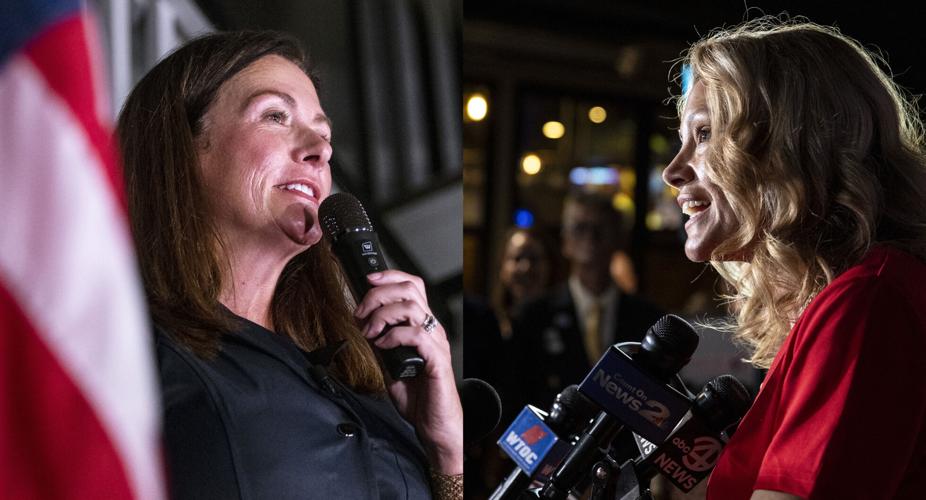
South Carolina will have an all-women election in its 1st congressional district. Source: Post and Courier.
Three other states held primaries on June 23rd: Maryland and Utah for many offices and South Carolina for runoffs. Drawing from news coverage and the Center for American Women and Politics, here are key outcomes for women.
South Carolina:
- Governor: Only four women are Republican governors, and it’s quite possible that number could drop to two this year, with Sarah Huckabee Sanders likely to win re-election in Arkansas and Sen. Marsha Blackburn favored to win an open seat in Tennessee. South Carolina offered another opportunity, with Lt. Gov. Pamela Evette leading in the first round of the primary and having Donald Trump’s endorsement. But with signs that her male opponent was leading, Trump endorsed him as well, and he won the runoff easily.
- South Carolina's First Congressional District: Nancy Mace chose to run for governor instead of re-election. She will be replaced by a woman, as both Republicans and Democrats nominated women this week in runoffs against men. Here’s coverage in the Post and Courier:
"The race to succeed U.S. Rep. Nancy Mace in Congress will be fought by two women in November. Republican County Councilwoman Jenny Costa Honeycutt and Democrat Nancy Lacore, a former Navy admiral fired by Defense Secretary Pete Hegseth, emerged victorious from their respective June 23 runoffs in the coastal 1st Congressional District. Their showdown will be one of the state’s most closely watched races. Honeycutt defeated state Rep. Mark Smith, R-Daniel Island, by a 54 percent to 46 percent margin, while Lacore bested attorney and former Coast Guard officer Mac Deford 52 percent-48 percent, according to unofficial returns."
Maryland:
Money played an outsized role in key contrasts in Maryland. Below is a breakdown of a few key races that we have been looking at.
- Maryland's 6th Congressional District: April McClain Delaney had the backing of Maryland's entire Democratic delegation but faced a difficult primary. Here’s more from Maryland Matters:
"After a bitter, expensive, and largely self-funded campaign, freshman U.S. Rep. April McClain Delaney (D-6th) has held her seat against David Trone, who was trying to reclaim it after a two-year absence…. The most remarkable part of their campaigns, however, was the money that each poured into them. Trone funneled $25 million of his own money into the race, according to his latest filing with the Federal Election Commission, while McClain Delaney reported loaning her campaign $7.2 million." - Maryland's 5th Congressional District: In a divided field without ranked choice voting, Adrian Boafo won with 32%, with second place going to businesswoman Quincy Bareebe, who was heavily outspent. As reported in Politico:
"Boafo won the Democratic primary Tuesday to replace retiring Rep. Steny Hoyer in the 5th District, aided by $11 million from pro-crypto and pro-Israel groups. Boafo was Hoyer’s preferred successor and his former campaign manager. The primary was marked by intraparty divisions over heavy outside spending." - Montgomery County: My state of Maryland has never had a woman governor, and my home county has never had a woman county executive. That lack of women's leadership will continue, with only men contesting this year’s open county executive seat. On the other hand, women won 8 of 11 county council seats.
Utah:
- CAWP reports on Congresswoman Celeste Maloy fending off a serious primary challenge, writing:
"Of the 8 major-party nominees for U.S. House in Utah, only one, incumbent Republican Representative Celeste Maloy, is a woman. Women make up 12.5% of major-party nominees, including none of the 4 Democrats and 1 of 4 (25%) Republicans."
New York (statewide seats):
CAWP reports: Women are 4 of 7 (57.1%) major-party nominees for statewide elective executive office in New York, including 3 of 3 (100%) Democrats and 1 of 3 (33.3%) Republicans.
- Kathy Hochul (D) was uncontested and will face Nassau County Executive Bruce Blakeman (R) for governor. The race is currently rated as “Solid Democrat” by the Cook Political Report.
- Tish James (D) was uncontested and will face Saritha Komatireddy (R) in an all-woman contest for attorney general.
- Adrienne Adams won the Democratic nomination for New York’s lieutenant governor. If she wins in November, she would be the first Black woman elected to this office. New York State Senate Majority Leader Andrea Stewart-Cousins has served as New York’s lieutenant governor in an acting capacity. This is the first all-woman governor/lieutenant governor general-election ticket in New York history.
A Woman Will Replace Eric Swalwell in California… But Not For Two More Months
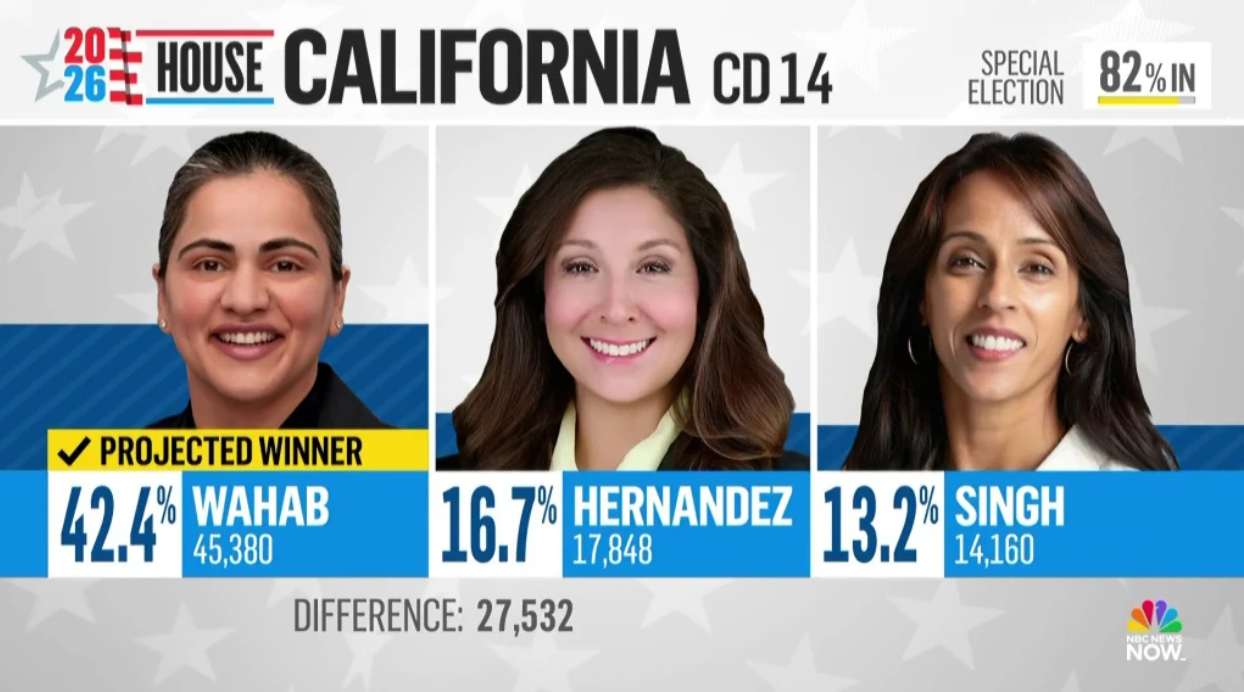
Source: NBC News
Eric Swalwell represented California’s 14th congressional district until resigning this spring. A hastily organized special election to fill his Bay Area seat was held on June 16, just two weeks after the regularly scheduled primary. Under California’s special election results, a candidate wins immediately if they secure more than half the vote. Otherwise, the top two head to a runoff two months later.
When the voters were courted, state Sen. Aisha Wahab earned 43% of the vote, with fellow Democrat and Bay Area Rapid Transit Director Melidda Hernandez finishing second with 17%. The seat will stay vacant for two more months despite Wahab’s commanding lead.
Voters use ranked choice voting for one-round elections in five Bay Area cities, including Oakland and San Francisco, and polls show it’s very popular. With RCV in place for special elections, California could far more efficiently ensure that its voters are represented in Congress. Here’s more on Sen. Wahab:
"Senator Aisha Wahab was elected in 2022 representing the cities of Hayward, Union City, Newark, Fremont, Milpitas, Sunnyvale, San Jose and Santa Clara. In 2018 when she won her seat on Hayward City Council, Aisha made national headlines as the first Afghan-American woman elected to public office in the United States.
As Mayor Pro Tempore & City Council Member of Hayward, Aisha has implemented policies that reduce economic inequality, expand homeownership opportunities, support small businesses, and strengthen safety nets for seniors, women, children and working families. Aisha entered public life to amplify the voices of renters and build a community that everyone can afford to call home. In the California State Senate, Aisha has worked as an advocate and organizer for seniors, women, and children. Aisha is dedicated to addressing issues including housing affordability, civic engagement, education, and economic inequality."
Afghan Women Are Still Resisting, and the Taliban Is Shooting Back

Source: Science/Business
As the Taliban approaches the five-year mark of its return to power this August, a rare protest in western Afghanistan last week laid bare both the brutality of its rule and the resilience of those living under it. In early June, Taliban authorities detained at least 30 women in Herat over alleged dress code violations, triggering rare protests in the Injil district. Taliban forces responded with violence, shooting at protesters and killing at least two people, including an 11-year-old child. Witnesses described forces searching homes afterward, examining phones for protest videos, and detaining men and women alike. Protesters were chanting demands for "Work, Education, and Freedom."
Mohammad Osman Tariq, a religious scholar and deputy head of the Afghan Ulama Research Council, says the latest measures suggest anxiety inside the Taliban system. The DW reports:
"The Taliban presents many of their restrictions on women as a religious matter. Tariq rejects this framing and argues that the clampdown is primarily about preserving power.
"One reason why this current Taliban administration is tightening control and not allowing anyone — even women — to go out and protest, and why they even want to ban smartphones, is because they view all of this as a threat to their rule and existence," Tariq told DW. "Therefore, they are strictly avoiding it."
He said the public mood in Afghanistan has changed since the first years of Taliban rule. Some people who initially supported the Taliban, or hoped they had changed during the 20-year insurgency, have now become disillusioned, Tariq said. "One reason why the Taliban want to ban smartphones is because they view all of this as a threat to their rule and existence."
"It is natural that the Taliban fear for the continuation of their rule," he told DW. "They understand that, ultimately, this is a regime of oppression, and it will collapse. Even some of their own members believe that it cannot last."
Human Rights Watch has described the events in Herat as part of a widespread and systemic gender based attack amounting to crimes against humanity. Since August 2021, the Taliban have imposed laws denying women and girls their fundamental rights because of their gender by banning education beyond primary school, restricting movement, and detaining women for their clothing. Despite these injustices, women and girls in Afghanistan continue to fight for their personal and political freedom.
Moldova Shows What Quotas Can Do and What Still Needs to Be Done
Source: UNDP Moldova
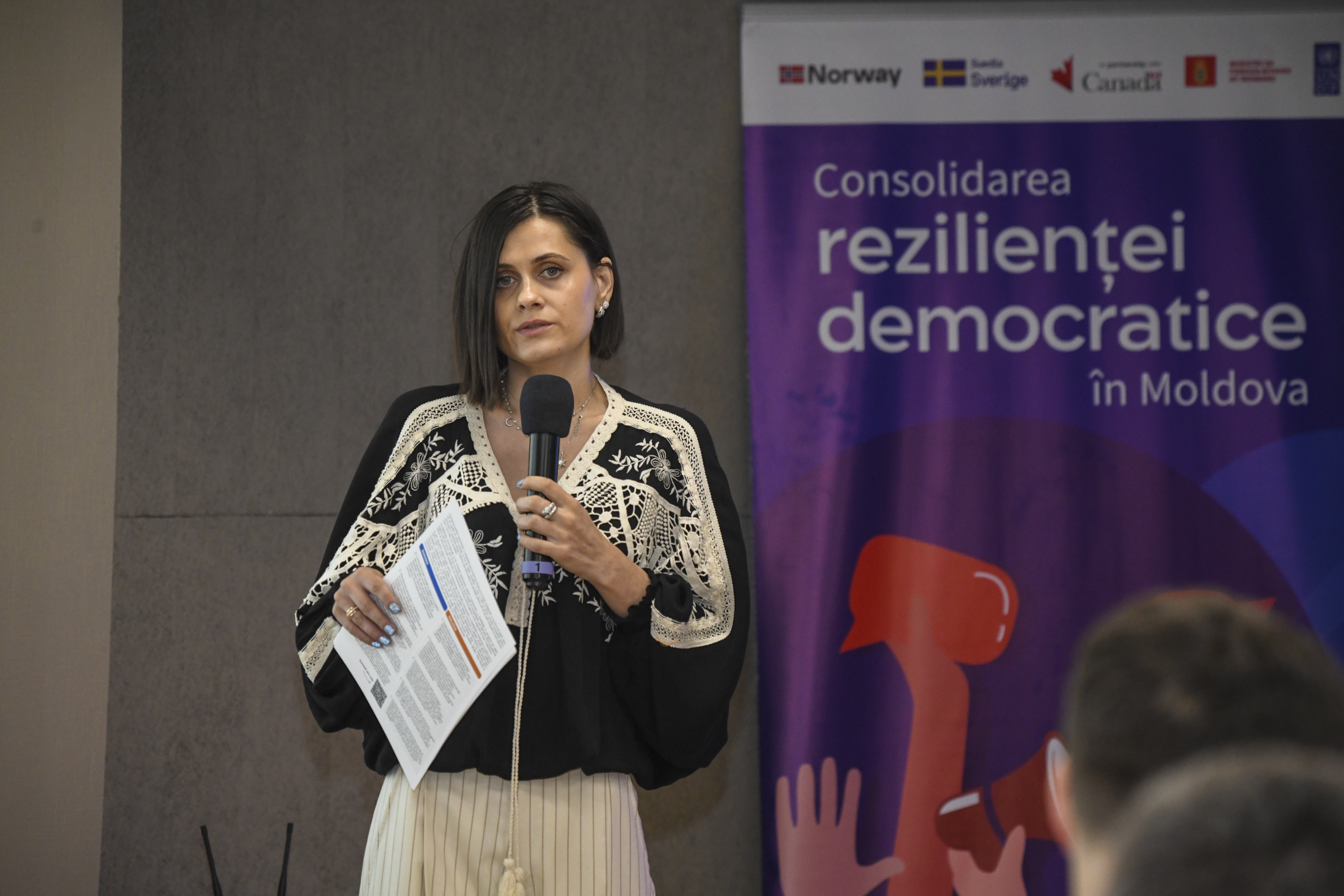
A public dialogue convened in Chișinău this week by Moldova's Partnership for Development Center (CDP) and United Nations Development Programme (UNDP) offered an assessment of where electoral reform works and falls short, and what comes next ahead of the country's 2027-2029 electoral cycle.
Results from the CDP analysis show that Moldova's double-quota system, requiring a minimum of 40% gender representation on candidate lists, has produced three consecutive electoral cycles with record numbers of women in parliament and local councils. But the analysis also identifies a persistent loophole. The current "four out of ten" placement rule still allows parties to concentrate women in non-eligible positions at the bottom of candidate lists. A stricter "zipper" system (ie, alternating one woman and one man on every list) would have raised women's share of parliament to 48.5%. That reform is now on the table ahead of the next cycle.
The dialogue also surfaced how much harder the barriers are for other groups. Persons with disabilities account for approximately 7% of Moldova's population but are virtually absent from parliament. Only 5.67% of polling stations were fully accessible in 2025, while over 65% remained inaccessible. Ethnic minorities are underrepresented and not even systematically tracked in candidate data.
To close the meeting, Seher Ariner, UNDP Deputy Resident Representative to the Republic of Moldova, remarked:
“The analytical products presented today provide a clear, evidence-based picture of both notable progress and remaining challenges in women’s representation and the inclusivity of elections. Quotas have helped double women’s representation in Moldova’s local councils. Yet, too many polling stations remain inaccessible. We must go further: equal participation for women and persons with disabilities cannot wait. The recommendations outlined in these papers merit serious consideration. Making politics fully accessible, from party offices to the ballot box, is not merely a technical task; it is a democratic imperative.”

Source: RepresentWomen
AI is Reinforcing Old Stereotypes About Women, and the Cost is Growing

Source: Her Agenda
As artificial intelligence becomes embedded in everyday life, UN Women is sounding the alarm that the technology is not neutral, and women are paying the price. A study of 133 AI systems found that 44% demonstrated gender bias and more than a quarter showed both gender and racial bias. Large language models (LLMs) have repeatedly associated women with the home, family, and childcare, while linking men to business, leadership, and career success. When researchers asked LLMs to complete a sentence beginning with a person's gender, about one in five responses came back sexist or misogynistic, even describing women as property or objects.
Jayathma Wickramanayake, UN Women Lead on Digital Technologies, explained the results in a recent UN News report:
"These outcomes, experts say, are not random errors or a glitch in AI, but instead a pattern documented across systems at scale. They are the predictable output of AI systems trained on decades of unequal representation of women and men, UN Women notes.
Speaking to UN News, Jayathma Wickramanayake, UN Women Lead on Digital Technologies, explained that AI models “pull bias from decades of text written by people, about people, in a world where women were filed under home and family, and men were filed under business and career”. For Ms. Wickramanayake, the most worrisome part is that this is not a design flaw – “it’s a real policy gap that was left wide open”.
Of 138 countries assessed worldwide, only 24 referred to gender in their national AI strategies, and just 18 included substantive gender-responsive measures. For the UN Women digital expert, this isn’t a bug waiting to be fixed in the next update, “it’s a choice that we make over and over in training data, in design rooms, in policy documents that stay silent on half of the population."
With women already facing disproportionate levels of abuse online, concerns are growing that harassment, manipulation, and image-based abuse will become harder to detect and prevent.
Colombia Presidential Winner’s Disturbing History of Sexism

Paloma Valencia fell short in her bid to become Colombia's 1st woman president. Source: U.S. News
Colombia’s presidential election runoff on June 21 was won by less than 1 percent by right-wing candidate Abelardo de la Espriella. In the first round, narrowing the field to two, De la Espriella had pulled away from early conservative favorite Paloma Valencia, who had sought to be the nation’s first woman president even as she ran away from feminism.
De la Espriella is part of a conservative trend in the region, as reported in the Guardian:
“The result is also being seen as further evidence of a wave of far-right candidates sweeping presidential elections across Latin America, after recent victories by Nasry Asfura in Honduras and José Antonio Kast in Chile, while Keiko Fujimori currently leads the vote count in Peru.”
He overcame a judge this month ordering him to apologize to a journalist for appalling sexism that we can hope won’t define his presidency. As reported in Democrata:
"A Colombian judge has ordered presidential candidate Abelardo de la Espriella to issue a public apology to a journalist, following a series of sexist comments and for pressuring her to comment on his genitals during an interview on the program Piso 8 FM, conducted in mid-May…
The judge concludes that this conduct injured several fundamental rights of the journalist, such as her dignity, the principle of non-discrimination, and her right to political participation on equal terms and free from gender-based violence. Therefore, she has ordered De la Espriella to issue a public apology, as reported by the newspaper "El Espectador."
Following the incident, the journalist herself had already reported on her social media that "it was not a simple unfortunate comment," but a profound lack of respect towards her person and her professional work. "I felt violated, harassed, and disgusted," wrote Laura Rodríguez, documenting the impact the episode had.
Given the controversy generated, De la Espriella tried to downplay what happened and apologized, arguing that his words were intended to be humorous. However, the Justice system has rejected these justifications and has specified that the message conveyed implies that women choose their vote based on physical attraction to a candidate, and not based on rational or ideological criteria."
The Musical Suffs Keeps on Marching in its National Tour
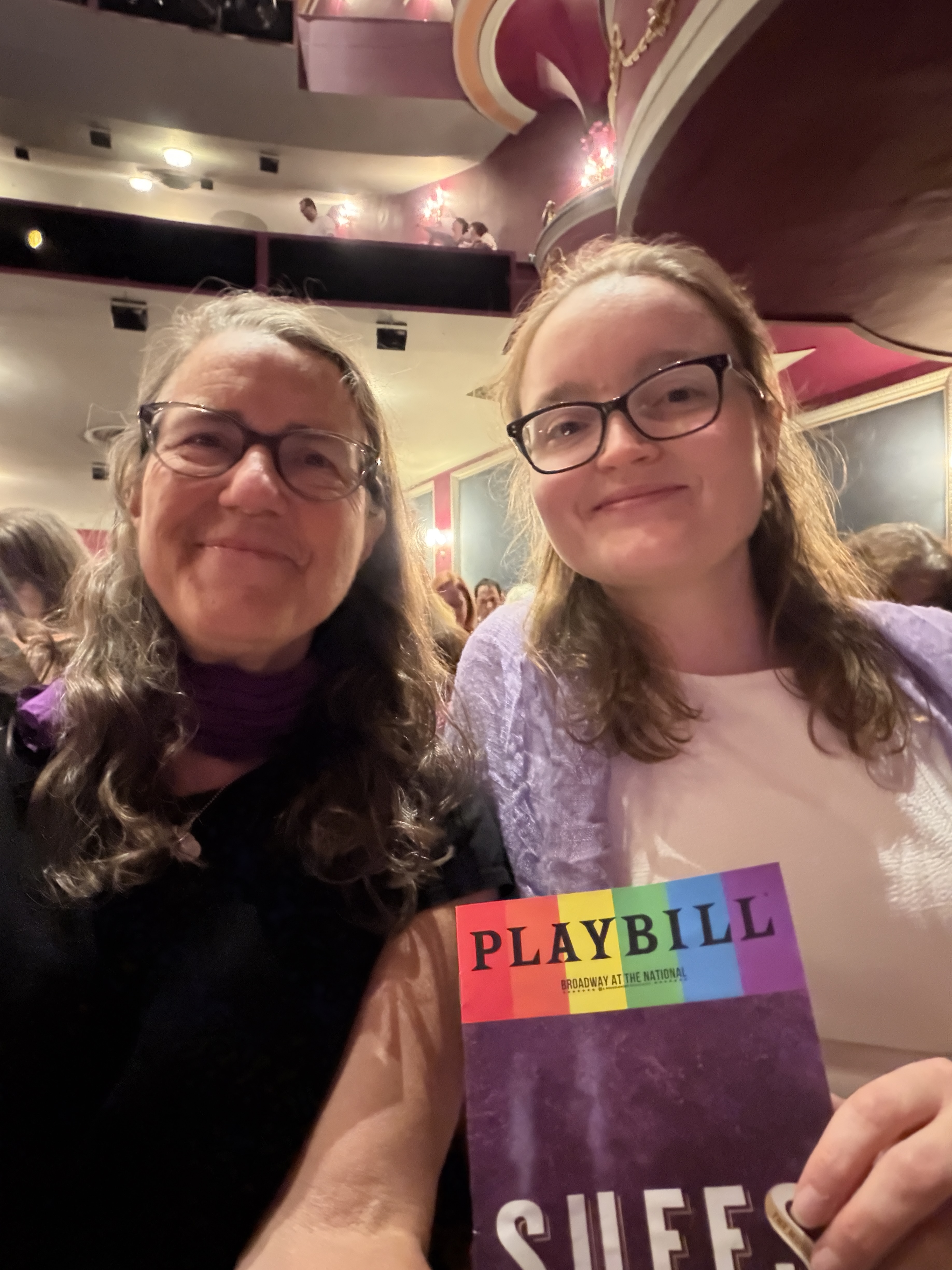
With my daughter Anna at Suffs
My daughter Anna and I were fortunate this week to attend the musical Suffs as it came through Washington, D.C on its national tour. It remains a powerful experience and a reminder of the challenges and complexities of changing power structures – catch it if you can! Here’s a review of the DC production in Broadway World:
"Suffs is the embodiment of the phrase, behind every powerful woman, are more powerful women. Originally produced by The Public Theater in 2022, writer Shaina Taub (Book, Music, & Lyrics) created a love letter to the real women who championed this movement and those that continue to battle for true equality. Suffs opened on Broadway in April 2024 to high audience praise and even nabbed Tony Awards :or Best Book and Best Score – making Taub the first woman to single handedly win these awards in the same year. The Original Broadway Cast, for posterity, was filmed and aired as a part of PBS’ Great Performances series…
Under the direction of Leigh Silverman, this cast has synergy — the sum is truly greater than its parts with this ensemble of women. Choreography (Mayte Natalio) is subtle, yet effective in dialing up the stakes of the wielding of collective power to make change. Though each member of the company is a star in their own right, a few standout performances jump off the page. Monica Tulia Ramirez as Inez Milholland radiates a guttural feminine power enhanced by her soulful voice. Maya Keleher (Alice Paul) embodies the fervorous, sometimes overzealous passion of a woman who knows her true purpose. Jenny Ashman’s caricaturistic Woodrow Wilson, Joyce Meimei Zheng’s unapologetic Ruza Wenclawska, and Victoria Pekel’s contrastingly obedient Phyllis and passionate Robin round out impeccable performances….
Suffs is a showcase of the extraordinary achievements of ambitious women in history but it's also a demonstration of the ability to fulfill a purpose and still maintain a life of your own. Where it would be easy to conclude with a call to action, Suffs contextualizes. You may never see the future you’re fighting for but let these women be an example of what can be done; bit by bit, march by march. Suffs is a musical grounded in reality, not fantasy which makes it all the more empowering – its stint in Washington, D.C. should not be missed."
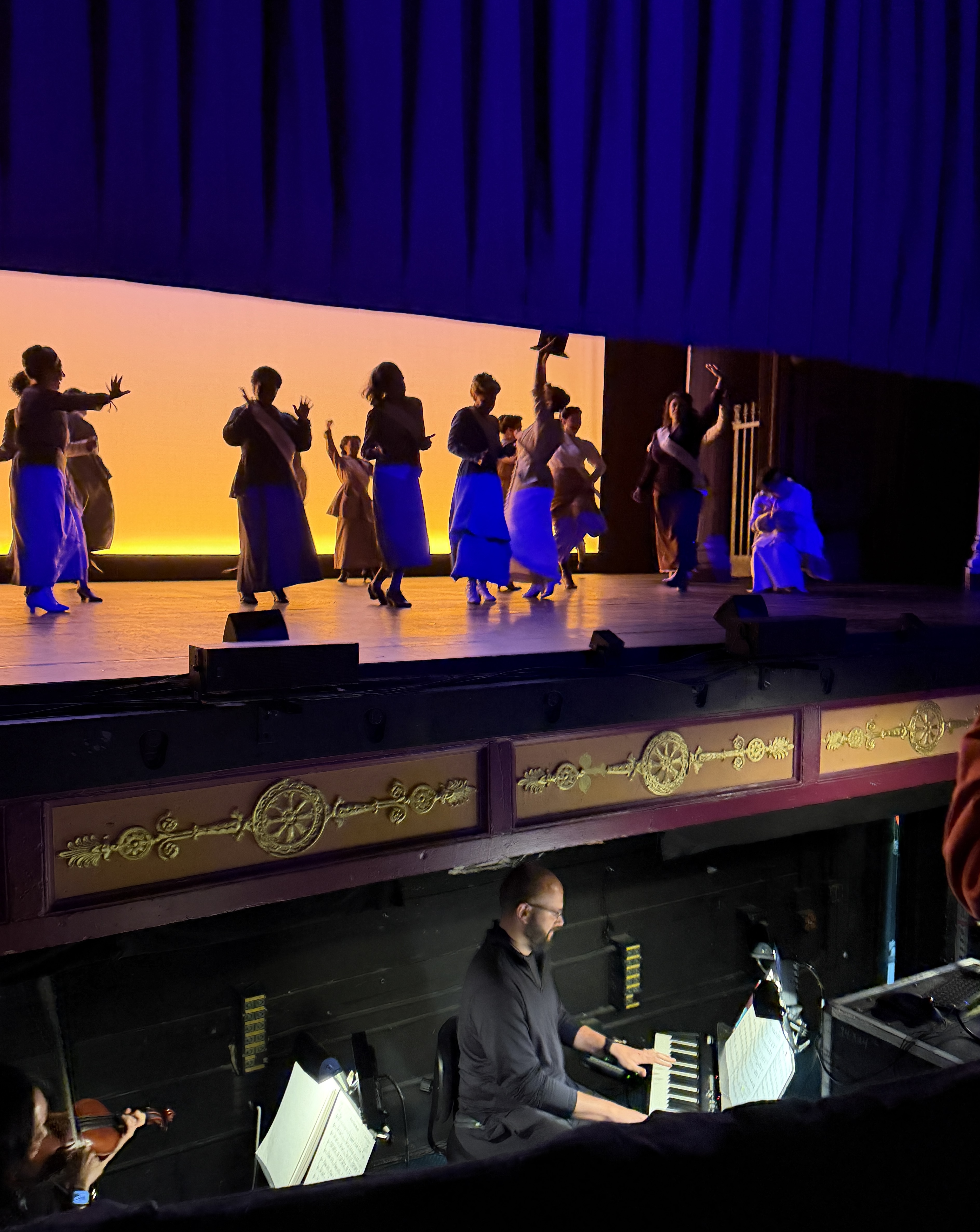
The curtain comes down on the cast of Suffs singing Keep Marching:
I won't live to see the future that I fight for
Maybe no one gets to reach that perfect day
If the work is never over
Then how do you keep marching anyway?
Do you carry your banner as far as you can?
Rewriting the world with your imperfect pen?
'Til the next stubborn girl picks it up in a picket line over and over again?
And you join in the chorus of centuries chanting to her
The path will be twisted and risky and slow
But keep marching, keep marching
Will you fail or prevail? Well, you may never know
But keep marching, keep marching
'Cause your ancestors are all the proof you need
That progress is possible, not guaranteed
It will only be made if we keep marching, keep marching on
Keep marching on
Keep marching on
And remember every mother that you came from
Learned as much from our success as our mistakes
Don't forget you're merely one of many others
On the journey every generation makes
We did not end injustice and neither will you
But still, we made strides, so we know you can too
Make peace with our incomplete power and use it for good
'Cause there's so much to do
The gains will feel small and the losses too large
Keep marching, keep marching
You'll rarely agree with whoever's in charge
Keep marching, keep marching
'Cause your ancestors are all the proof you need
That progress is possible, not guaranteed
It will only be made if we keep marching, keep marching on
Keep marching on
Yes, the world can be changed, 'cause we've done it before
So keep marching, keep marching
We're always behind you, so bang down the door
And keep marching, keep marching
And let history sound the alarm of how
The future demands that we fight for it now
It will only be ours if we keep marching, keep marching on…
.png)
.png)