
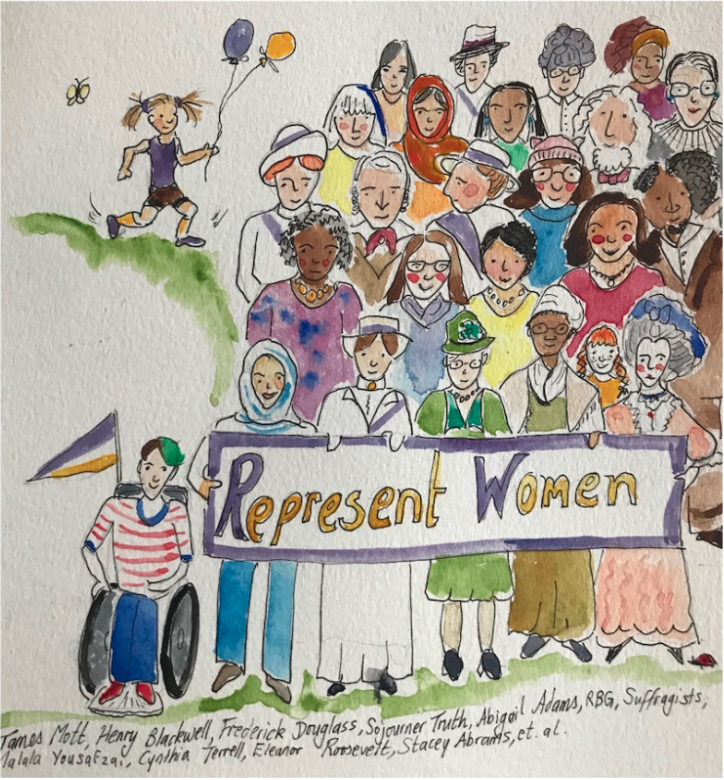
Yesterday was the 107th anniversary of one of the most consequential votes in American history, and one that, in my experience, tends to pass without nearly enough recognition.
On June 4, 1919, the United States Senate passed the 19th Amendment to the Constitution, extending the right to vote to women. It would still take more than a year — and the ratification of three-fourths of the states — before the amendment was certified on August 26, 1920. But that Senate vote was the turning point. It was the moment the federal government finally, formally, acknowledged what generations of women had spent their lives arguing: that they deserved a voice in the democracy they lived in.
What strikes me every time I return to this history is how long it actually took. The 19th Amendment was first introduced in Congress in 1878. It took forty-one years to pass. Forty-one years of lectures, petitions, marches, hunger strikes, and civil disobedience. Forty-one years of women being heckled, jailed, and physically attacked for insisting on something as basic as the right to vote. As the National Archives notes, few of the earliest supporters lived to see the final victory. That is the scale of persistence we are talking about.
And it did not happen without someone on the inside making the case. Jeannette Rankin — the first woman ever elected to Congress, representing Montana — was a driving force in the House in the lead-up to the 1918 vote on the amendment. She looked directly at her male colleagues and asked the question that should have been unanswerable:
"How shall we answer their challenge, gentlemen: how shall we explain to them the meaning of democracy if the same Congress that voted for war to make the world safe for democracy refuses to give this small measure of democracy to the women of our country?"
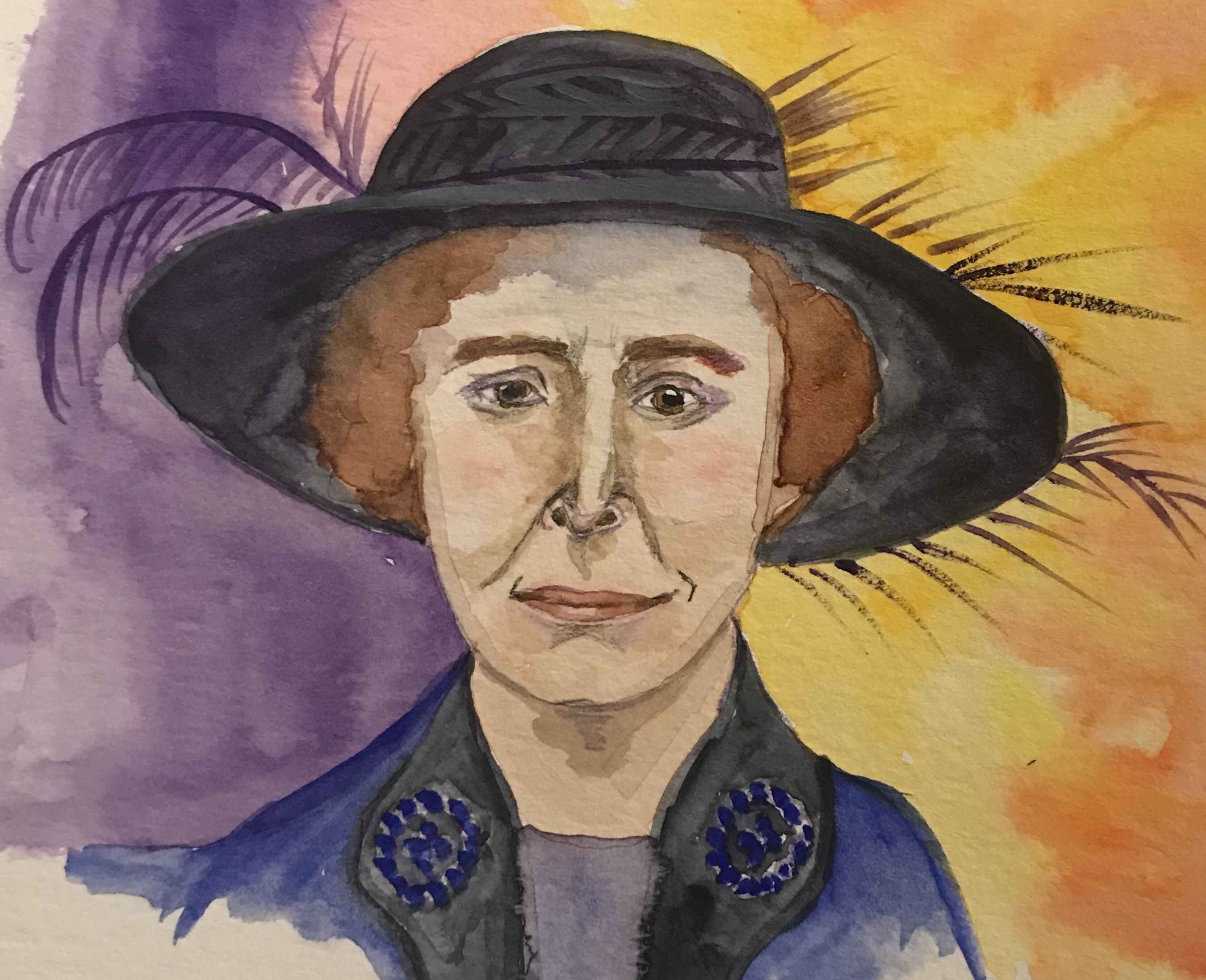
The House passed the amendment that day. The Senate would take another year, but that kind of moral clarity has a way of moving history, even when history moves slowly. And even then, the victory was incomplete. For Black women, Indigenous women, and women of color, discriminatory state voting laws meant the promise of the 19th Amendment remained out of reach for decades more. A right on paper has never been the same as a right in practice, and closing that distance has always required the same things: organizing, structural change, and the deliberate redesign of systems that determine who actually gets to participate.
That is the throughline I keep coming back to. The suffragists understood, even as they celebrated, that the vote alone was not enough. What mattered was what you could do with it, and whether the systems around you were designed to make your participation count. Proportional representation, ranked choice voting, placement mandates, and gender quotas — these are not abstract policy debates. They are the continuation of the same argument those women were making in 1878, and in 1919, and in all the years in between: that democracy only works when it is actually designed to include everyone.
One hundred and seven years later, that work is not finished. As noted in RepresentWomen’s Gender Parity Index, women hold just 28% of seats in Congress and 34% of state legislators. In the United States, we have never elected a woman president. And this year alone, we have watched efforts to make registration harder through legislation like the SAVE Act, restrictions on mail-in voting, and persistent barriers that make it harder for women — particularly women of color — to access the ballot and to run for office. The obstacles have changed shape over a century, but the underlying pattern is familiar: systems that were not designed with everyone in mind, and that require active, sustained effort to reform.
The rules of our democratic systems still shape who runs, who wins, and whose voice carries weight. But the anniversary of that Senate vote is a reminder that those rules are not fixed. They have always been changeable, and they have always been worth the fight.

One more image stayed with me today: Alice Paul. As Congress approved the amendment 107 years ago yesterday and sent it to the states for ratification, the National Women’s Party — led by Alice Paul — began sewing stars on a giant purple, white, and gold flag. A new star was added each time a new state ratified the 19th Amendment. When Tennessee became the 36th and final state to ratify on August 18, 1920, Alice Paul unfurled that complete flag from the balcony of the National Women’s Party headquarters, surrounded by women with their arms raised in celebration. I find that image quite moving — the patience it represents, the accumulation of hard-won victories, each stitched onto something you could finally hold up and see whole.
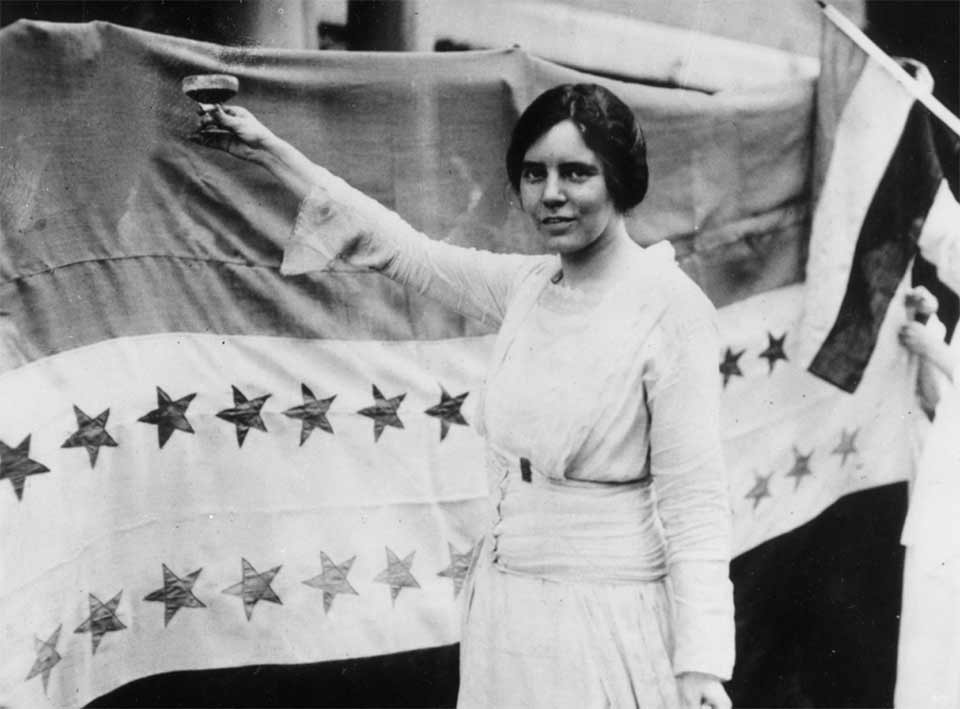
Alice Paul was a fellow Quaker and Swarthmore College alum, a connection I have always cherished. Last weekend, I was back on campus for my 40th reunion, and walked past Alice Paul Hall feeling the weight of that lineage. The Quaker tradition holds that every person carries an inner light, that no voice is more worthy than another, and that justice is not a destination but a practice. It is not hard to see that inheritance in the way Paul organized: methodically, persistently, and with a profound belief that the system could be made to reflect its own highest ideals. Standing there on campus, I felt it too.

Milestones: Native American suffrage granted by act of Congress (1924); In Corning Glass Works v. Brennan, the U.S. Supreme Court held that employers cannot justify paying women lower wages (1974); U.S. Senate passes the 19th Amendment and it is sent to the states for ratification (1919); The National Women's Party is formed (1916); Women's Bureau of the Department of Labor is formed (1920); Susan B. Anthony was fined for voting in a presidential election, Rochester, NY (1872).
Birthdays: Toni Gingerelli, National Alliance for Caregiving; Helen Taft, former First Lady (1861); Abby Wambach, professional soccer player; Dorothy West, writer & novelist during the Harlem Renaissance (1907); Josephine Baker, singer, actress, civil rights activist, and French Resistance spy (1906); Sheila Krumholz, former executive director of OpenSecrets; Katie Rogala Fahey, grassroots anti-gerrymandering activist & executive director of The People; Megan Beyer, journalist & women's rights activist; Carole Dulong, Director of Engineering at Google; and Maura Reilly, Senior Manager at Weber Shandwick.
Primary Night Roundup: Women at the Center of the 2026 Midterm Map

Tuesday was the biggest primary day of the 2026 cycle and will define the fall midterm landscape for women in many states. I’ll award roses to New Mexico, where women’s electoral success is beyond any other state up and down the ballot, including ranked choice voting advocates and experienced election officials Maggie Toulouse Oliver (favored to be elected Lt. governor) and Dona County Clerk Amanda López Askin (favored to replace Oliver as secretary of state). But it’s thorns for California, as it will continue to never have elected a woman governor - even as Los Angeles mayor Karen Bass surpassed expectations in easily advancing to the November election. We’ll write more about Los Angeles next week after the field is set.
The Center for American Women in Politics (CAWP) has this helpful news release (to be updated as ballots are counted) that summarizes outcomes for women. Here are highlights:
California: While many contests remain too close to call, there are already notable results in California’s U.S. House contests.
- Two (2D) of California’s incumbent women representatives did not run for re-election to the U.S. House in 2026: Julia Brownley (D-CA26) and Nancy Pelosi (D-CA11). Women have advanced to the general election contests in both districts: Connie Chan (D), a member of the San Francisco Board of Supervisors, came in second in California’s 11th Congressional District primary and state Assemblymember Jacqui Irwin (D) finished first in California’s 26th Congressional District primary. Both contests strongly favor Democrats.
- Current Los Angeles County Board of Supervisors Chair and former U.S. Representative and Secretary of Labor Hilda Solis (D) advanced to the general election in California’s 38th congressional district. This open-seat U.S. House contest, in which she will face a Republican, is currently rated as “Solid Democrat” by Cook Political Report. Solis previously served in the U.S. House from 2001 to 2009.
- California state Senator Aisha Wahab (D) advanced in first place to the general election in California’s 14th Congressional District. This open-seat U.S. House contest, in which she will face a Republican, is currently rated as “Solid Democrat” by the Cook Political Report. If successful in November, Wahab will be the first Middle Eastern/North African woman to serve in Congress from California.
Iowa:
- Current U.S. Representative Ashley Hinson (R) won the Republican nomination for U.S. Senate in Iowa to replace retiring incumbent U.S. Senator Joni Ernst (R). The open-seat contest is currently rated as “Lean Republican.”
- Of the 4 (3D, 1R) women U.S. House nominees in Iowa, 3 (2D, 1R) will compete in general election contests currently rated as toss-ups by the Cook Political Report. This includes incumbent U.S. Representative Mariannette Miller-Meeks (R) and former Iowa state Representative Christina Bohannan (D), who will compete in an all-woman rematch in Iowa’s 1st Congressional District; in 2024, Miller-Meeks defeated Bohannan by less than 1,000 votes. Learn more about all-woman congressional and gubernatorial contests here. Iowa state Senator Sarah Trone Garriott (D) will challenge incumbent U.S. Representative Zach Nunn (R) in another toss-up contest in Iowa’s 3rd Congressional District.
- Two (2R) women are nominees for statewide elective executive office in Iowa. Incumbent Attorney General Brenna Bird (R) is running for re-election, and current Lieutenant Governor Chris Cournoyer (R) won the Republican nomination for state auditor. Incumbent Governor Kim Reynolds (R) did not run for re-election in 2026 and will retire at the end of this term.
Montana
- Alani Bankhead won the Democratic nomination for U.S. Senate in Montana. The open-seat contest is currently rated as “Solid Republican” by the Cook Political Report. If successful, Bankhead would be Montana’s first woman in the U.S. Senate and first Latina elected statewide. [Weekend Reading Editors Note: There is talk that Bankhead may withdraw to allow a head-to-head contest between a Republican and independent Seth Bodnar]
- Women are 0 of 4 (0%) major-party nominees for U.S. House in Montana. No woman has served in Congress from Montana since 1943, when Jeannette Rankin (R) – the first woman to serve in Congress – completed her second term. Rankin’s first term in the U.S. House was from 1917 to 1919.
New Jersey:
- Of the 6 (5D, 1R) women U.S. House nominees in New Jersey, all 3 (3D) incumbent women are favored to win the election, and just 1 (1D) woman challenger – Rebecca Bennett (D) – is in a contest not currently favoring the incumbent. Bennett will challenge incumbent U.S. Representative Tom Kean (R) in New Jersey’s 7th Congressional District; the contest is currently rated as a toss up by Cook Political Report.
New Mexico:
- Former Secretary of the Interior and U.S. Representative Deb Haaland (D) won the Democratic nomination for governor in New Mexico. The contest is currently rated as “Likely Democrat” by the Cook Political Report. If successful in November, Haaland will be the first Native American woman governor in the United States.
- Deb Haaland (D) will be joined by current Secretary of State Maggie Toulouse Oliver (D), who won the Democratic nomination for lieutenant governor, on the 8th all-woman gubernatorial ticket in U.S. history. In New Mexico, nominees for governor and lieutenant governor run separately in the primary election but run as a single ticket in the general election. If successful, Haaland and Toulouse Oliver will be the second all-woman gubernatorial ticket to win a general election; Massachusetts Governor Maura Healey (D) and Lieutenant Governor Kim Driscoll (D) were the first women elected on a joint ticket. New Mexico would also become the 4th state to have women serving concurrently as governor and lieutenant governor.
- Women are 5 of 14 (35.7%) major-party nominees for statewide elective executive office in New Mexico, including 4 of 7 (57.1%) Democrats and 1 of 7 (14.3%) Republicans. A new woman is all but assured to win in the all-woman contest for secretary of state between Ramona Goolsby (R) and Amanda López Askin (D).
- Women are 3 of 6 (50%) major-party nominees for U.S. House in New Mexico, including 2 of 3 (66.7%) Democrats and 1 of 3 (33.3%) Republicans. Both incumbent women (2D) representatives are favored to win re-election in November. In New Mexico’s 1st Congressional District, incumbent U.S. Representative Melanie Stansbury (D) will be challenged by Ndidiamaka Okpareke (R) in an all-woman contest currently rated as “Solid Democrat” by the Cook Political Report.
South Dakota:
- No women filed as candidates for U.S. Senate in South Dakota in 2026. No woman has served in the U.S. Senate from South Dakota since 1948. Nikki Gronli (D) won the Democratic nomination for South Dakota’s at-large seat in the U.S. House. The open-seat contest is currently rated as “Solid Republican” by Cook Political Report. No woman has served in Congress from South Dakota since 2019. No women filed as candidates for governor in South Dakota in 2026. Nominees for all other statewide elective executive offices will be selected at party conventions.
How San Francisco's Malia Cohen, Jane Kim, and Connie Chan May Build on their Ranked Choice Voting History
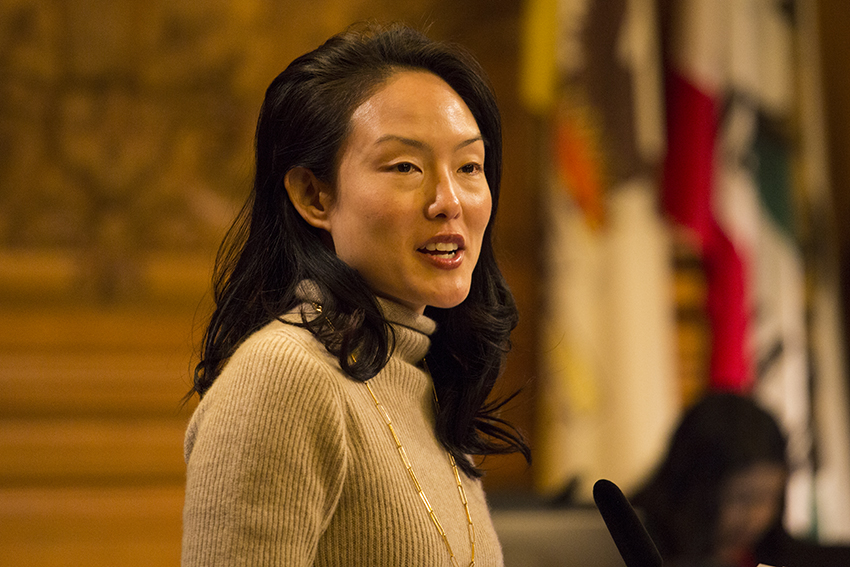
One storyline out of California is the rise of San Francisco politicians who embraced ranked choice voting RCV) in their breakthrough campaigns in 2010 for the Board of Supervisors. Malia Cohen and Jane Kim are well-positioned to win statewide, while the Board of Supervisors Connie Chan has Nancy Pelosi’s endorsement in the contest to succeed her in Congress and will face Scott Wiener, another San Francisco politician who first won in a contested RCV election in 2010.
Only 32 in 2010, Malia Cohen won perhaps the wildest RCV race in American history in a fractured field after finishing third in first choices in her Board of Supervisors race, but with the top 5 candidates all within two percentage points. She built on that grassroots victory until she was first elected State Controller in 2022. She’ll be heavily favored in her re-election bid, running against a Republican. Connie Chan also won a narrow ranked choice voting win in the Board of Supervisors elections in 2020 and 2024, going multiple rounds, and will now take on Wiener head-to-head.
Jane Kim looks likely to lead the field in this year’s election for state insurance commissioner, and the nature of the November contest will come down to whether a Republican or fellow Democrat finishes second. Kim’s upset win for the Board of Supervisors that launched her political career was based on embracing the virtues of ranked choice voting in a manner that was covered well at the time by Paul Hogarth in Beyond Chron.
“One of the keys to Jane Kim’s success was that the campaign never conceded a single neighborhood — forming a Fifty-Nine Precinct Strategy that met voters in every corner of District 6. Arguably, because she lacked the big progressive institutional endorsements, it was the only way she could win to outmaneuver Debra Walker.
Like Chris Daly, Jane Kim won the Tenderloin – because she had a base of SRO tenants and immigrant families. It takes months of campaigning for a candidate to build trust in that neighborhood, and Kim’s relationship with local community organizers made that possible. Walker campaigned in the Tenderloin, but Kim beat her there by 140 votes.
Of course, Kim’s campaign had a formidable “Chinese team” – whose outreach to the District’s Chinese voters allowed her to rack up huge margins in two SOMA precincts, as well as pad her Tenderloin numbers. But she also had a Filipino team that organized that community in SOMA, and Russian phone-bankers reached out to its senior population.
As the favorite of progressive institutions like the Bay Guardian, the Labor Council and the SF Democratic Party, Debra Walker had a huge advantage in the North Mission and Western SOMA – where many voters follow the slate-cards. But Kim had a strong field presence there, which kept her losses under control..
The election results were staggering. In the thirteen precincts that make up South Beach, Mission Bay & Eastern SOMA, Kim won handily with 1,113 votes – followed by 823 votes for Sparks, and 564 for Walker. In the Ranked Choice Voting tabulation, Sparks supporters preferred Kim – and Kim even beat Sparks among the Matt Drake voters. An important lesson for progressives is not to fear those District 6 condo voters – but to instead set aside your pre-conceived notions, and come to their neighborhood. A lot of them voted for Jane Kim, even if they knew she’s a progressive – because she was there…
On Friday night, after the Ranked Choice Voting tabulation confirmed her the winner, Jane Kim had a party for her supporters – which I attended. “Anyone could have done what we did,” she said, “but it takes a lot of work.” Campaigning in all 59 precincts is a lot of work. Executing a Fifty-Nine Precinct Strategy is a lot of work. Conceding no neighborhood is a lot of work. But anyone can do it.”
Alaska’s Top 4 Primary Election Fields Set in Latest Test of Innovative System
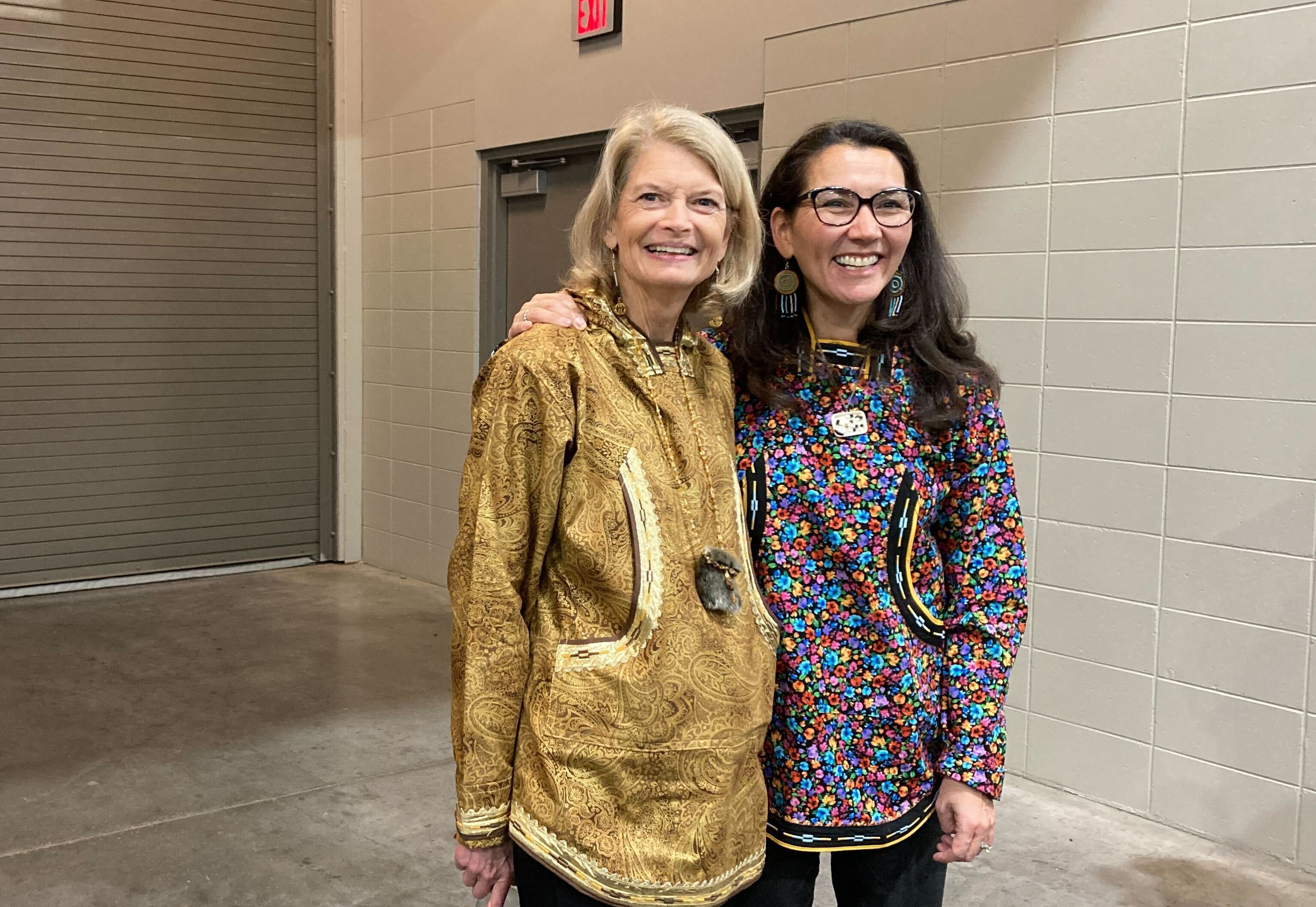
Alaska is the only state in the nation to hold an all-candidate primary followed by a general election, with four candidates decided by ranked-choice voting. Adopted in 2020 and used in the 2022 and 2024 elections, the “Top Four Primary” has contributed to a surge in elected women and to Alaska becoming the only state in the nation where coalitions of Republicans, Democrats, and independents run both chambers and have a fascinating history of finding common ground. This year will determine whether the coalition dynamics continue, whether the new governor elected by the system can expand this evolution of collaborative governance, and whether the system itself can survive a new attempt to repeal it on the ballot.
Large candidate fields are set for the race for governor and the other two big statewide contests this year – incumbent US Senator Dan Sullivan facing former Congresswoman Mary Peltola and incumbent US House representative Nick Begich facing several opponents. The House and half the Senate are also up for election. In the governor’s race, 17 candidates have filed. Candidates choose a lieutenant governor running mate. More than half of the field is running on a gender-balanced ticket, including some favorites like Republican Clint Bishop and Democrat Tom Begich. A second Dan Sullivan has filed in the US Senate race, but an RCV ballot minimizes the chance of a split vote in November.
KTUU News reports on the state legislative races:
"Another topline: which party will control the state legislature, and will the bipartisan majority survive? Alaska’s legislature has a history of bipartisan coalition governing, and in both chambers, coalition majorities — not pure Republican caucuses — hold power because a handful of moderate Republicans caucus with Democrats rather than with the all-Republican minority.
That arrangement, however, could be at serious risk. The heads of both chambers, the Senate President and the House Speaker, will not be the faces that served the 34th legislature. Senate President Gary Stevens, a Republican from Kodiak, is retiring after 25 years in the legislature. He first served as Senate President in 2009 and has been a key member of the bipartisan coalition. In his final Capitol Report this February, he wrote, “This is my final year serving in the Legislature.”
In the lower chamber, House Speaker Bryce Edgmon, an independent from Dillingham who has served nearly 20 years in the House, is not running for re-election for his House seat. Instead, he is running for the Senate seat being vacated by retiring Sen. Lyman Hoffman, a Democrat from Bethel and the longest-serving member in state history. Edgmon’s departure creates two simultaneous issues for the House coalition. First, a speaker vacancy that will need to be filled when the 35th Legislature convenes in January 2027. Second, the coalition holds its majority by a single vote, meaning the loss of even one seat could flip control of the chamber."
Buckle up for June Primary Contests in 18 States

I greatly appreciated the insights and recommendations in a strong piece in Democracy Notes by Saskia Brechenmacher, Laura Livingston, and Miriam Juan-Torres Gonzalez. Here’s an excerpt:
“Attacks on LGBTQ and women’s rights are often framed as “culture wars.” Our research shows that they are better understood as parts of a broader strategy to construct a social hierarchy, push targeted groups out of public life, and hollow out democracy. What begins as attacks on transgender people or “gender ideology” often expands to a much wider set of actors and institutions, enabling new restrictions on education, civil society, and public institutions.
Many U.S. democracy advocates worry that engaging on gender issues risks deepening polarization or narrowing coalitions. That concern is real. But stepping back from these issues entirely also carries risks: it enables harm against targeted communities and allows illiberal actors to reshape the political and cultural terrain in ways that weaken societal support for pluralism, equality, and democracy more broadly.
Globally, gender is being weaponized to advance illiberal and anti-democratic political projects. Narratives generating fear around “gender ideology” and trans people in particular are spread to fuel moral panic, with the aim of mobilizing voters, building new coalitions, and generating support for measures that restrict targeted groups’ political participation and rights while expanding state power.
These narratives are effective because they tap into deeply held beliefs about family, identity, and social order. They seek to define clear enemies, fuel polarization, and legitimize hierarchies. Arguments about gender—framed around what is natural or common sense—become socially acceptable entry points to question core tenets of liberal democracy.
Democracy defenders need to start by recognizing the ideologies and strategies driving these campaigns. There is a difference between policy disagreements—about parental leave, for instance, or the rules governing trans participation in elite sports—and measures that deny legal recognition, enable legal discrimination, impose censorship, and fuel violence. This distinction is ultimately one between accommodating different identities and ways of life and imposing a single, state-backed vision that constrains others—sometimes going so far as pushing entire groups out of public life altogether…
For those looking to dig deeper, a growing ecosystem of researchers and organizations is beginning to grapple with how anti-gender movements, misogyny, and LGBTQ scapegoating intersect with democratic erosion, and what effective responses might look like. Useful starting points include the Arch Collaborative, Equimundo, the Young Men Research Project, the Polarization & Extremism Research and Innovation Lab, the Countering Backlash Initiative, #shepersisted, and the Institute for Strategic Dialogue.”
CAWP: Men Give Far More than Women in Midterm Elections

The Center for American Women in Politics (CAWOP) is also doing comprehensive work around money in politics. Its new report has sobering findings. Here are excerpts from its release:
Demographics Analysis launches with a nationwide analysis of donors to 2026 congressional races. Analyzing donations made during calendar year 2026 to all major party congressional candidates in the running as of April 15, 2026, CAWP researchers find that:
- The total amount contributed by men to 2026 congressional candidates vastly exceeds the amount contributed by women. Men have provided 62% of all money contributed to congressional candidates with 38% provided by women. However, women fare better as a proportion of unique donors to congressional candidates than as a proportion of total money contributed. Women are about half of unique donors to congressional candidates.
- Women are providing a higher share of the total amount contributed to Democratic than Republican congressional candidates. Women have contributed 43% of all money given to Democratic congressional candidates, whereas women have only contributed 29% of all money given to Republican congressional candidates.
- Women from historically underrepresented racial/ethnic groups are especially underrepresented as donors to congressional candidates: Black women have donated just 1% of all money contributed to 2026 congressional candidates. Latinas have donated just 1% of all money contributed to 2026 congressional candidates. Asian American women have donated about 1.5% of all money contributed to 2026 congressional candidates.
Slight gender affinity effects are evident in giving patterns: Women have donated 45% of all money contributed to Democratic women congressional candidates compared with 42% of all money contributed to Democratic men congressional candidates. Women have donated 31% of all money contributed to Republican women congressional candidates compared with 28% of all money contributed to Republican men congressional candidates.
In Nigeria, Women's Political Participation Is Being Framed as a Path to Peaceful Elections
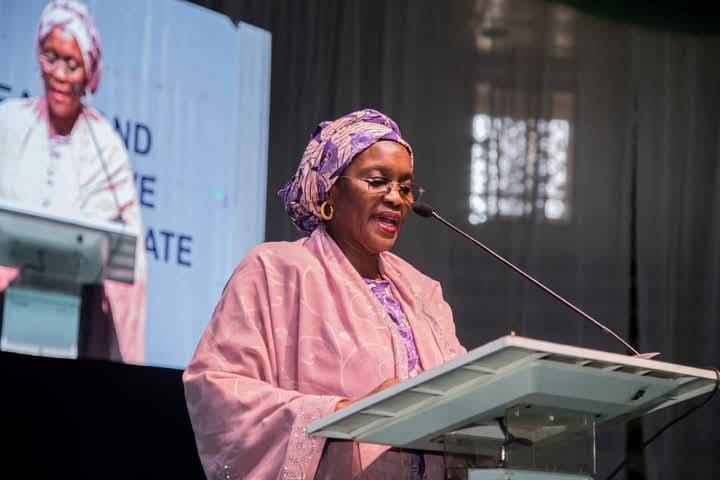
As Nigeria, Africa’s most populous nation, heads toward its 2027 general elections, a growing coalition of civil society leaders and women politicians is making a case that doesn’t concern reputation alone. Women's inclusion in politics may be one of the most effective tools available for reducing electoral violence. This comes in the wake of a grave historical record. According to Human Rights Watch, more than 800 people were killed in post-election violence following the 2011 presidential election. Concerns about 2027 are already circulating, with many observers believing the composition of the political field matters.
The barriers to women's participation are themselves violent. Peace News details how Hafsat Mohammed Baba, former commissioner for human services and social development and chieftain of the African Democratic Congress (ADC), believes this dynamic can change:
“According to [Baba], women are naturally advocates of peace and inclusion. She said that when women are involved in any decision for the progress of a nation, they give their very best, including by promoting peace and avoiding electoral violence.
However, she noted that many women face serious obstacles within political parties, especially during party primaries. “At the initial stage, women normally come out to participate, but you find out that they are being edged out, most especially at the primary elections,” she said.
She described how violence and intimidation often discourage women from contesting. “The majority of the men come with thugs, and then they disrupt the primaries,” Baba stated. “Once there is violence, people will be running for their lives.”
Despite these challenges, she insisted that women should remain determined to participate in politics, stressing that it is better for women to go to the polls and lose than to step down.”
In addition to the difficulties of entry, the structural reality is stark. Of Nigeria's 360-member House of Representatives, only 16 are women, and just four serve in the 109-member Senate. Since democracy was restored in 1999, no woman has been elected president, vice president, or governor.
Research supports the underlying argument. A 2020 Lund University study found that women-led mediation and early warning systems helped reduce electoral violence during Nigeria's 2015 elections. By increasing women’s participation in politics, next year’s elections could mark an important shift in tone for the greater political engagement in Nigeria.
Women Are Leading the Opposition to AI Data Centers
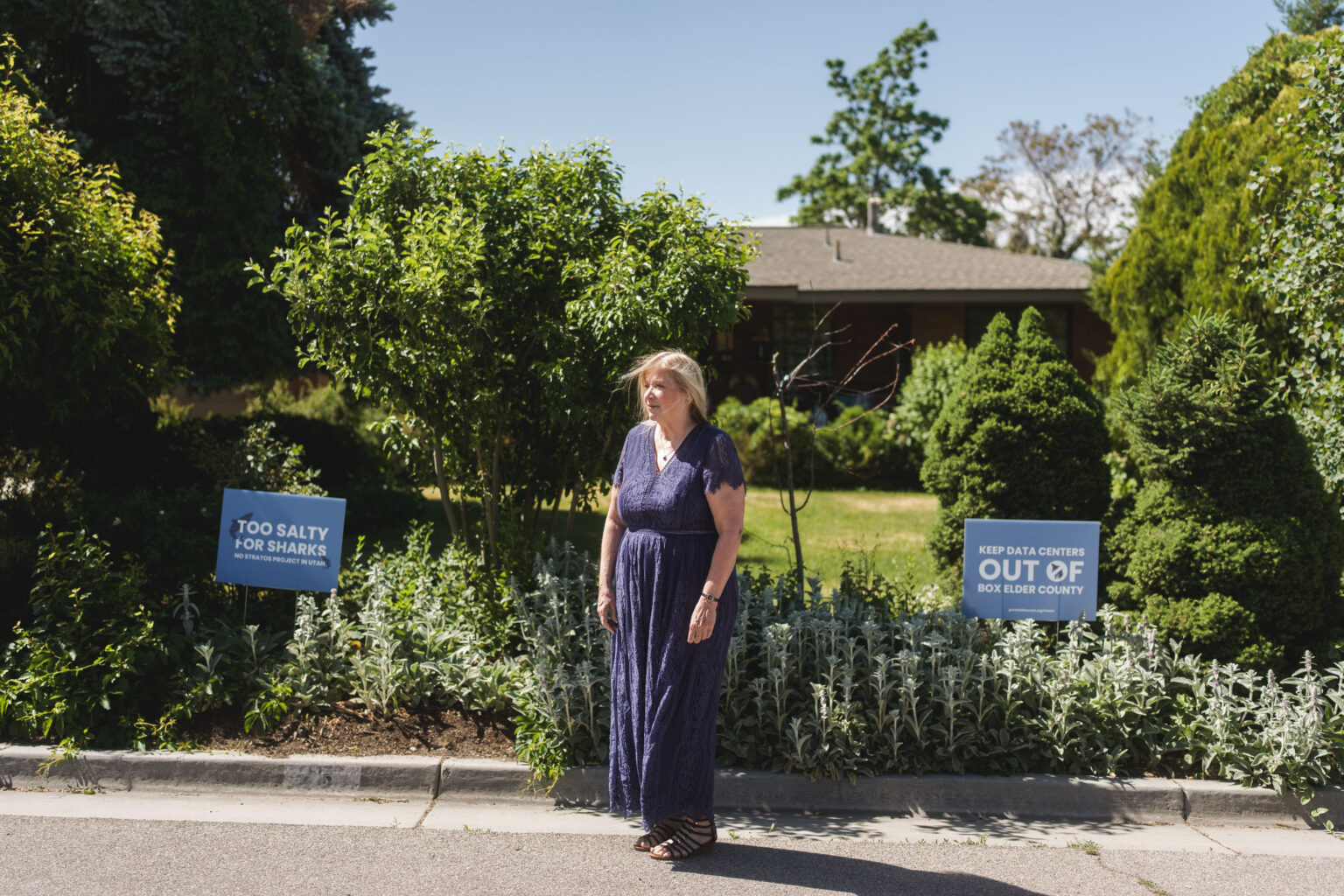
As the AI industry races to build massive data centers across the country, a new Gallup poll reveals a striking gender gap in public opposition, and it connects directly to why women's political representation matters. More than two-thirds of Americans oppose the construction of data centers, with a majority saying they'd prefer a nuclear power plant in their backyard instead. The opposition is sharpest among women, with 55% saying they strongly oppose data centers, compared to 43% of men. Logically, men were more likely to favor them, citing economic benefits and job opportunities.
Women are disproportionately impacted by environmental degradation and face higher risks of poverty, food insecurity, and displacement driven by climate change. These are the same concerns driving opposition to data centers, which consume enormous amounts of water and energy and strain local infrastructure. As the Utah News Dispatch reports:
"Gendered fears about the environment are nothing new, experts say. Women are disproportionately impacted by environmental degradation and at higher risk of poverty, food insecurity and gender-based violence when displaced by climate change, the United Nations reports. Studies have consistently shown that women are also key to driving inclusive, effective action to address the impacts of climate change.
“I’ve been organizing for 15 years, and it’s always been the case that women are leading our fights,” said Danny Cendejas, a campaign specialist for MediaJustice, who works with grassroots movements across the country that are opposing data centers. “We are definitely seeing everyone join the fight, but we have to recognize the truth, and it’s women, trans, queer and nonbinary people leading the work.” [...]
Data centers have become an increasingly pressing issue for candidates and their campaigns heading into the midterms in November. They’re also a rare source of bipartisan concern in a polarized political environment.
“There are really strong feelings about this. I see this playing out as a political issue, and now people who are running for governor, Senate, or local offices, are having to take a position on this, whereas this is not something people were talking about two years ago,” Jones said. “And now politicians across both parties are coming out as against data centers, which seems like the more popular viewpoint.”
Even in California, Women in Elected Office Face More Abuse Than Men
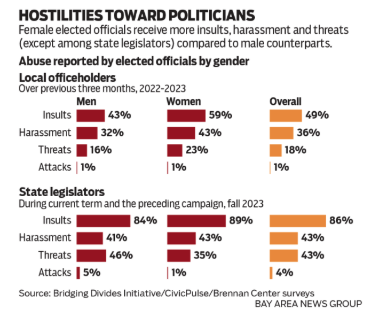
The East Bay Times focuses on one of the most disturbing trends in modern politics: abuse of women seeking to serve in office at all levels of government. Here’s an excerpt:
“For women in elected office in the Bay Area, instances of threats and abuse take many forms: calls and emails with violent language or death threats, unruly protests outside their family homes, political mailers that share personal information with the general public, or in the case of Davis, action intending to cause injury or harm. Many rise to the level of law enforcement presence, criminal charges or restraining orders — and shake their sense of safety for themselves and their family.
“You don’t feel safe in your own home,” Davis said. “You don’t feel safe for a long time.”
These threats and abuse take a mental toll on the elected officials they target. More broadly, the culture can dissuade diverse candidates from running for office or working on divisive issues, experts and elected officials said.
“We’re seeing people being reluctant to run for office when their families are put in harm’s way,” said Maya Kornberg, a senior research fellow and manager for the Brennan Center for Justice’s Elections and Government Program. “Almost half of women in local office that we surveyed expressed some level of reluctance to run for reelection or remain in office because of abuse.”
Eighty Years Ago, a Landmark Referendum Empowered Women in Italy

Italy has a woman prime minister and a parliament where women hold a third of seats, far higher than the United States. But it hasn’t always been that way. Women voted alongside men for the first time in 1946 in the wake of World War II. Wanted in Rome tells the story in a fascinating account that is excerpted here:
“The national referendum in 1946 asked Italian citizens a question of existential constitutional importance: should Italy remain a monarchy under the House of Savoy - discredited by its complicity with the fascist regime - or should it become a republic? Simultaneously, voters elected members to a constituent assembly tasked with drafting a new republican constitution.
On 2-3 June 1946, Italians went to the polls in the first free national vote in more than two decades. For the first time, women voted alongside men. When the results were announced on 10 June, 12,717,923 Italians had voted for a republic, while 10,719,284 had voted to keep the monarchy. The republic won by a margin of just under two million votes - roughly 54 per cent to 46 per cent. The overall participation rate was 89 per cent of eligible voters. Almost 13 million women (one million more than male voters) participated in this historic election, however the precise breakdown of female votes between republic and monarchy cannot be determined from the aggregate results…
The referendum was not the only democratic exercise of 2 June 1946. Voters simultaneously elected members to the constituent assembly, and among those elected were 21 women: the so-called Madri costituenti, or Constituent Mothers. 21 women were elected to the constituent assembly and took part in the drafting of the Italian constitution. The women elected sustained the principle of equality at all levels, obtaining important results principally in regard to labour, wages and the protection of maternity.”
Hegseth Cuts All Women from Navy Promotions

As part of the latest in a series of firings targeting women and people of color, Defense Secretary Pete Hegseth has cut all women from Navy promotions. Hegseth’s decisions appear to be motivated by a lack of diversity rather than by officers’ performance, according to reporting by The New York Times. Leaders in the Navy should be representative of the officers they lead, and with women making up over one-fifth of active-duty Navy, this is certainly a step in the wrong direction. Read more from The New York Times:
"In a move that disproportionately targets women and minority officers, Defense Secretary Pete Hegseth recently blocked the promotions of at least seven Navy officers who had been selected by a board of senior Navy admirals.
The net result of Mr. Hegseth’s intervention is a slate of 22 nominees to be one-star admirals that bears little resemblance to the broader force these officers will help lead. [...]
No female officers were included on the new one-star list, which was released publicly in late May, despite the fact that women make up about 21 percent of the active-duty Navy. The list appears to include only two nonwhite officers, even though sailors who identify as racial minorities make up about 38 percent of the active-duty Navy."
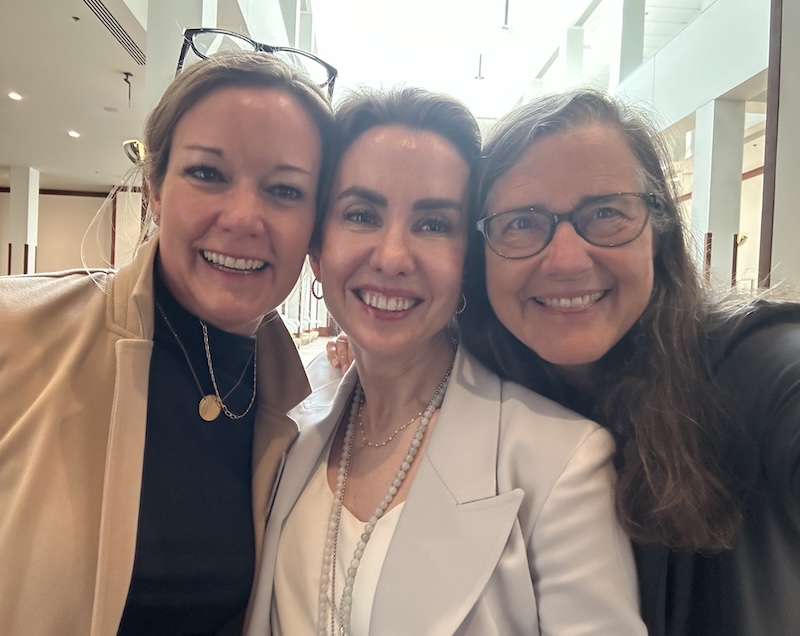
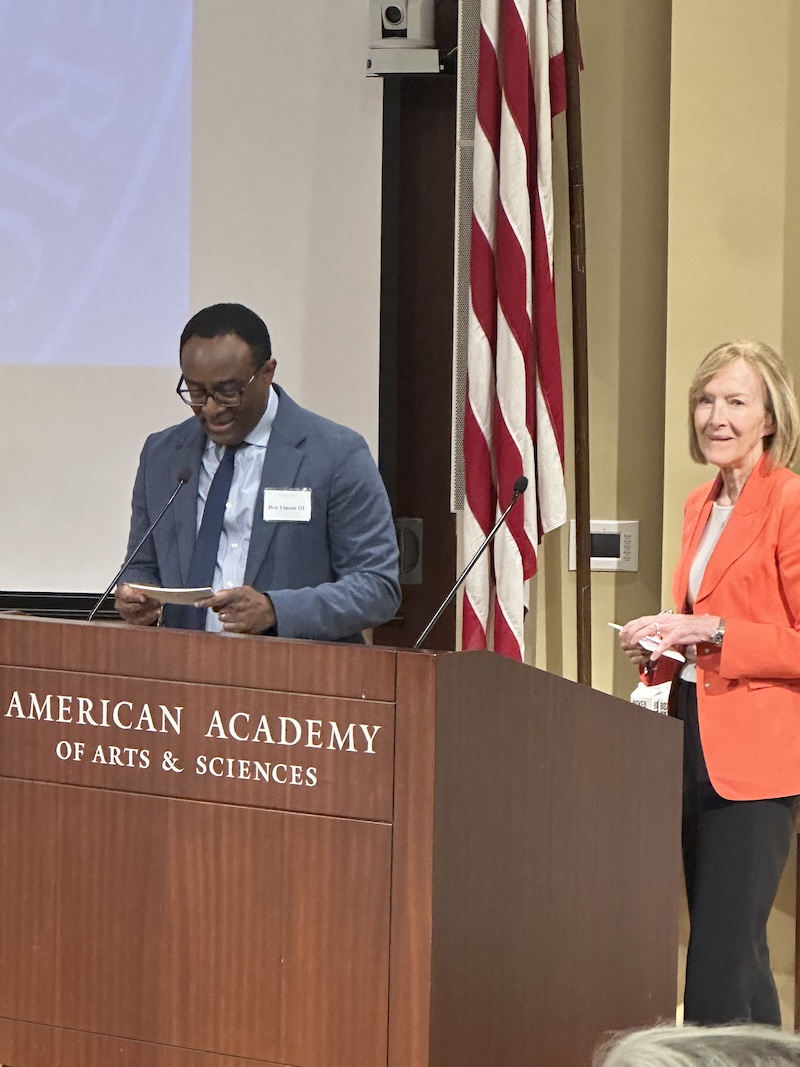
P.S. — This week, I had the pleasure of traveling to Boston for a Convening at the American Academy of Arts and Sciences, celebrating the sixth anniversary of their landmark report, Our Common Purpose. Released in 2020, the report has done what the best democracy scholarship does — it has grounded and deepened the conversation about what American democracy can and should be, and given advocates and reformers a shared framework to work from. It was an honor to be there for the final event of the project!
Hearing Judy Woodruff and Ben Vinson III read aloud our collective hopes for American democracy was the kind of moment that reminds you why this work matters, and why it is worth continuing even when the road feels long. I was so glad to reconnect with inspiring allies, including Jen Daulby, Meredith Sumpter, Sayu Bhojwani, Danielle Allen, Betsy Super, Jessica Lieberman, Jahnavi Rao, Sterling Speirn, and so many others, all of whom continue to give me so much hope for what is to come!
Do you know someone who would be interested in this weekly roundup of news stories on women's representation and democracy? Forward them this email and have them click this link to subscribe to RepresentWomen's Weekend Reading.
.png)