
What does the evidence actually show about ranked choice voting, women’s representation, and democratic reform? This week’s Weekend Reading looks back at the research, real-world outcomes, and lessons shaping what comes next.
Today is Ranked Choice Voting Day! Every January 23 (1-2-3), pragmatic idealists nationwide come together to celebrate a proven, people-powered reform that strengthens democracy by giving voters more choice and candidates a fairer path to office.
Coming just days after Martin Luther King Jr. Day celebrations, this year’s RCV Day feels especially timely. Dr. King reminded us that democracy is not self-executing — that the arc of the moral universe bends toward justice only when people are willing to do the structural work required to make it so. Voting systems are part of that work. They are not neutral. How we design elections determines whose voices are amplified, whose leadership is possible, and whether participation feels meaningful or futile.
Ranked choice voting (RCV) allows voters to rank candidates in order of preference, ensuring winners earn majority support while reducing vote-splitting and negative campaigning. Used thoughtfully, it encourages more civil campaigns, rewards coalition-building, and creates space for multiple qualified candidates to compete; values deeply aligned with Dr. King’s vision of a democracy rooted in dignity, participation, and shared power.
At RepresentWomen, we celebrate RCV Day because how we vote shapes who runs, who wins, and ultimately who leads. Ranked choice voting is one of the most effective systems reforms for advancing women’s political representation — not by favoring any one group, but by designing elections that better reflect the communities they serve and lowering structural barriers that too often keep women, especially women of color, on the sidelines.

This week, we were pleased to host an engaging RCV Day webinar with incredible panelists from across the country, who reaffirmed our research within their lived experiences driving this work. RepresentWomen’s Communications Lead, Alana Persson, moderated this panel and was joined by our guests — Anna Kellar of Rank the Vote, Elise Orlick of FairVote Washington, Tamara Allen of UpVote Virginia, Perry Radford of NM Voters First, and Tamaya Dennard of RepresentWomen. The conversation was thoughtful, energizing, and deeply rooted in what it takes to build durable reform. Our entire team left inspired by the insight, care, and passion each panelist brought to the discussion.
Thank you to everyone who joined us, and to everyone who participated in our RCV song selection challenge! Our winner this week was Run the World (Girls) by Beyoncé. We look forward to sharing more from the event next week, including the full webinar recording for those who weren’t able to attend.

As we move through this week — bridging MLK Day and Ranked Choice Voting Day — we’re holding both truths together: democracy is a moral promise and a structural project. Strengthening our electoral systems is part of the unfinished work Dr. King called us to, and RCV is one tangible way communities across the country are continuing that work today.
Milestones: Donna Shalala, 1st Arab-American woman cabinet secretary (1993); Kamala Harris sworn in as the 1st woman of color VP; Hillary Clinton became Secretary of State, the third woman to hold this position (2009); Avril Haines became the first woman Director of National Intelligence (2021); North Dakota granted women suffrage (1917); Patricia Roberts Harris became the 1st African American woman confirmed to the cabinet (1977); Madeleine Albright became the 1st woman to serve as Secretary of State (1997); Ranked Choice Voting Day; The U.S. military removes ban against women serving in combat positions (2013); Senate votes for the first time on women's suffrage, the bill is defeated (1887); and Muriel Humphrey Brown became the 1st female Senator from Minnesota (1978).
Birthdays for notable women: Shawn Johnson, Olympic gymnast; Janis Joplin, singer; Dolly Parton, singer; Lisa Rice, Unite America board member; Jamie Lee Kiles, Aviv Foundation; Pat Mitchell, co-founder of TEDWomen; Katy Nicholson; Abby Disney, film producer and philanthropist; Paula Hawkins, former U.S. Senator; Laura Kelly, governor of Kansas; Edith Wharton, novelist (1862); and Malia Paulmier.
RepresentWomen 2025 Annual Report: This week, we’re also pleased to share our 2025 Annual Report, which highlights the research, partnerships, and advocacy that shaped RepresentWomen’s work over the past year. From advancing voting rights and systems reform to elevating women’s leadership across the country, the report offers a snapshot of what we’ve been focused on, and where we’re headed. We invite you to take a look if you’d like to learn more about our work.

Portrait of Dolly Parton, by Melanie Humble.
Vermont Carries the Work Forward on Voting Rights

Martin Luther King Jr & Coretta Scott King, painted by Melanie Humble
On MLK Day, we were proud to provide a statement supporting the announcement of the Vermont Voting Rights Act. This is a meaningful step to protect and expand access to the ballot at a moment when voting rights face renewed legal and political threats nationwide.
Dr. Martin Luther King Jr. reminded us that the arc of the moral universe bends toward justice — but only when people and institutions commit to doing the work. State Voting Rights Acts are part of that work. They honor the legacy of the federal Voting Rights Act by strengthening protections where they are most needed and expanding access for voters who continue to face barriers to full participation.
The Vermont Voting Rights Act would codify key federal voting protections into state law and go further by expanding language access and accommodations for elderly and disabled voters. In doing so, it recognizes a fundamental truth: the right to vote is inseparable from the right to be represented.
At RepresentWomen, our research consistently shows that strong voting rights protections are deeply connected to fair representation outcomes. When safeguards against discrimination and vote dilution are robust, women, especially women of color, are better positioned not only to vote but to run, win, serve, and lead. Democracy functions best when participation is broad, protected, and meaningfully translated into representation.
Vermont Democratic lawmakers announced the proposal amid growing concern about the erosion of federal voting protections. The legislation would preserve the core principles of the Voting Rights Act of 1965 at the state level, ensuring that access to the ballot does not depend on shifting national political winds.
As we reflect this week — coming off the heels of MLK Day — this effort serves as a reminder that democracy is not self-executing. It requires vigilance, structural investment, and a willingness to act before harm occurs. State-level protections like the Vermont Voting Rights Act are not symbolic; they are practical, preventative, and essential to sustaining a representative democracy.
We encourage you to watch the press conference to learn more about the Vermont Voting Rights Act and the context surrounding its introduction here.
Women’s Role in the Civil Rights Movement Honored at MLK Jr. Day Celebration

American civil rights campaigner and widow of Dr. Martin Luther King Jr., Coretta Scott King (1927 - 2006) stands behind a podium covered with microphones at the Peace-In-Vietnam Rally in Central Park, New York, April 27, 1968. Source: CNN.
There would be no Martin Luther King Jr. Day without Coretta Scott King. Yet too often, the story of the Civil Rights Movement is told without fully honoring the women whose leadership, strategy, and sacrifice sustained it — before, during, and long after the moments most often taught in textbooks.
This year’s Martin Luther King Jr. Day celebrations in Bloomington, Indiana, intentionally centered that truth. Under the theme “Soul, Spirit and Sacrifice,” the city’s annual commemoration uplifted the often-overlooked contributions of Black women who carried the movement forward alongside, and often beyond, their male counterparts. Here is an excerpt from the piece:
“Traci Parker, associate professor of history at the University of California, Davis, spoke on Coretta Scott King’s influence on social justice movements from civil rights and beyond.
"Women are the soul of a movement,” Parker said. “I also think that she understood that the struggle changes and morphs every generation, so we can never be compliant, and it'll look different for every generation, but we have to be committed to justice for everyone."
Parker highlighted Coretta Scott King’s contribution to social justice outside of her role as Martin Luther King Jr.’s wife and a mother. She spoke to her successes and struggles, creating a national holiday for her deceased husband and advocacy for peace in Vietnam and an end to South African apartheid."
That message was echoed throughout the celebration. From music urging the audience to “lead with love,” to the honoring of local advocate Ruth Aydt for her work documenting racial inequities in the criminal justice system, the day underscored a simple but powerful truth: democracy and justice are maintained not through moments, but through commitment.
As we reflect on Dr. King’s legacy, it’s worth remembering that justice has always been both a moral and a structural pursuit. Women have been central to shaping that work across generations, even when their leadership has gone unnamed. Honoring the women of the Civil Rights Movement is not just an act of remembrance. It is a call to continue widening the circle of who is seen, heard, and empowered to lead, today and into the future.
Daughters of the Movement: Carrying Legacy, Shaping the Future
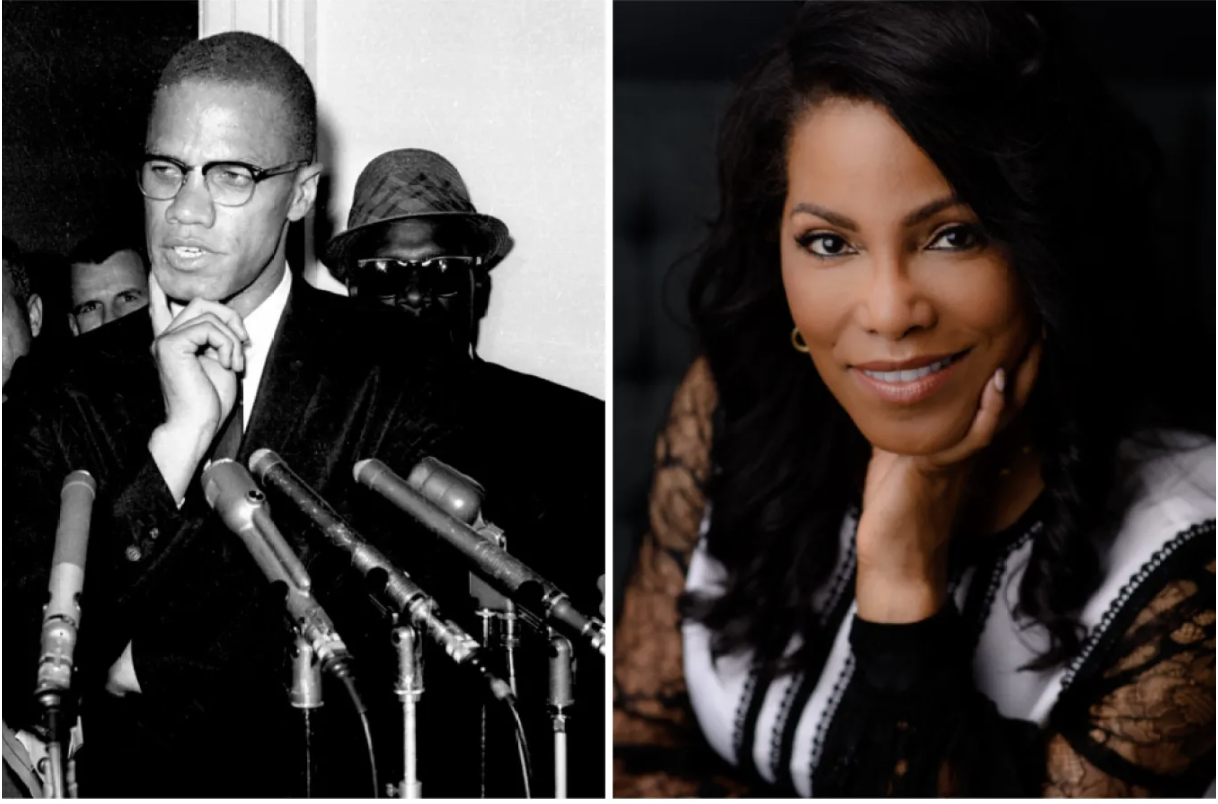
Malcolm X and his daughter, Dr. Illyasah Shabazz. Source: Variety.
At a Martin Luther King Jr. Day event in Detroit this week, it was women and daughters who helped frame the meaning of legacy, justice, and hope in this moment.
The gathering brought together reflections on Dr. King’s life and work alongside the enduring influence of Malcolm X, reminding those in attendance that the Civil Rights Movement was never a single voice or strategy, but a constellation of leaders, families, and communities committed to dignity and liberation. Importantly, that story was told not only about the movement’s icons, but through the voices of women who continue to carry its moral weight forward.
Speaking at the event, one of Malcolm X’s daughters, Dr. Illyasah Shabazz reflected on the relationship between her father and Dr. King, a relationship often flattened by history into false opposites, stating:
“Malcolm and Martin both embodied sacrifice and selflessness,” she said. “And while the world often portrays them as opposites, these two men thought of each other as brothers.”
Her words offered a reminder that movements are rarely as divided as popular narratives suggest — and that unity, even amid difference, has always been central to the pursuit of justice. That unity was not abstract; it was lived, relational, and sustained by families and women whose labor often unfolded outside the spotlight.
Michigan Lt. Gov. Garlin Gilchrist II also spoke to Dr. King’s legacy, grounding it firmly in the unfinished work of democracy and opportunity:
"Dr. Martin Luther King Jr. showed us the power of courage, conviction, and community in driving meaningful change and helping every person achieve health and wealth. Dr. King stood for justice and pressed relentlessly for progress on issues like poverty, economic opportunity, and voting."
What stood out most in Detroit was not only the reverence for history, but the emphasis on responsibility. The presence of daughters and women leaders made clear that the Civil Rights Movement is not a closed chapter. It is a living inheritance — one that asks each generation to decide how it will show up, what it will protect, and how it will widen the circle of justice.
Rev. Bernice King, Daughter of MLK Jr., Calls the Holiday a “Saving Grace” This Year

Rev. Bernice King speaks during an interview on the legacy of MLK Day. Source: Politico.
Dr. Martin Luther King Jr.’s daughter, Rev. Bernice King, shared her thoughts this week on what the legacy of her father should stand for in 2026. She shared with a crowd in Atlanta, Georgia, on Monday that, to her, honoring her father’s legacy has come as a “saving grace” this year in particular. Here is an excerpt from an AP article:
“I say that because it inserts a sense of sanity and morality into our very troubling climate right now,” the Rev. Bernice King said in an interview with The Associated Press. “With everything going on, the one thing that I think Dr. King reminds people of is hope and the ability to challenge injustice and inhumanity.” [...]
Bernice King said she’s not sure what her father would make of the United States today, nearly six decades after his assassination.
“He’s not here. It’s a different world,” she said. “But what I can say is his teachings transcend time and he taught us, I think, the way to address injustice through his nonviolent philosophy and methodology.”
Nonviolence should be embraced not just by those who are protesting and fighting against what they believe are injustices, but should also be adopted by immigration agents and other law enforcement officers, she said. To that end, she added, the King Center previously developed a curriculum that it now plans to redevelop to help officers see that they can carry out their duties while also respecting people’s humanity.
Even amid the “troubling climate” in the country right now, Bernice King said there is no question that “we have made so much progress as a nation.” The civil rights movement that her parents helped lead brought more people into mainstream politics who have sensitivity and compassion, she said. Despite efforts to scrap DEI initiatives and the deportation of people from around the world, “the inevitability is we’re so far into our diversity you can’t put that back in a box,” she said.
To honor her father’s legacy this year, she urged people to look inward.
“I think we spend a lot of time looking at everybody else and what everybody else is not doing or doing, and we’re looking out the window at all the problems of the world and talking about how bad they are and we don’t spend a lot of time on ourselves personally,” she said….
“I think we have the opportunity to use this [holiday] as a measuring point from year to year in terms of what we’re doing to move our society in a more just, humane, equitable and peaceful way,” she said.”
Young Girls Feel Empowered by the Legacy of Coretta Scott King

Bernice A. King, facing forward, hugs Siara White after her tribute to Coretta Scott King during the Martin Luther King Jr. Beloved Community Commemorative Service at Ebenezer Baptist Church in Atlanta, Monday, Jan. 19, 2026. Source: Plain Dealer.
At the historic Ebenezer Baptist Church, Siara White, a seventh grade student at the Coretta Scott King Young Women's Leadership Academy, was chosen to deliver a speech during the live, televised MLK Day commemorative service. Selected from a group of 20 students, Siara stepped into a lineage shaped by Dr. Martin Luther King Jr. and carried forward by Coretta Scott King — a lineage that understands leadership not as performance, but as responsibility. During her speech, White stated:
"I feel empowered," she said, reflecting on the legacy of Coretta Scott King. "Mrs. Coretta Scott King was so strong and an activist and leader for so many."
What makes this moment especially resonant is not only where Siara spoke, but how she arrived there. The pinning ceremony she participated in — where last year’s student speaker passed the honor to her — reflects something Coretta Scott King modeled throughout her life: leadership as stewardship, mentorship, and continuity. As one school leader told the students gathered in pink to honor Mrs. King, “You all embody the spirit of courage.”
That message echoes far beyond one ceremony. Siara’s preparation, her voice, and her belief that leadership rooted in peace and compassion can shape the nation speak to a deeper truth — that democracy is sustained not only by institutions, but by who is invited, encouraged, and supported to lead.
At RepresentWomen, we focus on systems because this is why we focus on systems. Representation doesn’t begin on Election Day — it begins years earlier, in classrooms, community spaces, and moments like this one, where young women are taught that their voices matter and that leadership is something they can grow into. When girls are empowered early, when their leadership is normalized, the pipeline widens, and democracy becomes stronger as a result.
Coretta Scott King understood this deeply. As educators at the academy remind their students, she did not simply preserve her husband’s legacy; she carried it forward, expanded it, and ensured it reached the next generation. Siara White’s presence at Ebenezer Baptist Church is one small but profound example of that continuation, and a reminder that the future of democracy is already speaking.
Honoring Dr. King’s “Give Us the Ballot” Address in 1957
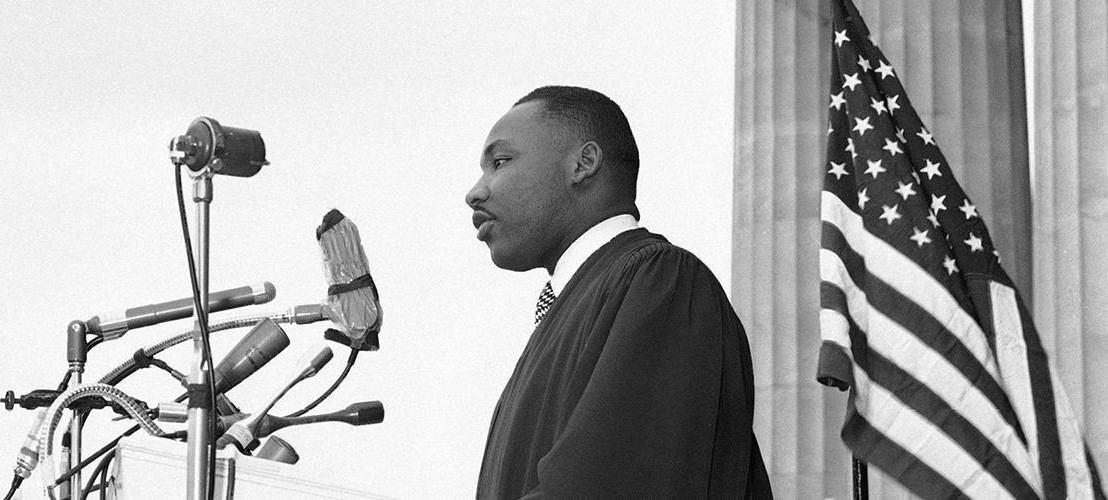
Picture of Dr. Martin Luther King Jr. delivering his famous “Give Us the Ballot” address in 1957. Source: AP.
As we close this week, it feels fitting to return to one of Dr. King’s most direct and enduring calls to action: “Give Us the Ballot.”
Delivered in 1957 on the steps of the Lincoln Memorial, this speech was not a metaphorical plea. It was a systems-level demand and a recognition that justice is not sustained by goodwill alone, but by structures that allow people to exercise power, shape outcomes, and hold institutions accountable. Again and again, Dr. King made the case that access to the ballot is inseparable from dignity, safety, and self-determination.
“Give us the ballot, and we will fill our legislative halls with men of goodwill… and send to the sacred halls of Congress men who will not sign a ‘Southern Manifesto’ because of their devotion to the manifesto of justice. Give us the ballot, and we will place judges on the benches of the South who will do justly and love mercy, and we will place at the head of the southern states governors who will, who have felt not only the tang of the human, but the glow of the Divine. [...]
In the midst of these prevailing conditions, we come to Washington today pleading with the president and members of Congress to provide a strong, moral, and courageous leadership for a situation that cannot permanently be evaded. We come humbly to say to the men in the forefront of our government that the civil rights issue is not an ephemeral, evanescent domestic issue that can be kicked about by reactionary guardians of the status quo; it is rather an eternal moral issue which may well determine the destiny of our nation (Yeah) in the ideological struggle with communism. The hour is late. The clock of destiny is ticking out. We must act now, before it is too late.”
What is striking, nearly seven decades later, is how current this argument remains. King understood that democracy falters not only when rights are denied outright, but when leadership fails to act — when there is, as he put it, a “high blood pressure of words and an anemia of deeds.” He warned against complacency, against lukewarm commitment, and against systems that promise equality while quietly narrowing who can participate safely and fully.
This week’s conversations about voting rights, ranked choice voting, women’s leadership, and representation are part of that same unfinished work. They ask us not only to honor history, but to measure ourselves against it. Are our systems expanding participation, or constraining it? Are we building pathways to leadership rooted in dignity, fairness, and accountability, or reproducing barriers under new names?
Dr. King reminded us that democracy is not self-executing. It requires courage, clarity, and sustained commitment — not just to ideals, but to design. As he said, “The hour is late. The clock of destiny is ticking out.”
As we look ahead, we invite you to carry that urgency and that hope with you. To stay rooted in evidence. To demand systems that reflect the people they serve. And to keep building, collectively and deliberately, a democracy worthy of the next generation.
You can watch the complete “Give Us The Ballot” speech here.
P.S. —
I also wanted to share an exciting opportunity from our partners at She Should Run, who have opened applications for their Local Leader Lab. It’s a free, virtual 10-week program designed to help women move from that familiar mix of concern and frustration into real, tangible leadership in their communities — learning how decisions are made locally while working on an actual project alongside others asking the same questions. Applications close January 31 at midnight. We invite you to apply here.
.png)