Last Sunday marked International Women’s Day, a moment each year when people around the world pause to celebrate the achievements of women and reflect on the work still ahead to build a more equitable future.
This year, I had the privilege of spending the days that followed in conversation with hundreds of people — including more than 60 speakers, panelists, and moderators — who share a deep commitment to strengthening democracy and expanding women’s political power.
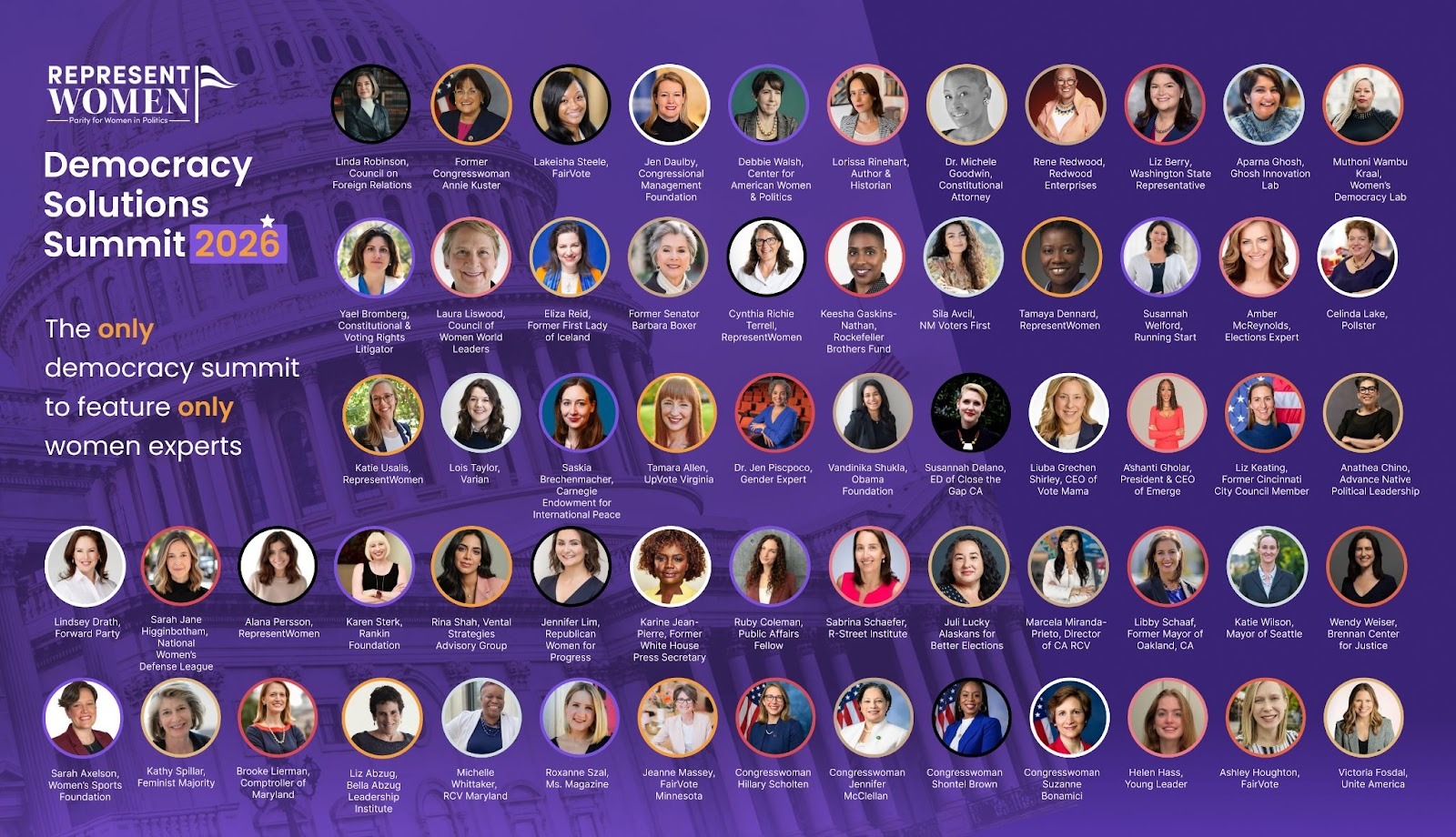
At RepresentWomen, we hosted the 2026 Democracy Solutions Summit, bringing together leaders, researchers, policymakers, and advocates for three afternoons of conversation about a question that sits at the center of our work: How do we design democratic systems that truly reflect the people they serve?
Before anything else, I want to begin with gratitude. To everyone who joined us, whether you attended one session or all three days, thank you. Your engagement, curiosity, and commitment to this work are what make gatherings like this meaningful. I’m also deeply grateful to the remarkable speakers and moderators who shared their insights, and to the RepresentWomen team who worked tirelessly behind the scenes to bring the Summit to life.
This year’s theme was “Women’s Power by Design.” It’s a phrase we return to often because women’s representation is not simply the natural outcome of democracy. It is shaped by the rules and systems that determine who has the opportunity to run, who wins elections, and whose voices are heard. So we structured the Summit around three conversations: Where We’ve Been, Where We Are, and Where We’re Going.
On the first day, we looked back at the foundations that made women’s political progress possible. Leaders including former U.S. Senator Barbara Boxer, Debbie Walsh, Kathy Spillar, and Liz Abzug reflected on the organizing, persistence, and institutional change that helped build momentum for women candidates over the past several decades.

The second day focused on the realities women face in public life today. In a discussion on political violence and harassment, Washington State Representative Liz Berry, researcher Aparna Ghosh, and democracy advocate Muthoni Wambu Kraal explored how threats to women in public life can discourage participation and undermine democratic institutions.

Another panel brought together political strategist Celinda Lake, Linda Robinson of the Council on Foreign Relations, and Sabrina Schaeffer of the R Street Institute to discuss democratic resilience, institutional guardrails, and the importance of rebuilding public trust. While women on another panel, including Vandinika Shukla, Saskia Brechenmacher, and Jennifer Piscopo, discussed international trends for women’s representation and power.

We also highlighted the organizations building the leadership pipelines women need to run and lead. In a conversation moderated by Lindsey Williams Drath, CEO of the Forward Party, leaders from across the political spectrum shared insights from their work expanding pathways to public office, including Susannah Delano of Close the Gap California, Liuba Grechen Shirley of Vote Mama, A’shanti Gholar of Emerge, Anathea Chino of Advance Native Political Leadership, and Jennifer Pierotti Lim of Republican Women for Progress.

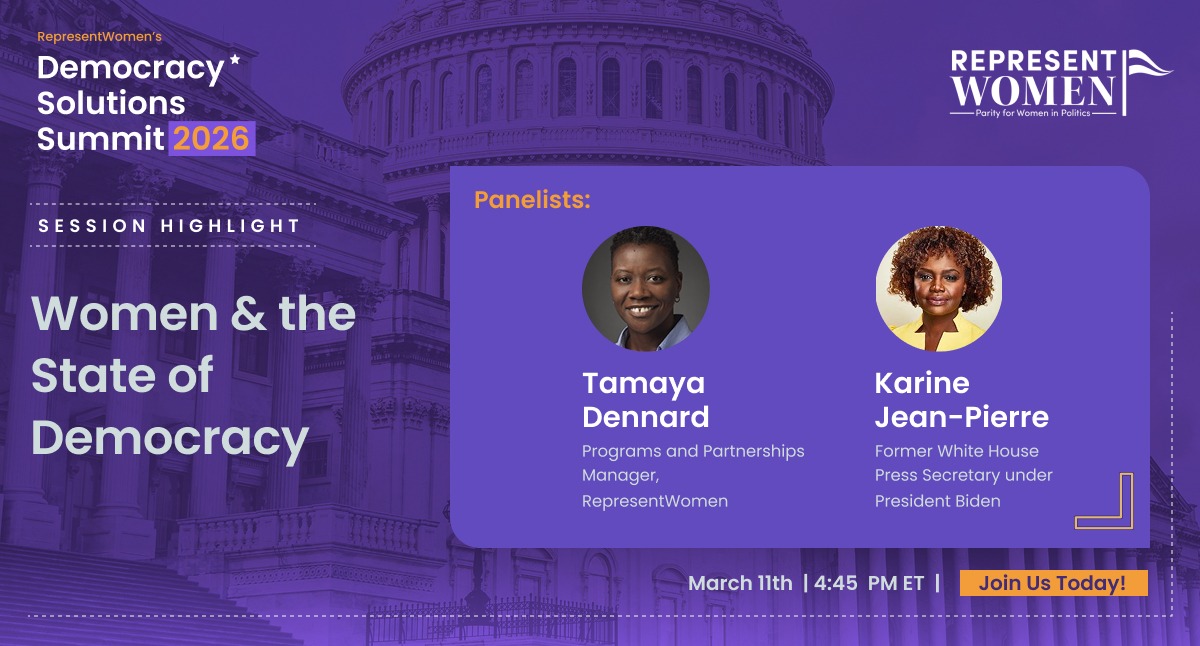
And while this day was often sobering, as we sat with all the work to be done, it also provided a lot of hope, which is meaningful in itself. As was so profoundly stated by former White House Press Secretary Karine Jean-Pierre, “Hope is action,” which should never be underestimated.
The final day of the Summit turned toward the future; toward the reforms, leadership pipelines, and new voices that will shape the next chapter of women’s political power.
Movement leaders from across the country — including Tamaya Dennard of RepresentWomen, Sila Avcil of New Mexico Voters First, Liz White of UpVote Virginia, Marcela Miranda-Prieto of the California Ranked Choice Voting Coalition, Michelle Whittaker of RCV Maryland, and Juli Lucky of Alaskans for Better Elections — discussed the growing momentum behind electoral reform efforts.
Later panels brought together elected officials and legal experts, including former Oakland Mayor Libby Schaaf, constitutional lawyer Yael Bromberg, and former Cincinnati Councilmember Liz Keating to discuss what it takes to lead within today’s political and legal systems while working to reform them.
And while all of the conversations throughout the Summit were powerful, of the most meaningful moments came when Ruby Coleman, a graduate student at American University and a former RepresentWomen intern, shared reflections on the future of democracy before moderating a conversation with three teenage girls, who are passionate about women’s representation, about the political system they hope to inherit. Listening to them speak was a powerful reminder that the work we do today is not just about the next election cycle. It is about the generations that will shape democracy long after we are gone.
Across the three days, one theme came through clearly: women’s political power has never been accidental. It has been built through generations of organizing, reform, and determined leadership by women who believed democracy could be more inclusive. And that work is far from finished.
As we approach the 250th anniversary of the Declaration of Independence, we have a chance to reflect not only on how far our democracy has come, but also on the systems we inherited along the way, including election rules rooted in traditions adopted from England centuries ago. The question before us now as we look toward the future is simple but profound: What would it mean to finally design a democracy that truly reflects the people it serves?
As we closed the Summit, we shared a reflection from former New Zealand Prime Minister Jacinda Ardern, whose memoir A Different Kind of Power offers a vision of leadership grounded not in dominance, but in empathy, courage, and responsibility to the people we serve.
Expanding representation is not only about who holds office. It is also about how leadership is practiced once they get there. And as the musical Suffs reminds us:
“Remember every mother that you came from…
On the journey every generation makes.”
Progress is never guaranteed. But history shows that it is possible when each generation continues the work. So as we move forward from this year’s Summit, let’s keep marching on, together, to design a system where women’s political power is not the exception, but the expectation.
Milestones: Janet Reno is confirmed as the 1st woman U.S. Attorney General (1993); The first-ever Girl Scouts meeting is held in Savannah, GA; Susan Butcher wins Iditarod, becoming the 2nd woman ever to win the Alaskan dog sled race; Nathaniel Hawthorne’s The Scarlet Letter is published.
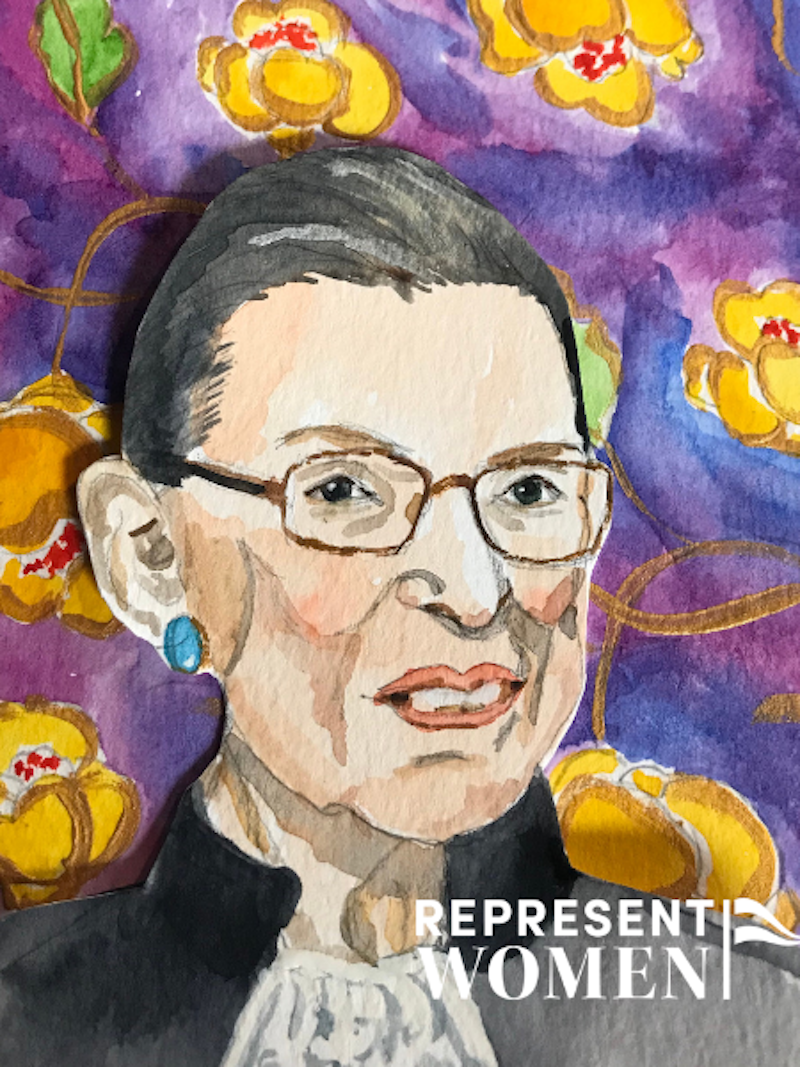
Birthdays: Winsome Earle Sears, former Lt. Governor of VA, and the first Black woman elected to statewide office in VA – she was elected with ranked choice voting; Janet Mock, writer, host, director, producer, and activist; Alyse Nelson, President and CEO of Vital Voices Global Partnership; Michele McCrary, RepresentWomen’s Director of Operations & Finance; Corinne Claiborne Boggs; Abigail Fillmore; Jane Elizabeth Jones, suffragist & abolitionist; Simone Biles; Ruth Bader Ginsburg; Ariel Hill-Davis, co-founder of Republican Women for Progress; Eva Longoria; and Alexandra Petri, noted author & journalist.
CAWP Release: “Mississippi Will Remain the Only State that Has Never Sent a Woman to the U.S. House”
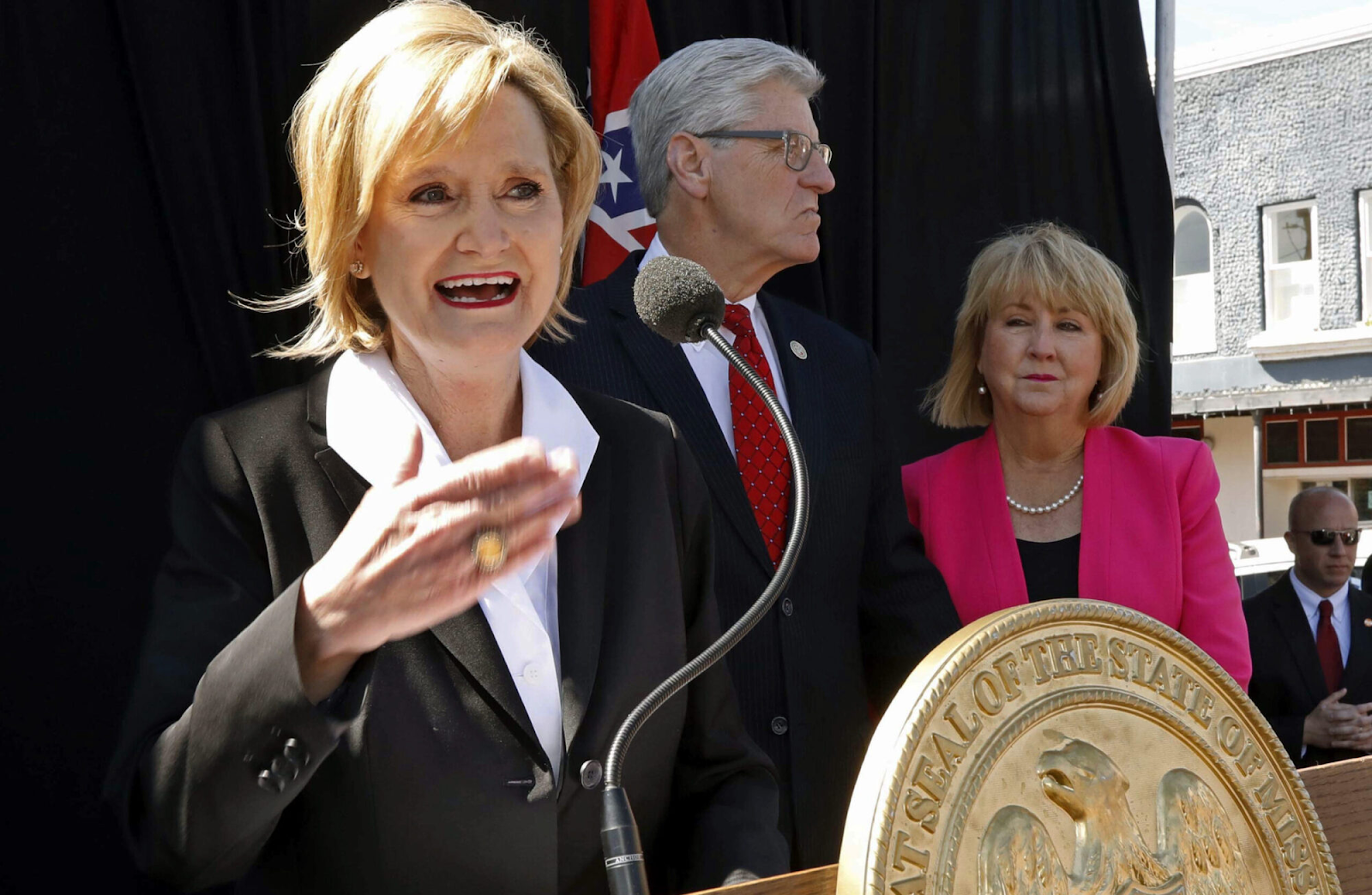
Thanks to our friends at the Center for American Women and Politics for their rapid-fire analysis of the low-key primaries on Tuesday in Mississippi:
Primary elections were held on Tuesday in Mississippi. Full results for women candidates in federal races are available on this post on our Election Analysis page; there are no undecided races from yesterday's primaries, so the full post is the final results for women congressional candidates in the 2026 Mississippi primaries.
Among the most notable results for women:
- Incumbent U.S. Senator Cindy Hyde-Smith (R) won the Republican nomination to run for re-election in November in a contest currently rated as “Solid Republican” by Cook Political Report. First appointed in 2018, she is the only woman who has ever represented Mississippi in Congress.
- No women filed as candidates for U.S. House seats in Mississippi in 2026, ensuring that Mississippi will continue to be the only state that has never sent a woman to the U.S. House.
New Hampshire Special Election Winner Bobbi Boudman
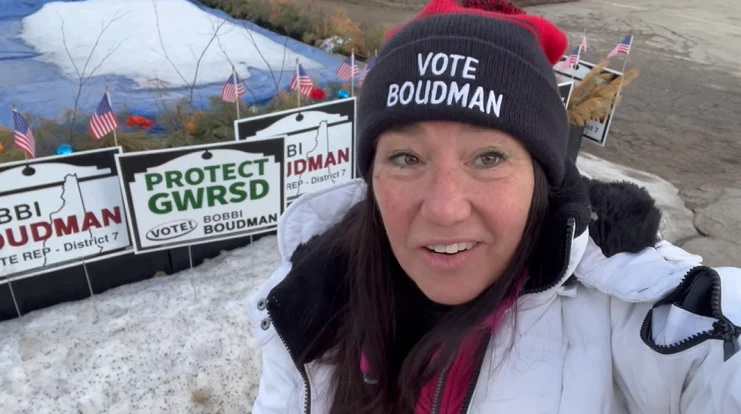
Coverage of a special election for a woman in the New Hampshire state legislature from The Guardian:
A Democrat won a special election for a state house seat in New Hampshire on Tuesday, flipping a Republican district that Donald Trump carried and marking the latest in a string of 28 Democratic upsets that could usher in a blue wave in the midterms.
Bobbi Boudman beat Republican Dale Fincher in New Hampshire’s Carroll county district 7. It was Boudman’s third try at the seat – she lost to incumbent representative Glenn Cordelli in the last two cycles by several points. Cordelli resigned from the seat after moving, leading to the special election on 10 March.
Unofficial results show Boudman winning with about 52% of the vote among the more than 4,000 voters who turned out. Marissa Hebert, a spokesperson for the New Hampshire Democratic party, noted on X the swing Boudman made in the district: she lost in 2024 by more than 13 points.
CAWP on Prospects for Women in the U.S. Senate in 2026
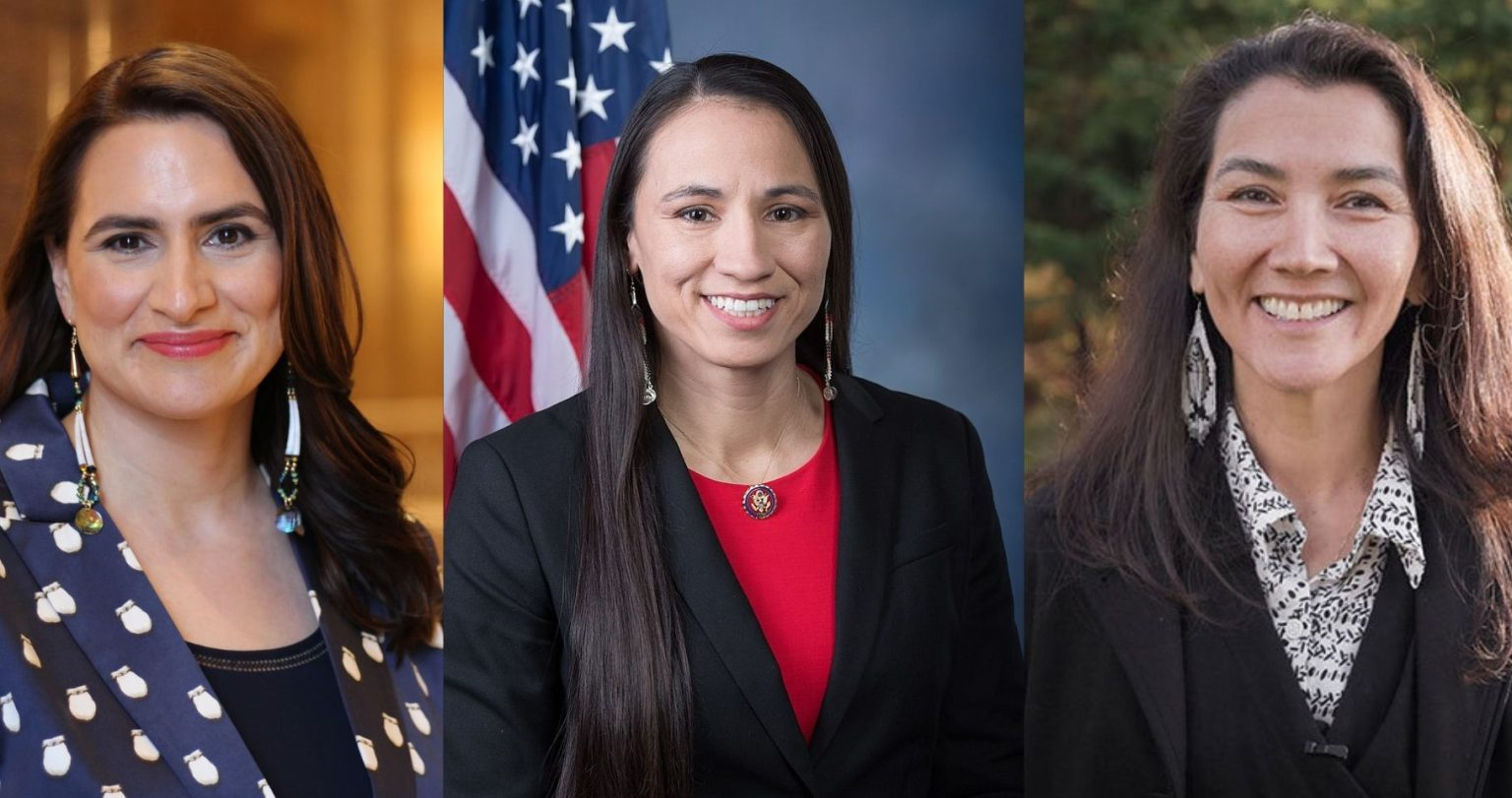
Kelly Ditmar with the Center for American Women and Politics (CAWP) provides a detailed rundown of the prospects for women in U.S. Senate races, including women candidates having chances to become new Senators in at least eight states. From the article’[s start and end.
There are 35 U.S. Senate elections in 2026, including 33 regularly-scheduled and two special election contests. While we begin the cycle with a net deficit of women senators due to departures, there are possible pick-ups that could yield stasis or even a slight increase in women’s representation in 2027. If non-incumbent women are unsuccessful in their Senate bids, however, the number of women in the U.S. Senate could drop as a result of the 2026 election…
As the 2026 cycle continues, CAWP will track how women fare in U.S. Senate elections as part of Election Watch 2026.
Sobering Inter-Parliamentary Union Report on Women Internationally
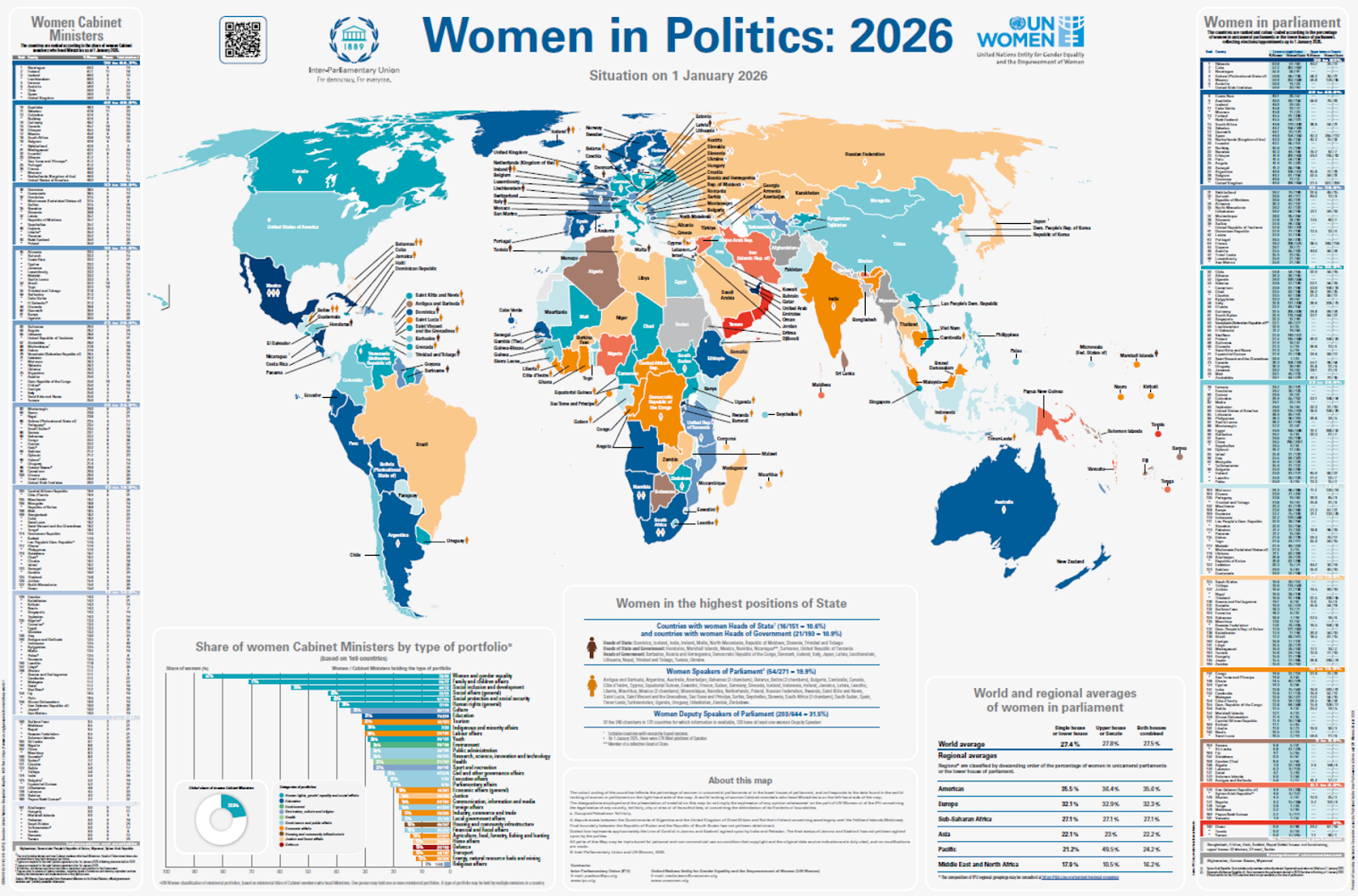
The Inter-Parliamentary Union this week released a sobering report based on UN Women data that “shows women remain far from having equal political power, holding just 22.4% of cabinet posts and 27.5% of parliamentary seats worldwide.” Here is from the release.
Across the world, women remain vastly under-represented in political leadership, with the most powerful decisions still overwhelmingly made by men. In 2026, only 28 countries are led by a woman Head of State or Government, while 101 countries have never had a woman leader, according to the latest data released by the IPU and UN Women.
When women are shut out of political leadership, decisions that shape peace, security and economic priorities are made without half of the world’s experience at the table. The new global data reveals stagnation, and in some cases regression, in women’s political leadership, particularly in executive government.
Key findings from the data released by IPU and UN Women include:
- Women hold just 22.4% of cabinet minister positions globally, down from 23.3% in 2024, marking a reversal after years of gradual progress.
- 14 countries have achieved gender parity in cabinet, demonstrating that equal representation is possible, yet eight countries still have no women ministers at all.
- Women hold 27.5% of parliamentary seats worldwide, up slightly from 27.2% in 2025. The increase of just 0.3 percentage points marks the second consecutive year of the slowest growth recorded since 2017, highlighting how slowly women are advancing in political decision-making.
- Women are also losing ground in parliamentary leadership. As of January 2026, 54 women serve as Speakers of Parliament globally, representing 19.9% of all Speakers. This represents a nearly four-percentage-point decline from the previous year and the first drop in women Speakers in 21 years.
- Women in politics face rising hostility and intimidation from the public, both online and offline. 76% of women parliamentarians surveyed reported experiencing intimidation by the public, compared with 68% of men, a trend that deters women from seeking office and is slowing progress toward equal political power.
- Even when women reach leadership positions, they are often concentrated in a narrow range of portfolios traditionally linked to social sectors.
Growing Gap between Young Women and Men on Equality
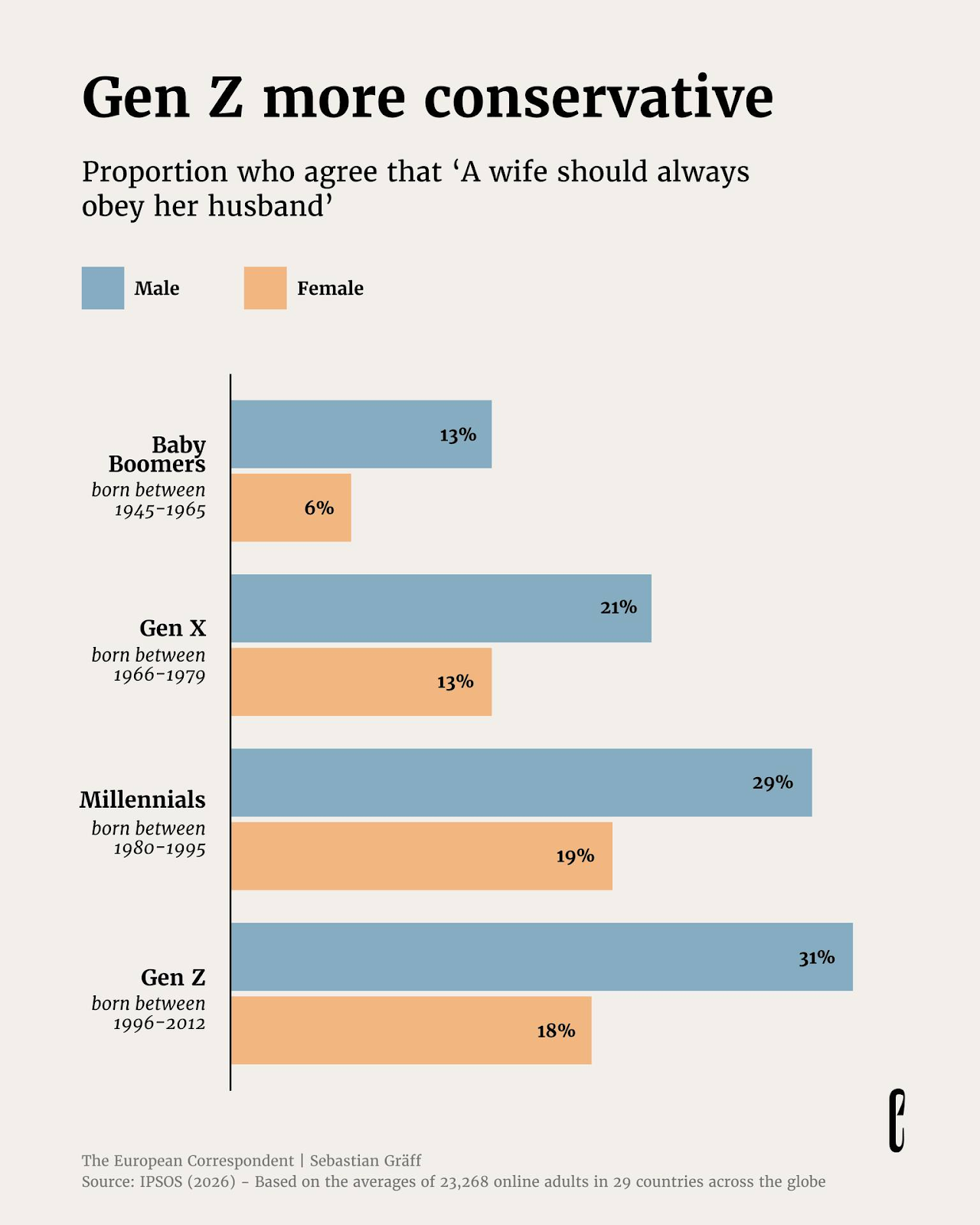
Younger people around the world in general are less committed to equality than older people, with gaps between young men and women particularly striking. The Guardian editorial addresses the challenge for us in an editorial with this excerpt:
Last week, results from a global survey signalled a rise in worrying attitudes towards women among young men. A team from the pollsters Ipsos and King’s College London found that nearly a third (31%) of gen Z men believe that a woman should always obey her husband, a fifth (21%) believe that she should never initiate sex, and 33% believe that women should let their husbands have the final word on important decisions…
Social media also plays a destructive role, offering the scapegoat of women’s rights rather than real solutions. The “manosphere” offers little beyond bigotry dressed up as self-respect and get-rich-quick fantasies that prey on male anxiety. You don’t have to look far to see the effect. When asked by Ipsos/King’s College, “When it comes to giving women equal rights with men, things have gone far enough in my country”, in the UK almost half of men agreed – just below the 29-country average..
Researchers argue these attitudes will not shift until the reality does: more jobs, higher wages and better living standards for young people. Yet prosperity alone does not erase misogyny. A cultural shift is also needed – one that can’t happen without young men first taking accountability for their attitudes towards women. They also need compassion – to be told that they do not need to wear the faulty armour of machismo; and that wealth does not define them. Above all, it is rising inequality that blocks their path to a good life – not women.
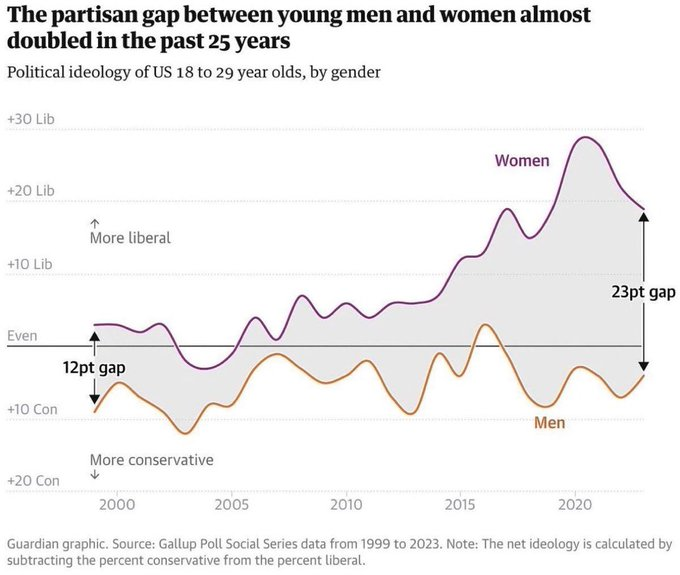
A July 2024 Guardian story on political trends in the United States based on Gallup polls was telling on evolving gaps in the United States.
Ranked Choice Voting Used for Student Elections at Over 100 Colleges & Universities
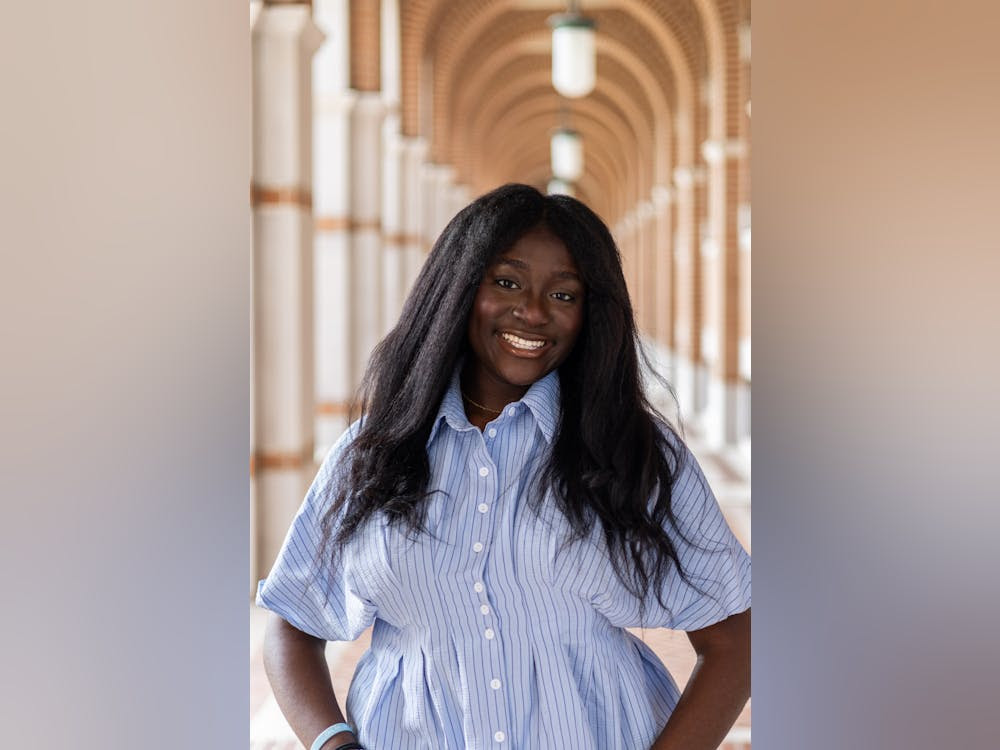
I’m always impressed with the number and diversity of American colleges and universities electing their student leaders with ranked choice voting - well above 100 schools and rising every year, with recent adoptions in the past month including University of Tulsa (OK), University of Maryland, and University of Utah. Here is coverage in the Rice Thresher of Chelsea Asibbey’s win with RCV this week:
"In one of the most crowded races in the Rice Student Association’s history, Chelsea Asibbey has been elected RSA president for the 2026-27 school year. After five rounds of ranked choice voting, she received 50.6% of the vote. Asibbey beat second-place candidate Jenny Karsner by only 19 votes in an instant runoff.
A Baker College junior and current director of communications for the RSA, Asibbey ran on a platform focused on “action, affordability and accessibility.” ..With five candidates and numerous write-ins, the Election Committee used the instant runoff voting method. The candidate with the fewest votes is eliminated, and their votes are redistributed to the remaining candidates according to the next-ranked preference on each ballot. This process continues until a candidate holds a majority of the votes. ..The election also saw an increase from last year’s turnout. 1,713 students voted in a turnout of 35.8% compared to last year’s 29.02%."
Oscar Voters Spotlight Ranked Choice Voting for Best Picture

The 98th Academy Awards will take place on Sunday, March 15, 2026, honoring films released in 2025. Nearly all categories were nominated with the proportional form of ranked choice voting that ensures nearly every voter contributes to a nomination. On Oscar night, only Best Picture is chosen with ranked choice voting, The New York Times did a fun explainer on how Best Picture voting works with RCV. When thinking of unifying winners, imagine if that were the goal of all of our elections - which helps explain why women hold more than half of all local election seats elected with RCV in the United States today.
The Jeannette Rankin Peace Plan
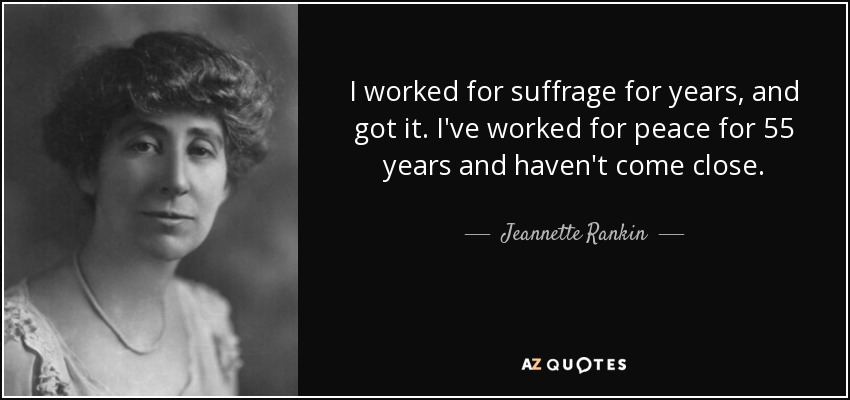
Lorissa Rinehart, author of Winning the Earthquake, this week writes in the Female Body Politic on how Jeannette Rankin, the first woman elected to Congress, was a fervent peace advocate and explains how she anticipated the rise of rogue militarism we are seeing today - one where the United States is leading a military attack on Iran that is the most unpopular war launched in the modern era of polling, as discussed in this New Jersey article The Iran war is the most unpopular conflict in U.S. history, and the numbers are staggering. Here is more from Lorissa Rinehart:
For the next 60 years, Jeannette worked tirelessly, even to the point of her own impoverishment, for peace and democracy: the two pillars on which American freedom is, and must be, founded.
As the author of Winning The Earthquake, my biography of Jeannette Rankin, I’ve identified 5 key points for peace and democracy drawn from her nearly 70 years of activism. This is her plan not only to prevent today’s war, but all wars. If we had listened to her in 1917, the words ‘peace’ and ‘freedom’ would mean something entirely different. They would be the ground beneath our feet rather than remain castles in the sky we are forever trying to bring to earth.
We must listen to Jeannette Rankin now. Demand the adoption of her peace and democracy plan. Insist on these reforms — because our action or inaction in this moment will decide our future.
Rinehart then explains each plank in detail. They are:
- Require a national popular vote to declare war
- Abolish the Electoral College
- Elect House Representatives through ranked choice voting in multi-member districts
- Equal the UN Security Council to Include nations committed to disarmament

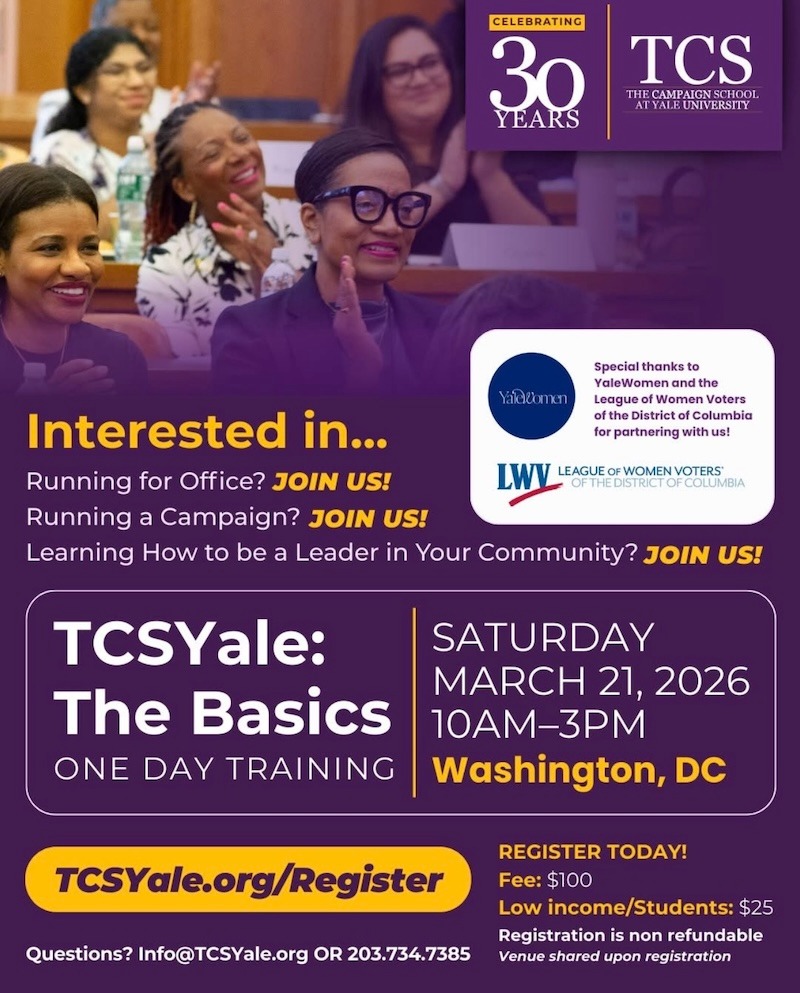
P.S. Fabulous friend of RepresentWomen Patti Russo, who runs the The Campaign School at Yale, is hosting two events in Washington, DC on Wednesday, March 18th and Saturday, March 21st

.png)
.png)