Multi-member districts are one of the leading structural components within proportional representation systems found to impact women’s representation. In a single-member district (SMD), one individual represents one district. In a multi-member district (MMD), multiple people represent one, larger district.
According to a study of election results in 14 U.S. states, as well as in numerous international cases, more women are elected in multi-member districts (MMDs) than in single-member districts (SMDs) and that women run for office more often in MMDs than SMDs. This reveals a direct relationship between the number of seats in a district (district magnitude) and the proportion of women elected. Through higher district magnitudes, PR systems ensure full and fair representation, particularly in legislative bodies that elect multiple members, such as city councils, state legislatures, and the U.S. House.
American Roots
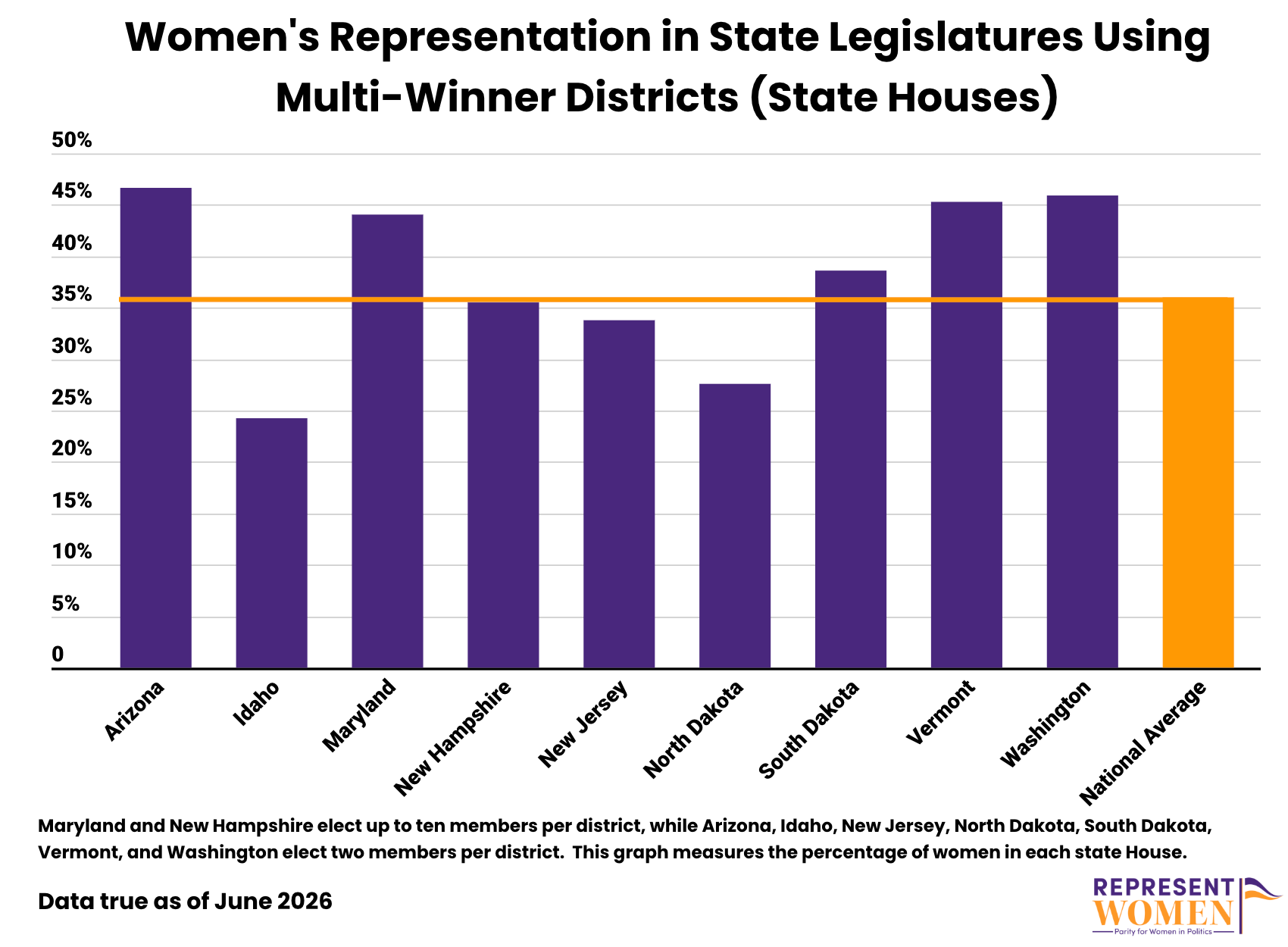
More than 40 states have used multi-member districts at some point in their history, and several still do today. These systems prove that proportional representation is not foreign to the U.S. — it has deep roots in our own political traditions. Currently, nine states use multi-member districts to elect their state houses, seven of which (Arizona, Idaho, New Jersey, North Dakota, South Dakota, Vermont, Washington) have two-seat districts, and two of which (New Hampshire and Maryland) have as many as ten-seat districts. States with MMDs tend to have higher rates of women in the state house than the national average, 36%. This is particularly true for states with 3+ member districts.
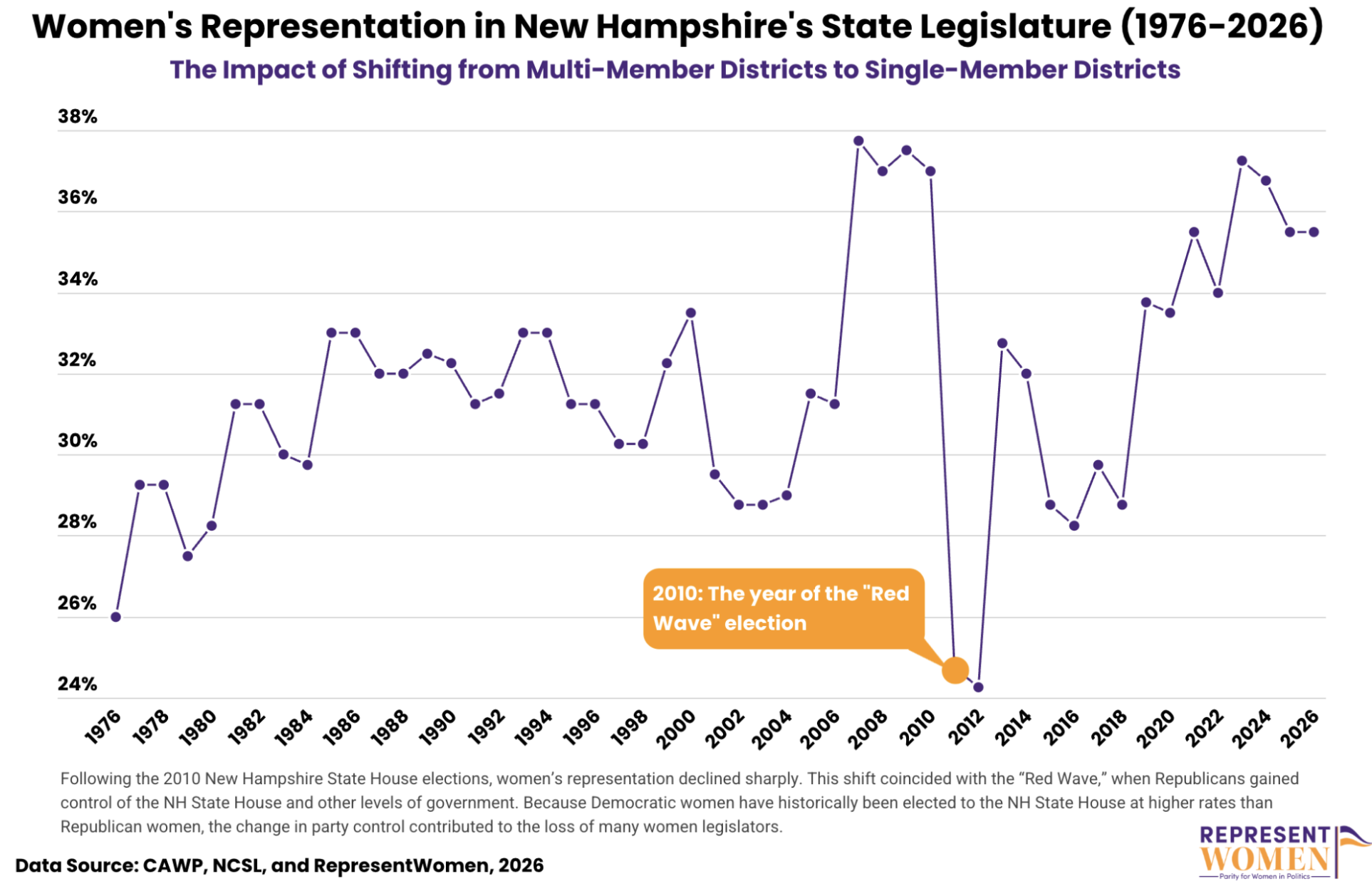
Additionally, research from FairVote has documented a striking pattern in these districts: when parties field a slate of candidates rather than a single nominee, voters are measurably more willing to cross party lines to add a woman to that slate than they are to choose a woman over a man in a head-to-head, single-seat race. In New Hampshire's 2012 elections, this dynamic handed Democratic women seats in heavily Republican multi-member districts, seats their party would not have otherwise won, specifically because Republican slates in those districts underrepresented women. The lesson FairVote draws is a structural one: multi-member districts change the incentives for both parties and voters in ways that consistently favor gender balance, regardless of which party benefits in a given year.
West Virginia
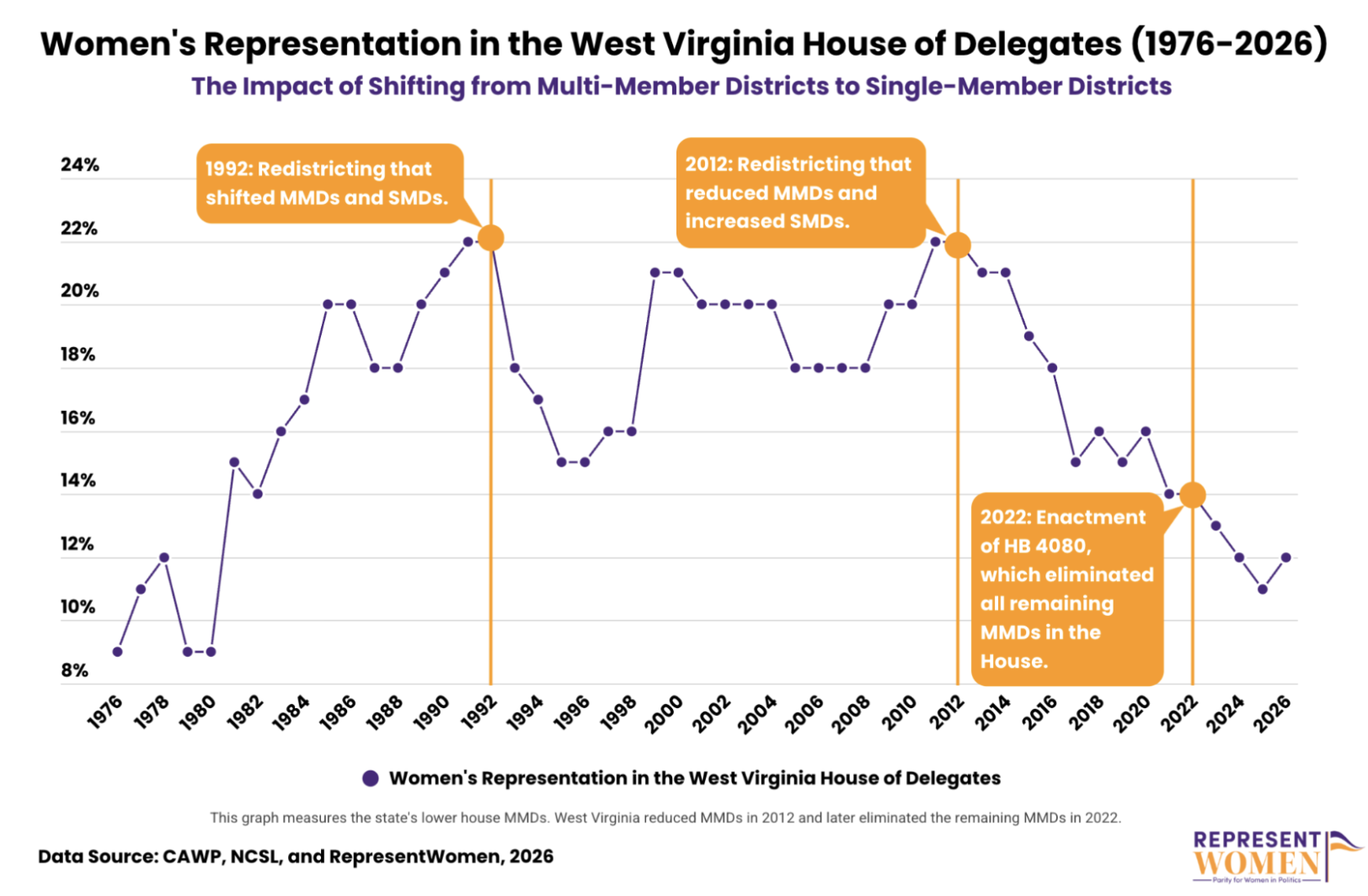
West Virginia offers a compelling example of how changes to multi-member districts can coincide with shifts in women’s representation. Beginning in 2012, the state reduced its use of MMDs, ultimately eliminating them entirely in 2018 and transitioning to 100 single-member districts by the 2022 elections. During this period, women’s representation in the House of Delegates declined from 22% in 2012 to 12% in 2026.
Want to learn more?
Read our West Virginia Case StudyNew Hampshire
To this day, New Hampshire’s 400-member House of Representatives is elected largely through multi-member districts, with some districts electing as many as ten representatives. Research on NH has found that these larger districts, as well as other structural components present in the state’s electoral system, create greater opportunities for women candidates to win and run.
Want to learn more about how the structural components that have led to New Hampshire’s “A” grade in the Gender Parity Index?
Explore the full NH case study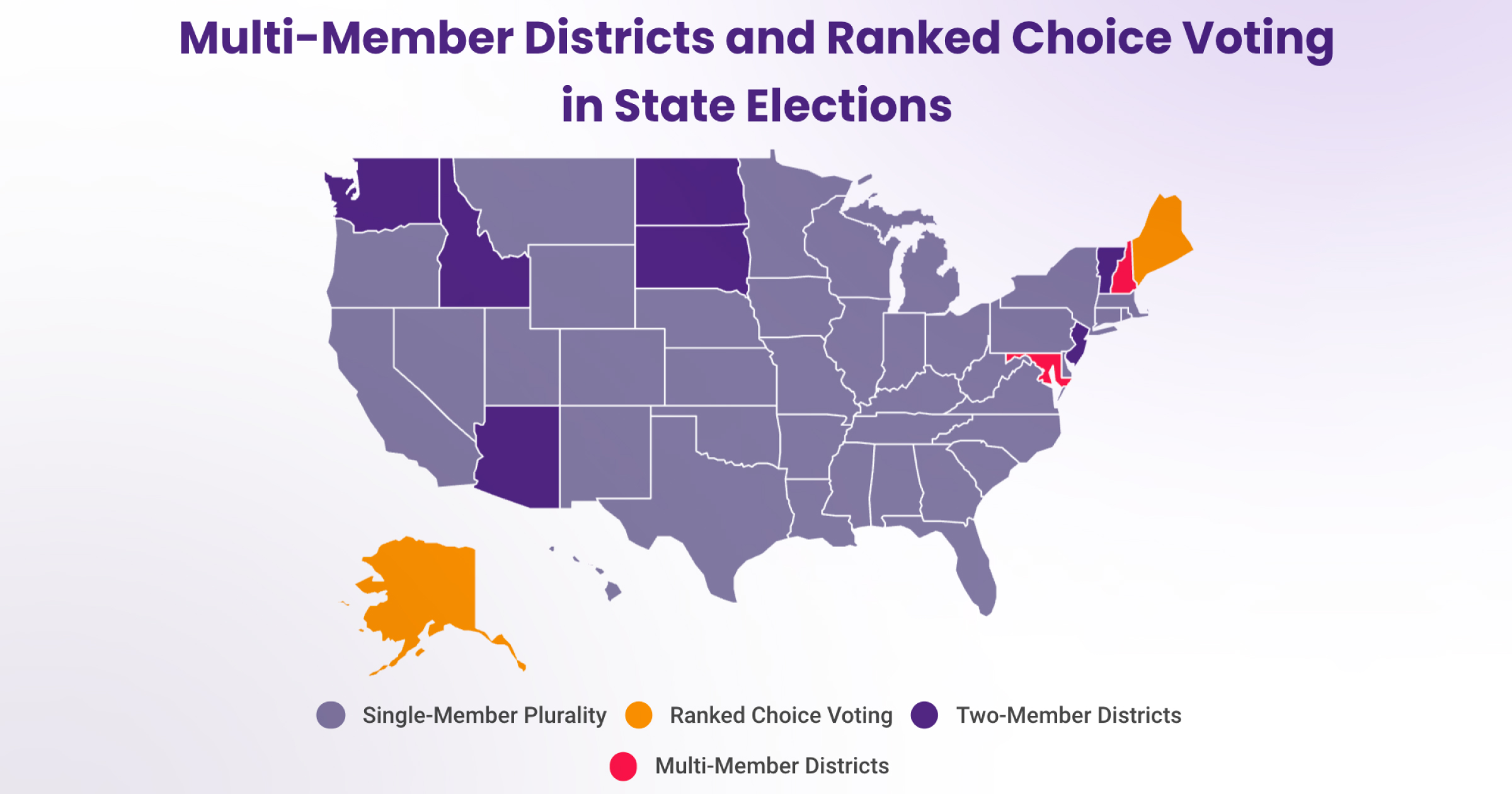
%20(4).png)