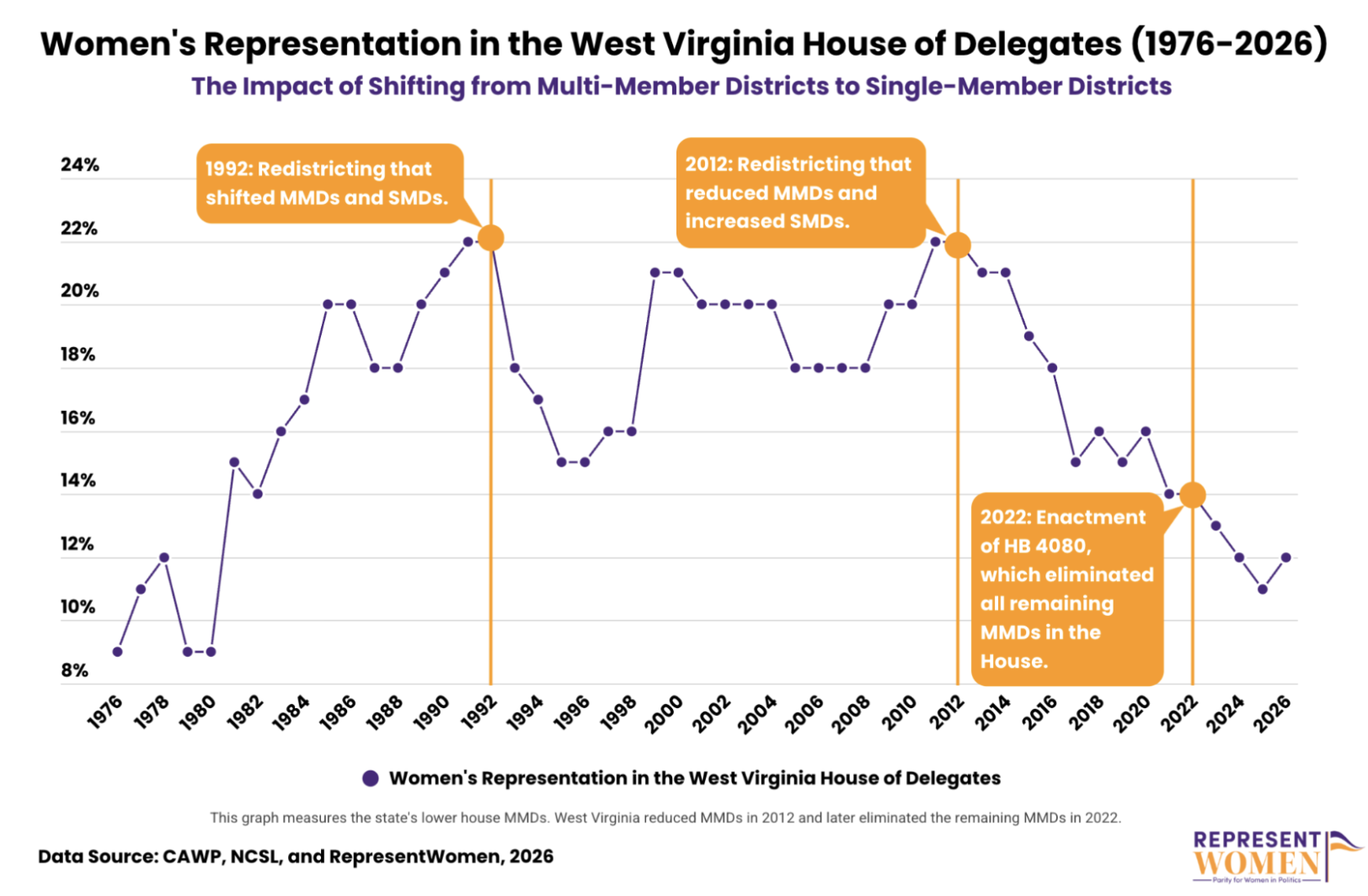
Starting in 2012, West Virginia implemented a major redistricting overhaul following the 2010 Census. As part of this restructuring, the number of single-member districts (SMDs) increased from 36 to 47, while the number of multi-member districts (MMDs) decreased from 22 to 20. This change marked the beginning of a broader transition away from multi-member representation in the state. That transition continued in 2018, when West Virginia enacted legislation eliminating all multi-member districts in the House of Delegates. The legislation converted the remaining 20 MMDs into 53 single-member districts, ultimately creating 100 single-member districts. This change was implemented beginning with the 2022 elections.
The timing of these structural changes is particularly significant when considered alongside the trajectory of women’s representation in the House of Delegates. Beginning in 2012, the same year West Virginia began reducing its use of multi-member districts, the percentage of women serving in the House entered a steady decline. From 2012 through 2026, women’s representation was cut nearly in half, falling from 22% (14 Democrats, 6 Republicans) to 12% (10 Republicans, 2
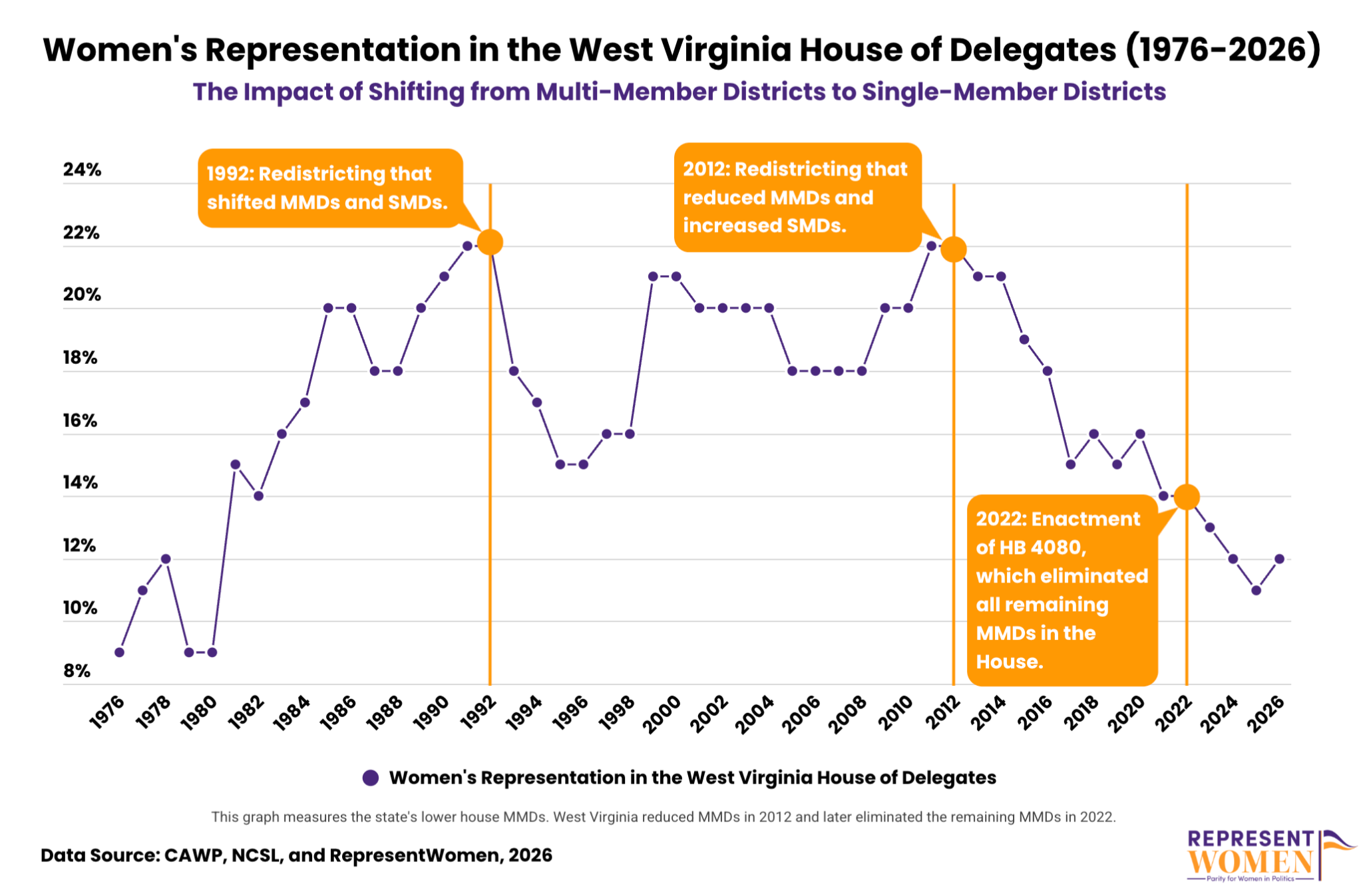
Democrats). By 2025, West Virginia had reached its lowest level of women’s representation in more than four decades, with the share of women in the House falling below 11% for the first time since 1980.
Taken together, these trends raise important questions about the consequences of moving from multi-member to single-member districts. The decline in women’s representation coincides closely with the initial reduction and eventual elimination of MMDs, suggesting that the structure of electoral districts play an important role in determining who has access to legislative office. This relationship is particularly important because multi-member districts have been identified as mechanisms that can broaden candidate opportunities and increase women’s representation. When voters can elect multiple representatives from a single district, more candidates can compete successfully for office, potentially reducing the gatekeeping pressures that can limit women’s access to elected positions. West Virginia’s experience therefore illustrates why the impact on women’s political representation (and other minorities) should be considered when designing and altering electoral district composition.
%20(4).png)