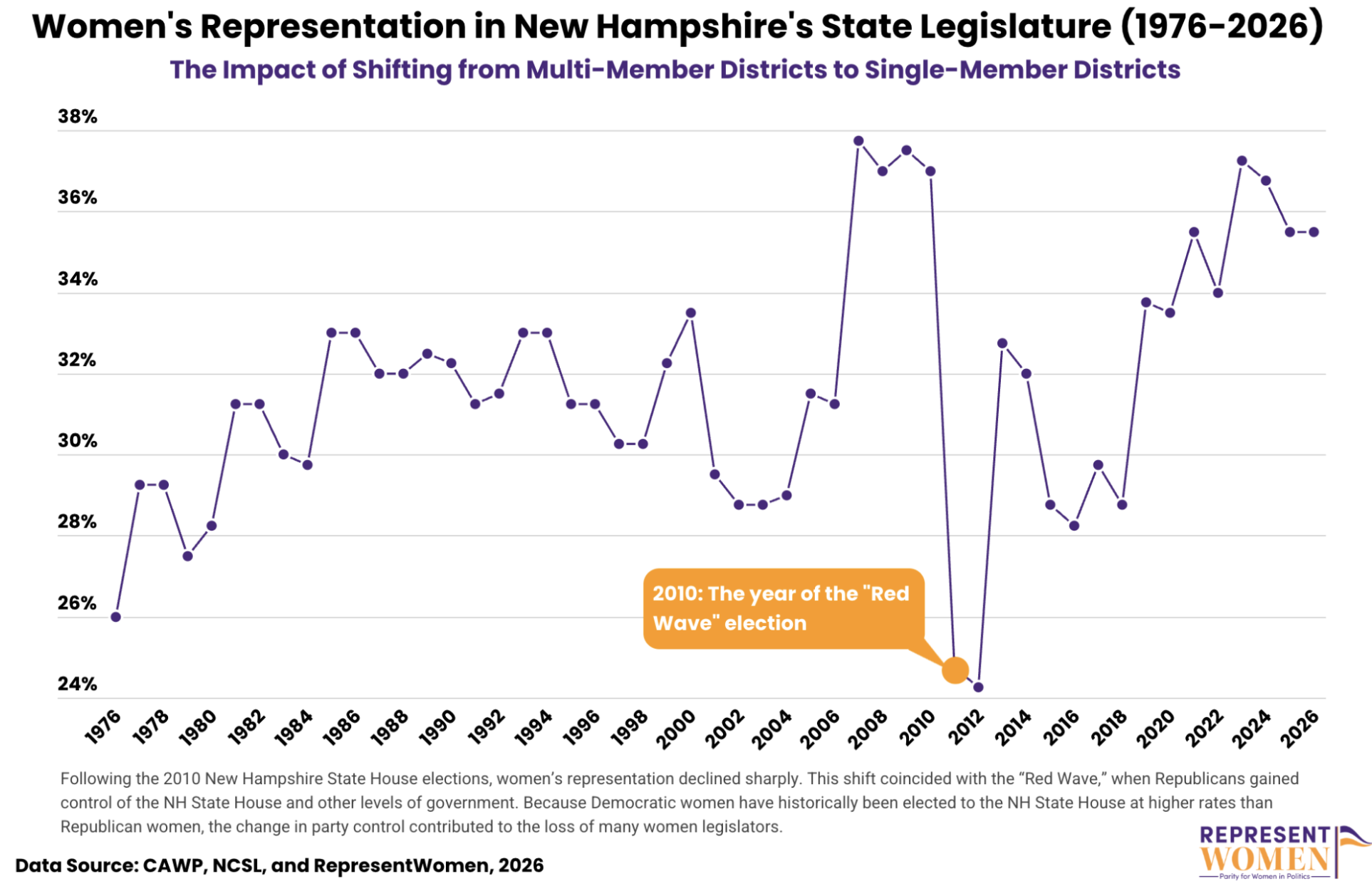
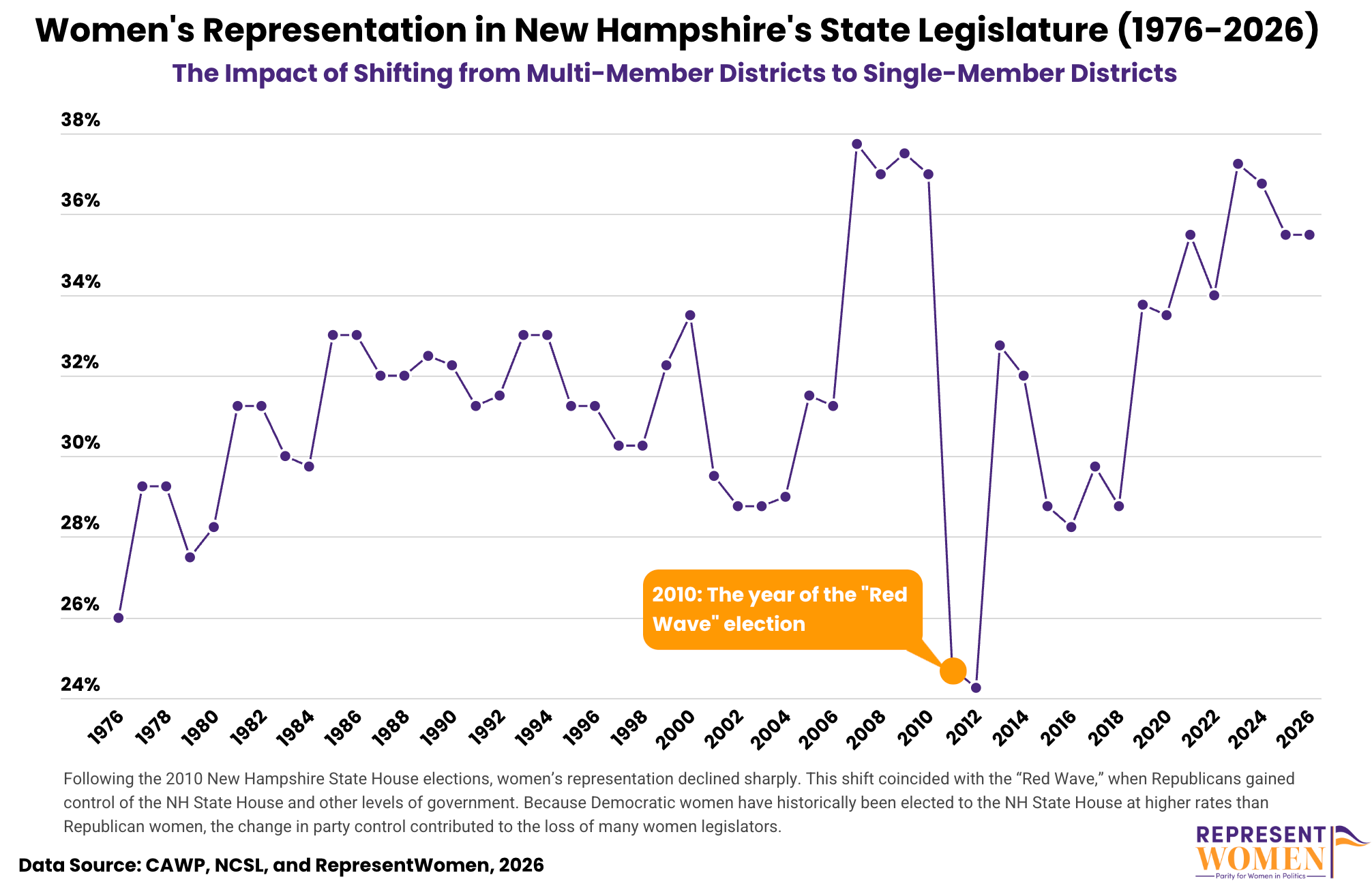
New Hampshire's advantage in women's representation is real, but it is not evenly distributed. The state has led the nation in electing women to Congress and the governorship, sometimes by wide margins, while its state legislature and local governments have lagged well behind that same standard. Understanding why New Hampshire succeeds where it does is only half the picture. The other half is asking what would close the gap in the places where the state's usual advantages don't reach, and doing so faster than precedent alone would allow.
New Hampshire already has structural features other states don't:
- Large multi-member legislative districts
- A citizen legislature with low barriers to entry
- And a track record long enough that voters no longer treat women candidates as novel.
Rather than proposing reforms foreign to the state, the strongest opportunities build directly on what New Hampshire already has in place.
Convert existing multi-member districts to proportional ranked choice voting
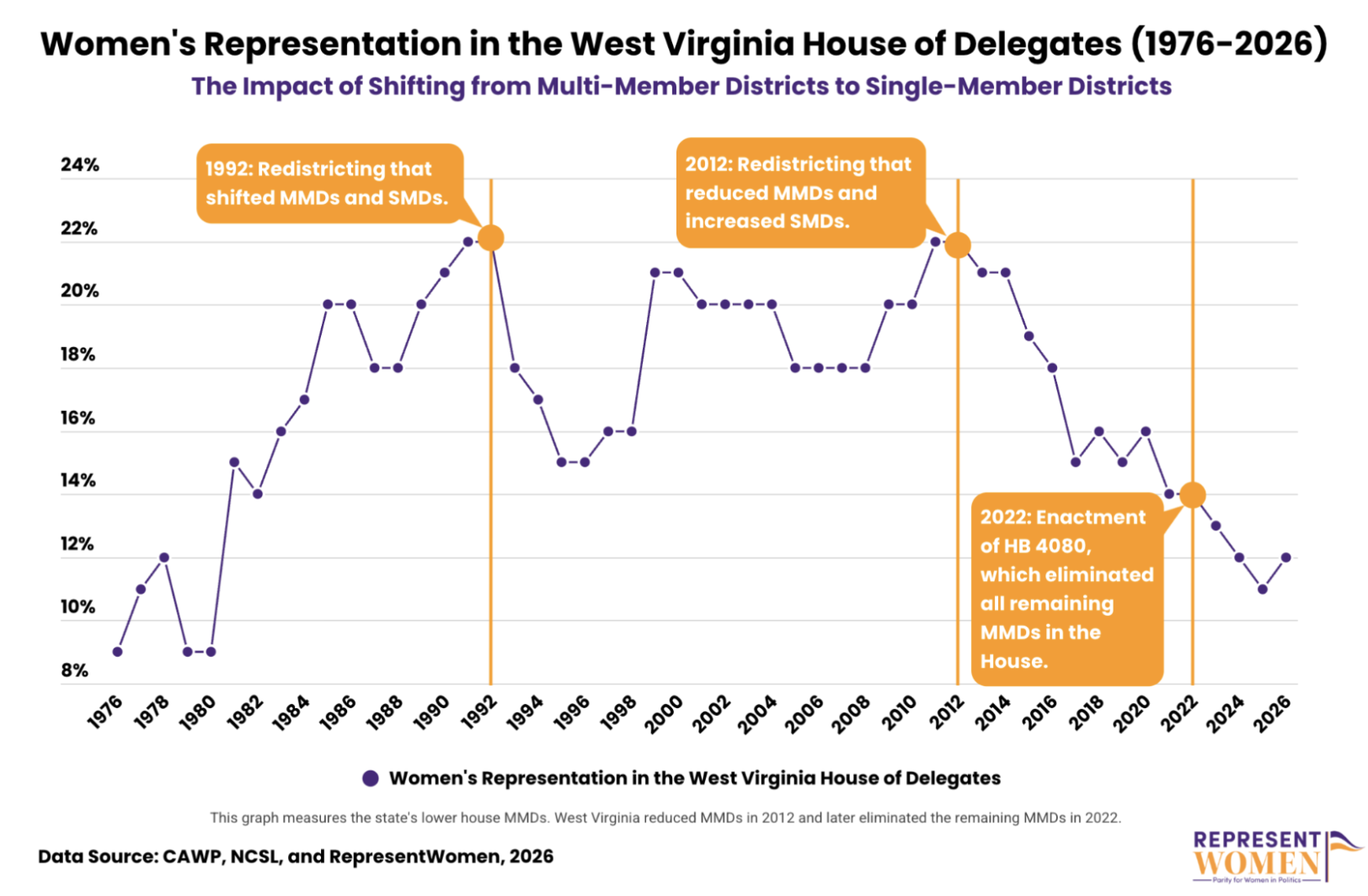
New Hampshire's State House is already elected largely through multi-member districts, some as large as ten seats. Research has shown these districts can produce real gains for women's representation, but only when voters actively correct for a party's under-nomination of women by crossing party lines. That correction is inconsistent by nature: it depends on a large enough bloc of voters recognizing an imbalanced slate and being willing to break with their own party to fix it.
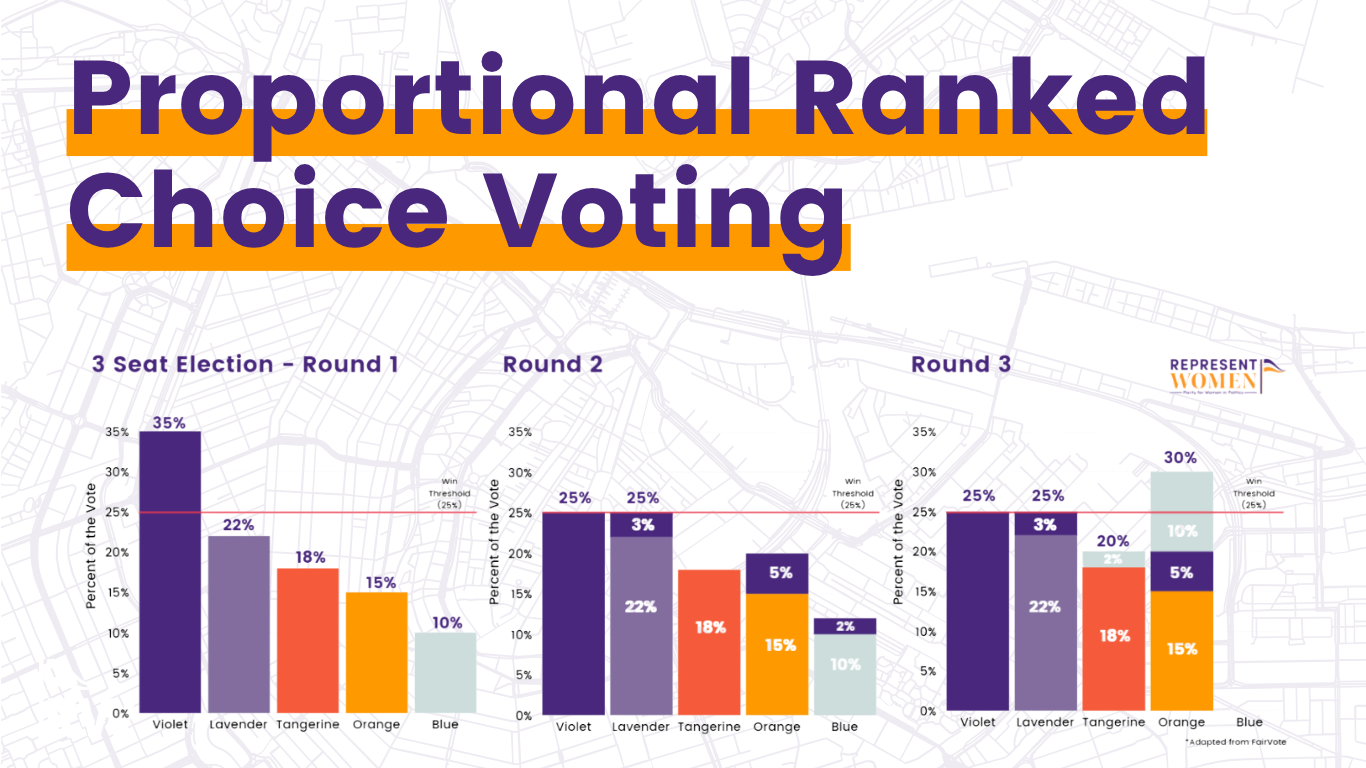
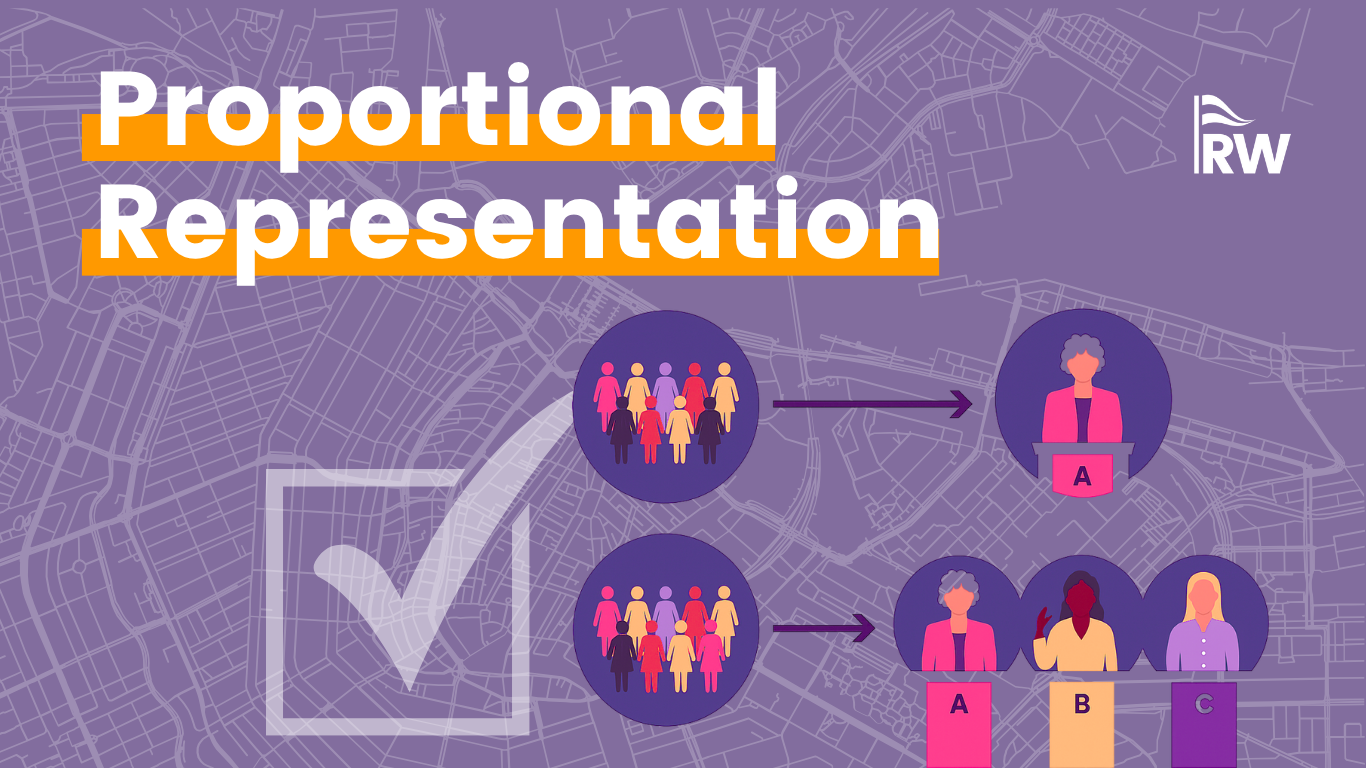
Proportional ranked choice voting, also called single transferable vote, would keep New Hampshire's existing multi-member structure while changing what happens within it. Instead of the top vote-getters sweeping every seat, seats are allocated to match each party's actual level of support — a party earning 55% of the vote wins roughly 55% of the seats, not all of them. That shift changes incentives well before Election Day: a party seeking to maximize its seats has a direct reason to nominate a representative slate from the outset, rather than relying on voters to punish an unrepresentative one after the fact. It also means a voter who wants to support a woman candidate no longer has to abandon their own party to do it — they can rank her within their party's slate or across party lines without their vote being wasted.
Sustain investment in candidate recruitment
Structural reform changes the incentives facing parties and voters. It does not, on its own, produce a pipeline of women ready to run. Organizations like the New Hampshire Women's Foundation have spent over a decade running recruitment and training programs specifically aimed at closing the political ambition gap — the well-documented pattern in which women who are equally qualified to run for office are less likely to be encouraged to do so, and less likely to see themselves as viable candidates until someone tells them otherwise.
Structural reform and recruitment investment are not substitutes for one another. Voting reform lowers the barrier to winning; recruitment work ensures there are qualified women ready to walk through it. New Hampshire's history suggests both have mattered; the state's structural advantages did not produce results until they were paired with sustained, active recruitment.
An open question: legislative professionalization and modernization
One factor deserves further study rather than a firm recommendation at this stage. New Hampshire's citizen legislature — a $100 annual salary fixed in the state constitution, minimal staff support, and no expectation that the role functions as a career — lowers the barrier to entry for candidates of any gender. Research suggests it may simultaneously make the role harder to sustain for women disproportionately carrying caregiving responsibilities, since more professionalized legislatures elsewhere, with better pay and staff resources, tend to see stronger representation for women over time.
New Hampshire's fixed pay structure is tied to a broader political and tax culture that resists broad-based revenue increases, and any change would likely require a constitutional amendment rather than a legislative vote. Given how much this intersects with the state's fiscal identity, it warrants continued research rather than a specific policy position at this time.
A related institutional factor that may contribute to New Hampshire’s limited representation of women at the state legislative level is the absence of a women’s legislative caucus. According to the National Conference of State Legislatures (NCSL), women’s caucuses or commissions exist in a substantial majority of states, making NH one of the relatively few states without such an institution. These caucuses provide female lawmakers with an opportunity to build consensus, identify areas of common ground, and discuss policy issues openly before introducing legislation to the broader legislature. While NH has a Democratic Women’s Caucus, there is no corresponding organization for Republican women in the state legislature, nor is there a joint, bipartisan women’s caucus. This institutional gap limits opportunities for Democratic and Republican women legislators to develop relationships, identify shared policy priorities, and collaborate on legislation that could garner bipartisan support.
Taken together, these factors suggest that both the structure of New Hampshire’s citizen legislature and the absence of a bipartisan women’s caucus may shape women’s ability to enter, remain in, and collaborate within the legislature.
Building on strength, not waiting on precedent
New Hampshire has already shown what representation looks like when it becomes unremarkable rather than exceptional. The recommendations above are not a departure from that story, rather they build directly on structural features New Hampshire already has, refining a system that works in some places into one that works consistently everywhere in the state. Other states without New Hampshire's decades of precedent have even more reason to pursue these same structural changes directly, rather than waiting for a head start they don't have.
%20(4).png)