February is Black History Month, a time to honor the brilliance, leadership, resilience, and enduring impact of Black Americans on every aspect of our democracy.
The observance began in 1926, when historian Carter G. Woodson established what was then Negro History Week. He understood that a nation cannot fully know itself without reckoning honestly with its history. By 1976, that week had grown into the month-long commemoration we recognize today.
At its core, Black History Month is about visibility. It is about telling the truth. It is about insisting that stories long marginalized are, in fact, central to the American story.
In politics, we often tell that story through “firsts.” The first Black woman elected to Congress, Shirley Chisholm. The first Black woman to serve as Vice President, Kamala Harris. The first Black women elected as mayors of major cities. The first Black women speakers, senators, councilmembers, governors.
These milestones matter. They represent courage in the face of exclusion and leadership in systems that were never designed with Black women in mind.
But Black History Month asks a harder question: Why are so many firsts still necessary?
They remain necessary because progress in representation has depended more on extraordinary individuals than on equitable systems. When political opportunity is shaped by narrow recruitment networks, inequitable fundraising structures, and winner-take-all election rules, breakthroughs happen, but they are not guaranteed and they are rarely sustained.
For those of us who work in democracy reform and women’s representation, this month is not only about celebration. It is about examining the design of the institutions that shape political power. Black women’s leadership is not a footnote in American democracy. It is foundational. Yet the systems of representation have too often lagged behind the communities they serve.
From civil rights organizing to voter protection to federal office, Black women have expanded and defended democratic participation at every stage of our history. Former Congresswoman Shirley Chisholm’s declaration, “If they don’t give you a seat at the table, bring a folding chair,” was not simply about perseverance. It was a direct challenge to structural exclusion.
Dorothy Height understood that challenge well. Born in 1912, Height served for fourty years as the president of the National Council of Negro Women and advised U.S. presidents and world leaders. She warned that democracy must work not only “for those who have the most skills and who know how to manipulate the systems,” but also “for and with those who often have so much to give but never get the opportunity.”
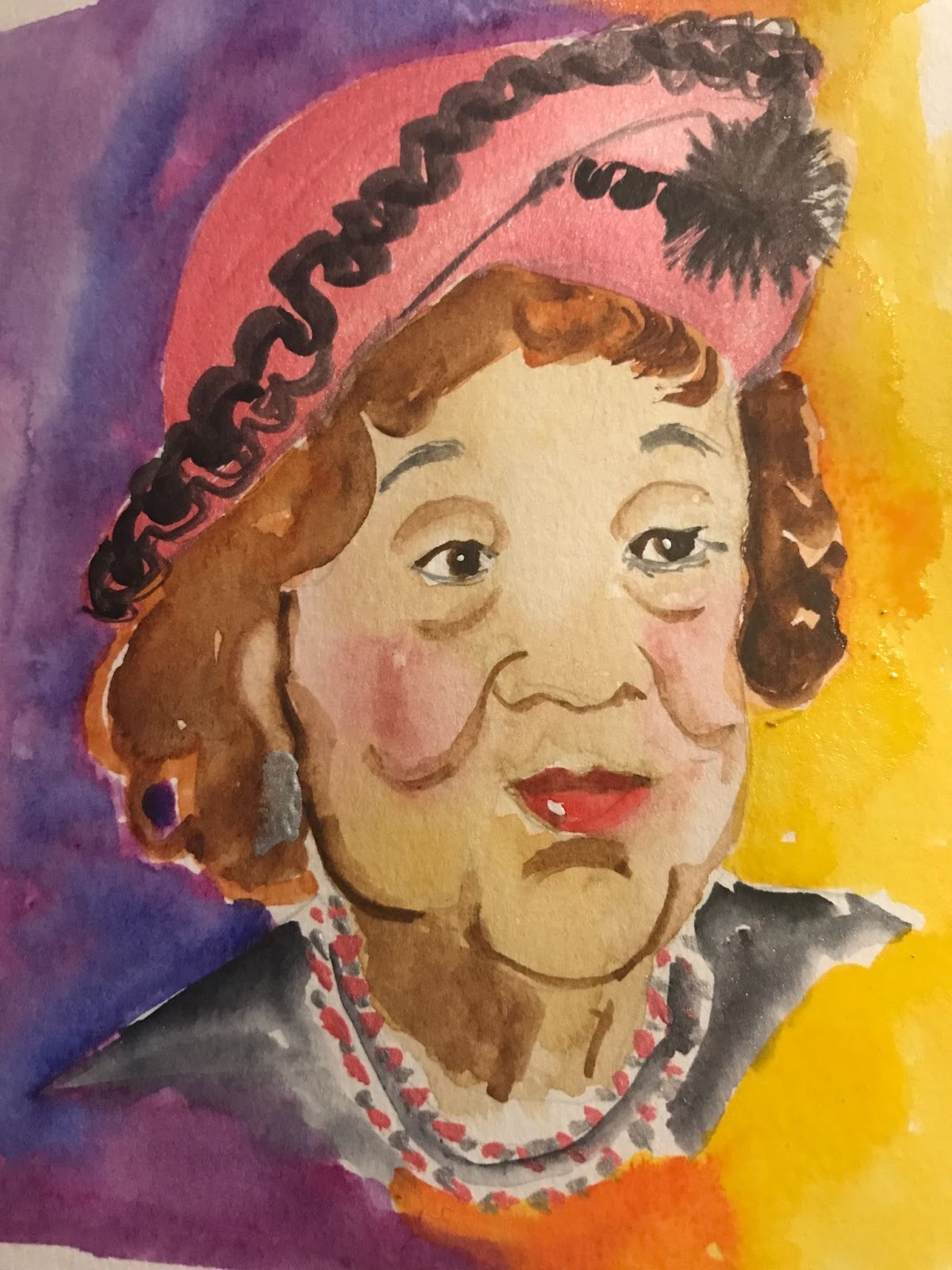
Height’s words remain urgent in 2026. When political systems reward those already closest to power, talent or skill is not the limiting factor — access is. And yet, despite the barriers, exclusion has never been the final word. Progress has come through sustained organizing, coalition-building, and the refusal of Black women to accept structural limits as permanent.
According to Pew Research Center analysis, the 119th Congress marks several historic milestones. For the first time, two Black women are serving concurrently in the U.S. Senate. Overall, 61 women of color now serve in Congress, including five senators, the highest number in history. Together they represent 24 states, three territories, and the District of Columbia.
These gains reflect decades of civic leadership and voter mobilization, much of it led by Black women themselves. Organizations like Higher Heights Leadership Fund, founded by Kimberly Peeler Allen and Glynda Carr, have long documented what the data consistently shows: Black women are among the most consistent voters and civic participants in this country.
Participation has never been the issue. Representation, however, remains uneven. Black women make up 8 percent of the U.S. population. No Black woman has ever been elected governor. At the state and local levels, progress can surge in one cycle and stall in the next.
These disparities are not about ambition or ability. They are about structure. Recruitment pipelines often overlook Black women. Fundraising systems reward proximity to wealth and power. Winner-take-all election rules reinforce the status quo.
If we take Black history seriously, we must also take democratic design seriously. Representation is not symbolic; it is structural. It is shaped by who is recruited, who is funded, how votes are counted, and which candidates are deemed electable. A democracy worthy of its people does not rely on extraordinary perseverance to produce representation; it builds systems that make an equitable inclusion routine.
Black women’s leadership has never been in question. It is the design of our institutions that must rise to meet it.
I approach this month with humility and with recognition that the leadership driving this progress has long come from Black women and Black women-led institutions. Our responsibility is not to narrate that history, but to support reforms that make representation durable rather than exceptional.
Firsts matter, as they signal change. But a democracy cannot rely on firsts alone. A truly representative democracy must be designed to reflect its people fully and consistently. The work before us is to ensure our institutions are built to recognize leadership, not resist it.
Milestones: Kentucky passes law permitting women to attend school under limited conditions (1838); Anna Mae Hays, American Brigadier General, becomes first U.S. woman promoted to rank of General (1920); The National American Woman Suffrage Association is formed (1980); Betty Friedan publishes her highly influential book, The Feminine Mystique (1963); Sarah G Bagley, who is believed to be the 1st US woman telegrapher, became superintendent of the Lowell, MA telegraph office; 80 participants (including MLK Jr. and Rosa Parks) in Montgomery bus boycott gave themselves up for arrest. This played a key role in the U.S. Supreme Court mandating the desegregation of the buses (1956).
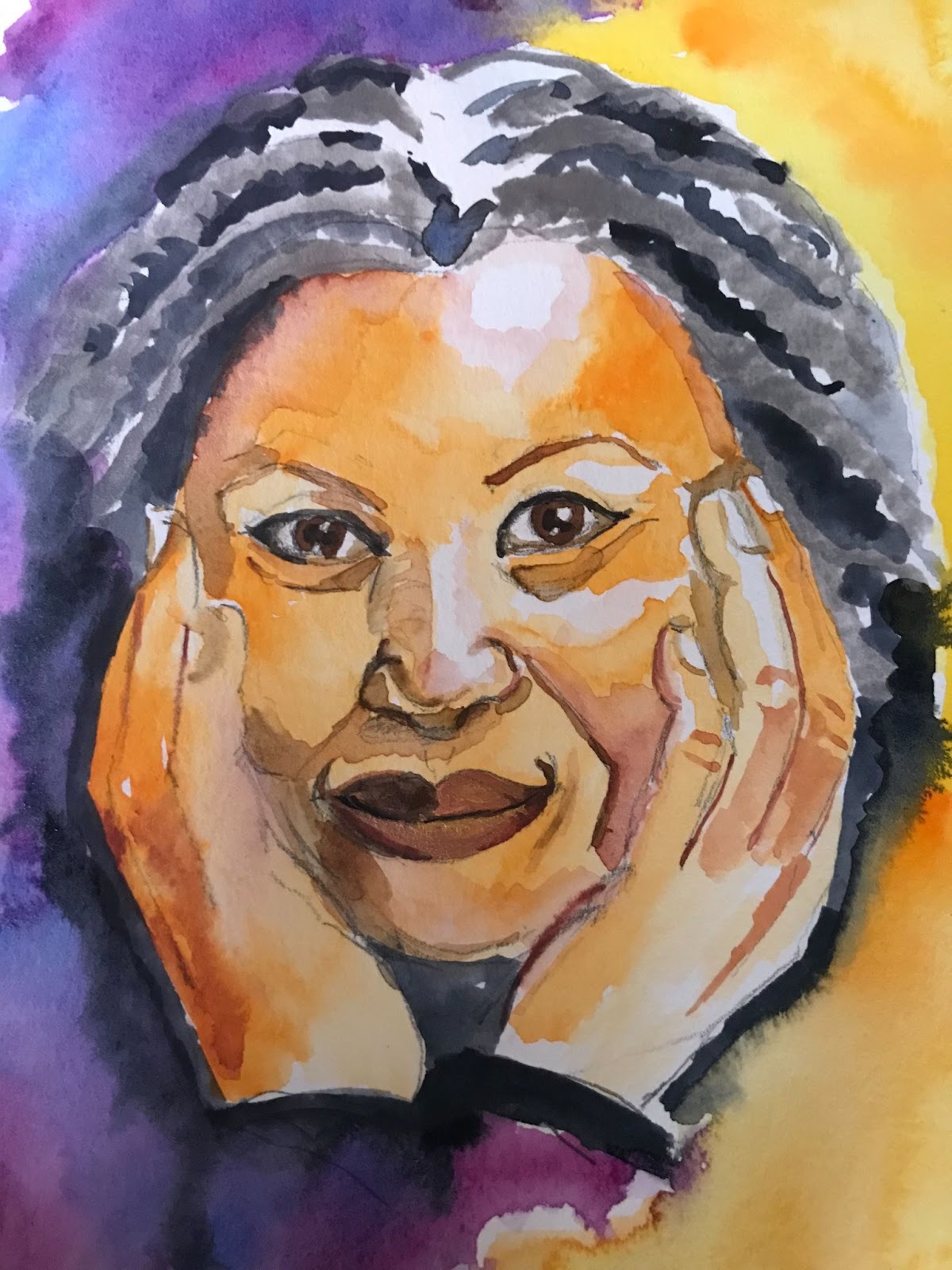
Birthdays for notable women: Jeanne Massey, Executive Director of FairVote MN; Laura Ingalls Wilder, author (1867); Lorissa Rinehart, host of the Female Body Politic podcast & author of Winning the Earthquake, a book about the first woman member of Congress, Jeannette Rankin; Jayne Atkinson-Gill, actress; Toni Morrison, author (1931); Carolyn Nicholson Terrell (1921 - 2007), Cynthia’s mother; Margaret Foley, suffragist and labor organizer, famously made a solo balloon trip over MA and released suffrage literature over the region (1875); Valerie Smith, President of Swarthmore College; Anita Earls, Justice on the North Carolina Supreme Court; Angelina Grimké Weld, abolitionist and suffragist (1805); Erin Vilardi, Founder and CEO of VoteRunLead; Barbara Jordan, Civil Rights leader & 1st African American woman elected to Congress from Texas, & 1st African American woman to speak at the Democratic National Convention (1936); Nina Simone, singer and civil rights activist (1933); and Danielle Reyes, President and Chief Executive Officer of the Crimsonbridge Foundation.

Systems Strategies and the Success of EMILY’s List
This year marks the 40th anniversary of EMILY’s List catalyzing primary election gifts to pro-choice women Democrats, with the clever and accurate acronym for “Early Money is Like Yeast.” Formed by Ellen Malcolm after her frustration at women losing winnable primary elections, EMILY’s List biggest 1986 success was to boost then-Congresswoman Barbara Mikulski in the Democratic primary for U.S. Senate before she went on to win the general election. I experienced the impact of EMILY’s List directly soon after when working as field director for Congresswoman Jolene Unsoeld in her winning re-election campaign in southwest Washington in 1990.
In the decades that followed, EMILY’s List reports that it “helped elect 193 Democratic pro-choice women to the House, 29 to the Senate, 22 to governors’ seats, and more than 1,600 women to state and local office.” Women went from holding a smaller share of seats among congressional Democrats than their Republican counterparts to holding nearly triple the number of congressional seats as Republican women. The relative change has been just as dramatic in the states, with women today holding 49.5% of Democratic state legislative seats as compared to women holding only 21.5% of Republican state legislative seats.
When our RepresentWomen team talks about the importance of system strategies for representation of women, we often mean the hydraulics of how democracy works to create a more level playing field for women – areas of potential reform such as election changes like ranked choice voting, proportional representation, and multi-member districts, nomination changes like the gender quota rules that are so common elsewhere, and governing changes like proxy voting, equitable compensation and collaborative policymaking.
EMILY’s List embodies another kind of systems strategy that has been remarkably impactful in the United States: intentional efforts to inspire, recruit, fund and train women candidates. But notably, the impact of such efforts is deeply imbalanced by party, suggesting that the more hydraulics-based approaches may be necessary to address the deep under-representation of women Republicans.
I’ll close with a quote from Ellen Malcom’s op-ed in USA Today in 2016 recounting EMILY’S List origins and the impact of women in office.
“But the numbers, to me, aren’t the point. During the most recent government shutdown, women senators of both parties were the ones with strong working relationships, even friendships — and most important, the determination to get things done. Mikulski and Sen. Patty Murray on the Democratic side worked with Republican Sens. Susan Collins, Lisa Murkowski and Kelly Ayotte to put together the bipartisan deal that averted a disastrous default. “Leadership, I must fully admit, was provided primarily from women in the Senate,” Sen. John McCain, R-Ariz., said after the agreement was announced.
When women were absent from the political stage, the first candidates were seen as mysterious creatures. Many voters, having no reference points, resorted to gender stereotypes. “But who is cooking dinner?” they’d ask. Or worse yet, “Can you as a woman even understand a budget?” Voters these days have seen women run effectively for office and serve with distinction. Each candidate has opened voters’ minds.”
Donna Brazile Celebrates the Impact of Rev. Jesse Jackson
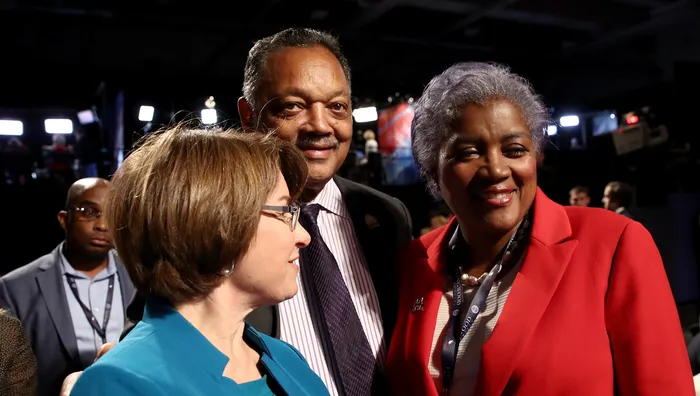
This week marked the passing of Rev. Jesse Jackson, one of the most impactful politicians of the last 50 years. His 1984 and 1988 campaigns for president catalyzed remarkable growth in the votes and representation of African Americans, especially in the South, and led to his earning a firm commitment from the Democratic Party to proportional representation of votes for earning delegates in presidential primaries. Donna Brazile, a long-time political strategist and commentator and former chair of the Democratic National Committee, lifted up the impact of Rev. Jackson in the Washington Post.
“On the trail, Jackson was a mesmerizing speaker, full of energy. Hearing Jackson was like being in church, and he used his clerical background to summon biblical analogies reminiscent of King, his mentor. Jackson could riff like few before him or since — oh, those effortless, virtuoso rhymes — with never the need to poll-test his message. He knew what he stood for.
No, Jackson did not win in 1984 — or in 1988, when he returned with a better-organized campaign — but it would be wrong to think he lost. He registered millions of Black voters, particularly in the Deep South, setting the stage for a Democratic takeover of the Senate built on wins in Southern states in 1986, surprising many in his own party. His 1988 campaign — he won 13 primaries and caucuses and amassed more than 1,000 delegates — registered millions more, while catapulting a new generation of Black activists (including me) into positions of power inside the party.
The Black share of Democratic primary voters jumped from 14 percent in 1980 to 24 percent in 2016, a dramatic shift in power. Consider: In the 1983-1984 session of Congress, there were no Black senators and only 22 Black members of the House. Today there are five Black senators and 61 Black House members. Jackson’s son, Jonathan, a congressman from Illinois, is one of them….
Now, like his mentors before him, Jackson has passed the torch. But you can still hear that stirring voice, can’t you? Hear him as he closes his rousing speech to the 1988 Democratic convention: “Keep hope alive. Keep hope alive. Keep hope alive. On tomorrow night and beyond, keep hope alive.”
2026 Cycle Underscores Importance of Primaries for Women’s Representation
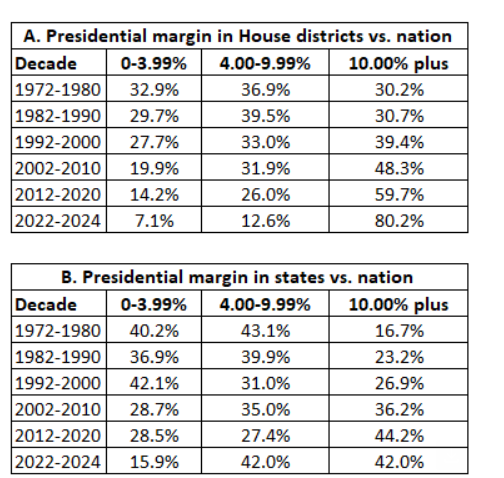
Before your eyes glaze over at these numbers from Larry Sabato’s Crystal Ball, please consider their implications! The first chart shows that we now are seeing a near perfect correlation between which party’s presidential candidate won a state or congressional district and which party’s Senate or congressional candidate wins in the midterm two years later – changing from more than half of states on average electing a “minority party” U.S. Senators before 1996 to only about 10% doing so since 2014, with a similarly stark shift in U.S. House races. Just as importantly, the second chart shows the level of “partisan sorting” into partisan supermajorities in most of the nation, exacerbated by gerrymandering that has sharply reduced competitive states and districts based on that all-important presidential vote share
Put those facts together, and you can see why Ellen Malcom was so insightful four decades ago to focus on early money in primaries. Analyes this month in Sabato’s Crystal Ball underscores that if women are going to have major gains in representation in Congress, they’ve got to earn nominations matching the majority in their district or state. The general election playing field is obviously important for partisan control of Congress, but vanishingly small. Here are two Crystal Ball pieces: one about the few competitive seats among this year’s historic number of races without incumbents and the second about generational trends toward the primary being the election that matters.
First, Kyle Kondik reviews open seats in an article called “Flood of Open House Seats—But Not Competitive Open Seats”. Getting into helpful details, the article leads with this simple summary:
“More than 50 members of the U.S. House of Representatives are not seeking another term in the House this year. The number of incumbents running again is going to be one of the lowest totals in any House election cycle since World War II. However, the vast majority of these retirements don’t mean anything for the November election because they are coming in safe seats. The open seats, collectively, feature a smaller share of truly competitive seats than the House as a whole does.”
Second, Alan Abramowitz focuses on the potential swing in partisan control, but in doing so, provides great information like the charts above that explain the limited playing field in general elections in November. Here’s an excerpt:
“Over the past several decades, however, the American electorate has become increasingly divided along party lines, and the number of swing districts and states has declined sharply. This raises a question about whether there is still a potential for the midterm elections to deliver a clear rebuke to an unpopular president. In this article, I will examine the implications of these trends for electoral accountability in congressional elections, and in 2026 in particular. I will show that despite growing nationalization of congressional elections and the declining number of House districts and states that are closely divided in presidential elections, large swings in House and Senate seats are still possible, and these seat swings remain highly responsive to the voting preferences of the electorate. However, these conclusions apply more clearly to House elections than to Senate elections due to the drastic overrepresentation of sparsely populated rural states in the Senate and the peculiar makeup of the Senate seats at stake in a given election.”
CNN Poll: Kamala Harris Would Defeat Donald Trump by 54%-46% in Rematch

I couldn’t be more impatient with the suggestion that it’s unsafe to nominate women for president. Women keep winning swing-state races for governor and the U.S. Senate, and internationally, women overperformed recently, winning big landslides from Japan to Italy and Mexico. In the 2016 presidential election, Hillary Clinton won the popular vote by nearly three millions votes, while in 2024, Kamala Harris’ abbreviated campaign couldn’t overcome the underlying dynamics of an electorate seeking change.
Now comes news that this very same electorate would today elect Harris over Donald Trump in a landslide. Here’s more from the Daily Beast:
“CNN’s chief polling expert says Donald Trump would get wiped in an electoral rematch against Kamala Harris. Harry Enten, the network’s chief data correspondent, told CNN News Central host John Berman on Tuesday that if the 2024 election were to happen today, Harris would defeat Trump in a landslide.
“Regrets of some folks—had a few," Enten, 37, said. He explained that in April 2025, a polled redo of the election between Trump and Harris showed Harris winning by a point, not Trump.
“Look at where we are now, according to an NBC News SurveyMonkey poll: She wins it by—get this—eight points," he said. “A massive shift from what we saw in November of 2024 when Donald Trump won by a point.”
“And I will note that this sample was weighted to the 2024 result in which Donald Trump won by a point, but yet, Kamala Harris in this weighted sample,” he continued, “She wins by eight amongst the sample that voted for Trump by one.”
Lorissa Rinehart & Her Bold Move Both Make Case for a Woman President
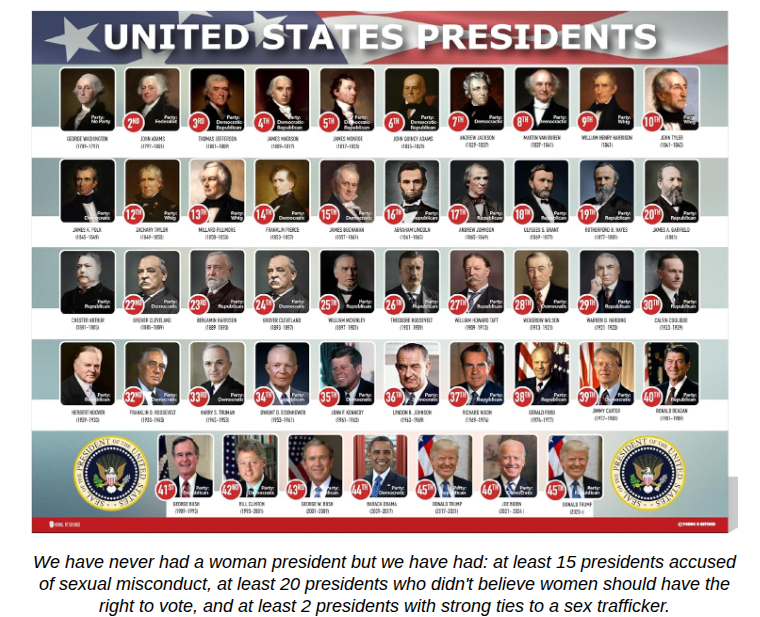
President’s Day inspired a great post from Lorissa Rinehart in The Female Body Politic that begins:
“In honor of this Presidents’ Day, I wanted to take a moment to remember Zoe Leonard’s iconic poem, “I Want A President,” which imagines a leader in the Oval Office cut from the same cloth as those they served. One who wasn’t groomed for unchecked power at Exeter, Choate, Harvard, and Yale - in the Ivory Tower removed from We The People - but whose education comes from experience, community, empathy, and solidarity.
Her poem asks and allows us to imagine a President who looks like us. At a time when the future of American democracy remains in the balance, I cannot imagine a more practical and important exercise that has the power to change our very concept of what a government of, for, and by the people looks like.
Because it does not look like the current halls of power. It looks like you, it looks like me, it looks like those Leonard writes about. To help get your imagination going, I’ve written a little about 6 of my favorite female Presidential candidates. I think it’s safe to say we’d be a lot better off if we had elected them - a reality that America is finally and at long last waking.”
In the same vein, I often appreciate the vim and verve of e-blasts from Her Bold Move. Here’s an excerpt from its President’s Day message.
“There are qualified, brilliant women in this country who are just waiting in the wings to bring about real change. The would-be female presidents who have been waiting far too long for their turn to lead. Policymakers who, perhaps, haven’t been recorded bragging about grabbing women by the genitals or appeared to be best friends with the most notorious sex trafficker in modern history… We believe these women are out there.
As research from the Wilson Center points out, “Although the presence of a woman in leadership does not automatically ensure positive change, empirical evidence underscores the broader impact of having more women in public decision-making roles. This shift is associated with higher economic growth, improved gender equality, and greater social investment in education, healthcare, and environmental protection.”
At least one woman has held the highest office in more than a third of countries in the world. As you know, the U.S. is not one of them. In 2024, Mexico elected its first female president, Claudia Sheinbaum, making her the first female president in North America. Since then, she has maintained an approval rating of around 70%. She has thrived in her role as Mexico’s first woman president – including enshrining women’s right to equality and establishing the Ministry of Women.
Women in Mexico didn’t gain the right to vote for president until 1953. Not to mention, as recently as 2021, the country had very few women in government. Now, Mexico has surpassed the United States in gender parity. We want to see that kind of progress happen here.”
Goldman Sachs Embraces Return to the Old Boy’s Club
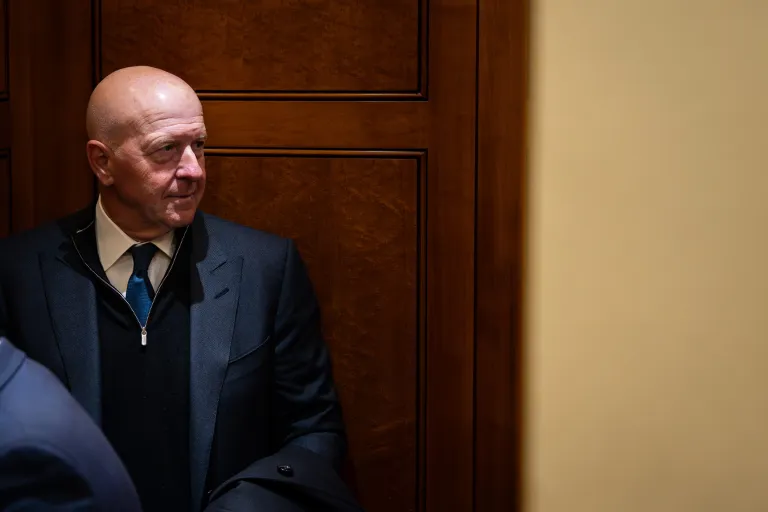
Corporate America remains overly dominated by the kind of rich white men who feature so prominently in the disturbing files of sexual predator Jeffrey Epstein. After a push to diversify its staff and leadership, Goldman Sachs has decided to turn back the clock, joining many of the country’s largest corporations. With the ongoing rise of women among voters, politics and consumers and with all the evidence of the value of a more diverse workforce and leadership, that’s a mistake. Fortune Magazine’s executive editorial director Diane Brady comments:
“Goldman Sachs got some unwanted attention yesterday for its reported plans to scrap DEI criteria for its board, about a year after erasing diversity goals for its workforce. Many other companies have done the same amid a federal crackdown and several state lawsuits over corporate DEI efforts. (Starbucks won a dismissal last week after Missouri challenged its DEI initiatives, freeing up time to battle a recent suit in Florida.)
When asked, every CEO tells me that they remain committed to creating a diverse, equitable and inclusive workforce, even if those words are being erased from public documents. They cite the studies that diverse teams perform better, arguing efforts continue behind the scenes. They just don’t want to talk about it. One exception is Costco CEO Ron Vachris who continues to publicly affirm the retailer’s commitment to diversity even as rivals have scaled back.
Boards are another matter. Investors want results. Along with setting CEO compensation, directors manage succession and hold management accountable. U.S. boards tend to be more diverse than the companies they oversee, with white men occupying fewer than half the board seats on Fortune 50 boards for the third year in a row. But that’s changing, as the Conference Board reports that the number of companies disclosing directors’ race and ethnicity in the S&P 500 has dropped dramatically, and ISS-Corporate reports white men made up the majority of new directors in that group for the first time since 2017.
Given the challenges facing companies right now, the case for diverse perspectives is compelling. A staggering number of women are leaving the U.S. workforce, for example, many because of caregiving costs and responsibilities. Part of a board’s job is to recognize and press leaders on such issues. One CEO told me that issues like childcare and flexibility became part of boardroom talent discussions after a third woman joined their board.
Who is in the boardroom also impacts who lands in the C-suite. Boards are training grounds for the next generation of leaders, a place where they can see leadership in action and get direct exposure to issues they’ll face in CxO roles. Getting a board seat is not just a culmination of a career well spent but an opportunity to ascend to the top ranks. Finding top talent is hard enough without limiting opportunities to develop it.”
What the Heritage Foundation War on Gender Equality Means for Representation of Women

Goldman Sachs’ lack of backbone on its commitment to diversity was exploited by the conservative National Legal and Policy Center (that, predictably, is entirely male in its board and staff leadership). But the Center is far from alone. The Heritage Foundation is a leader in the right-wing move against women. Jessica Grose’s recent New York Times essay, The Heritage Foundation Wants to Send American Women Back Half a Century, tells a sobering tale. Here are excerpts:
“It is telling that the Heritage Foundation issued a grand statement about how welfare wrecked marriage and children two days after the Trump administration froze $10 billion in funding for needy families in five Democratic-led states, which includes $2.4 billion for the Child Care and Development Fund…This comes after other attempts by the Trump administration to withhold or cancel Head Start (which provides free child care for children 5 and under from low-income families) funding all over the country in 2025. The stop and start of federal grants continues to cause chaos for programs. “...
[The Heritage Foundation’s authors] claim marriage and churchgoing will make citizens happier. Yet year after year, the Nordic countries — Denmark, Finland, Iceland, Norway and Sweden — dominate the 10 happiest countries, according to the World Happiness Report. These countries are secular and are generous welfare states. Their marriage rates aren’t particularly high, and cohabitation is common…
These are problems of the present and future, and they will need new and inventive solutions. Even a majority of G.O.P. primary voters in a 2025 Bipartisan Policy Center/Cygnal poll said the government has a role to play in helping parents get access to safe and reliable child care. Instead of figuring out a real way to make life easier for families, all the Heritage Foundation does is propose razing what little government support exists while scolding young people for their decadence because they want fewer children and more bathrooms.”
Bangladeshi Voters Back National Referendum for Diversity, but Elect Nearly All Men
Showing the complexity of voters, and the limitations of U.S.-style plurality voting elections in single-member districts – voters earlier this month in Bangladesh sent a mixed message. As detailed on Bangladeshi TV, a record 85 women ran for district seats in parliament, but only seven won. As detailed in a helpful “everything you would want to know” post by IFES about the elections, however, 50 additional seats will be allocated to The referendum sought people's consent to the July National Charter 2025, which aims to completely change how the country is governed. The July Charter outlines a total of 84 reform points related to state restructuring.ular vote.
In this nation of more than 175 million people, hope for the future for women comes from a landslide win for a referendum on a new charter for the nation - a major result of last year’s student-led movement that toppled the previously autocratic regime. Here’s more from NDTV news in its story 70% Bangladeshis Voted 'Yes' To July Charter. What Does It Mean?:
“The referendum sought people's consent to the July National Charter 2025, which aims to completely change how the country is governed. The July Charter outlines a total of 84 reform points related to state restructuring. It was drafted after the July 2024 student-led uprising that resulted in the ouster of Prime Minister Sheikh Hasina.
A Constitutional Reform Council is expected to execute these reforms within 270 working days. The Charter's main aim is to prevent the concentration of executive power to prevent a "recurrence of authoritarian and fascist rule" by fundamentally restructuring key state institutions. Out of the 84 reform proposals, 47 require constitutional amendments, while the rest of the 37 will be implemented through laws or executive orders, according to Bangladesh's Business Standard.
- Term Limits: Implementation of strict term limits for prime ministers to prevent long-serving autocratic rule.
- Bicameral Parliament: Creation of upper house, with seats allocated based on party national vote share, aimed at balancing legislative power.
- Reduced Executive Power: Strengthening the role of the president to reduce the concentration of power in the prime minister's office.
- Opposition Participation: Inclusion of provisions for opposition leaders to head key parliamentary committees and serve as deputy speaker.
- Women's Representation: It also includes increased representation of women in parliament.”
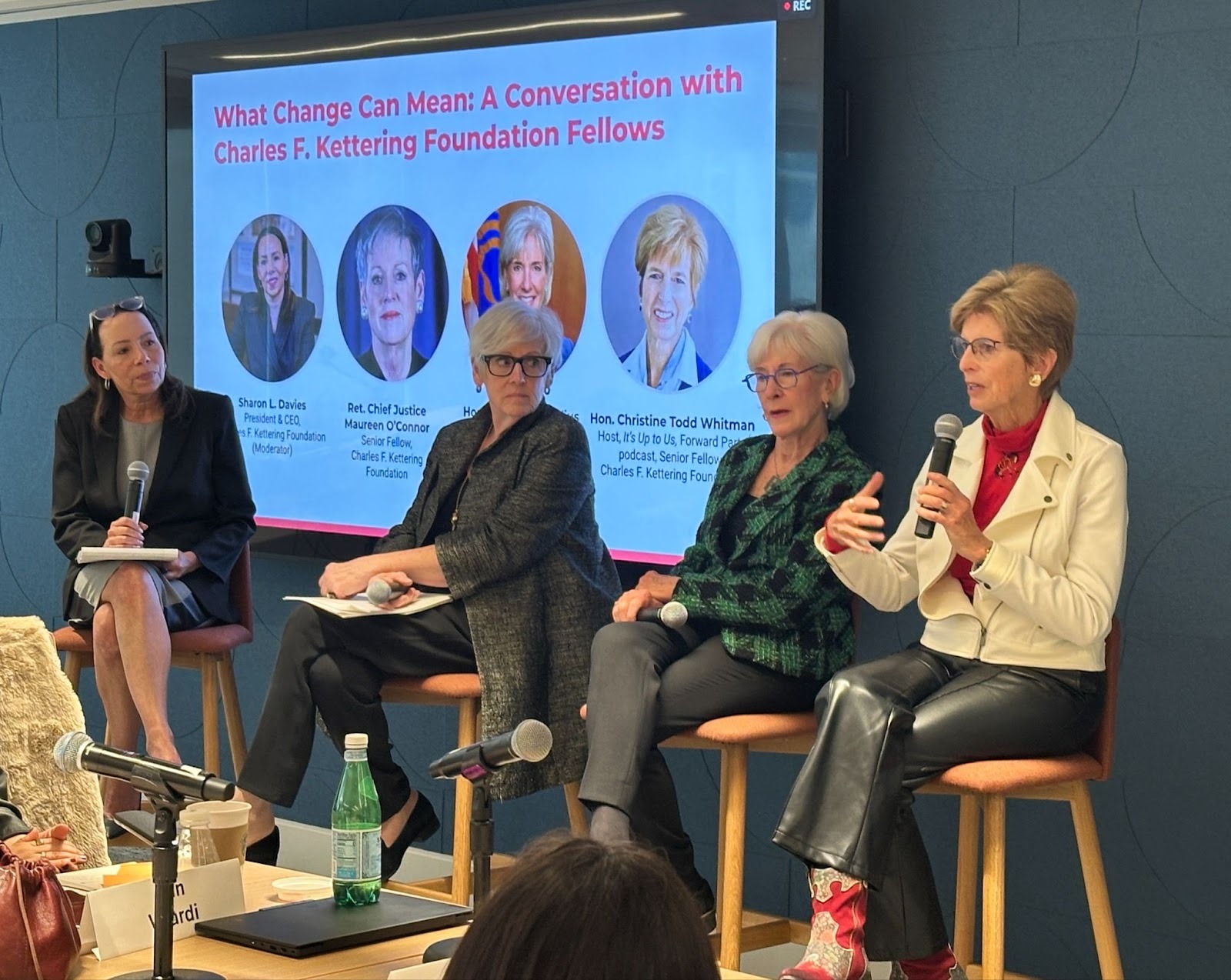
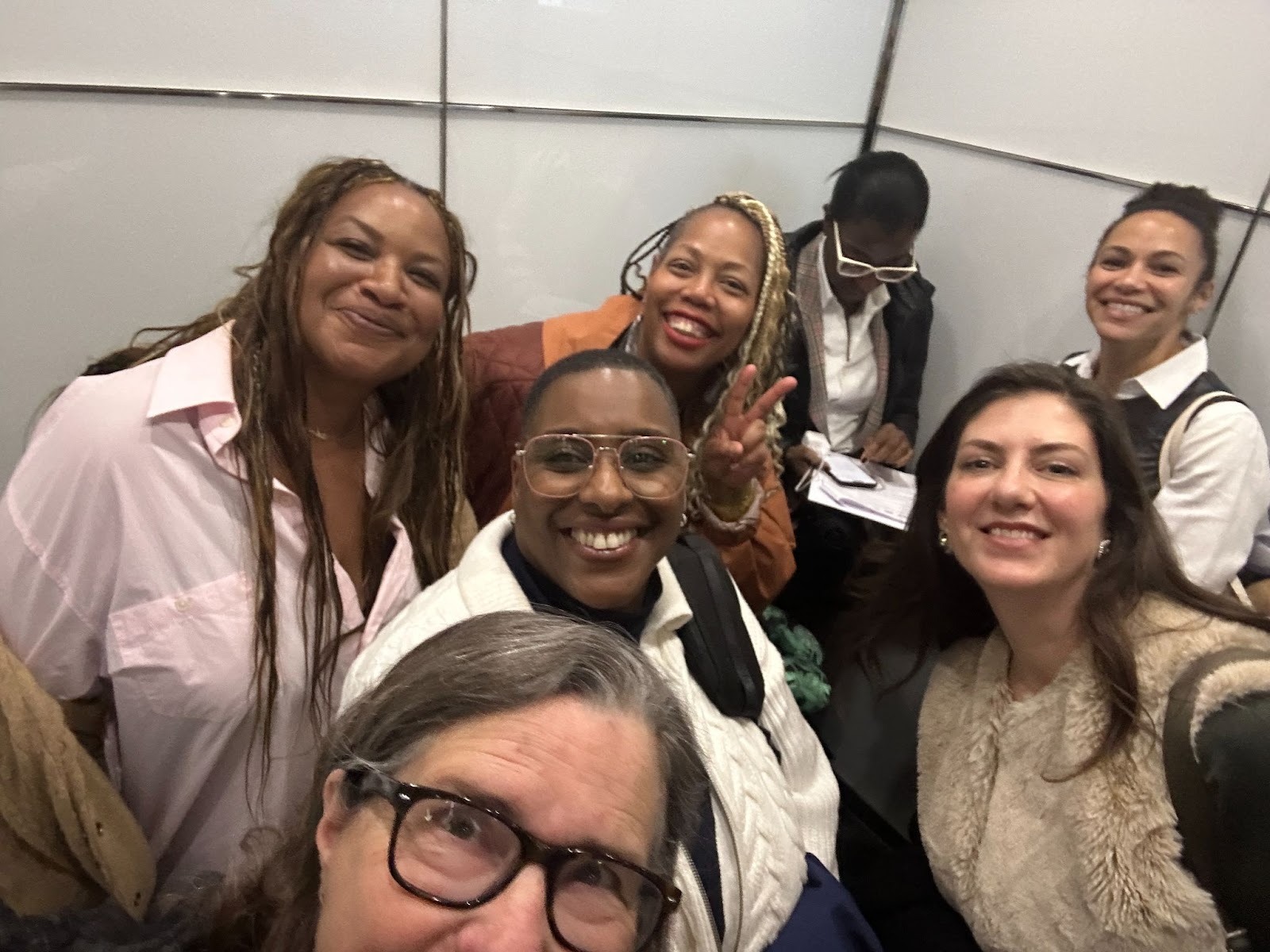
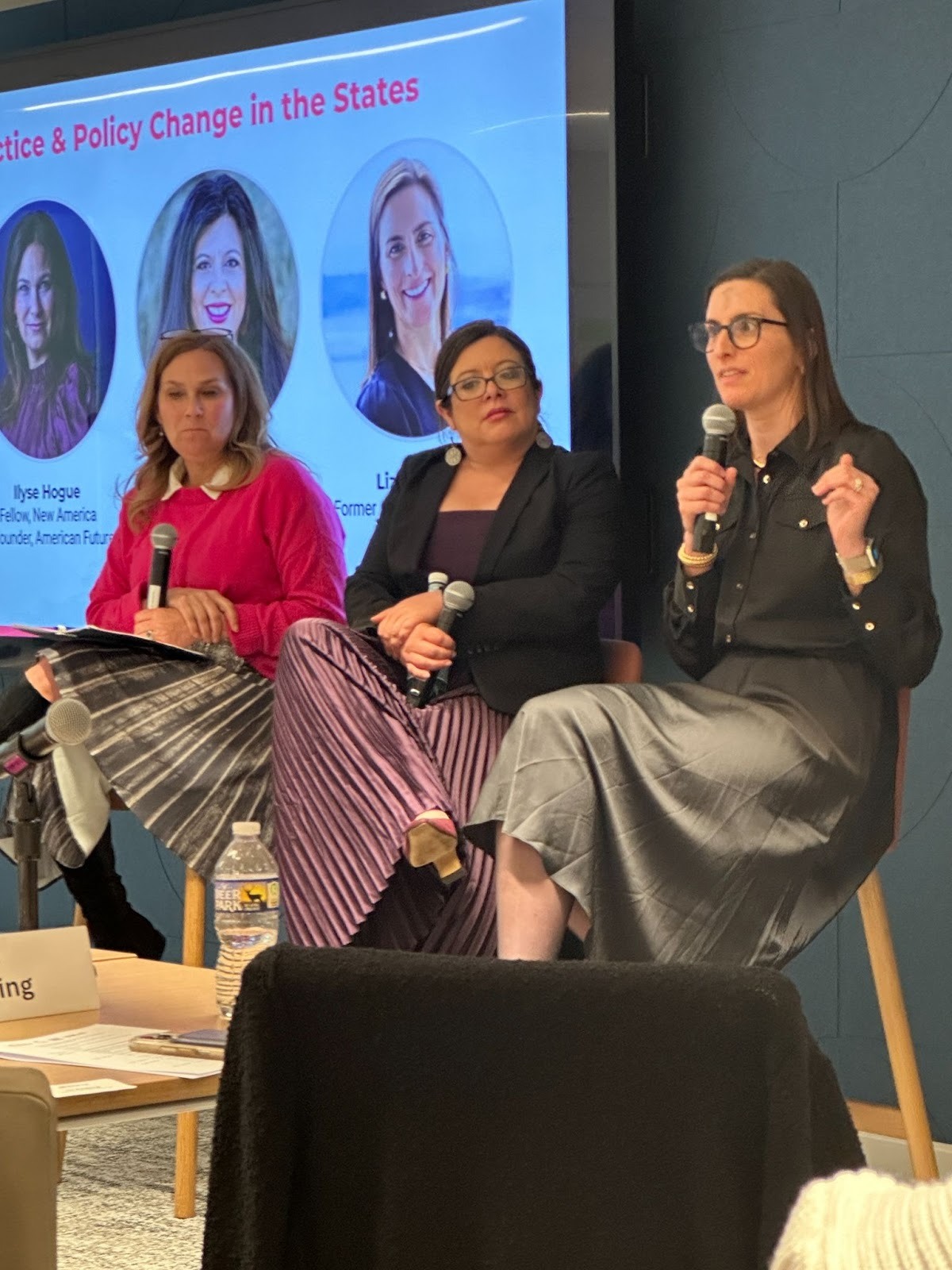
P.S. — Earlier this week, I had the opportunity to participate in a working session hosted by Erin Vilardi of Vote Run Lead, Brad Rourke of the Kettering Foundation, Muthoni Wambu Kraal, co-founder and Executive Director of the Women’s Democracy Lab, and Emily Quick Schriver, CEO of the Matriots Education Fund, focused on women leaders, their safety, and the health of our shared democracy.
The day was marked by thoughtful dialogue and honest reflections about the risks many women face in public life, and the implications those risks carry for democratic participation itself. When intimidation and harassment shape who is willing to run, serve, or speak out, representation narrows and democracy weakens.
I am deeply grateful for the hosts’ vision and leadership in convening this conversation. As was said during the session, we must begin building the democracy we need even as we protect the one we have. That work is ongoing, and I am encouraged to be part of a network committed to ensuring that women’s leadership is not only possible, but safe and sustainable.