
%20(1).png)
What Is the Voting Rights Act?
The Voting Rights Act (VRA) of 1965 is one of the most consequential pieces of civil rights legislation in American history. Signed into law at the height of the civil rights movement, it was designed to dismantle the systematic disenfranchisement of Black Americans — particularly in the South — by prohibiting discriminatory voting practices and establishing federal oversight of elections in jurisdictions with histories of suppression.
At its core, the VRA affirms a foundational democratic principle: that the right to vote must be paired with a meaningful opportunity to be represented. Securing the ballot is the floor, not the ceiling.
For nearly 60 years, the VRA has served as a cornerstone of representative democracy, ensuring that communities — regardless of race, color, or background — have a fair opportunity to elect candidates who reflect their interests and lived experiences. That promise of fair representation has never been automatic. It has required vigilant enforcement and sustained commitment. Those protections have faced unprecedented challenges in recent years, leaving the VRA and the communities it protects on unstable ground.
The law operates through several key provisions, both of which have been largely stripped by the Supreme Court. Section 2 prohibits any voting practice or procedure that discriminates on the basis of race, color, or membership in a language-minority group, and it applies nationwide. While still in place, Section 2 was rendered ineffective by the Court’s decision in Louisiana v. Callais. Section 5 (now largely gutted by the Supreme Court's 2013 decision in Shelby County v. Holder) required certain jurisdictions with histories of discrimination to seek federal preclearance before changing any voting laws or procedures. Together, these provisions created a framework for accountability that fundamentally shaped American elections for over four decades. Increased attacks against the VRA have only cemented representation issues across the country, allowing states to redraw maps and dilute the votes of Black Americans.
The VRA was the product of generations of organizing, sacrifice, and courage — particularly by Black women whose leadership has long been the backbone of democratic progress in this country. Protecting, strengthening, and rebuilding its promise is not a partisan cause. It is a democratic one.
The Voting Rights Act - Impact on Women
RepresentWomen's research makes one conclusion unmistakable: voting rights protections and representation outcomes are deeply interconnected. When safeguards against discrimination, vote dilution, and exclusion are strong, women — particularly women of color and members of language-minority communities — are more likely to participate, to run for office, and to win. When those safeguards are weak, the effects ripple outward, narrowing who has access to political power.
The VRA matters for women's representation in several distinct and compounding ways.
- Vote dilution is a women's issue. Vote dilution occurs when election structures allow people to cast ballots but consistently prevent certain groups of voters from translating their shared preferences into representation. This can happen in systems like at-large elections or winner-take-all, single-seat districts, where a cohesive majority can sweep every available seat — even when a substantial share of the community votes together for different candidates. Over time, those voters may participate fully and still never see themselves reflected in governing bodies. Not because of a lack of engagement, but because of how the system operates. Women, and especially women of color, have historically been among those most affected by these structural dynamics.
- Discrimination and vote dilution do not require malicious intent. Even well-intentioned election practices can produce unfair outcomes over time. The VRA's focus on impact and results — rather than intent alone — is precisely what makes it a meaningful tool for addressing systemic inequity. In its original form, Section 2 of the VRA allowed courts to examine if district lines produced discriminatory results. Under Callais, the Court insists that a person must prove discriminatory intent, which is difficult and rarely announced.
- Proportional remedies expand opportunity for women. RepresentWomen's research shows that remedies for voting rights violations that address underlying systems, such as proportional voting structures, are among the most effective approaches to improving representation outcomes. In jurisdictions where such remedies have been implemented, governing bodies have become more reflective of the communities they serve, strengthening democratic legitimacy and accountability.
- Portland, Oregon, offers one compelling example. Following the city's adoption of council expansion alongside proportional ranked choice voting as a remedy, women now hold half of all city council seats, and four of the six women elected are women of color — making it the most representative council in the city's history. These outcomes demonstrate what becomes possible when voting rights protections are paired with systems designed to prevent vote dilution and foster fair representation.
At its core, the VRA affirms a foundational democratic principle: that the right to vote must be paired with a meaningful opportunity to be represented. Securing the ballot is the floor, not the ceiling.
The VRA's language access and participation provisions matter. Barriers to voting disproportionately affect women — especially caregivers, older women, and women in language-minority communities. When participation is limited, women's leadership is often the first to be excluded. Provisions that ensure voting materials and assistance are available where there is demonstrated need, and that protect older voters, voters with disabilities, and voters facing intimidation or misinformation, ensure that participation is real, not theoretical.
Women whose leadership has long sustained civic life are too often the first to be excluded when democratic systems fail. The right to vote is inseparable from the right to be represented, and representation must include women.
What the Data Tell Us
For nearly 60 years, the VRA has served as a cornerstone of representative democracy, ensuring that communities — regardless of race, color, or background — have a fair opportunity to elect candidates who reflect their interests and lived experiences. That promise of fair representation has never been automatic. It has required vigilant enforcement and sustained commitment. Today, those protections face unprecedented challenges — and understanding what's at stake has never been more urgent.
RepresentWomen's analysis found that 54 — or 36% — of the 148 majority-minority districts identified by Ballotpedia (2024) are currently represented by women in Congress. In the 11 states most likely to face redistricting pressure following an adverse ruling in Callais, up to 36 majority-minority districts could be redrawn, 12 of which are currently represented by women in the House of Representatives.
What happens to those women and their constituents if those lines change is an open question. Comprehensive data tracking how Section 2 protections have specifically shaped women's pathways to office, and what happens when those protections are removed, remains limited. What RepresentWomen's broader research does show is that when election structures change, women — particularly women of color — are disproportionately affected.
A Critical Moment: Louisiana v. Callais and the Future of the VRA
The VRA recently dealt one of the most serious legal blows in decades. On April 29, 2026, the Supreme Court decided against the constitutionality of Louisiana’s congressional map in a 6-3 ruling in the case Louisiana v. Callais (consolidated with Robinson v. Callais). More broadly, this decision renders Section 2 ineffective and has profound implications for voting rights and representation.
The background: Following the 2020 census, Louisiana's Republican-controlled legislature drew a congressional map that gave Black voters — who make up roughly one-third of the state's population — the opportunity to elect their preferred candidate in only one of its six congressional districts. Black voters and civil rights organizations challenged the map under Section 2 of the VRA. After years of litigation, courts determined the map was likely unlawful, and the legislature was directed to draw a second majority-Black district. When that new map was challenged as an unconstitutional racial gerrymander, the case reached the Supreme Court.
What makes this case different: The Court first heard oral arguments in March 2025, but made the rare decision to schedule the case for reargument — narrowing its focus to a newly framed question: whether the intentional creation of a second majority-minority congressional district violates the 14th or 15th Amendments to the Constitution. This reframing put Section 2 itself squarely in the crosshairs. Section 2 acknowledged that racial discrimination rarely announces itself and is often difficult to prove. Under the new language, the statute becomes “all but a dead letter,” as Justice Elena Kagan wrote in her dissent.
What the ruling means: The Court’s conservative majority—the majority of whom are men—fundamentally restricted the use of Section 2 in redistricting. This will have, and has already shown, sweeping consequences for congressional maps, state legislatures, city councils, school boards, and local governing bodies across the country. It will, as we have already seen in Alabama, eliminate majority-minority districts as a remedy for proven voting rights violations, make gerrymandering effectively consequence-free, and remove one of the last remaining checks on discriminatory election practices.
The Brennan Center for Justice has noted at least 30 active cases currently asserting claims under Section 2 of the VRA, all of which could be affected.
How the ruling impacts women: The newly gutted VRA deepens the structural barriers that already prevent women of color from accessing political power. The VRA has served as a critical legal framework for challenging election systems that dilute the voting strength of communities whose preferred representatives are disproportionately women. Weakening it narrows, not expands, the pipeline to leadership.
State Voting Rights Acts: Strengthening the Promise at the Local Level
With federal protections legally attacked, state-level Voting Rights Acts have become an increasingly critical line of defense — and opportunity.
What is a State VRA?
State Voting Rights Acts are laws passed at the state level that mirror, extend, or strengthen the protections of the federal VRA within a given state. They can cover voting districts, election administration, language access, and anti-dilution provisions, and in some cases go further than the federal law in scope or enforcement. Importantly, in many instances, state VRAs include provisions that allow for proportional and ranked choice voting remedies when discriminatory practices are found, providing pathways to the kinds of structural change that RepresentWomen's research shows are most effective at advancing women's representation.
As federal courts have chipped away at VRA protections — from the Supreme Court's gutting of Section 5 preclearance in Shelby County v. Holder (2013) and the recent decision to further strip protections via Callais — states have an opportunity, and a responsibility, to fill the gap. State VRAs are not a fallback. They are proactive, affirmative commitments to democracy.
RepresentWomen's Work on State VRAs: A Case Study in Vermont
RepresentWomen has been actively engaged in efforts to advance state-level voting rights protections. In Vermont, we expressed strong support for the Vermont Voting Rights Act (S-0298) — legislation that would establish comprehensive protections against vote denial and dilution, establish transparent preclearance and public notice processes for election changes, provide language access provisions, and protect voters from intimidation and misinformation.
We testified before the Vermont Senate Committee on Government Operations in January 2026, making clear that this legislation is critical not only to protecting the right to vote but to ensuring the right to be meaningfully represented. Vermont has an opportunity to lead — and the Vermont VRA is a model for how states can take decisive action to strengthen democracy in the face of federal rollback.
States with Voting Rights Acts
Several states have already passed or are actively pursuing their own voting rights legislation. For a current map and overview of state-level VRAs across the country, see our map below:
In Her Own Words: Lani Guinier on Democracy and Representation
"I am a democratic idealist who believes that politics need not be forever seen as 'I win, you lose,' a dynamic in which some people are permanent monopoly winners and others are permanently excluded losers." — Lani Guinier
Lani Guinier (1950–2022) was a groundbreaking civil rights lawyer, Harvard Law School's first tenured woman of color, and one of the most visionary legal thinkers on voting rights and democratic representation of her generation. Her scholarship challenged winner-take-all elections as structurally discriminatory — not just against racial minorities, but against women and other underrepresented communities. She was a fierce advocate for proportional voting systems as the most effective path to fair, inclusive representation.
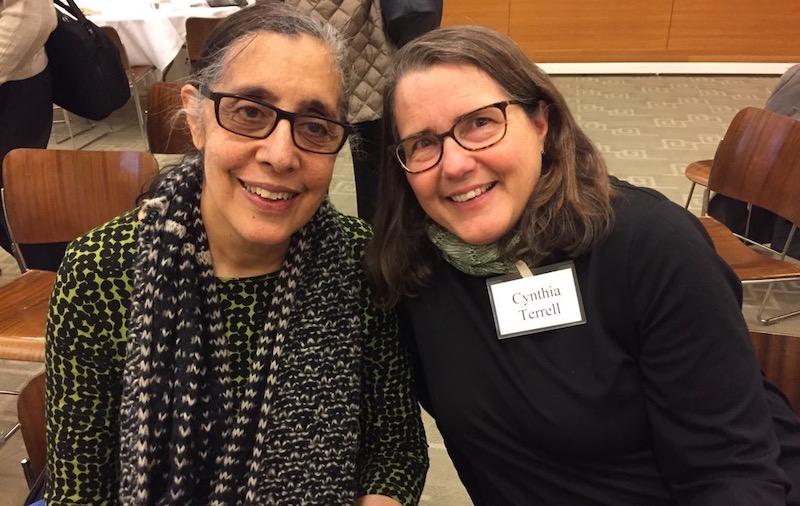
RepresentWomen's founder and Executive Director Cynthia Richie Terrell first met Guinier 40 years ago and came to know her and her work deeply. Guinier's legacy is evident in the many organizations working today for election reform — including RepresentWomen itself.
Take Action: Support Voting Rights
Protecting the VRA is inseparable from advancing women's representation. Here's how you can get involved:
- Learn More — Watch our recent Solutions Series Webinar on the VRA!
- RepresentWomen's Democracy Solutions Series has featured conversations on voting rights and representation reform.
- Explore Key Resources
Stay Connected
Sign up for RepresentWomen's newsletter to receive updates on VRA litigation, state-level advocacy, and opportunities to take action.