In the News
July 10, 2025
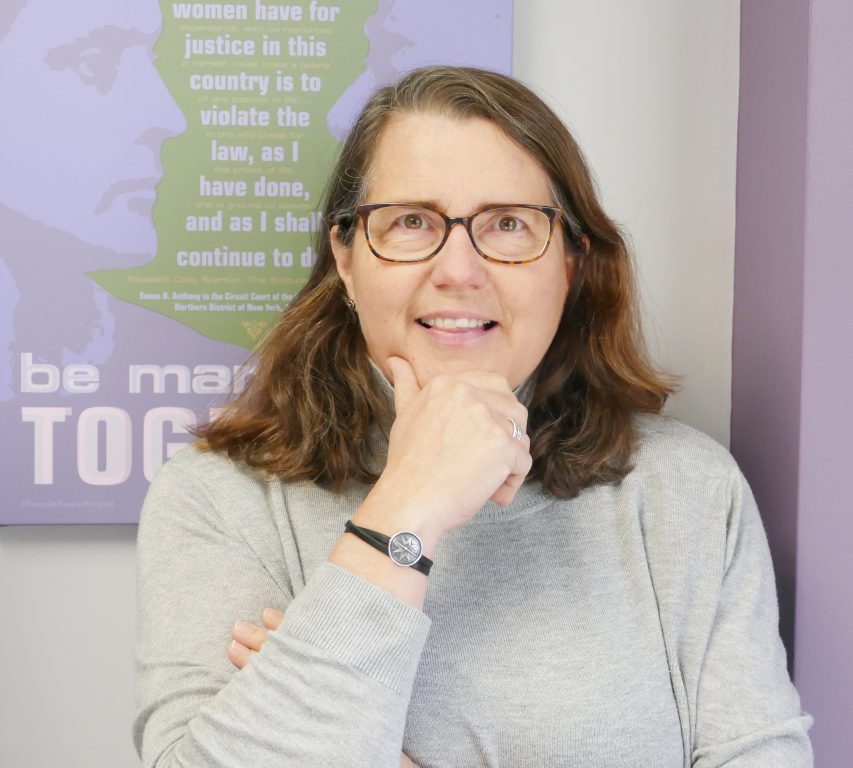
This article was published in Ms. magazine as a companion piece to the first episode of the Ms. podcast, Looking Back, Moving Forward, in which Ms. consulting editor Carmen Rios interviewed RepresentWomen's founder, Cynthia Richie Terrell. In the interview, Cynthia talked about about the vision of democracy she’s inspired by, practical strategies for advancing gender balance in politics, and what she considers the “gold standard” for equitable voting. Read an exerpt below:
Carmen Rios: You’ve done a ton of work in the space of political representation, representative and fair democracies. What led you to founding RepresentWomen?
Cynthia Richie Terrell: From an early age—when anybody asked me what I wanted to be—I wanted to be a judge. I had this idea that being a judge was powerful, or interesting, or useful. In my interview for college, I was asked, “What do you want to do?” And I was like: “Well, obviously I’m going to be president. Who doesn’t want to be president?” I always had that sensibility. I don’t think it was a single incident that infused in me the sense that women need equality.
I also did a lot of student government work where I went to college. I was president of the student council, and we took things seriously. We had a budget for speakers, and one of the great opportunities was bringing really cool feminist speakers to campus. I brought Elizabeth Enlow, who is an author, and Petra Kelly, who was the leader of the Green Party from Germany. I really had a sense, through just being involved in advocacy and activism, of what a global feminist movement looked like. I was pretty well-schooled and socialized to think about places around the world where women had exercised their power.
I did electoral politics and campaigns for a few years, and worked for some men and worked for some women. It wasn’t until 1991 that I got hired to work on an Equal Rights Amendment campaign in Iowa by Kathy Spillar and Ellie Smeal. I got a big dose of ERA politics—working on a state ERA campaign, and going up against Ralph Reed from the Christian Coalition, and being in the room when Ellie Smeal was debating Phyllis Schlafly, and getting to talk a lot about women’s rights. I’ve always had in me a sense of the imperative or inevitability of women’s power and gender balance.
Fast-forward to the establishment of FairVote, and our work with a big group of people, ideologically diverse, to really advance voting system reform in the United States. That was great, but I began to be even more interested, about 10 years ago, in the impact that electoral systems were having on women and the disparities in the United States.
At that point, the United States ranked about 102nd or 103rd worldwide globally for women’s representation, and it just seemed appalling to me. We were maybe six years away from the centennial of suffrage, and from suffrage to parity seemed like such a good thing—‘we really need to push hard and get ourselves to parity by the centennial of the 19th Amendment passage ratification.’ Of course, we’re not there yet, and it’s already 2025.
Read the full article here.