How Systems Reform and Community Action Delivered a Gender-Balanced City Council
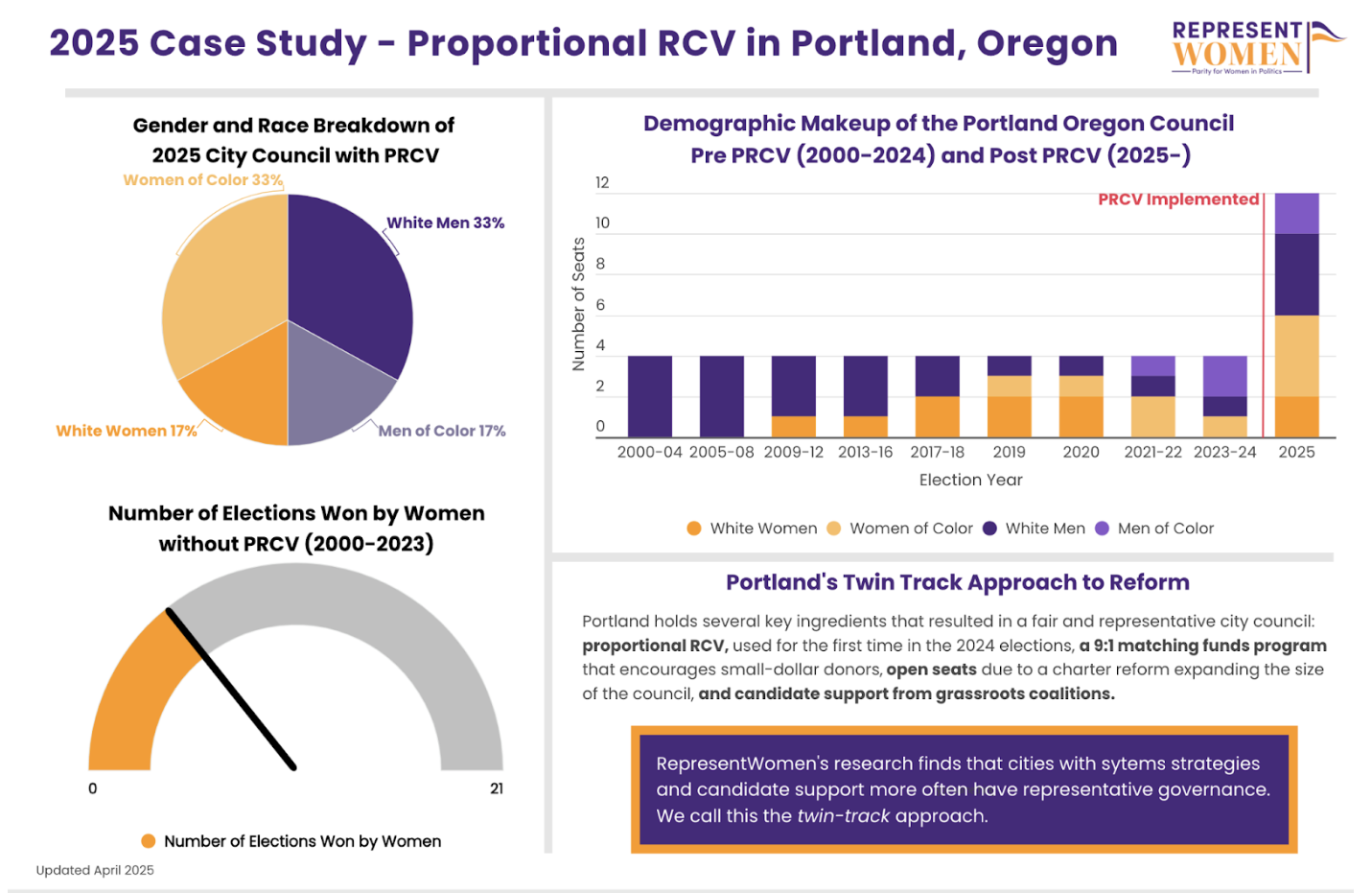
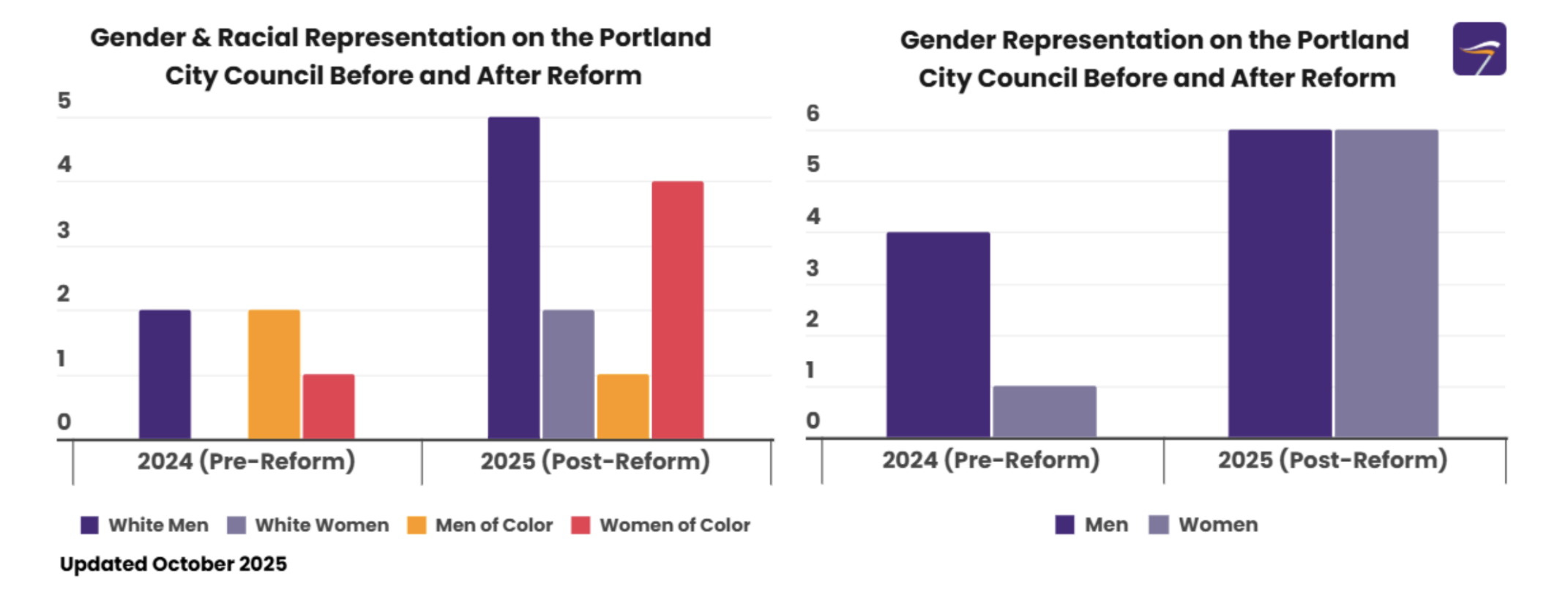
In 2024, Portland, Oregon, made history. For the first time, women hold half of the seats on the city council — and four of those six women are women of color. This transformation did not happen by chance. It was the result of a deliberate, multi-year effort to modernize the city’s political systems and invest in the community networks that help new candidates run and win.
RepresentWomen’s Twin-Track Analysis: Portland, Oregon, examines how the city’s reforms — including proportional ranked choice voting (PRCV), council expansion, and public financing — worked in tandem with grassroots organizing, voter education, and coalition building to produce this milestone for gender-balanced leadership.
View the 2025 Report
Get Involved
How Portland Achieved Gender Balance
This research builds on RepresentWomen’s Twin-Track Framework, first introduced in our 2022 analysis of New York City’s historic 2021 elections. In that case, a combination of systems reforms — term limits, ranked choice voting, and matching funds — paired with robust candidate training programs led to the city’s first woman-majority council.
In Portland, we saw the same pattern unfold — through a different path. The 2024 election marked the city’s first under a restructured council and a new PRCV system. This time, the twin-track strategy took root not through gender-specific candidate programs but through a robust ecosystem of reforms and equity-driven organizations that opened the door for women, communities of color, and first-time candidates to lead.
Portland’s Path to Change
Before reform, Portland’s five-member commission government was one of the least representative in the country. For more than a century, most commissioners were white men from the city’s west side — a stark contrast to the city’s demographics, where over half the population is women and 30% are people of color.
That changed in 2022, when voters approved a new charter that:
- Expanded the council from 5 to 12 members
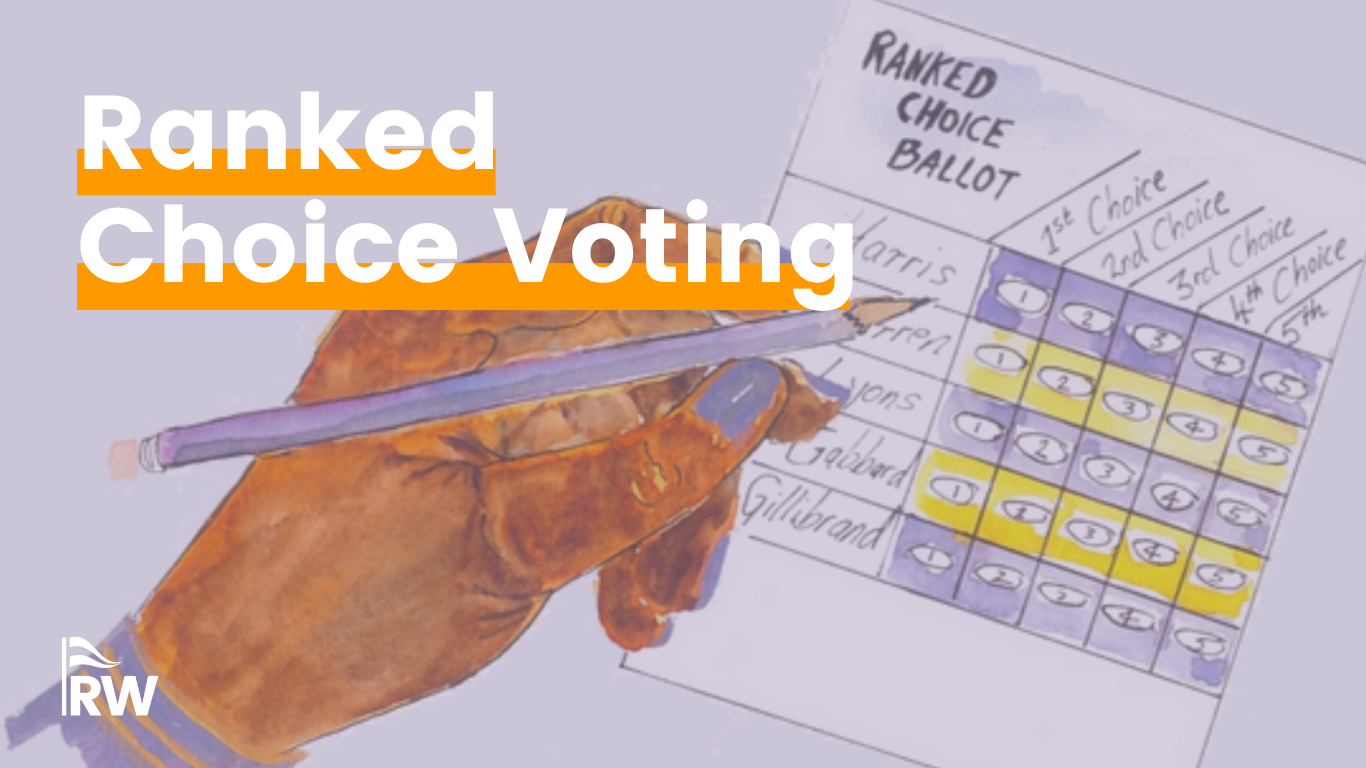
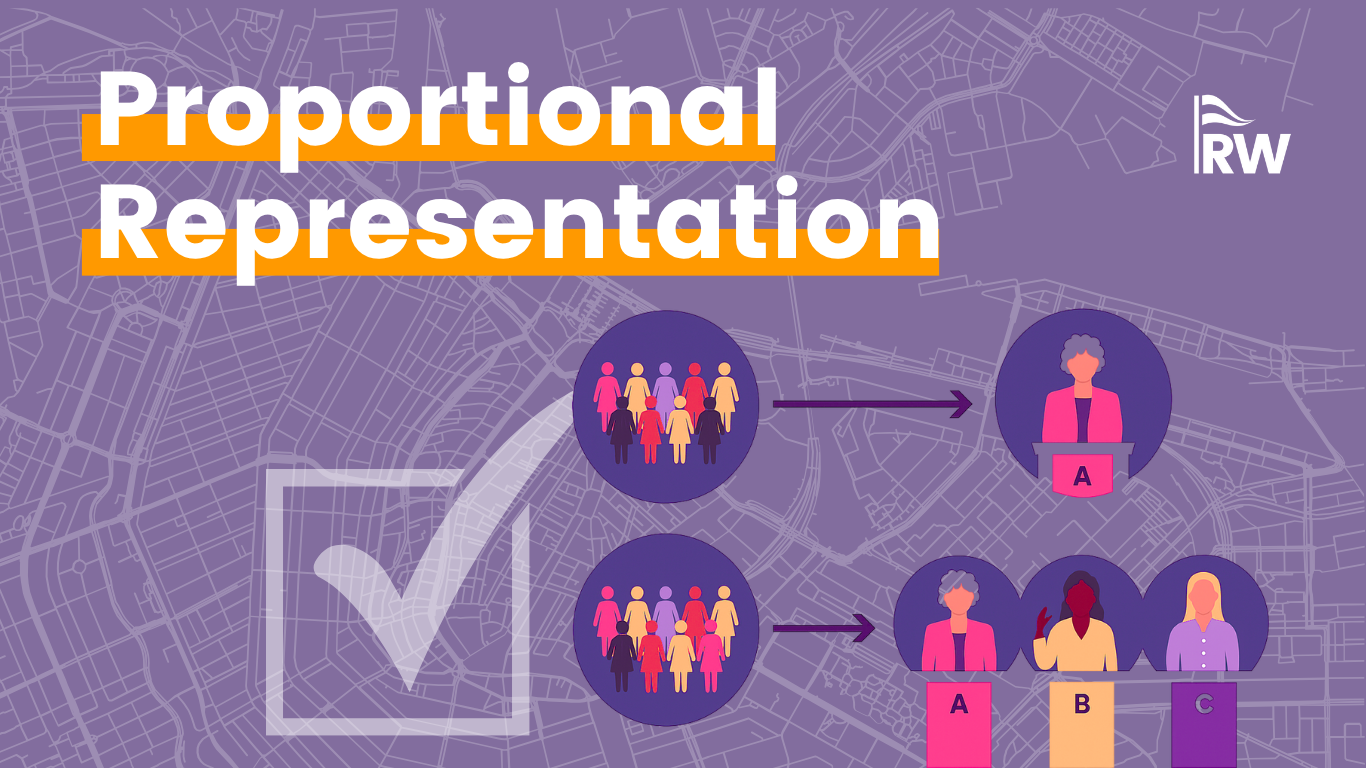
- Replaced at-large, winner-take-all elections with proportional ranked choice voting
- Divided the city into four multimember districts
The first election under this new system, held in 2024, produced historic results:
- 50% women elected to the city council
- Four women of color among the winners
- Five people of color total — the most diverse council in Portland’s history
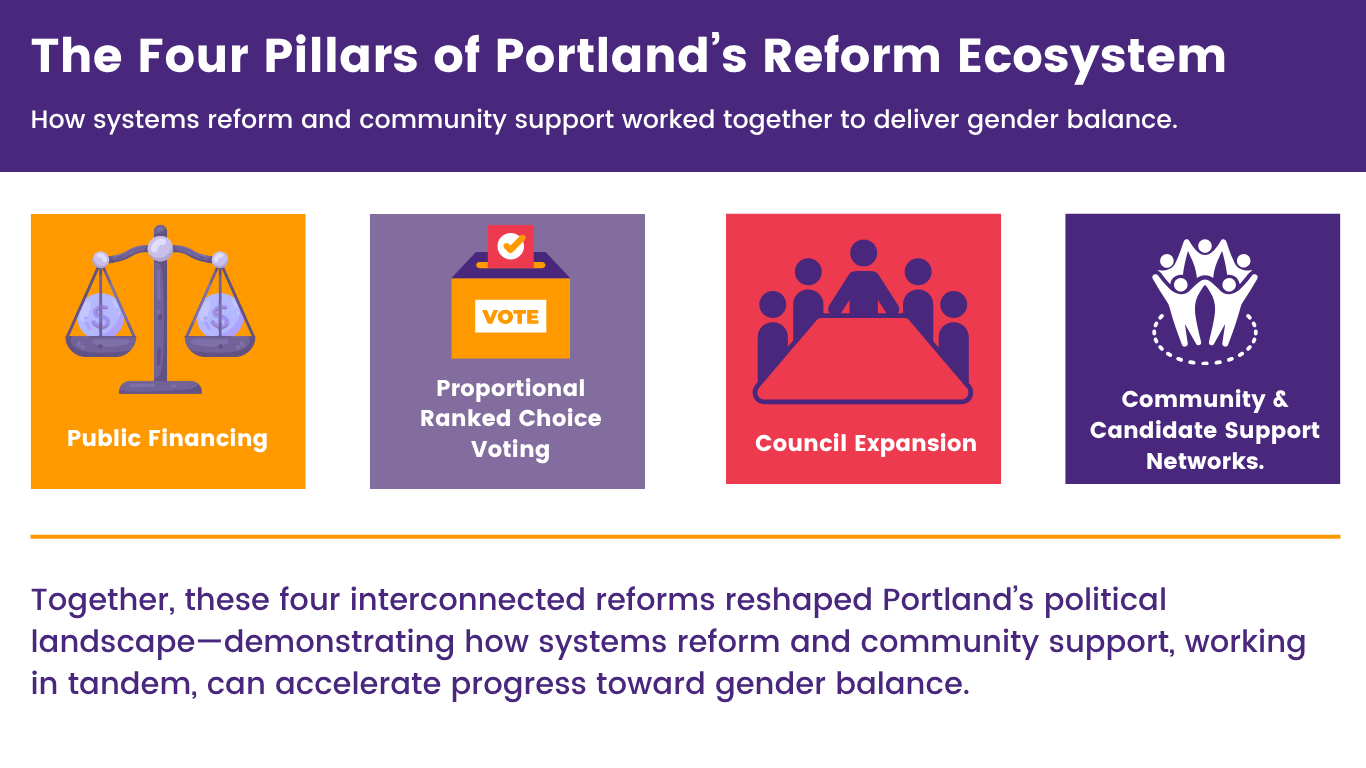
1. Public Financing: The Small Donor Elections Program

This reform empowered community-backed campaigns and helped women and candidates of color compete on equal footing.
2. Proportional Ranked Choice Voting (PRCV)
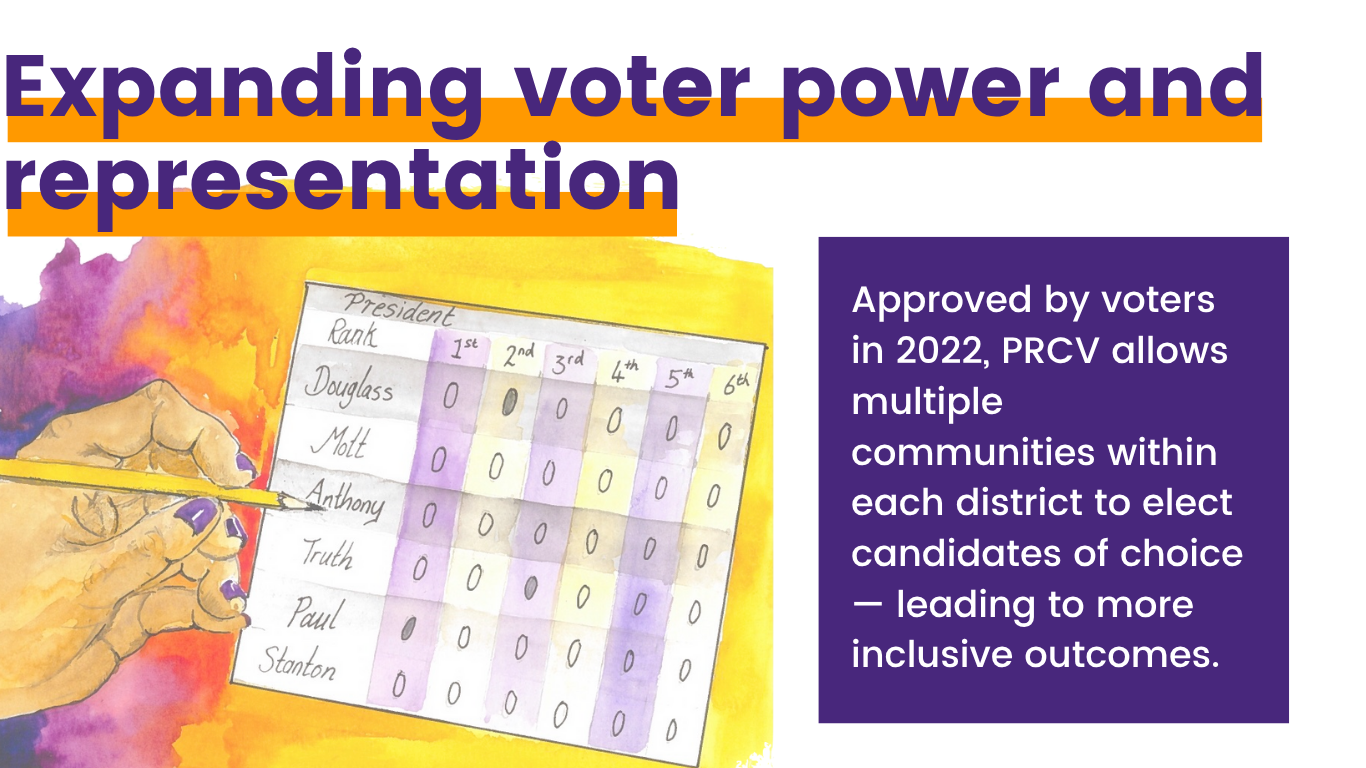
In Portland’s first PRCV election:

Check out our pages to learn more about Proportional Representation and Proportional Ranked Choice voting.
3. Council Expansion: More Seats, More Opportunities

RepresentWomen research shows women are far more likely to win when running for open seats. Portland’s 2024 results proved it: expansion paved the way for a gender-balanced and diverse council.
4. Community & Candidate Support Networks
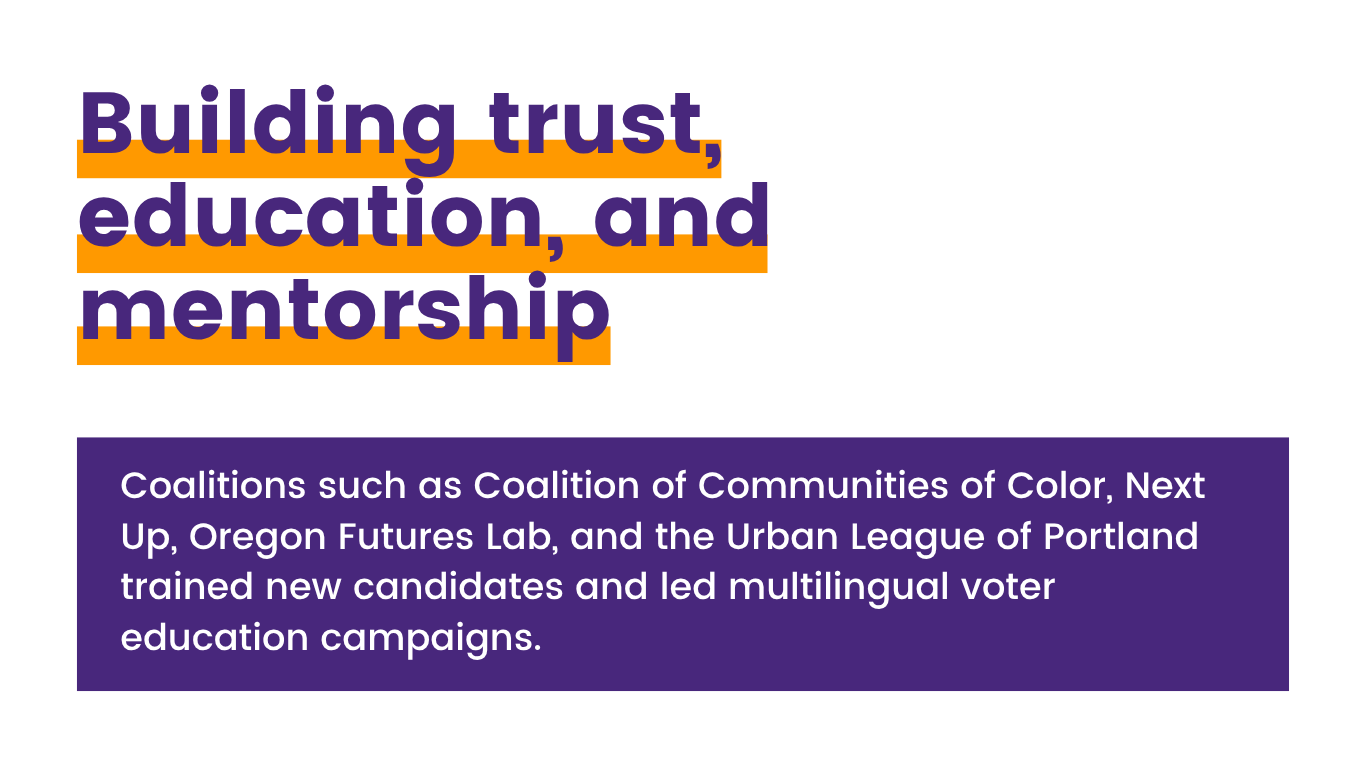
The City of Portland also funded 11 grassroots organizations (up to $40,000 each) to ensure every community understood the new voting system.
“Grantees were chosen for their long-standing relationships and trust in priority communities… meeting voters where they are.”
— City of Portland, Voter Education Program
These community efforts weren’t gender-specific, but they played a key role in achieving gender balance by lowering barriers and supporting nontraditional candidates.
Why It Worked: The Power of the Twin Track Approach
The Twin-Track Approach combines systems-level reform with candidate- and community-level support to accelerate women’s representation and strengthen democracy.

When these two tracks work in concert, reform doesn’t just change who can run — it changes who can win. Structural reform set the stage, but community action made it a reality.
Portland’s success underscores a defining truth: reforms change the rules, but people change outcomes. When systemic improvements, such as PRCV and public financing, are implemented alongside grassroots support, they work synergistically to make democracy more inclusive.
This dual strategy created a sustainable foundation for gender balance — not as an anomaly, but as a model for other cities to follow.

Looking Ahead

At RepresentWomen, we know that women’s representation strengthens democracy. The Portland case demonstrates what’s possible when we address barriers on both tracks: reforming the structures that shape elections and supporting the communities that bring democracy to life.